
By : Sonalika Singh, Consulting Editor, GSDN
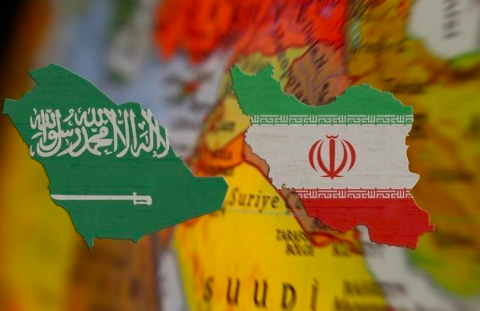
Iran’s strategy toward Saudi Arabia illustrates how a state with inferior conventional military capabilities can impose substantial strategic costs on a stronger regional rival through indirect warfare, stand-off weapons, maritime pressure and partnerships with non-state armed groups. The Houthi movement in Yemen has become an important component of this strategy. Saudi Arabia retains considerable military, economic and diplomatic capabilities. Nevertheless, the Houthi campaign has progressively constrained Riyadh’s strategic freedom of action by exposing its territory and critical infrastructure to relatively inexpensive missile and drone attacks, threatening maritime routes and complicating its reliance on external security partners.
The foundations of this pressure were established well before the current regional escalation. Iran’s relationship with the Houthis developed over several years, while the movement itself evolved from a primarily local insurgency into a force capable of employing ballistic missiles, cruise missiles, unmanned aerial vehicles (UAVs) and maritime systems.
A 2021 study by the Center for Strategic and International Studies (CSIS), which examined 4,103 Houthi attacks between January 2016 and October 2021, found that the monthly number of attacks against Saudi Arabia and other targets more than doubled during the first nine months of 2021 compared with the same period in 2020. CSIS also assessed that Iran’s Islamic Revolutionary Guard Corps–Quds Force and Lebanese Hezbollah had provided weapons, training and technical assistance. The significance of this development is that Saudi Arabia’s current vulnerability did not emerge suddenly. It was the product of a gradual transformation in the character, range, and sophistication of Houthi warfare.
Iran’s strategic logic is relatively straightforward. Tehran faces adversaries with significantly greater conventional military resources, particularly the United States and Saudi Arabia. Attempting to match these capabilities directly would be prohibitively expensive and would increase the risk of a major escalation. By working through regional partners, Iran can extend its strategic reach, impose costs on adversaries and complicate their security calculations without necessarily committing its own conventional forces to direct confrontation.
The Houthis are particularly valuable in this regard because of Yemen’s geography. The country sits alongside the Red Sea and the Bab el-Mandeb, one of the world’s key maritime gateways linking the Indian Ocean with the Suez Canal and European markets. This gives Iran an indirect means of exerting pressure not only on Saudi Arabia but also on international shipping and energy flows.
For Saudi Arabia, the geographical problem is especially difficult. A substantial portion of the kingdom’s economic strength is concentrated in large, fixed installations: oil-processing facilities, export terminals, pipelines, airports, and industrial infrastructure. These assets cannot simply be relocated when hostilities begin.
This creates structural asymmetry. Saudi Arabia must defend many geographically dispersed and economically important sites, while an attacker can concentrate relatively limited resources against selected targets. The objective of the Houthi campaign therefore does not necessarily have to be the destruction of Saudi military forces. It can instead be to create sufficient disruption, uncertainty, and defensive expenditure to make continued military operations increasingly costly.
CSIS documented an evolution in Houthi, targeting predominantly military objectives toward critical infrastructure and maritime assets. The movement employed ballistic and cruise missiles, UAVs, sea mines, and unmanned maritime systems. This shift expanded the strategic problem facing Riyadh from border security to the protection of a nationwide economic and infrastructure network.
The development of Houthi weaponry has further strengthened this asymmetric strategy. CSIS documented Iranian assistance involving ballistic and cruise missiles, UAVs, anti-tank weapons, sea mines and unmanned maritime vehicles. It also assessed that several Houthi systems were derived from Iranian designs.
The Borkan-2H ballistic missile, for example, was assessed by a UN panel as a lighter version of Iran’s Qiam-1 missile, while the Houthis developed cruise-missile variants with Iranian assistance. The Samad family of UAVs further expanded the geographical reach of Houthi attacks.
The importance of these systems lies not only in their destructive potential but also in the defensive burden they create. Saudi Arabia must account for attacks originating from multiple directions and protect an expanding number of potential targets. Even when individual attacks are intercepted, the requirement to maintain persistent air and missile defence across a large territory imposes significant financial and operational costs.
This is central to Iran’s use of the Houthis. Tehran does not need the movement to become a substitute for Iran’s own military forces. Instead, the Houthis extend Iran’s strategic reach and create an additional axis from which pressure can be applied to Saudi Arabia and its partners.
The relationship between Iran and the Houthis has involved allegations and evidence of weapons transfers, training, technical assistance and intelligence support. In 2024, Reuters reported claims by U.S. officials and other sources regarding Iranian and Hezbollah involvement in supporting Houthi operations, while U.S. sanctions targeted Iranian and Houthi-linked individuals and networks involved in weapons and financing.
An UN-related report, also reported by Reuters in 2024, described the Houthis as having developed into a more capable military organization with assistance from Iran, Hezbollah and Iraqi specialists. At the same time, Iran has repeatedly denied supplying the Houthis with military support.
Evidence of Iranian assistance does not necessarily establish that every Houthi operation is directly planned or ordered by Tehran. The Houthis have their own political, territorial and strategic objectives within Yemen. Their relationship with Iran is therefore better understood as a partnership that enhances Houthi capabilities and expands Iran’s regional leverage, rather than as a simple command-and-control structure.
The maritime dimension has transformed the Houthi campaign from a predominantly regional security issue into a problem with global economic consequences.
Beginning in late 2023, Houthi attacks on commercial shipping significantly altered the security environment around the Red Sea and Bab el-Mandeb. Some commercial vessels diverted around the Cape of Good Hope, adding considerable time and cost to voyages between Asia and Europe.
The strategic significance is considerable. A relatively inexpensive non-state actor demonstrated the ability to influence the decisions of major international shipping companies and disrupt one of the world’s most important trade corridors. The economic costs are consequently distributed across countries, shipping companies, insurers, and consumers rather than being confined to the immediate battlefield.
For Iran, this creates an additional layer of leverage. Pressure generated through the Houthis does not need to remain confined to Saudi Arabia. It can affect international trade and energy markets, creating incentives for external powers to engage with Tehran over regional security.
The same logic applies to Saudi Arabia’s energy infrastructure. Riyadh has historically regarded its extensive energy network and geographical position as sources of economic strength. Yet these same characteristics can become vulnerabilities during a prolonged conflict.
Saudi Arabia developed the East-West Pipeline partly to provide an alternative route for transporting crude toward the Red Sea and reduce dependence on the Strait of Hormuz. Such diversification enhances resilience, but it does not eliminate vulnerability. Pipelines, terminals, and processing facilities remain in fixed infrastructure that can be targeted.
Reports of attacks against energy infrastructure, combined with Houthi pressure around the Red Sea, therefore highlight a broader strategic problem: alternative routes are valuable only if the infrastructure connecting them remains secure. Diversification can reduce dependence on one chokepoint without eliminating the wider problem of infrastructure vulnerability.
The cumulative effect can be described as strategic compression. Saudi Arabia cannot focus exclusively on defending its southern border with Yemen. It must simultaneously consider threats to cities, oil facilities, pipelines, ports, airports, shipping, and maritime approaches.
At the same time, developments around the Strait of Hormuz can constrain the eastern side of the kingdom’s energy system. During the September 2026 escalation, Reuters reported that traffic through Hormuz remained substantially below normal levels, while the Bab el-Mandeb was also facing disruption amid Houthi advances along Yemen’s Red Sea coast.
The simultaneous pressure on both maritime corridors demonstrates why the Houthi front matters to Saudi Arabia’s broader strategic position. The kingdom’s security challenge is no longer confined to a conventional land border. It encompasses multiple geographical theatres and infrastructure networks that are economically interconnected.
The political and strategic consequences are equally important. Saudi Arabia has invested heavily in its armed forces and maintains a longstanding security relationship with Washington. Yet repeated missile and drone attacks have demonstrated the limitations of relying exclusively on conventional military superiority against dispersed and relatively inexpensive threats.
The 2019 attacks on Saudi oil infrastructure provided an earlier illustration of this problem. Even sophisticated air-defence systems cannot guarantee complete protection of a large territory containing extensive energy infrastructure. The experience also reinforced the value of diplomatic risk reduction.
This context helps explain Riyadh’s pursuit of engagement with Tehran, including the 2023 Saudi-Iranian rapprochement brokered by China. Such engagement did not necessarily represent a rejection of Saudi Arabia’s relationship with Washington. Rather, it provided an additional mechanism for reducing the risk that Saudi territory would become a battlefield in a broader U.S.-Iran confrontation.
The Houthi factor complicates this calculation. If Iran can exert pressure through Yemen without directly engaging Saudi forces, Tehran can raise the costs of confrontation while maintaining some distance from the immediate battlefield. Saudi Arabia, meanwhile, must account for the possibility that escalation elsewhere in the region could activate the Houthi front.
The September 2026 escalation illustrates how the capabilities developed over previous years can become particularly consequential during a wider confrontation involving Iran.
Reuters reported that Houthi forces had advanced along Yemen’s Red Sea coast and that Saudi Arabia and the Houthis were exchanging attacks. During the same period, concerns grew over disruptions affecting both Bab el-Mandeb and the Strait of Hormuz.
The G7 foreign ministers subsequently warned that developments in Yemen threatened regional stability, global energy security and freedom of navigation, while calling on Iran to end its support for the Houthis. The significance of this response lies in the extent to which the Houthi issue has moved beyond being a localized Saudi-Yemeni security problem. It has become connected to wider questions about international trade, energy security, and freedom of navigation.
China’s position is similarly revealing. Reuters reported in September 2026 that Beijing privately urged Iran to use its influence to restrain the Houthis after Saudi Arabia sought Chinese intervention. This reflects China’s own interests in maintaining stable energy supplies and protecting maritime trade.
The episode demonstrates a broader consequence of Iran’s strategy: pressure generated through the Houthis can create incentives for major external powers to engage directly with Tehran, even when those powers have interests that differ substantially from Iran’s.
Nevertheless, describing Saudi Arabia as completely defeated would be misleading. Riyadh retains substantial financial resources, military capabilities, diplomatic relationships, and alternative energy infrastructure. It has also demonstrated the ability to intercept many incoming missiles and drones.
The more precise analytical conclusion is that Iran has constrained Saudi Arabia’s strategic freedom of action by making several of Riyadh’s options more costly.
Military escalation carries the risk of further attacks against critical infrastructure. Reliance on U.S. security guarantees does not eliminate the threat posed by relatively inexpensive missiles and drones. Diversification through the Red Sea reduces dependence on Hormuz but introduces exposure to another vulnerable maritime theatre. Diplomatic accommodation with Iran can reduce certain risks but cannot guarantee that Iranian partners will remain inactive during a wider regional confrontation.
The strategic dilemma is therefore one of cost and vulnerability rather than conventional military inferiority. The significance of the Houthi strategy lies less in any single battlefield victory than in the architecture of regional power it has created.
Iran has combined geography, regional partnerships, stand-off weapons and economic chokepoints to impose costs that conventional military superiority alone cannot easily eliminate. The Houthis provide Tehran with access to the southern approach to the Red Sea, a mechanism for applying pressure to Saudi Arabia’s western flank and the capacity to disrupt international maritime commerce.
When combined with pressure around the Strait of Hormuz and the activities of other regional partners, the result is a distributed security problem rather than a single battlefield. Saudi Arabia must respond simultaneously across multiple fronts while protecting infrastructure that is geographically fixed and economically indispensable.
This is the deeper meaning behind the argument that Iran has “checkmated” Saudi Arabia through the Houthis. It does not mean that Saudi Arabia has been militarily defeated or stripped of its ability to act. Rather, it describes a situation in which Iran has helped create a network of vulnerabilities that significantly increases the costs and risks associated with Riyadh’s strategic choices.
The Houthis have therefore become an instrument through which Iran can convert Yemen’s geography into regional leverage. By extending the battlefield toward the Red Sea, increasing pressure on Saudi Arabia’s western flank and creating risks for international shipping, the movement enables Tehran to impose strategic costs without having to match Saudi Arabia or its external partners weapon for weapon.
The broader lesson is that conventional military superiority does not automatically translate into strategic control. A state may possess vastly greater financial resources, advanced weapons and sophisticated armed forces, yet remain vulnerable when an adversary can exploit geography, fixed infrastructure, asymmetric weapons and non-state partnerships. Iran’s strategy has sought precisely to exploit that gap, and the Houthis have emerged as one of its most consequential instruments for doing so.
Author



