
By : Jaiwant Singh Jhala, Research Analyst, GSDN
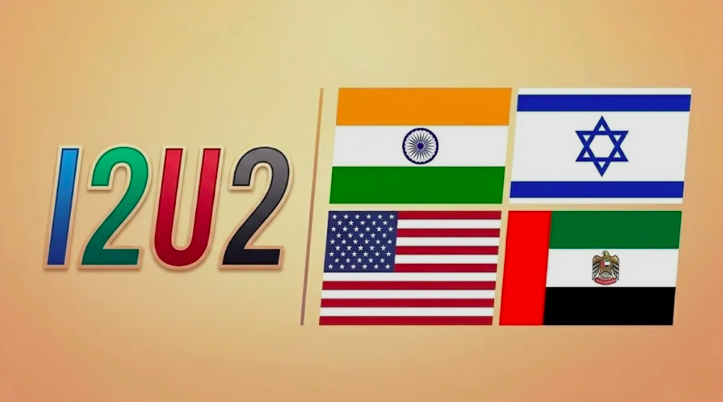
The global political and economic landscape is undergoing a profound transformation. Traditional multilateral institutions are increasingly being complemented by smaller, issue-based partnerships known as minilateral groupings. These partnerships bring together a limited number of countries with shared strategic interests to address specific global and regional challenges more efficiently than larger organizations. One of the most significant examples of this trend is the I2U2 grouping. I2 stands for India and Israel, whereas U2 stands for the United States and the United Arab Emirates. I2U2 was launched at the leaders’ summit in July 2022 and has been described as a new model of international cooperation focused on practical economic outcomes rather than military alliances or ideological partnerships. The grouping seeks to combine the technological innovation of Israel, the investment capabilities of the UAE, the market size and human capital of India, and the financial and technological leadership of the United States to promote cooperation in areas such as food security, renewable energy, infrastructure, technology, transportation, healthcare, and supply chain resilience. The origins of I2U2 can be traced to the changing geopolitical environment in West Asia. For decades, political divisions prevented close cooperation between Israel and several Arab states. However, the signing of the Abraham Accords in 2020 marked a turning point by normalizing relations between Israel and the UAE. This historic development created new opportunities for regional economic integration and diplomatic engagement.
Achievements
One of I2U2’s greatest achievements has been its ability to create a new strategic architecture in West Asia. Historically, the region’s political landscape was shaped by ideological divisions and security rivalries. I2U2 represents a departure from this pattern by emphasizing economic cooperation over geopolitical confrontation. It has brought together countries from South Asia, the Gulf, the Middle East, and North America in a partnership based on shared economic interests and technological collaboration rather than traditional security concerns. For India, the grouping has significantly strengthened its diplomatic and strategic presence in West Asia. India has long pursued a policy of maintaining balanced relations with Israel, the Gulf states, Iran, and the broader Arab world. I2U2 enhances India’s role as a trusted economic and technological partner without forcing it to abandon its policy of strategic autonomy. It complements India’s ‘Link West’ policy by expanding opportunities for trade, investment, and innovation while reinforcing its position as an emerging global power. The most concrete outcome of I2U2 has been its focus on food security. One of the flagship initiatives announced during the inaugural summit involved a UAE commitment to invest approximately US$2 billion in integrated food parks across India. These food parks aim to modernize agricultural infrastructure by improving storage facilities, reducing post-harvest losses, increasing food processing capacity, and strengthening supply chains. Israeli expertise in precision agriculture and water-efficient farming, combined with American technological support and Emirati investment, creates a comprehensive model for enhancing food security. Beyond benefiting India, these projects are also expected to improve food availability for Gulf countries, which remain heavily dependent on food imports. Another major initiative has been cooperation in renewable energy. The grouping announced plans to support the development of a 300-megawatt hybrid renewable energy project in Gujarat, combining solar and wind power with advanced battery storage technology. This project aligns with India’s ambitious renewable energy targets while contributing to global efforts to reduce carbon emissions. It also demonstrates how I2U2 seeks to address global challenges such as climate change through practical investments rather than merely issuing political declarations. Technology has emerged as another important pillar of cooperation. The four countries possess complementary strengths in fields such as artificial intelligence, semiconductors, biotechnology, cybersecurity, space technology, and digital innovation. Although many collaborative projects remain in the early stages, the framework established by I2U2 has significantly expanded opportunities for research partnerships, private-sector investment, and technological exchanges. Grouping has also contributed to strengthening global supply chain resilience. The COVID-19 pandemic exposed the vulnerabilities of overly concentrated supply chains, prompting countries worldwide to diversify production and logistics networks. I2U2 supports this objective by encouraging greater cooperation in pharmaceuticals, food processing, clean energy technologies, and critical infrastructure. By reducing dependence on single suppliers and promoting trusted economic partnerships, grouping contributes to greater resilience in the global economy.
Challenges
Despite its promising start, I2U2 has encountered several obstacles that have slowed its progress. Many of the projects unveiled during the inaugural summit remain under development, and relatively few have reached full operational status. The outbreak of the Israel-Hamas conflict in October 2023 created another major challenge. The conflict shifted political attention toward immediate security concerns and complicated regional diplomacy. Although none of the member countries abandoned the partnership, progress on several economic initiatives slowed considerably as governments focused on managing the evolving crisis. The conflict also highlighted the broader geopolitical uncertainties that can affect long-term regional cooperation. Another limitation is the absence of a permanent institutional structure. Unlike organizations such as the European Union (EU) or Association of South-East Asian Nations (ASEAN), I2U2 has no permanent secretariat, dedicated budget, or legally binding treaty. Its flexible structure allows for rapid decision-making, but it also makes continuity dependent on the political commitment of successive governments. Changes in domestic political priorities, particularly within the United States, could influence the level of future engagement and financial support. India’s own foreign policy presents both opportunities and challenges for I2U2. India maintains strong relations not only with Israel, the UAE, and the United States but also with countries such as Iran and Saudi Arabia. Preserving this delicate diplomatic balance requires careful management. India has consistently emphasized that I2U2 is an inclusive economic initiative rather than an exclusive geopolitical bloc directed against any country.
Future of I2U2
The long-term success of I2U2 will depend largely on its ability to convert political vision into measurable outcomes. Completing flagship projects in food security and renewable energy will be essential for maintaining credibility and demonstrating the practical value of the partnership. Greater institutionalization through regular ministerial meetings, dedicated working groups, and more robust coordination mechanisms could also strengthen continuity and implementation. Emerging technologies present significant opportunities for future collaboration. Artificial intelligence, quantum computing, semiconductors, biotechnology, digital infrastructure, green hydrogen, and climate-resilient agriculture are all areas where the combined strengths of the four members could generate substantial economic and technological benefits. The announcement of the India-Middle East-Europe Economic Corridor (IMEC) has further increased the strategic relevance of I2U2. By improving connectivity between India, the Gulf, Israel, and Europe through integrated transport, energy, and digital infrastructure, IMEC complements many of I2U2’s objectives. If both initiatives progress simultaneously, they could reshape regional trade routes and establish a new corridor of economic growth linking to Asia, the Middle East, and Europe.
Judging I2U2 solely by the number of completed projects would underestimate its broader significance. As a relatively young partnership, it has already succeeded in creating a new model of minilateral cooperation based on investment, innovation, and practical problem-solving. It has strengthened India’s strategic engagement in West Asia, encouraged collaboration among four economically complementary nations, and identified concrete areas where joint investments can address pressing global challenges such as food security, renewable energy, and resilient supply chains. At the same time, the partnership has yet to fully realize its ambitious vision. Slow implementation, regional conflicts, institutional limitations, and evolving geopolitical priorities continue to constrain its progress. The true measure of I2U2’s success will depend on whether it can consistently translate diplomatic commitments into visible economic outcomes over the coming decade. Overall, it has succeeded in establishing an innovative strategic platform and generating significant political momentum, even though many of its flagship initiatives remain working in progress. In an era increasingly characterized by flexible, issue-based partnerships rather than rigid alliances, I2U2 represents an important experiment in international cooperation. If its member countries sustain their political commitment, accelerate project implementation, and expand cooperation into emerging sectors such as artificial intelligence, clean energy, and digital infrastructure, I2U2 has the potential to become one of the most influential economic partnerships connecting South Asia, West Asia, and the wider global economy.



