
By : Jaiwant Singh Jhala, Research Analyst, GSDN
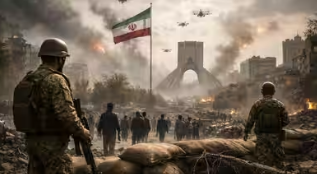
The ceasefire that followed the recent Iran-Israel conflict has offered the Middle East a much-needed pause after weeks of escalating military confrontation. The fighting, which witnessed missile exchanges, airstrikes, cyber operations, and direct attacks on strategic military installations, marked one of the most dangerous phases in the long-standing rivalry between the two regional powers. Unlike previous proxy confrontations fought through allied militant groups, the recent conflict involved direct military engagement, raising fears of a broader regional war that could have drawn in the United States, Gulf Arab states and other global powers. The ceasefire has temporarily reduced the intensity of hostilities; history demonstrates that ceasefires in the Middle East are often fragile, influenced by military calculations, domestic politics, ideological rivalries, and external intervention. While the current agreement has prevented further immediate escalation, it has not resolved the fundamental disputes that led to the conflict. The durability of the ceasefire depends upon several interrelated factors such as the strategic objectives of Iran and Israel, the involvement of the United States, the role of regional actors, domestic political pressures, the activities of proxy militias, economic considerations and the effectiveness of international diplomacy.
What Is the Conflict?
The Iran-Israel rivalry has evolved over four decades. Before the 1979 Iranian Revolution, Iran maintained close diplomatic and military ties with Israel. The establishment of the Islamic Republic transformed Iran into one of Israel’s strongest regional adversaries. Iran rejected Israel’s legitimacy and positioned itself as the principal supporter of anti-Israel resistance movements such as Hezbollah in Lebanon and Hamas in Gaza. Meanwhile, Israel has viewed Iran’s expanding regional influence and nuclear programme as existential security threats. Over the years, both countries have engaged in covert operations, cyber warfare, assassinations of military officials and nuclear scientists, and attacks on each other’s strategic assets. The latest conflict represented a dangerous departure from the shadow war. Direct missile and drone attacks demonstrated both countries’ willingness to openly challenge one another. The intervention of the United States in support of Israel and diplomatic efforts by regional and international actors eventually led to a ceasefire before the conflict escalated into a prolonged regional war.
The Ceasefire
Both Iran and Israel suffered considerable military and economic costs during the conflict. Israel faced repeated missile attacks that strained its missile defence systems and disrupted civilian life. Iran experienced significant damage to military infrastructure and faced increasing international pressure. Neither side appeared prepared for a prolonged war involving sustained military operations. Accepting a ceasefire allowed both governments to regroup while claiming strategic success before their domestic audiences. The United States played a central role in preventing wider escalation. US has consistently supported Israel’s security while simultaneously seeking to avoid another major military conflict in the Middle East that could divert resources from strategic competition with China and Russia. American diplomatic engagement reportedly encouragedrestraint from both sides. Regional allies also feared that continued fighting would threaten energy infrastructure and maritime trade. There were economic aspects to it. War is expensive. Iran continues to face sanctions, inflation, and economic hardship. Israel also experienced significant financial costs associated with mobilization, missile interception, infrastructure damage, and disruptions to tourism and investment. Both governments therefore had economic incentives to pause military operations. One important reason the ceasefire could survive is mutual deterrence. Both Iran and Israel demonstrated that they possess the capability to inflict substantial damage upon each other. Israel retains qualitative military superiority, advanced intelligence capabilities, and sophisticated air defence systems. Iran has expanded its missile arsenal, drone technology, and regional proxy network. Because both countries understand the destructive consequences of renewed war, deterrence may encourage continued restraint. International diplomacy remains actively engaged in preserving the ceasefire. Countries including Qatar, Oman, Turkey and European powers have maintained communication channels between opposing parties. Although Iran and Israel lack direct diplomatic relations, intermediaries continue to facilitate indirect dialogue. These diplomatic mechanisms reduce the risk of misunderstandings that could unintentionally trigger renewed conflict. The Middle East has experienced years of instability. From Syria and Iraq to Yemen and Gaza. Most regional governments now prioritize economic development, infrastructure investment, tourism, and foreign investment. Countries across the Gulf increasingly seek stability rather than confrontation. Their preference for de-escalation creates additional pressure on Iran and Israel to avoid another large-scale conflict. Neither Iran nor Israel achieved decisive strategic victory during the conflict. Israel weakened certain Iranian capabilities but did not eliminate Iran’s military potential or nuclear expertise. Iran demonstrated its ability to strike Israeli territory but failed to significantly alter Israel’s strategic position. Since further military operations may not fundamentally change the strategic balance, both sides may prefer maintaining the ceasefire.
Challenges To the Ceasefire
Numerous risks continue to threaten the agreement. Iran’s nuclear programme remains perhaps the greatest long-term source of tension. Israel insists that Iran must never acquire nuclear weapons capability. Iran maintainsthat its nuclear programme serves peaceful civilian purposes while asserting its sovereign right to uranium enrichment. If intelligence suggests significant progress toward weaponization, or if negotiations collapse, Israel could again consider military action. Perhaps the greatest weakness of the ceasefire is that numerous armed non-state actors remain active throughout the region. These include Hezbollah in Lebanon, Various Iraqi militia groups, Houthi forces in Yemen and Palestinian militant organizations. Even if Iran and Israel avoid direct confrontation, actions by these groups could provoke retaliation and rapidly escalate into wider conflict. Proxy warfare has historically allowed regional powers to compete while avoiding full-scale conventional war. Political leaders often face domestic pressures that influence foreign policy. Israeli governments frequently prioritize national security and may adopt tougher military responses following attacks. Iranian leaders must also satisfy influential political, military, and ideological constituencies that oppose compromise with Israel. Changes in leadership or internal political crises could therefore weaken support for the ceasefire. Miscalculation is another problem. Military confrontations frequently result from accidents rather than deliberate policy such as misidentified missile launches, drone incursions, border incidents, intelligence failures and cyber-attacks attributed to the opposing side. Given the absence of direct communication between Iran and Israel, even small incidents could escalate rapidly. Unlike conventional territorial disputes, the Iran-Israel conflict contains strong ideological dimensions. Iran portrays itself as a leader of resistance against Israel and Western influence in the Middle East. Israel views Iran’s regional ambitions and support for militant organizations as existential threats. These ideological narratives make lasting reconciliation extremely difficult.
Role of External Powers
The United States remains the most influential external actor. US provides Israel with military assistance, intelligence cooperation, and diplomatic backing. At the same time, successive American administrations have sought to prevent regional wars that threaten global stability. Future US policy will significantly influence whether deterrence remains effective. Saudi Arabia, the United Arab Emirates, Qatar and other Gulf countries increasingly prioritise regional economic transformation. Large development projects, foreign investment, and economic diversification require stability. Consequently, Gulf states have strong incentives to encourage continued ceasefire arrangements and mediation efforts. Russia and China have expanded their diplomatic influence in the Middle East. China has strengthened economic ties with both Iran and Gulf states while presenting itself as a potential mediator. Russia maintains strategic relationships with Iran but also coordinates with Israel on regional security issues. Although neither power possesses the same influence as the United States, both can contribute to diplomatic efforts that discourage renewed conflict.
Economic Significance
The ceasefire carries major economic consequences beyond the Middle East. The Middle East remains central to global oil production. Conflict involving Iran raises concerns about shipping through the Strait of Hormuz, a vital maritime chokepoint. Even temporary disruptions can increase oil prices and contribute to global inflation. A durable ceasefire would stabilize energy markets and reduce uncertainty for consumers and investors. Regional instability threatens shipping routes connecting Europe, Asia, and Africa. Insurance premiums rise during periods of conflict, increasing transportation costs, and disrupting global supply chains. Continued peace therefore benefits international commerce. Both Iran and Israel require economic stability. Iran seeks sanctions relief, investment, and inflation control. Israel aims to restore tourism, technology investment, and economic confidence. These domestic priorities encourage both governments to avoid renewed warfare.
The coming months will be critical. If diplomatic engagement continues and both sides exercise restraint, the ceasefire may evolve into a more stable framework for managing competition. If not, the Middle East could once again witness a cycle of escalation with consequences extending far beyond the region. Ultimately, whether the ceasefire holds will depend less on the agreement itself than on the willingness of Iran, Israel, regional states, and global powers to transform a temporary cessation of hostilities into a broader process of conflict management. While cautious optimism is justified in the short term, lasting peace will require sustained diplomacy, confidence-building measures, and political compromise.



