
By : Pratyush Raj, Research Analyst, GSDN
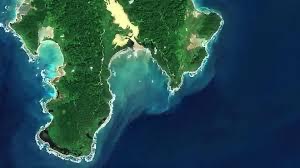
Great Nicobar Island, situated at the southernmost edge of India, has emerged as a cynosure of the country’s strategic and developmental ambitions. It aims to strengthen India’s strategic position in the Indian Ocean Region (IOR) and foster holistic development of the Island improving the quality of life for its residents. However, the project has also sparked debates over environmental sustainability and rights of indigenous communities. This article attempts to analyse the developmental and strategic significance of this project, while critically examining the environmental and social challenges associated with its implementation.
Introduction: Understanding the Project
The Great Nicobar Project, envisioned under the leadership of Prime Minister Narendra Modi, was proposed in 2021, and received environmental and forest clearances in 2022. As conceived by NITI Aayog, this project aims to bolster “Holistic development of Great Nicobar Island” improving the quality of life of local people, maritime security, and economic development. Estimated at $8.5 billion, this mega project aimed at building an International Transshipment port, Greenfield International Airport, Powerplant, and a Township. Covering a total area of 166.10 sq km, including 35.35 sq km revenue land and 130.75 sq km forest land, this project will be developed in 3 phases:
- Phase I (2025-2035) – The first phase of the project, covering an area of 72.12 sq km, focuses on key infrastructure developments, including a dual-use military and civilian airport at Campbell Bay, a desalination plant, a 450 MVA gas- and solar-based power facility, a 22-km expressway, and township development across Campbell Bay, Gandhi Nagar, and Govind Nagar. Together, these initiatives aim to enhance connectivity, generate economic opportunities, and support future growth in the region.
- Phase II (2036-2041) – During second phase, the project will shift its focus towards tourism, business activities, and urban development over 45.27 sq km. Planned initiatives include expanding the port, developing tourism and wellness centers, building a cruise ship terminal, extending residential townships, constructing a river dam, and introducing a metro rail network.
- Phase III (2042-2047) – The final phase, covering 48.71 square kilometers, aims to turn the region into a major hub for business, finance, and tourism. It includes the development of an international financial center, a smart city, digital business parks, entertainment zones, and modern commercial infrastructure to attract investors and visitors.
To understand the importance of Great Nicobar Project, it is essential to examine the strategic position of the island and the advantages possessed by it which not only contributes to building an economic hub but also strengthening India’s presence in the Indo-Pacific region.
Strategic Significance
Great Nicobar Island sits at just 40 nautical miles from the Malacca Strait, narrow chokepoint through which nearly 25-30% of global seaborne trade and a massive share of China’s energy imports pass. It gives India a vantage point over one of the busiest sea lanes. It effectively counters China’s expanding footprint in the Indian Ocean (String of Pearls – Strategic encirclement of India, which extend from the Chinese Mainland to Port Sudan in the Horn of Africa). The Indo-Pacific has emerged as a global economic attraction. India views a free, open, inclusive, and rules-based Indo-Pacific essential for stability in the region. As it is geographically closer to Southeast Asia, it can serve as a bridge between India and The Association of Southeast Asian Nations (ASEAN) comprising Brunei, Cambodia, Indonesia, Laos, Malaysia, Myanmar, the Philippines, Singapore, Thailand, Vietnam, and Timor-Leste. The project also complements India’s SAGAR (Security and Growth for All in the Region) vision, which seeks to promote maritime security, regional cooperation, and sustainable development in the Indian Ocean region. This project will contribute to achieving India’s broader objectives of India’s Act East Policy which focuses on strategic and economic engagement with Southeast Asian countries and maintain itself as a responsible stakeholder in the region.
Economic Sovereignty
Currently, nearly 75% of India’s transshipped cargo is handled at foreign ports like Colombo (Sri Lanka), Singapore, and Port Klang (Malaysia). With the development of International Container Transshipments Port (ICTP), India’s dependence on foreign transshipment ports will be significantly reduced. India at present has one operational transshipment port in Kerala, and with the addition of Galathea Bay port, India can save up to $220 million annually. The Great Nicobar Project is expected to improve the island’s infrastructure and connectivity in a major way. The proposed international airport, township, power plant, and road network will help transform the island into a more connected and developed region. Due to its remote location, Great Nicobar has faced several challenges in terms of transport and access to basic facilities. The project aims to overcome these challenges through modern infrastructure development.
Increased connectivity via air and water routes will facilitate the ease of access to the island, bringing it closer to mainland India and the neighboring countries. Improved infrastructure can help facilitate good health care, education, and other social services. On the other hand, the development has a possibility of bringing in investments and creating prospects for tourism and businesses. Hence, in conclusion, the project could play a pivotal role in the overall development of the island. The project can help increase the flow of tourists by improving their connectivity with the rest of the world and making them easily approachable to them. In addition, there is a possibility of creating employment opportunities in construction, tourism, transport, and many other sectors.
However, despite all its strategic importance and developmental objectives, this project has been widely criticized on account of its ecological sustainability and lack of civic participation.
Challenges
Environmental Concerns
About two-thirds of the Great Nicobar Island is a Biosphere reserve involving Campbell Bay National Park and Galathea National Park. Out of the 166.10 sq km required for the project, 130.75 sq km is forest land which will lead to the uprooting of approximately 10lakh trees in the tropical evergreen and semi-evergreen forest. Since this Island comes under the Sundaland biodiversity hotspot, critics argue regarding the implementation of the project and sustainability of the ecosystem. The construction of the proposed transshipment terminal and other infrastructure may disturb nearby coral reefs, which play an important role in supporting marine biodiversity. Increased shipping activity, dredging, and coastal development could affect marine habitats and alter the ecological balance of the region. Environmental experts have therefore stressed the need for adequate safeguards to minimize damage to these sensitive ecosystems. Environmentalists have also expressed concerns about the impact of the project on the giant leatherback turtle, one of the world’s largest sea turtle species. Great Nicobar, particularly the beaches of Galathea Bay, serves as an important nesting site for these turtles. Increased construction activity, artificial lighting, noise, and human presence could disrupt nesting patterns and affect their breeding success. Consequently, concerns have been raised regarding the long-term survival of this vulnerable species in the region.
Impact on Indigenous Communities
The Great Nicobar Project is expected to bring major changes to the island. However, these changes may also affect the indigenous communities that call the island home. The Shompen, a particularly vulnerable tribal group (PVTG) that lives mainly in the island’s forests, and the Nicobarese, a traditional island community with a strong connection to the coastal environment, have lived in the region for generations. In India, development projects involving forest land are generally expected to comply with the provisions of the Forest Rights Act, 2006, which seeks to protect the rights of forest-dwelling communities. The Act emphasizes the participation and consent of affected communities, usually through Gram Sabhas, before forest land is diverted for non-forest purposes. However, the application of these provisions in Great Nicobar has been a subject of debate. Since the Shompen tribe follows a nomadic lifestyle and does not have formally organised Gram Sabhas, questions have been raised about how their views were represented during the approval process. Critics have argued that forest and environmental clearances were granted despite unresolved concerns regarding tribal consultation and consent. This has led to a broader discussion on how developmental objectives can be balanced with the rights and interests of indigenous communities. Another concern is the sharp increase in the population that the project is expected to bring. According to project projections, the population of Great Nicobar could rise from fewer than 10,000 people at present to around 6.5 lakh by 2050. Critics argue that such a massive influx of people could place significant pressure on the island’s natural resources and infrastructure. It may also affect the cultural identity and traditional way of life of indigenous communities such as the Shompen and Nicobarese tribes. Therefore, while the Great Nicobar Project promises significant developmental benefits, it is equally important to ensure that the rights, culture, and livelihoods of indigenous communities are protected throughout the implementation process.
Therefore, the debate surrounding the Great Nicobar Project should not be viewed as a choice between development and conservation. Rather, the focus should be on finding ways to pursue development while safeguarding the island’s ecological and social fabric.
Way Forward
These issues associated with the Great Nicobar Project cannot imply that the project needs to be scrapped off completely. Instead, it can show how the project can be developed responsibly.
It is necessary to see that all environmental laws are properly adhered to. There is a rich biodiversity on the island, together with coral reefs, mangroves, and endangered species. Thus, there should be strict control over the construction work, and all the necessary environmental assessments need to be made to avoid any ecological impact on the island.
At the same time, it is especially important to pay much attention to the Shompens and the Nicobarese people. It is necessary to listen to their concerns and take care of their rights and traditional lifestyles.
Furthermore, one more aspect that should be considered is that of disaster management. The island of Great Nicobar is situated in such a way that it experiences regular earthquakes and tsunamis. That is why all the infrastructural development in the area should be constructed in a manner that it is resilient and prepared to withstand potential disasters.
Finally, the project should be implemented in a gradual and balanced manner. Economic growth, national security, environmental protection, and tribal welfare should go hand in hand. By adopting such an approach, India can ensure that the Great Nicobar Project becomes a model of sustainable and inclusive development.
Conclusion
Indeed, the Great Nicobar Project can be considered as the largest and most ambitious developmental project undertaken by India. Notably, the project can have a lot of influence on the strategic positioning and development of the Indian state in the Indian Ocean Region. Being close to important routes and having plans to develop a port and an airport on the island, the project can facilitate trade and connectivity of the region.
However, at the same time, the Great Nicobar Project faces several important issues related to environmental conservation and the problems associated with the protection of the rights of the native population inhabiting the island.
Therefore, the successful implementation of the Great Nicobar Project will depend on how well India is able to balance between the developmental and strategic objectives, their negative impact on the environment, and the native population inhabiting the island.
Author




Congratulations Rahul…
It’s a well researched and thought provoking analysis…The article presents a balanced perspective on the Great Nicobar Project, highlighting the need to carefully reconcile strategic development with ecological conservation and the interests of indigenous communities…It is encouraging to see such a nuanced, evidence based discussion on an issue of national importance…
Great work 👏🏻👏🏻👏🏻🍫