
By: Khushbu Ahlawat, Consulting Editor, GSDN
Introduction
A law named after a senator who did not live to see it pass now threatens India with a 100 percent tariff over a barrel of Russian crude. The real question for New Delhi is not whether to blink, but what blinking would actually cost. On 18 September 2026, US President Donald Trump signed into law a bill that had, in its own strange way, become a tribute to a dead man. The Lindsey O. Graham Sanctioning Russia and Iran Act of 2026 carries the name of the Republican senator from South Carolina who first introduced it in April 2025 and who died on 11 July, after a trip to Kyiv, before seeing it through. His sister, Darline Graham, was appointed to his Senate seat and helped steer the bill to final passage — 86 votes to 11 in the Senate, 262 to 159 in the House — framing it as a tribute to his legacy as one of Ukraine’s most committed allies in Congress. Somewhere in that bipartisan sentiment, India found itself named, almost incidentally, as one of the law’s primary targets.
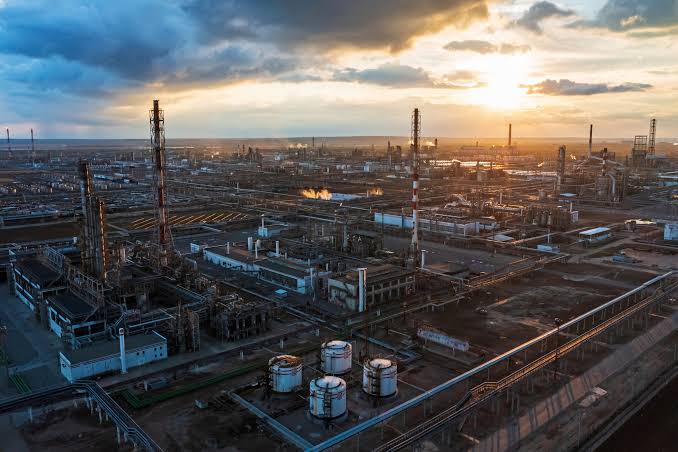
The provision that matters to New Delhi is straightforward in its mechanics and blunt in its intent: it gives the US president discretionary authority, invoked under the International Emergency Economic Powers Act, to impose tariffs of up to 100 percent on goods imported from any country ranked among the world’s top five buyers of Russian crude oil or natural gas, or among the top five facilitators of Russia’s sanctions-evasion network. China, India, Azerbaijan, Hungary and Slovakia currently occupy that unwelcome list on the oil and gas side. For India specifically, the exposure is not abstract. Russia supplied 30.3 percent of India’s crude oil imports in the 2025-26 fiscal year, worth some US40.8billionoutoftotalcrudeimportsofUS134.7 billion, making Moscow India’s single largest oil supplier by a wide margin — a position Russian crude did not hold before 2022, when Indian refiners began snapping up discounted barrels that Western buyers were shunning after the invasion of Ukraine. Far from tapering off under the growing threat of sanctions, that reliance has, if anything, deepened: Indian imports of unprocessed Russian oil reportedly jumped 34 percent in June 2026 alone, hitting an all-time high, partly a consequence of the Gulf supply disruptions caused by the ongoing US-Iran conflict, which has severed petroleum shipments that historically made up roughly 40 percent of India’s oil purchases.
A Law Built on a Double Standard
What makes the Graham Act difficult to take entirely at face value is the selective nature of its moral logic. The same United States now threatening India with a punitive tariff for buying Russian crude remains, itself, a substantial buyer of Russian goods. In 2023, the US imported US$1.19 billion worth of enriched uranium and other nuclear materials from Russia — 701,835 kilograms — making it the single largest national buyer of Russian nuclear material that year, ahead of the European Union, France, China, South Korea, Kazakhstan, Germany and Brazil. That volume roughly halved by 2024, to around US$624 million, a decline that preceded, rather than followed, Washington’s own ban on unwaivered Russian uranium imports, which took effect in August 2024 and does not close off the trade entirely until 2028. Uranium is just one line in a far larger ledger: in 2025, the US imported a total of US$4.05 billion in goods from Russia, including US$1.8 billion in fertilisers, US$1.12 billion in chemicals, US$733 million in precious stones and metals, and US$92 million in wood products. A country legislating punitive tariffs against others for sustaining Russia’s economy while quietly continuing to do exactly that itself is not a contradiction that escapes the attention of the countries being targeted.
The bill is not, to be fair, an automatic trigger. Section 113 of the Act makes the 100 percent tariff discretionary rather than mandatory, leaving the administration to decide whether to act, against whom, and at what rate, with carve-outs available for countries importing less than 15 percent of Russia’s total natural gas exports and a presidential waiver available on national-interest grounds. That discretion is precisely why Indian officials have, so far, treated the law as a contingency to be managed through diplomacy rather than a fait accompli — External Affairs Minister S. Jaishankar raised India’s concerns directly with US Secretary of State Marco Rubio in New York shortly after the law’s signing, and the exchange was, by most accounts, aimed at establishing exactly how much latitude the administration intends to use. But discretion cuts both ways. A tariff authority that remains in force for five years, renewable by Congress, aimed at a country already smarting from an earlier, if short-lived, 25 percent tariff Washington imposed on India in July 2025 over the same Russian-oil issue before withdrawing it in February 2026, is not a threat India can treat as empty rhetoric. The pattern of behaviour is, at minimum, consistent: Washington has shown it is willing to use tariff power as a blunt instrument of coercion on this specific question, and has done so against India more than once already within the span of little over a year.
What Capitulation Would Actually Cost
The temptation, for a country as dependent on access to the American market as India is, might be to simply give in. The case against doing so rests on a fairly unsentimental cost-benefit calculation. The United States absorbs roughly one-fifth of India’s total merchandise exports while supplying less than 7 percent of India’s imports — a meaningfully asymmetric relationship, but one where losing US market access would still be a serious blow to Indian exporters, particularly in textiles, gems and jewellery, and pharmaceuticals, sectors already bruised by the 2025 tariff episode. Set against that, though, is a starker risk: a sudden, enforced cut-off from Russian crude would not simply reroute India’s energy bill, it would inject real volatility into it. Alternative suppliers exist — the UAE and Nigeria are the most frequently cited candidates to fill part of the gap — but at meaningfully higher prices that would cascade through transport costs, fertiliser prices and food inflation, while also requiring more dollars to settle, putting fresh pressure on the rupee at a moment when India’s import bill is already strained by the Gulf disruptions flowing from the US-Iran war.
There is also a harder geopolitical calculation buried inside the economic one. If India were to abandon Russian oil purchases under visible American duress, the optics would be difficult to spin as anything other than a surrender of strategic autonomy — the principle India has spent decades cultivating as the organising idea of its foreign policy, the insistence that New Delhi makes its own choices rather than being conscripted into someone else’s bloc. The logic the Graham Act embodies is, in substance, a reheated version of the “with us or against us” doctrine that defined the George W. Bush era’s approach to global alignment after 2001: buy American-approved energy or face American-imposed costs, with little space left in between. For a country that has spent recent years deepening a ten-year defence framework with Washington, signed in October 2025, and positioning itself as a serious partner in the Indo-Pacific, being treated with the same blunt instrument used against adversarial China is a signal worth taking seriously about how much that partnership status is actually worth in Washington’s current calculus.
The Wider Pattern Washington Risks Setting
There is a broader argument here that goes beyond India’s narrow interest, and it concerns the kind of international order the Graham Act’s approach is quietly dismantling. A law that asserts the authority to penalise third countries — and even the vessels that carry their cargo — for engaging in lawful commercial transactions with another sovereign state is a significant escalation in how the US wields its tariff power, moving well past sanctions aimed directly at Russia into secondary measures aimed at everyone who continues to trade with it. Critics within the US Senate itself, including Democratic Senator Maggie Hassan, have voiced unease about handing the executive this scale of discretionary tariff authority even while supporting the underlying goal of pressuring Russia, warning that the costs of such tariffs ultimately land on American businesses and consumers rather than on Moscow. Taken together with the Trump administration’s parallel military campaign against Iran, now well into its seventh month with no clear resolution in sight, and its broader pattern of coercive tariff diplomacy against allies and rivals alike, the Graham Act reads less like a carefully calibrated instrument of statecraft and more like one more entry in a lengthening list of unilateral assertions of American economic power — the kind of behaviour that, when practised by Beijing or Moscow, Washington has spent decades condemning as a violation of the rules-based international order it claims to champion.
That irony is not lost on the countries now being squeezed by it. The EU, China and India collectively account for a substantial share of global GDP, trade and growth, and all three now find themselves, in one form or another, on the receiving end of the same coercive logic. It is not an accident that this pressure is coinciding with visible, if cautious, moves toward alternative financial architecture: the BRICS New Delhi Declaration, issued at the September 2026 summit, tasked a dedicated BRICS Payments Task Force with advancing cross-border payment interoperability and local-currency settlement — both explicitly framed as a hedge against the vulnerabilities of a dollar-dominated system and the exposure countries face to the SWIFT network during Western sanctions episodes. None of this amounts to an imminent alternative to dollar primacy, and significant political friction, not least between India and China, stands in the way of any genuinely cohesive non-Western payment architecture emerging soon. But the Graham Act, by making energy purchases a matter of coerced political alignment rather than market choice, gives every targeted country an additional incentive to keep building precisely the kind of parallel infrastructure that reduces its own future exposure to this sort of pressure.
Conclusion
New Delhi’s position, as officials have repeatedly signalled, is that India will continue diversifying its energy sources on the basis of market dynamics and will take whatever measures are necessary to protect its own trade and economic interests — language carefully calibrated to avoid both capitulation and confrontation while the discretionary nature of the tariff authority plays out in diplomatic channels over the coming months. That is, for now, the right posture. The Graham Act’s tariff provision is a genuine and serious threat, backed by bipartisan political will and a track record of prior use against India specifically, and it would be a mistake to dismiss it as bluster. But giving up Russian crude under duress would trade a manageable, diversifiable economic relationship for an unmanageable energy shock, while simultaneously signalling to Washington, and to the rest of the world watching how India responds, that American tariff threats are sufficient to override India’s own strategic calculations. The wiser course is the harder one: continue quietly diversifying energy sources and export markets to reduce future vulnerability on both fronts, keep diplomatic channels with Washington open to test how much of the law’s discretion will actually be exercised, and decline, for now, to treat a law named after a senator who never lived to enforce it as grounds for abandoning a relationship that has given India real economic breathing room since 2022. Strategic autonomy was never going to be free. The question the Graham Act forces New Delhi to answer is simply how much it is actually worth.



