Monday
January 12, 2026
Home Blog Page 23

Behind Closed Doors. Documents Reveal Deep Divisions In Ukraine Peace Talks. What’s The Drama This Time?

Ukrainian and European officials aren’t exactly on board with some of the latest U.S. ideas on how to end the war in Ukraine, and they have made their own counterproposals, touching on everything from territorial control to sanctions.

Full versions of the proposals offer a rare glimpse into the ongoing back-and-forth diplomacy behind closed doors. The documents come from two key rounds of talks, one in Paris on April 17 and another in London on April 23 , and they reveal just how complex and divided the negotiations have become as President Donald Trump pushes hard for a quick peace deal.

The main sticking points, as per documents – how and when to settle territorial issues, whether sanctions on Russia should be lifted, what kind of security guarantees Ukraine should get, and how big its military should be. Some of these disagreements had been hinted at before, but the documents spell them out in black and white.

According to sources, the first proposal, labeled as the “final offer” from the U.S., was put together by Trump’s envoy, Steve Witkoff, and first shared with European officials in Paris before being passed along to Ukraine.

U.S. Secretary of State Marco Rubio called the proposal a “broad framework” to get all sides aligned. But Vice President JD Vance took a firmer line, saying the U.S. had laid out a very clear deal and it was time for everyone to either get on board or risk the U.S. walking away from its peace efforts.

Meanwhile, the counterproposal, drawn up by Ukrainian and European officials in London,  was sent over to the American side this week. President Zelenskiy confirmed on Thursday that the document from the London talks was now in front of Trump.

And as of Friday, Witkoff was in Moscow, meeting with President Vladimir Putin, another sign of just how serious and fast-moving this peace push has become. It’s the most intense diplomatic effort to stop the war since the early days of Russia’s full-scale invasion in 2022. As things stand, Moscow controls about 20% of Ukrainian territory.

Ukraine, peacetalks

Where the Major Differences Lie

When it comes to territory, the proposals from Trump’s envoy Steve Witkoff suggest that the U.S. would legally recognize Russia’s control over Crimea, the peninsula Moscow grabbed back in 2014 and de facto recognize Russian control over parts of southern and eastern Ukraine currently occupied by its forces.

On the other hand, the European and Ukrainian counterproposals take a very different approach: they suggest putting off any serious discussion about territorial issues until after a ceasefire is in place. And importantly, there’s no mention whatsoever of recognizing Russian control over any Ukrainian land.

The Crimea issue, not surprisingly, has turned into a major flashpoint. This week, Trump criticized President Zelenskiy after the Ukrainian leader doubled down on Kyiv’s stance that it would never recognize Crimea as Russian territory. Trump, in an interview with Time magazine, was blunt: “Crimea will stay with Russia,” he said, adding that he didn’t think Ukraine would ever be allowed into NATO.

Security Guarantees, Worlds Apart

The Witkoff proposal says Ukraine would get a “robust security guarantee,” backed by Europe and other friendly countries, but it’s pretty vague on the details. One thing it does say clearly – Ukraine would not join NATO.

Meanwhile, the European and Ukrainian side lays out much stronger terms. Their proposal allows Ukraine to have an unrestricted military, invites allied forces to set up shop on Ukrainian soil, and calls for serious security promises, something similar to NATO’s Article 5 mutual defense pact. Unsurprisingly, these ideas are likely to ruffle a few feathers in Moscow.

Economic Measures, Not Much Alignment Here Either

On sanctions, the U.S. proposal suggests lifting the measures placed on Russia since its 2014 Crimea annexation as part of the peace deal.

The counterproposal is a lot tougher. It says U.S. sanctions could only gradually be lifted after a stable peace is achieved and if Russia breaks the deal, the sanctions could snap right back. Plus, Ukraine would get financial compensation for war damages from Russia’s frozen overseas assets, while the U.S. proposal just vaguely mentions compensation without explaining where the money would come from.

Ukraine Talks - Behind The News

The Pressure Cooker

Both Kyiv and Moscow are racing to show Trump that they’re making progress toward his goal of a quick peace deal, especially after the U.S. hinted it might walk away from the process if things drag on.

Zelenskiy admitted the talks in London were tough but called them “constructive.”

However, not everyone’s feeling optimistic. Three European diplomats stated that they initially thought the Paris talks were promising, a good first step toward hammering out differences ahead of the London round. But soon after, they sensed that U.S. negotiators were under heavy pressure to get a deal moving quickly. That raised alarm bells that Ukraine and Europe might end up backed into a corner, forced to accept terms they aren’t happy with.

In London, the main aim was to pull together the joint European and Ukrainian counterproposal for U.S. envoy Keith Kellogg to carry back to Washington, setting the stage for the next round of this diplomatic chess match.

Pahalgam Massacre, A Message Written In Blood. But Who Was It Really For And By Whom?

On April 22, 2025, the calm of Pahalgam in Jammu & Kashmir was torn apart by a brutal terror strike. 27–28 civilians were slaughtered. Not killed – slaughtered. Another 15–20 left clinging to life. But this wasn’t just another act of senseless violence. No. This was a blood-soaked communiqué – carefully timed, surgically executed, and chilling in its clarity.

Let’s Not Sugarcoat It- The Targets Were Hindu Civilians
Forget the sanitized headlines talking about “generic terrorism.” This was a targeted communal strike. Hindu civilians were singled out. This wasn’t collateral damage or a random act of terror – it was sectarian cleansing. The attackers, linked to Islamist groups with Pakistani DNA and aided by a local sleeper network, made their message loud and grotesquely clear.

And yet, some continue parroting the tired line – “terror has no religion.” That’s convenient. But in this case, wrong. Deliberate targeting of one community is ideological warfare. Let’s call it what it is.

The Timing Was No Coincidence, Who Landed in India on April 21?
While India bled, guess who was sipping chai with top Indian officials – U.S. Vice President J.D. Vance. He arrived on April 21, and the bullets started flying on April 22. Coincidence, Maybe. Strategic message, Most likely.

His visit, the agenda was razor-sharp – grow Indo-U.S. economic ties and counterbalance an increasingly cornered China. And right when that conversation was heating up, terrorists lit a fire in Kashmir. Ask yourself, who benefits when the India-U.S. partnership is disrupted or distracted?

Pahalgam, Pakistan

China’s Meltdown Mode, Tariffs, Tantrums, and Tactical Diversions
Let’s not forget what else was brewing. The U.S. just dropped a nuclear-grade economic bomb on China, a monstrous 245% tariff on Chinese goods.

Now China, the world’s factory, is scrambling. It’s making doe-eyed gestures toward India, pretending to welcome Indian exports. Don’t fall for it. China doesn’t import. It controls.

The fear in Beijing is simple and real –  India is becoming the world’s next big supply chain hub. Apple, Google, Amazon, they’re all moving ops to India. If this shift accelerates, China’s global grip unravels.

Pakistan’s Relevance Crisis + China’s Strategic Panic = Pahalgam
Let’s stitch it together, a top U.S. official visits India – skips Pakistan entirely. India is rising in Washington’s Indo-Pacific plans. Pakistan is reduced to a footnote. China is on the backfoot, tariffs cutting deep, exports piling up, domestic consumption stalling.

So what happens? A brutal, high-visibility terror strike during the VP’s visit. Hindu civilians executed. Headlines hijacked. Global attention diverted. And the message very clear – India is not safe, not stable, not ready to lead.

The Indo-Pacific Isn’t Just Strategy Anymore – It’s the New Frontline
From rerouted Chinese goods in Southeast Asia to desperate ASEAN diplomacy, China’s grip is slipping. The Indo-Pacific is no longer Beijing’s backyard, it’s a battleground for influence, trade, and global alignment. Every U.S. handshake with India is a threat. Every missed stop in Islamabad is a snub.

So yes, Pahalgam was a massacre. But more than that, it was a warning shot. Not just for India. But for Washington too. Stay close to India, and this is what you’ll see.

Was this massacre designed to remind the world, and especially Washington, that India still bleeds in Kashmir?  If so, the message was received, and written in blood.

Look East – Bangladesh is Quietly Tilting Red
Zoom out. What’s happening in Bangladesh should be ringing sirens in New Delhi. Chinese money is flooding into Dhaka, not just for roads and ports, but for control. Beijing is modernizing Mongla Port, just a stone’s throw from India’s most vulnerable artery, the Siliguri Corridor, aka the Chicken’s Neck.

And India? It’s not blind. The deployment of S-400s and Rafale jets in this region isn’t coincidence. It’s counter-pressure. Because one wrong move near that corridor, and India’s northeast could be cut off like a limb – it’s strategic reality.

China’s Encirclement Game: Death by a Thousand Partnerships
Further west, the dragon cuddles up tighter with Pakistan, planning joint military ops, space programs, and maybe even astronaut selfies. So, let’s connect the dots –

Tensions in Ladakh and Arunachal.

China’s naval chokeholds in the Indian Ocean.

The Bangladesh economic flirtation.

Pakistan’s loyal servitude.

This is what strategic encirclement looks like. China doesn’t need to invade. It just needs to box India in, strangle its supply chains, stretch its military thin, and whisper instability into the ears of global investors.


Beijing’s Panic Playbook — Disrupt, Delay, Divert
Post-COVID, post-tariffs, and post-global-wake-up-call, China is hemorrhaging control. U.S. slapped a 245% tariff wall on Chinese goods, and now its export-led economy is gasping. American giants are jumping ship. India is the next stop.

And that’s exactly what China fears, India as the next factory of the world.

So what’s the strategy?
Keep India distracted. Stir the pot in Kashmir. Spark internal chaos. Reignite old fault lines. Make investors nervous. It’s cheaper than war, and just as effective.

And Then There’s Pakistan – Always Ready with the Matchstick
Let’s not ignore what Pakistan’s Army Chief, General Asim Munir, said on April 7. He didn’t preach unity. He didn’t call for peace. Instead, he told Pakistani citizens to teach their children the “difference between Hindus and Muslims.” He spoke of 1947. Partition. Ideology.

Weeks later, Pahalgam happens and who are the targets? Hindu civilians. Again, not a coincidence. A provocation. Possibly, a state-backed one.

Different from Hindus': What did Pakistan Army chief say days before Pahalgam horror | Latest News India - Hindustan Times

Why Now? The Silence Is Broken – But What Changed Behind the Scenes?
For months, maybe even years, Pakistan kept a calculated hush in Kashmir. No major strikes. No overt provocations. Just the occasional diplomatic jab. So why now? Why Pahalgam, and why this moment?

First instinct says: maybe it’s about disrupting Indian elections. But there are none happening right now. No national polls, no state elections, not even a local bypoll worth the bloodshed.

So, strike that theory off the board. Pressure Cooker in Rawalpindi?

Sure, the Pakistani military is under heat. The post-Imran Khan political chaos has made the generals look less like guardians of the nation and more like bloated landlords with a PR problem. But picking a fight with India, a regional giant with far superior firepower and economic clout,  isn’t how you deflect criticism.

Unless, of course, someone else is underwriting the gamble. Someone like, say, Beijing?

And now, we’re getting warmer.

Geopolitical Signaling: The Real Motive?
India’s growing global gravitas is impossible to ignore. With New Delhi tightening its handshake with Washington, cozying up to Tel Aviv, and forging key Gulf alliances, the power equation is shifting, and not in Pakistan or China’s favor.

Why Pahalgam? Because it’s a jewel in India’s tourism crown. It hosts pilgrims, honeymooners, peace-seekers. Attacking here is psychological warfare, meant to destroy a sense of normalcy and safety.

And let’s not ignore the tactical precision. These attackers didn’t shoot in the dark, they knew where to hit, when, and whom. That level of intel doesn’t come from Twitter. It screams insider help.

India Responds With Hydrological Muscle
Instead of waiting for an apology that’ll never come, New Delhi hit Islamabad where it hurts – water. By suspending key Indus Waters Treaty arrangements, India is now flexing real leverage. The move restricts river flows into Pakistan, a country already teetering on economic collapse.

And that? That’s not just retaliation, that’s a signal – “If you light fires, we’ll dry up the rivers.”

Pakistan Knew the Trap Was Set. Now, the Game Is On.
Pakistan had prepared for India’s retaliation well in advance.
The moment India moved to divert Indus waters, Pakistan was ready to scream “act of war.”

Think about the absurdity – you harbor terrorists, send them across borders to kill civilians, and when the victimized country uses legitimate diplomatic tools, you play the victim.

This strategic whining allows Pakistan to keep tensions at a simmer, just below full-blown war, while standing in global forums crying foul. It’s a tired game, but one that still finds a few takers in the international community.

But why hasn’t India struck back militarily yet?
Because unlike Pakistan’s reckless adventurism, India’s decisions are strategic, not emotional.
A direct military strike could spiral into an all-out war. But more crucially, does Pakistan even have the stomach, or the cash, for a war?

Pakistan Is Broke. Period.
Pakistan’s economy today is a house of cards. They can barely pay salaries, fund their imports, or keep the lights on, let alone wage a war against a country like India.

So, why risk it all?
Because someone is underwriting the risk.

Who’s Writing Pakistan’s Blank Check?
Two names emerge, unmistakably – 

China: Nervous about India’s growing Indo-Pacific role, desperate to slow its ascent.

The United States: Historically addicted to the “strategic leverage” Pakistan offers near Afghanistan and Iran.

Today, with India emerging as a global manufacturing alternative and America hardening its stance on China, Beijing is jittery.

Pahalgam Terror Attack: Major Wars Between India And Pakistan; A Historical Overview

The Last Word
Indians are done with lip service.
The mood is different now. It demands action – not symbolism, not diplomacy-only posturing.

Pahalgam was not just an attack on tourists. It was an attack on India’s confidence, its soft power, and its dignity.

This is a defining moment. One that will redraw India’s national security doctrine.
One that will warn the world – you fund terror at your peril.

As PM Modi declared: “Those who orchestrate terror will not escape.”

And this time, India’s vengeance will be deliberate, multi-dimensional, and final.


Pentagon Power Couple? Pete Hegseth’s Wife Raises Eyebrows Inside Defense Circles. Why Jennifer Hegseth’s Pentagon Presence Alarms Insiders

Over the weekend, renewed attention turned toward Jennifer Hegseth, wife of U.S. Defense Secretary Pete Hegseth, after revelations that she was included in a second encrypted group chat where the Secretary reportedly shared details about sensitive military operations. The development has reignited scrutiny over her visible, yet unofficial, role within the Pentagon during her husband’s relatively short tenure as the head of the U.S. Department of Defense.

Jennifer Hegseth has been closely involved in her husband’s professional orbit since before his confirmation to the Cabinet post. Her participation in high-level discussions was highlighted anew when it emerged that she was part of a Signal group chat with Secretary Hegseth, his brother Phil, and his lawyer Tim Parlatore, a group in which the Secretary is said to have discussed military actions against the Houthi rebels.

While both Phil Hegseth and Tim Parlatore currently hold official roles within the Defense Department, Jennifer Hegseth does not hold any formal position. According to a source familiar with the matter, she submitted paperwork seeking a security clearance, though it remains unclear whether that clearance was granted. A Pentagon spokesperson declined to comment on the status of any individual’s security clearance, citing standard policy. However, Pentagon press secretary Kingsley Wilson stated that Jennifer Hegseth “has never attended a meeting where sensitive or classified information was discussed.”

Several sources have indicated that Secretary Hegseth, increasingly wary of internal leaks to the media, has chosen to surround himself with a tight-knit group of confidants – a circle that notably includes his wife.

Pete, Hegseth, Jennifer Hegseth

The Signal group chat in question was reportedly created during the confirmation process as a means to coordinate strategy, but its usage persisted even after Pete Hegseth assumed office.

Addressing the issue in a recent interview on Fox and Friends, Hegseth emphasized that the communications over Signal were “informal” and involved “unclassified coordination” related to media and other non-sensitive matters.

Pentagon press secretary Wilson also defended Jennifer Hegseth’s involvement, describing her as “an incredibly accomplished woman and leader,” and a “trusted adviser to her husband and an advocate for military families.”

Jennifer Hegseth’s presence has been consistently noted throughout her husband’s confirmation journey. She frequently accompanied him to meetings with senators on Capitol Hill, prompting attention, and in some cases, unease, among lawmakers. A Senate aide familiar with the confirmation process remarked, “She attended every single one of his meetings with Republican senators, which is unprecedented for a nominee.” The aide further noted that her presence altered the dynamic of several discussions, especially those centered around sensitive allegations such as sexual misconduct, raising concerns among some female senators.

A former senior Pentagon official, who served under a Republican administration, expressed that they had “never heard of anyone” bringing their spouse into official meetings. “What I’ve seen with [Pete] Hegseth – never in my life have I ever seen this,” the former official added, describing her frequent appearances as unusual and unsettling to many in Washington.

Her presence extended beyond domestic meetings. In March, Jennifer Hegseth reportedly sat in on a bilateral meeting between her husband and UK Defense Secretary John Healey at the Pentagon. At the time, Pentagon spokesperson John Ullyot, who has since publicly criticized Secretary Hegseth, defended her attendance by saying, “She is the wife of the Secretary of Defense and is welcome at the Pentagon.” Wilson later clarified that Jennifer exited the meeting prior to any sensitive or classified discussions.

US DefSec Pete Hegseth Brings Wife, Brother To Sensitive Meetings, Alarm In  NATO | Trump | CLRCUT - YouTube

Concerns Grow Over Jennifer Hegseth’s Unprecedented Presence in Pentagon Affairs

Pentagon press secretary Kingsley Wilson confirmed that Jennifer Hegseth “exited the meeting before any sensitive and classified discussions occurred” during the bilateral engagement with UK Defense Secretary John Healey. However, her mere presence at such a high-level diplomatic meeting has sparked concerns among former defense officials and policy experts.

“This is unprecedented,” said a former senior Pentagon official. “I have never in my professional life seen a spouse sit in on a meeting with foreign counterparts where substantive matters related to international military relationships are discussed.”

Chris Meagher, a former Pentagon spokesperson under Secretary Lloyd Austin, expressed confusion over the extent of Jennifer Hegseth’s involvement, both in bilateral meetings and in private group communications such as the Signal chat, where sensitive information was allegedly shared. “Not only is it unlikely that his wife has a security clearance,” Meagher said, “but she definitely does not have a need-to-know for the classified information that Pete Hegseth is apparently sharing across multiple text chains.”

National security experts are voicing broader concerns about the implications of such access. Greg Williams, director of the Center for Defense Information at the Project on Government Oversight, emphasized the potential diplomatic fallout. “This raises serious concerns that Hegseth does not grasp the necessary boundaries between his personal and professional life,” Williams said. “The strength of our alliances hinges on trust – if our partners believe the U.S. defense secretary cannot maintain proper discretion, it may discourage them from sharing crucial intelligence in the future.”

A U.S. official familiar with the matter said Jennifer Hegseth has leaned on her past experience as a Fox News producer to assist her husband in managing media strategy. She is said to share his skepticism toward mainstream media outlets, aside from Fox News, where the Secretary has conducted most of his interviews.

According to the official, she has also had an active hand in helping shape the Pentagon’s public affairs team during her husband’s tenure – further blurring the line between informal support and quasi-official responsibility.

While it is not unusual for high-ranking officials to consult their spouses privately, some believe the Hegseths have taken this dynamic to an unusual level. “This has been a well-noticed and odd feature of his time in office,” said a Senate aide familiar with the situation. “Sure, anyone in a senior role might lean on their spouse for personal counsel – that’s natural. But this crosses into uncharted territory. It’s a pretty bizarre situation.”

Diplomatic Setback In London, Ukraine Rejects Trump’s ‘Final Offer’ As Ceasefire Talks Lose Steam

In a significant downgrade to high-level diplomacy over the war in Ukraine, a much-anticipated meeting between top diplomats from the United States, United Kingdom, France, Germany, and Ukraine has been postponed in London. The decision to replace foreign ministers with senior officials signals deepening divisions and rising frustrations—particularly over a controversial ceasefire framework proposed by the U.S., allegedly endorsed by former President Donald Trump and widely rejected by Kyiv.

Downgraded Talks Reflect Deepening Fractures
The abrupt postponement was quietly announced by the UK’s Foreign Office without a stated reason, though insiders point to Ukraine’s sharp rebuff of Trump’s ceasefire plan as a possible cause. Ukraine’s Foreign Minister Andrii Sybiha, who arrived in London with President Volodymyr Zelenskyy’s chief of staff Andriy Yermak and Defence Minister Rustem Umerov, is still expected to hold bilateral meetings with British Foreign Secretary David Lammy.

Despite the diplomatic downgrade, Ukrainian officials remain committed to engaging with their Western counterparts. “Despite everything, we will work for peace,” Yermak wrote in a series of social media posts. He emphasized that the delegation’s priority remains achieving a “complete and unconditional ceasefire” – a necessary first step, in Kyiv’s view, before any legitimate peace negotiations can occur.

Ukraine

The ‘Final Offer’ That Hit a Wall
The background to the diplomatic fallout lies in a ceasefire proposal reportedly presented by the U.S. during earlier talks in Paris. According to multiple sources briefed on the framework, the plan controversially includes a provision for Ukraine to recognise Russia’s annexation of Crimea—a red line for Kyiv that would contradict Ukraine’s constitution and sovereignty.

Ukrainian President Volodymyr Zelenskyy was unequivocal in his rejection: “There is nothing to talk about. This violates our Constitution. This is our territory – the territory of the people of Ukraine,” he stated during a press briefing in Kyiv on Tuesday.

Crimea, annexed by Russia in 2014 in a move not recognized by the international community, remains one of several contested regions. Kyiv also fears the plan could pave the way for the permanent loss of occupied territories in Kherson, Donetsk, Luhansk, and Zaporizhia—areas where Russian military presence remains entrenched.

“As soon as talks about Crimea and our sovereign territories begin, the talks enter the format that Russia wants – prolonging the war,” Zelenskyy warned, suggesting any concessions would embolden Moscow rather than end hostilities.

Washington’s Patience Wears Thin
The rejected plan is reportedly being characterized by Trump’s circle as the “final offer,” signaling a turning point in U.S. engagement. Keith Kellogg, the retired U.S. general and Trump’s informal envoy for Ukraine-Russia negotiations, was initially expected to head the U.S. delegation in London. However, both Special Envoy Steve Witkoff and Secretary of State Marco Rubio confirmed Kellogg would not be attending.

Rubio, speaking after the Paris talks, conveyed growing impatience: “We’re not going to continue with this endeavour for weeks and months on end.” He hinted that Trump—who remains a frontrunner for the Republican presidential nomination—might soon pivot to “other priorities,” especially if no traction is achieved on the ground.

Putin’s Calculated ‘Freeze’ Proposal
Meanwhile, the Kremlin has reportedly floated a proposal to freeze the fighting along existing front lines, potentially as a precursor to a broader peace arrangement. Citing unnamed sources, the Financial Times reported that Putin is offering to halt active combat operations in return for a de facto recognition of the current territorial status quo.

This offer comes on the heels of a 30-hour Easter truce declared unilaterally by Moscow, which both sides have accused each other of violating. While the Kremlin presents this as a goodwill gesture, Kyiv sees it as yet another attempt to legitimize occupation without accountability.

Kremlin foreign policy adviser Yuri Ushakov confirmed that Witkoff is expected to return to Moscow later this week for further talks, suggesting backchannel diplomacy is still underway.

However, Kremlin spokesman Dmitry Peskov cautioned against setting expectations. “The settlement issue is so complex that it would be wrong to put some tight limits to it,” he said. “Trying to set some short timeframe for a viable settlement would be a thankless task.”

A table for five: What to expect from each player at Ukraine peace talks -  Bulletin of the Atomic Scientists

UK and Allies Accuse Russia of Bad Faith
In the UK’s House of Commons, Defence Secretary John Healey delivered a sharp rebuke to Moscow. “While Putin has said he declared an Easter truce, he broke it; while Putin says he wants peace, he has rejected a full ceasefire,” Healey told lawmakers. “He continues to play for time in the negotiations.”

Across Europe and the United States, there is growing concern that Russia is using peace overtures as a smokescreen while it regroups militarily and reinforces its territorial holds in eastern and southern Ukraine.

Civilian Casualties Continue to Mount
Even as diplomats spar, the violence on the ground remains relentless. Russian drone strikes overnight targeted civilian infrastructure across several regions.

In the Dnipropetrovsk region, a drone attack on a bus transporting workers in Marhanets claimed nine lives, according to regional governor Serhiy Lysak. In the southern city of Odesa, two people were injured and multiple fires broke out following another drone strike that targeted civilian areas, regional Governor Oleh Kiper confirmed.

The attacks come amid renewed fears that Russia is ramping up psychological pressure ahead of any formal ceasefire discussions, targeting not just infrastructure but civilian morale.

The Last Bit, Uncertainty and Stalemate
With Kyiv rejecting what Washington terms a final offer, and Moscow pushing to freeze the conflict on terms favourable to its territorial ambitions, prospects for a negotiated settlement appear dim, at least for now.

Ukraine’s steadfast insistence on restoring full sovereignty clashes head-on with Russian demands for recognition of annexed territories. And as Trump-aligned voices in the U.S. hint at disengagement, Europe may soon find itself bearing more of the diplomatic and military burden of supporting Ukraine.

Yet amid the fog of stalled diplomacy, Kyiv’s message remains clear: peace cannot come at the cost of principle. For Ukraine, territorial integrity is not negotiable, and any talk of peace that compromises that integrity risks prolonging, not ending, the war.

Pahalgam Terror Echoes Israel’s October 7, Time For India To Hit Back Hard And Rethink The Pakistan-Bangladesh Nexus

At least 26 civilians were killed and several others grievously injured in a brutal terrorist attack in Pahalgam, South Kashmir, on April 22, marking a grave escalation in the hybrid war being waged in Jammu and Kashmir. The assault, executed in the Baisaran Valley, involved terrorists opening indiscriminate fire on a group of tourists after verifying their religious identity as Hindu, making it one of the deadliest civilian massacres in the region in recent memory.

This is not merely an act of terror, it is a clear “Pulwama 2.0” moment for India, drawing chilling parallels with the October 7 Hamas-style attack on Israel. The similarities in tactics and targeting are unmistakable. Crucially, the strike occurred just two days after provocative remarks by Pakistan’s Chief of Army Staff, General Asim Munir, fueling strong suspicions of direct Pakistani military involvement.

Initial intelligence inputs suggest that the attackers may have been operatives of Pakistan’s Special Service Group (SSG) masquerading as militants, a classic move by the Pakistani deep state. The attack appears to have been a meticulously planned cross-border operation, possibly sanctioned at the highest levels of Pakistan’s military hierarchy, with the objective of destabilizing Kashmir and shifting regional focus.

Such a blatant provocation demands a calibrated but firm response. As Israel has demonstrated in recent months, sovereign nations cannot afford to appear weak in the face of asymmetric warfare. India must now deliberate an equally forceful counter-strategy, not just for deterrence, but for the preservation of its territorial integrity.

Immediately following the attack, Indian paramilitary and police units were deployed to the site to assist victims and initiate a counter-operation. Home Minister Amit Shah flew into Kashmir to oversee security responses, while Prime Minister Narendra Modi aborted a diplomatic visit to Saudi Arabia and returned to New Delhi to convene a high-level national security meeting the next morning.

Pahalgam

Sequence of Events. What Happened in Pahalgam?

Known locally as the “Valley of Shepherds,” Pahalgam is among the most frequented tourist destinations in Kashmir, located about 50 kilometers from Srinagar. On Tuesday, around 2:45 p.m., a group of armed men clad in camouflage reportedly emerged from a nearby forest and launched a surprise attack on civilians at Baisaran meadow, a scenic upland spot accessible only via pony rides or by foot.

Eyewitnesses stated the area was teeming with tourists when the gunmen struck. The attack occurred while U.S. Vice President JD Vance was visiting India, a detail that further illustrates its geopolitical messaging.

Who Claimed Responsibility?

A statement attributed to The Resistance Front (TRF) – a proxy outfit widely believed to be an offshoot of the Pakistan-based terrorist organization Lashkar-e-Taiba, claimed responsibility for the attack. The TRF has previously been used by Pakistan’s intelligence agencies to obscure direct state involvement in terrorism.

The group cited opposition to the Indian government’s policy of issuing residency permits to non-Kashmiris, a process that began after the revocation of Article 370 in 2019, which ended Jammu and Kashmir’s semi-autonomous status. The move allowed Indian citizens from other states to legally reside and work in the region, a development that Pakistan has consistently framed as demographic engineering.

While it could not independently verify the authenticity of the TRF’s statement, Indian intelligence agencies believe the operation involved at least four attackers – two reportedly from Pakistan, and two from Indian-administered Kashmir.

The Broader Strategic Context

This incident is not isolated. It is part of a broader doctrine of Pakistan’s proxy warfare strategy –  weaponizing religion, targeting civilians, and exploiting global diplomatic timings. The intent is as much psychological as tactical, to stir fear, disrupt economic revival in Kashmir, and provoke internal unrest.

Pahalgam attack triggers mass cancellations of trips from eastern India |  Industry News - Business Standard

Three Very Important points to consider:

‘1. Pakistan has been systematically probing Indian defences

The attack in Pahalgam is part of a wider, more disturbing pattern. Over the past two years, Pakistan has deliberately shifted the theatre of terror operations from the more heavily secured Kashmir Valley to the hilly districts of the Jammu region – Poonch, Rajouri, Reasi – all of which had seen relative peace for most of the last decade. The renewed focus on Jammu indicates a tactical adjustment: exploiting terrain, testing India’s response, and probing for vulnerabilities.

This push hasn’t been limited to Jammu alone. Ceasefire violations and infiltration attempts along the Line of Control, such as the one recently reported in the J sector, where Pakistani troops crossed the LoC and were pushed back by Indian forces, are further signs of this pattern. Sporadic attacks in the Valley have continued as well, enough to keep Indian forces alert, but not enough to provoke a full-scale retaliation. Together, these actions amount to a calibrated probe — a test of India’s strategic posture across multiple fronts.

2. Rawalpindi’s frustration over losing the Kashmir narrative

For the Pakistan Army, the erosion of its grip over the Kashmir narrative has been a bitter pill to swallow. Since India abrogated Article 370 in 2019, Islamabad has scrambled to mount any meaningful response – diplomatically, militarily, or even rhetorically.

International bodies have largely shrugged, the OIC has offered only token noises, and the Valley – once a hotbed of separatist sentiment – has seen record tourism and credible democratic elections. The symbols of “normalcy” that Rawalpindi once mocked are now becoming entrenched, and it has no counter-narrative left.

It is in this context that General Asim Munir’s recent declaration of Kashmir as Pakistan’s “jugular vein” – a line not seriously invoked since the Zia era – must be understood. It wasn’t strategic signaling. It was the cry of an institution watching the central pillar of its ideological identity slip away. The louder the rhetoric grows, the clearer it becomes –  Rawalpindi is no longer setting the terms of the Kashmir discourse, it’s reacting to its loss.

3. Diversion from the internal battle

At first glance, it may appear irrational for the Pakistan Army to provoke a major incident at a time when it is firefighting crises on multiple fronts. The TTP continues to get the better of it in the tribal areas. Baloch separatists recently held an entire train of off-duty soldiers hostage in a stunning display of defiance. Relations with Afghanistan – once thought to be manageable under the Taliban – have completely deteriorated. The country is in the midst of a deep political and economic rut.

Logically, this would seem the worst time to open another front with India. And yet, that is precisely what Rawalpindi has done. Why?

Because when things fall apart internally, the Army reaches for the only narrative that still holds the country together – India as the eternal enemy.

Talking about Kashmir, launching attacks, risking retaliation, these are all tools to distract, unify, and reassert the Army’s centrality in Pakistan.

In this calculus, even a deadly terror attack in Pahalgam makes sense –  it reactivates the India card, reminds the domestic audience of the Army’s supposed raison d’être, and gives the generals something to rally the country around. It is for this reason that the Pakistan Army is even ready to risk an Indian retaliation. It would only help make the institution that thrives on the “India threat” seem more relevant.

Pahalgam terror attack LIVE: Home Minister Amit Shah arrives at Baisaran  meadow, where tourists were killed - The Hindu

Will India Retaliate Against Pakistan? The Looming Dilemma After Pahalgam

The terror attack in Pahalgam – gruesome in both intent and execution – has reignited a critical question in India’s strategic circles – Should India retaliate? And if so, how?

“This Is an Act of War”
For many in India’s security establishment, the answer is already clear. Tara Kartha, Director at the Centre for Land Warfare Studies and a former official with the National Security Council Secretariat, didn’t mince words: “This is an act of war. That’s how we are seeing it.”

Her remark wasn’t off-the-cuff. It came in the backdrop of a fiery April 16 speech by Pakistan’s Chief of Army Staff, General Asim Munir, where he invoked the two-nation theory and starkly emphasized Pakistan’s “difference from Hindus.”

Kartha connected the dots between rhetoric and reality. “The tone of Munir’s speech and the events in Pahalgam are not coincidental,” she said. “This was a calculated signal.” According to her, unless Pakistan unambiguously condemns the attack and takes concrete action against the perpetrators within 48 hours, a full-blown crisis may be unavoidable.

Pakistan’s Tepid Response
Islamabad’s response has done little to dial down the heat. In a carefully worded early-morning statement, the Pakistani Ministry of Foreign Affairs expressed “concern” over the attack, extended condolences to the victims, and notably referred to the region as “Indian Illegally Occupied Jammu and Kashmir.” That phrasing alone ensured the statement would be seen in India not as an olive branch, but as salt on fresh wounds.

Will India retaliate?

Public pressure on the Modi government — already known for its muscular posture — is immense. There’s a prevailing expectation, especially among the BJP’s support base, that some form of retributive action is inevitable. But voices of caution remain.

But inaction carries its own risks. Another terror attack left unanswered could embolden Pakistan-based elements, undermine India’s deterrent posture, and damage public confidence in the government’s national security capabilities.

From Pulwama to Pahalgam – The Pattern Is Repeating

This is Pulwama 2.0, and possibly worse in its geopolitical calculus. Much like the 2019 Pulwama attack that triggered the Balakot airstrikes by India, the Pahalgam incident appears to be a calibrated escalation. Sources within India’s intelligence community indicate this could be the handiwork of Pakistan’s military establishment, orchestrated under the leadership of General Asim Munir, who is believed to be engineering heightened tensions for internal consolidation and regional leverage.

India, in this instance, cannot afford to respond with just condemnation. Israel’s response to Hamas set a precedent – that sovereign states must retaliate to protect civilian lives and national integrity. India must now consider a proportionate and unflinching response – diplomatically, militarily, and economically.

Mohammad Yunus can go down in history as the architect of a new Bangladesh  | Opinions | Al Jazeera

The Pakistan-Bangladesh Nexus

What complicates the regional equation further is the recent uptick in diplomatic and strategic alignment between Pakistan and Bangladesh under Mhd Yunus, analysts fear a possible drift in Bangladesh’s internal equilibrium – one that Pakistan’s ISI is all too eager to exploit.

It is imperative for India to not just address the immediate security lapse in Pahalgam but also reassess the evolving Bangladesh-Pakistan proximity, especially given the long-standing history of ISI using Bangladeshi soil for proxy operations in the Northeast.

In the aftermath of the attack, Indian Home Minister Amit Shah and the country’s top intelligence chiefs rushed to Srinagar. Prime Minister Narendra Modi, cutting short a strategic visit to Saudi Arabia, chaired a high-level security meeting to craft a comprehensive response. These are necessary steps -0 but insufficient if not followed by long-term recalibration.

India must:

Launch targeted counter-terror operations across the Line of Control if actionable evidence confirms Pakistani involvement.

Internationally expose the dual-face of Pakistan — one that talks peace but wages asymmetric war through terror proxies like TRF and LeT.

Pahalgam was a strategic strike at the heart of India’s national security architecture. It is a wake-up call that regional dynamics are shifting, that hybrid warfare is back, and that the time for half-measures is over. Much like Israel post-October 7, India must now act – decisively, boldly, and without compromise.

30 Hours Of ‘Peace’ And Plenty Of Spin, Did Trump Just RSVP To Putin’s Blame Game? Putin Says He Is Open To Direct Peace Talks With Ukraine

After more than three brutal years of war, Russian President Vladimir Putin has suddenly remembered diplomacy. In a move that seems less olive branch and more olive-scented smoke screen, he’s now proposing bilateral peace talks with Ukraine, the first such offer since the early weeks of Russia’s 2022 invasion. And just like that, the Kremlin’s 30-hour Easter “ceasefire” now reads more like a PR stunt than a genuine shift in strategy.

While Ukraine’s President Volodymyr Zelenskiy didn’t jump to shake Putin’s outstretched hand (or whatever that was), he did reiterate Ukraine’s consistent stand: stop targeting civilians, and we’ll talk. Simple. Sensible. But apparently, not enough for Moscow, which still wants Ukraine to surrender swathes of its land and its sovereignty in return for “peace.” That’s not a negotiation; that’s a mugging disguised as a handshake.

The timing of Putin’s peace pitch is curious, and not coincidental; with U.S. patience thinning and Washington threatening to bail on peace efforts unless progress is made, Putin’s latest move feels tailor-made for the West’s gaze. A subtle flex aimed at shifting blame –  Look, we tried, but Kyiv just won’t cooperate.

Enter Donald Trump and Marco Rubio, the dynamic duo now weighing whether to keep America’s foot in the peace process. Trump, ever the optimist when the cameras are on, said he “hopefully” expects a deal this week. Hopefully, he also reads the fine print: Moscow still wants Ukraine to fold like a cheap lawn chair.

Meanwhile, both sides have said they’re open to more ceasefires. The problem is they can’t agree on who violated the last one – a 30-hour truce that broke faster than a politician’s promise. Zelenskiy rightly pointed out that Russia’s continued attacks during the Easter ceasefire revealed Putin’s true intent –  draw out the war, bleed Ukraine slowly, and keep the West distracted.

Ukraine’s stance remains consistent: no attacks on civilians, a real ceasefire, and discussions that don’t start with surrender as a precondition. Zelenskiy made it clear, mirror diplomacy is the new doctrine. Russia halts fire, Ukraine halts fire. Russia strikes, Ukraine strikes back. Tit for tat with no illusions.

And while London becomes the next chessboard for high-stakes diplomacy with U.S. and European leaders, one has to ask – is Putin playing for peace, or playing for time?

One thing’s clear: the Kremlin’s new “peace offensive” may sound like dialogue, but if history is any guide, it’s more likely designed to blur the lines, muddy the blame, and split the West’s resolve.

In the end, words are cheap, especially when they come from the man who launched the war in the first place.

Putin, Trump, Peace talks, Russia-Ukraine War

Putin’s 30-Hour Ceasefire Was a Political Trap, And Trump Might’ve Just Walked Into It

It was short. It was suspicious. And it was never meant to last. The Kremlin’s 30-hour Easter truce came and went in a flash,  just long enough for Vladimir Putin to claim the moral high ground and pin the blame for stalled peace talks on Ukraine. The real target, though – U.S. President Donald Trump, and his shaky ambitions of peacemaking in one of the world’s most brutal and complex wars.

Announced out of nowhere on Saturday, Putin’s “ceasefire” immediately drew side-eye from Ukraine and its allies. Few believed it was anything more than a desperate PR pivot. After months of dragging its feet in diplomatic channels, Moscow was suddenly reaching for a white flag, conveniently timed as U.S. patience runs thin and Trump’s peace promises face global scrutiny.

But the moment of silence, or what was supposed to be, quickly turned chaotic. By midnight Sunday, the guns were back, the dust had barely settled, and Putin had stuck to his script: a symbolic gesture, never designed to evolve into anything meaningful.

Ukraine asked for an extension. Russia shrugged. There weren’t even negotiations to push the pause button again. That wasn’t the point. The truce served its purpose, not on the battlefield, but in the court of international perception.

From the moment Moscow’s clock started ticking, both sides accused each other of breaches. Ukraine claimed nearly 3,000 Russian attacks during the ceasefire window. Russia claimed 5,000 Ukrainian violations. Numbers aside, the message, blame Ukraine, frame Kyiv as the aggressor, and sell it to an American audience with Trump at the center.

The Russian foreign ministry’s so-called ambassador-at-large for “Kyiv regime crimes,” Rodion Miroshnik, wasted no time hitting the Kremlin-controlled airwaves, wagging fingers at Ukraine’s supposed inability to “even manage 30 hours” of peace.

Trump and his allies have flirted with Kremlin stories before. And Putin, who’s always known his audience, is betting they’ll do it again. The Easter truce, a message to the MAGA crowd? We tried peace, they didn’t. Now fix it.

Meanwhile, Ukraine, which had already agreed to a proposed 30-day ceasefire championed by Trump, was painted as the problem by a Russian regime that never intended to lay down arms in earnest.

World's cartoonists on this week's events – POLITICO

Manipulate Trump or Risk a U.S. Snapback
Behind the Kremlin’s Easter truce was the fear that Donald Trump, ever the wildcard, might actually follow through on his threat to walk away from Ukraine peace efforts and worse, pin the blame squarely on Russia.

That possibility is Putin’s nightmare scenario.

If Trump were to declare Russia the spoiler, it could torpedo the fragile detente Moscow has been quietly nurturing with parts of the American right. It could mean a surge in U.S. support for Kyiv, a fresh wave of punishing sanctions, and the collapse of any hopes for a reimagined U.S.-Russia relationship. For a Kremlin already economically battered and geopolitically isolated, that’s a price it can’t afford.

The U.S., for now, remains committed, officially, to a “full and comprehensive ceasefire,” according to a State Department spokesperson. But the mood is shifting. Secretary of State Marco Rubio warned just days ago that Washington could pull the plug on mediation within “days” if progress remains elusive.

Which is exactly why Putin needs Trump to believe that Ukraine is the problem.

Declaring a brief ceasefire, even a doomed one, Trump’s reaction –  posted in characteristic all-caps on Truth Social — hinted at continued engagement, at least for now. “HOPEFULLY RUSSIA AMD UKRAINE WILL MAKE A DEAL THIS WEEK,” he wrote on Sunday, fresh off the golf course. “BOTH WILL THEN START TO DO BIG BUSINESS WITH THE UNITED STATES OF AMERICA, WHICH IS THRIVING, AND MAKE A FORTUNE.”

It was classic Trump –  transactional, bombastic, and just optimistic enough to leave the door open for a deal. But if he flips,  if Moscow loses him, the Kremlin’s carefully laid plan will unravel fast.

Putin knows this. And that’s why the ceasefire wasn’t about peace, it was about narrative control. A chess move in a global game where Trump’s perception may matter more than Ukraine’s frontlines.

Second Signal Chat Exposes Pentagon Chaos Under Defense Secretary Hegseth

Defense Secretary Pete Hegseth reportedly disclosed intricate details of a military operation targeting the Houthis in Yemen via a second Signal group chat, this one accessed through his personal phone and involving his wife, legal counsel, and brother, according to reports.

Originally formed during Hegseth’s contentious confirmation hearings as a backchannel for close confidants to coordinate strategy, the chat continued to be active even after his confirmation, with more than a dozen participants remaining in the loop, sources said.

This latest disclosure adds to growing unease among some of Hegseth’s former top aides, who have begun questioning his decision-making abilities. Among them are his ex-press secretary, John Ullyot, and three senior officials recently dismissed by Hegseth – top adviser Dan Caldwell, deputy chief of staff Darin Selnick, and Colin Carroll, former chief of staff to the deputy defense secretary.

“It’s been a month of absolute mayhem at the Pentagon – from sensitive military plans being exposed to sweeping staff purges,” Ullyot stated. The dysfunction is now distracting the president, who deserves far better from his senior leadership.”

This second chat group is separate from the Signal thread Hegseth used last month to relay military planning to Cabinet-level officials, a communication channel now under review by the Defense Department’s acting inspector general.

As with the first chat, which came to light when The Atlantic’s editor was accidentally added by national security adviser Mike Waltz, the second thread also included discussions on airstrikes against the Houthis, sources confirmed.

While Hegseth’s brother Phil and attorney Tim Parlatore are both employed by the Department of Defense, his wife, Jennifer, holds no official role, though she was regularly involved in early meetings with foreign dignitaries. It remains unclear whether all members of the second Signal group had the necessary security clearances.

In response to mounting scrutiny, Pentagon spokesperson Sean Parnell tweeted Sunday night that “no classified information was shared in any Signal chat.”

Pete Hegseth,
Persistent Chaos at the Pentagon

The revelation of a second private Signal chat comes amid ongoing upheaval at the Department of Defense, where Defense Secretary Pete Hegseth recently dismissed three senior aides – Dan Caldwell, Darin Selnick, and Colin Carroll – and reassigned his chief of staff, Joe Kasper.

Though Pentagon officials initially attributed the internal disarray to a leak investigation, the firings were just one symptom of deeper dysfunction that has gripped Hegseth’s office over the past month. Tensions had reportedly been simmering between Kasper, Caldwell, Selnick, and Carroll, culminating in a complete breakdown of internal coordination.

Kasper, who resigned last week, may still land a different role within the department, but he has not publicly commented on his departure.

By mid-March, Hegseth had grown increasingly unsettled by a string of unauthorized leaks – including plans involving the Panama Canal, operations in the Middle East, and even a classified China-related briefing held for Elon Musk at the Pentagon. In response, Hegseth and Kasper initiated a full-blown internal probe, complete with proposed polygraph testing for staffers.

Following a wave of damaging press stories, such as casting doubt on the effectiveness of a large-scale military campaign against the Houthis – Hegseth’s frustration mounted. Sources say he began suspecting his own inner circle of betrayal and even demanded an FBI investigation into the leaks. Advisers urged him to reconsider, warning that such a move might intensify the scrutiny he was already facing from the Defense Department’s inspector general.

That very investigation continues to weigh heavily on Hegseth, according to insiders. Caldwell, Selnick, and Carroll are expected to be interviewed as part of the ongoing inquiry.

In a joint statement released Saturday, the trio expressed disappointment at how their service had ended and denied any involvement in leaks. “Unnamed Pentagon officials have smeared our reputations with baseless allegations,” they wrote. “All three of us served our country with honor, including deployments to Iraq and Afghanistan. We fully understand the gravity of protecting sensitive information and treated it accordingly.”

They added: “To this day, we have not been informed what we were investigated for — if there’s an active inquiry at all — or whether any real investigation into so-called ‘leaks’ even existed.”

John Ullyot, Hegseth’s former press secretary who resigned earlier this month, also came to their defense. “The narrative that these three were dismissed for leaking is simply false,” he said Sunday. “Despite the department’s claim that polygraph tests would be conducted, not one of the three was ever tested.”

In fact, Ullyot revealed, one of the former officials had been told by investigators that he was likely to be formally cleared of any wrongdoing. “Regrettably, Hegseth’s team has developed a troubling habit of spreading anonymous, easily disproven falsehoods about departing staffers,” Ullyot said.

The continued internal strife has only amplified concerns over Hegseth’s leadership, particularly at a moment when the Pentagon is managing several high-stakes operations – including military action in the Middle East against the Houthis, contingency planning amid rising tensions between Israel and Iran, and the mobilization of troops and equipment to the U.S.-Mexico border.

“Unfortunately, after a disastrous month, the Pentagon’s priorities appear to have shifted from warfighting to infighting,” Ullyot remarked. “Even for those of us who’ve supported the secretary, it’s clear — this past month has been a complete implosion. And it’s fast becoming a liability for the administration.”

Hegseth has yet to publicly address the firings or the internal chaos engulfing his office. He’s also avoided any encounters with the press in recent days. On Thursday, when reporters were invited to attend his meeting with France’s defense minister, Hegseth skipped the engagement entirely, sending a staffer in his place.

Choking The Chicken’s Neck, How West Bengal’s Stagnation Threatens India’s Eastern Ambitions

There was a time when West Bengal was the nerve center of India’s socio-economic trajectory – when the intellectual, cultural, and financial arteries of the nation pulsed through the streets of Kolkata.

The city was not only the capital of British India for nearly 140 years; it was also the economic capital in independent India’s formative years. So prominent was West Bengal’s role that in the early decades post-independence, it commanded a formidable share in the national GDP and shaped India’s developmental discourse. But cut to 2025, and the picture stands in contrast – what was once a thriving industrial and cultural giant has been reduced to a state struggling to find its economic footing.

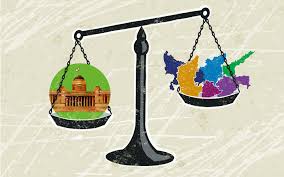
In 1960–61, West Bengal held an impressive 10.5% share of India’s GDP, ranking third in the country. Today, that number has nearly halved to just 5.6% in 2023–24. This isn’t a sudden drop, it has been a consistent, decades-long slide, revealing deep structural issues that have gone unaddressed. Some may argue that West Bengal still ranks sixth in terms of absolute GDP, so where lies the crisis?

The answer becomes clear when one examines per capita income, a truer measure of economic prosperity. Back in 1961, West Bengal had the highest per capita income among all Indian states at ₹442, ahead of even Maharashtra (₹403), Punjab (₹374), and Gujarat (₹372). It stood at 127.5% of the national average. But fast forward to 2023–24, and its relative per capita income has dropped to 83.7% of the national average, falling below even traditionally lagging states like Rajasthan and Odisha, as illustrated in a recent paper by the Economic Advisory Council to the Prime Minister (EAC-PM).

The same paper notes a clear pattern: the western and southern regions of India – particularly Maharashtra, Tamil Nadu, and Gujarat – have outpaced others in economic and industrial growth over the decades. In contrast, West Bengal, despite being mineral-rich and strategically located, has witnessed not just stagnation, but significant de-industrialization.

West Bengal, TMC

To understand this decline, consider – : in 1947, Bengal contributed nearly 25% of India’s manufacturing GDP. Today, it contributes less than 3%. Once among the richest states in terms of per capita income, West Bengal now finds itself categorized among the bottom-most states, as pointed out by the Union Finance Minister in her address on May 15.

Worryingly, the state’s debt-to-GDP ratio stands at 39%, one of the highest in the country. This level of debt is not just unsustainable, it’s alarming. The per capita debt is at an all-time high, raising concerns about a looming debt trap that could further restrict the state’s developmental capacity.

While Maharashtra and Tamil Nadu (once West Bengal’s industrial peers in the 1960s) have continued to modernize and diversify their economies, Bengal has lost its industrial muscle. And this has happened despite its enviable geographic and natural advantages.

Today, West Bengal is no longer just a state facing an economic slowdown; it is a state whose continued stagnation threatens to pull down broader national ambitions. As the EAC-PM paper warned, the state’s long-term underperformance is not just a regional issue but a national concern, especially given Bengal’s pivotal location in India’s Act East policy and trade connectivity to Northeast India and Southeast Asia.

But, the sleeping dragon must awaken. Because this is no longer just about West Bengal’s revival, it’s about India’s growth story, too. Without Bengal rising, India’s aspirations for inclusive development and regional balance risk becoming nothing more than unfulfilled dreams.

Why West Bengal’s Revival Is Crucial for India’s Growth and Strategic Interests
Today, West Bengal stands as India’s fourth most populous state, home to nearly 8% of the country’s population. But its importance extends far beyond its borders.

The state’s geographical and economic position holds the key to unlocking the developmental potential of India’s eastern corridor – including Bihar, Jharkhand, Odisha, and the entire Northeast. In fact, as stated by the Economic Advisory Council to the Prime Minister (EAC-PM) in its report “Relative Economic Performance of Indian States: 1960–61 to 2023–24,” the stagnation of eastern India remains a matter of pressing concern.

The report uses two key parameters – a state’s share in national GDP and its relative per capita income – to show how far West Bengal has slipped from its once-commanding position. But within this sobering data lies a crucial opportunity – if West Bengal rises, it can carry the rest of eastern India with it.

Strategically positioned on the Bay of Bengal, West Bengal could become a vibrant economic and logistical hub—not just for domestic trade, but also for international connectivity. Its ports – Kolkata and Haldia – are natural gateways to the landlocked states of Jharkhand, Bihar, Odisha, and the Northeast, via road, rail, and inland waterways. The state is also the employment and service nucleus for this entire region, with Kolkata acting as the nerve center for jobs, education, and healthcare.

But the reality today is far from ideal. Poor port efficiency and sluggish infrastructure have already started affecting trade flows – Odisha’s steel exports, Assam’s tea trade, and even essential freight movement are impacted when West Bengal’s logistical arteries clog. The ripple effects are both economic and geopolitical.

India-Nepal Border Dispute - PMF IAS

At an international level, West Bengal’s relevance becomes even more pronounced. The state shares borders with Bangladesh, Bhutan, and Nepal, making it central to India’s regional diplomacy and trade. Projects like the Chilahati–Haldibari rail link and the Kaladan Multi-Modal Transit Transport Corridor, which connects India to Myanmar and further to Southeast Asia, all run through West Bengal. In the near future, India’s access to Thailand, Laos, Cambodia, Vietnam, and Singapore could be channeled through Bengal. But without robust infrastructure and economic strength in the state, these grand foreign policy ambitions risk stalling.

West Bengal’s ports, especially Kolkata and Haldia, are vital exit and entry points for landlocked countries like Nepal and Bhutan. If Bengal can enhance its inland connectivity and modernize its logistics, it would not only deepen India’s trade links with South Asia and ASEAN, but also accelerate the development of the Northeastern states, often seen as isolated from India’s growth story.

The security and migration dimension must also be considered. A thriving Bengal could reduce cross-border illegal migration and associated tensions, creating a more stable demographic and social environment. Moreover, in the wake of China’s expanding influence in Nepal, Bangladesh, and India’s Northeast, West Bengal’s development is no longer just an economic imperative- it is a geopolitical necessity. A strong and stable Bengal can anchor India’s eastern flank and act as a bulwark against external strategic pressures.

Given this context, the question must be asked: If Bengal is so critical to India’s future, why has it lagged behind for so long?

The answers lie deep in history. From the British era, West Bengal was the economic crown jewel of India. Kolkata was once synonymous with progress—boasting some of the best infrastructure, education systems, banking institutions, and globally recognized industries, especially in textiles and jute.

But 1947 changed everything.

Just like Punjab, West Bengal was torn apart by Partition. The division with East Bengal (now Bangladesh) unleashed waves of communal violence and dislocation. Over 4 million Hindu refugees poured into the state from East Pakistan, straining resources and governance. The demographic pressure was overwhelming, but the economic consequences were equally devastating.

Take the jute industry, once the pride of Bengal. While the processing and export hubs remained in India, over 75% of the jute-growing areas went to East Pakistan. What use were the factories and mills in West Bengal, if the raw material had to be imported across hostile borders? The industry collapsed, taking with it a vast swathe of jobs, infrastructure, and economic confidence.

This loss marked the beginning of a slow economic unraveling – a trajectory from which the state is yet to fully recover.

How Policy, Politics, and Ideology Pulled West Bengal Backward
For West Bengal to reclaim its lost glory and fulfil its geographic and economic potential, what it needs is not just vision but an enormous financial push. However, any discussion on Bengal’s sluggish development must account for the historical policy missteps and political choices that have consistently undercut its progress.

One of the most damaging of these was the “Freight Equalisation Policy” introduced by the Central Government in the 1950s. On paper, this policy aimed to promote balanced regional development by subsidising the transportation of raw materials, particularly coal and steel, across the country. But in practice, it stripped states like West Bengal of their inherent industrial advantage. As a mineral-rich, resource-proximate region, Bengal should have naturally attracted industry. Instead, thanks to freight equalisation, industries now had no cost incentive to be located near raw material sources, and they began drifting toward other parts of India, particularly Maharashtra and Gujarat. This was a foundational blow to Bengal’s industrial ecosystem.

But it wasn’t just policy; the socio-political conditions was equally turbulent. The rise of militant trade unions, especially from the 1960s onward, further drove businesses away. The industrial climate turned hostile, with frequent strikes, shutdowns, and labour unrest. Industries began shutting shop, either scaling down operations or exiting the state entirely. Investors became wary, and new entrants chose more stable destinations. Bengal, once the industrial hub of India, slid into a period of prolonged stagnation.

Naxalbari: How a peasant uprising triggered a pan-India political movement  | Research News - The Indian Express

Amid this economic despair, Naxalism was born. In 1967, the small village of Naxalbari in North Bengal became the epicentre of a violent agrarian movement aimed at overthrowing the existing feudal order. What began as a peasant uprising quickly evolved into a nationwide armed insurgency against the state. While the Naxal movement spread to other states over the decades, its roots in Bengal are a grim reminder of what sustained economic neglect and disenchantment can lead to. Even today, Left-Wing Extremism remains one of India’s most pressing internal security challenges.

Then came another long chapter that sealed Bengal’s fate further- the Left Front rule from 1977 to 2011. While the Left came to power on the promise of social justice and land reforms, their tenure soon devolved into economic mismanagement and ideological rigidity. The government’s anti-capital stance, suspicion of private enterprise, and excessive bureaucracy made West Bengal an investor’s nightmare. The infamous slogan “Industry is not our priority” echoed the sentiment of the era.

The result? A massive industrial flight. Major corporations exited the state. Bengal’s economy became dependent on services and remittances from its diaspora. Job creation stagnated. The youth began migrating in large numbers, and Bengal was left watching other states race ahead.

The political shift in 2011, when Mamata Banerjee’s Trinamool Congress (TMC) came to power, was seen as a ray of hope. The expectation was that the TMC would reverse the anti-development legacy of the Left, rebuild trust with industry, and usher in a new era of economic revival.

But more than a decade later, those hopes remain largely unfulfilled.

While there have been attempts at infrastructure development and some progress in social welfare schemes, West Bengal’s core industrial and economic base remains weak. Investors continue to view the state as a politically volatile and bureaucratically challenging destination. The Singur-Tata Nano debacle under the TMC government is still cited as a case study in how not to handle industrialisation. Land acquisition remains a contentious issue, and major projects have either stalled or fled.

Economists argue that West Bengal today needs aggressive reforms, infrastructure modernisation, and policy stability to even begin closing the gap with more developed states. But without a consistent political will, Bengal remains stuck in a limbo – rich in potential but poor in performance.

The Last Bit, Bengal’s Destiny Is India’s Opportunity
In conclusion, the story of West Bengal is a story of missed opportunities and of how policy, politics, and ideology can together dim a state’s promise. It is also a story of latent power.

West Bengal is strategically located, culturally rich, and intellectually vibrant. It can still be the gateway to Southeast Asia, the engine of growth for the East, and a bulwark against external threats. But only if it is given the chance, and if its leaders are willing to rise above short-term politics and reignite the fire that once made Bengal the pride of India.

India cannot afford a weak Bengal. Will Bengal rise again, or continue to be a sleeping giant shackled by its past and limited by its present?

DRDO’s Successful Mk-II (A) Laser DEW Test Puts India in Exclusive Club

0

By: Suman Sharma

DRDO’s DEW: source Author

India’s Defence Research and Development Organisation (DRDO) has carried out the successful trial of Mk-II(A) Laser-Directed Energy Weapon (DEW) system at National Open Air Range (NOAR), Kurnool, mastering the technology of disabling missiles, drones and smaller projectiles. The success has put India in the exclusive and limited club of nations, which possess the high-power Laser-DEW.

Indigenously designed and developed Mk-II(A) DEW system was demonstrated in its entire spectrum of capability by engaging the fixed wing drones at long range, thwarting a multiple drone attack and destroying enemy surveillance sensors & antennae. The lightning speed of engagement, the precision and the lethality delivered at the target within few seconds made it the most potent Counter Drone System.

DRDO’s Centre for High Energy Systems and Sciences (CHESS), Hyderabad has developed the system along with other DRDO laboratories like LRDE, IRDE, DLRL, academic institutions and Indian industries.

Once detected by a radar or by its inbuilt Electro Optic (EO) system, laser-DEW can engage targets at the speed of light and use an intense beam of powerful light (Laser Beam) to cut through the target, leading to structural failure or more impactful results if the warhead is targeted. This type of cutting-edge weaponry has the potential to revolutionize the battlespace by reducing the reliance on expensive ammunition, while also lowering the risk of collateral damage.

The proliferation of unmanned aerial systems (UAS) and the emergence of drone swarms as asymmetric threats are driving the demand for directed energy weapons with counter-UAS and counter-swarm capabilities. The DEW will soon be replacing traditional kinetic weapons and missile defence systems due to its ease of operation and cost effectiveness. The requirement for cost-effective defence solutions to offset the low-cost drone attacks is driving the adoption of DEWs by military organisations worldwide. Cost of firing it for a few seconds is equivalent to the cost of couple of liters of petrol. Therefore, it has the potential to be a long-term and low-cost alternative to defeat the target.

Suriname’s Crude Awakening, Can This Tiny Nation Fuel South America’s Rise As The World’s Next Oil Powerhouse?

Suriname’s emergence as a significant player in the global oil market is not just a local or regional story, it has the potential to reshape energy geopolitics. With a population of under one million and a GDP of less than $6 billion, Suriname is a small nation on the cusp of a big transformation. Its offshore oil discoveries, concentrated in Block 58 and surrounding areas, are estimated to contain billions of barrels of recoverable crude.

Global energy giants such as TotalEnergies, APA Corporation, and Petronas are placing strategic bets on the region, with exploration and development activities accelerating. This renewed interest is based not only on the promise of oil but on the rare combination of geological potential, political stability, and regional momentum.

As global demand shifts and the energy transition looms, companies are carefully choosing where to invest. Suriname offers a “low-hanging fruit” scenario –  relatively underexplored but promising basins, a government eager to collaborate, and neighboring models like Guyana that prove success is possible – even rapid.

What Makes Suriname’s Oil Different?
Unlike heavy, sour crudes found in parts of the Middle East and Venezuela, Suriname’s offshore reserves tend to be light and sweet crude, highly desirable in global markets due to its lower refining cost and smaller environmental footprint.

This plays into the broader narrative of “greener hydrocarbons” – oil that is cheaper and cleaner to extract and refine, which has a better chance of fitting into the evolving global energy mix that still relies on fossil fuels but demands lower emissions.

Additionally, companies in Suriname are looking to leapfrog older technologies. They are integrating AI-based reservoir modelling, remote subsea systems, and predictive maintenance technologies to minimize operational costs and environmental risks. This early adoption could help Suriname set a new standard for frontier oil regions.

Suriname, South America, oil

A Region Poised for Collective Dominance
South America’s repositioning as an oil powerhouse rests on more than just Suriname. Together with Guyana, Brazil, and potentially Argentina, the continent is forming an energy triangle with the following strategic pillars –

Guyana,  A Warning and a Blueprint
Guyana’s meteoric rise has not gone unnoticed. Since the first major find in 2015, the country has seen exponential growth in oil output. ExxonMobil, along with Hess and CNOOC, now lead a booming sector that could generate over $7 billion in oil revenues annually by 2027.

However, Guyana has also faced criticism for slow revenue distribution, environmental concerns, and overdependence on foreign firms. These are critical lessons for Suriname to heed as it drafts contracts and regulatory frameworks.

Brazil, The Veteran Innovator
Brazil remains the regional giant. Its pre-salt offshore fields, discovered in the 2000s, have put it in the top 10 oil producers globally. Petrobras, the state-controlled energy major, is undergoing a modernization drive, including carbon capture, cleaner refining processes, and digital oilfield platforms.

Yet Brazil, too, faces uncertainty. The dual pressure of global decarbonization goals and political instability (with fluctuating policies between administrations) make its oil narrative more complex.

Argentina, The Shale Underdog
While less prominent, Argentina’s Vaca Muerta shale formation is among the world’s largest. If infrastructure and political hurdles can be overcome, it could serve as a continental counterbalance to offshore giants like Brazil and Guyana.

In 2023 and 2024, the country achieved record shale oil and gas outputs. With plans underway to reach 1 million barrels per day by 2030, Argentina is charting a path to energy self-sufficiency, and potentially to becoming a net exporter.

Economic Hurdles Remain
However, the journey is far from smooth. Chronic economic instability, persistent inflation, and a volatile currency have long deterred foreign investment. Moreover, poor infrastructure, especially bottlenecks in pipeline and export terminals, could hinder Argentina’s full energy potential. Nevertheless, global energy players like Chevron, Shell, and YPF remain invested, believing in the long-term value of the country’s resources.

Suriname, The New Frontier of Deepwater Oil

Since 2020, offshore exploration led by TotalEnergies and APA Corporation has revealed that Suriname’s deepwater blocks could hold more than 6 billion barrels of oil, an extraordinary find for a country of just over 600,000 people. These discoveries have made Suriname the most talked-about new entrant in South America’s oil scene.

Unlike early producers who had to learn from a steep learning curve, Suriname is benefiting from hindsight. Its regulators and operators are taking a measured, technology-forward approach –

-Automated drilling rigs in ultra-deep waters

-3D seismic mapping and AI-based data analysis

-Digital twins to simulate extraction and optimize flow rates

This calculated pace is allowing Suriname to avoid the boom-and-bust mistakes seen in oil-rich countries like Venezuela.

Challenges and Potential
Still, Suriname’s success hinges on more than geology.

The country faces – a lack of domestic infrastructure, including pipelines and refineries, a need to diversify the economy to avoid oil over-dependence, governance and financial transparency issues, which can become Achilles’ heels if not addressed early

But if managed wisely, Suriname could catalyze a new era for the Guiana Basin, joining Guyana to redefine the Caribbean coast as a vital hydrocarbon hub.

Suriname opens oil and gas bid round - The Energy Year

Is the Global Energy Transition at Risk?
The rise of new oil powers in South America arrives amid a global push for decarbonization. Countries like Suriname are entering the oil race just as others are trying to phase out fossil fuels.

Hence, for nations like Suriname, the oil boom presents both an opportunity and a risk –

–Should they invest heavily in oil infrastructure?

–Or use oil revenue as a bridge to build renewable capacity?

Technologies like carbon capture and storage (CCS) and green hydrogen production could help mitigate emissions, but they require massive capital and international collaboration. Without such measures, new oil producers could find themselves out of sync with global climate goals, risking sanctions, falling demand, and reputational costs.

But Is Fossil Fuel Demand Really Declining?
Despite global climate ambitions, the war in Ukraine has revealed a sobering truth – the world still depends heavily on oil and gas.

The conflict has – disrupted energy markets, especially in Europe. Triggered record-high energy prices. Forced even green-leaning nations to reinvest in LNG and coal and illustrated geopolitical vulnerabilities in energy security

This has created a renewed urgency for diversification of supply, and that’s where emerging producers like Suriname come in. The world may be transitioning, but it is doing so unevenly and under the shadow of geopolitics.

What Are the Risks and Obstacles?
For every oil success story, South America has a cautionary tale.

Venezuela’s Decline – The country with the world’s largest proven reserves now produces less than 700,000 barrels per day, down from over 3 million in the early 2000s.

The reasons, sanctions, corruption and mismanagement, and a complete collapse of state-run PDVSA.

Colombia and Ecuador – Colombia faces declining reserves, social unrest, and environmental pushback. Ecuador, with fiscal constraints, is struggling to modernize its energy sector despite recent interest in offshore blocks.

Hence, if Suriname can thread this needle, it may avoid the fates of other oil-rich but misgoverned nations, and usher in a new era of strategic energy leadership in the Western Hemisphere.

What Could Suriname’s Rise Mean for OPEC?

The quiet emergence of Suriname and its neighbor Guyana, as oil producers is no longer a footnote in the global energy story. Instead, it signals a potential shake-up for the world’s most influential oil cartel – OPEC.

For decades, OPEC has steered the global oil market, adjusting production levels to maintain prices and geopolitical leverage. But as Suriname prepares to enter full-scale production, and with Guyana already ramping up exports, a subtle rebalancing of power may be underway. These non-OPEC nations, flush with newfound reserves, aren’t tethered to OPEC’s quotas or political intricacies. They are agile, investor-friendly, and committed to growth, making them attractive suppliers to a world still heavily dependent on oil.

The more countries like Suriname enter the field, the harder it becomes for OPEC to control supply. The cartel may find itself recalibrating production strategies or even extending membership offers to new players to preserve its influence. Angola’s recent exit from OPEC already raised eyebrows, exposing cracks in unity and hinting at growing restlessness among members.

Still, the influx of oil from non-OPEC countries may bring benefits for global consumers. More competition generally means lower prices, improved supply security, and a less monopolistic energy market, offering some relief to developing nations struggling with high energy costs.

But for OPEC, the rise of Suriname signals a deeper issue,  it’s not just about barrels anymore – it’s about relevance.

Total proves more oil in deepwater block 58 offshore Suriname | Offshore

The Last Bit, Will Suriname’s Oil Boom Truly Reach Its People?

Beyond the international buzz and investor excitement, Suriname’s oil era must ultimately serve one core purpose –  uplifting its citizens.

That’s the challenge President Chan Santokhi is attempting to meet head-on. His “royalty for all” initiative is a rare move in the oil world, a commitment to ensuring that every citizen directly benefits from the country’s newfound wealth. By placing $750 into individual savings accounts, earning 7% annual interest, the plan aims to democratize the dividends of petroleum.

Suriname’s projected windfall – estimated at up to $10 billion over the next two decades – is significant for a nation of less than a million people. But raw numbers only matter if translated into tangible progress –  better schools, modern hospitals, job creation, and clean water systems.

To avoid the infamous “resource curse,” Suriname has also established a sovereign wealth fund modeled after Norway’s success. It’s a sign the country is thinking long-term, about resilience, not just revenue.

Still, risks remain. Environmental damage from spills, unequal wealth distribution, and governance challenges could quickly derail progress. Suriname’s journey will be closely watched, not just as a case study for oil economics, but as a test of whether a small nation can truly harness energy wealth to power inclusive, sustainable development.

If it succeeds, Suriname could become more than an oil producer, it could become a model.

Ads Blocker Image Powered by Code Help Pro

Ads Blocker Detected!!!

We have detected that you are using extensions to block ads. Please support us by disabling these ads blocker.

Powered By
Best Wordpress Adblock Detecting Plugin | CHP Adblock