
By: Khushbu Ahlawat, Consulting Editor, GSDN
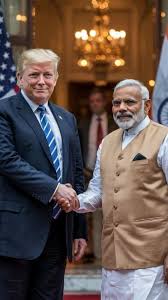
Indian Trade Diplomacy:Source Internet
Introduction
Global trade is no longer merely an economic exchange of goods and services; it has become a strategic instrument of power, influence, and resilience. The post–Cold War optimism surrounding rules-based multilateralism under the World Trade Organization (WTO) has steadily given way to a more fragmented and competitive landscape. Trade agreements are now deeply embedded in national security, technological competition, supply-chain resilience, and geoeconomic rivalry. The rise of protectionism, weaponization of tariffs, industrial subsidies, digital trade restrictions, and sanctions regimes has fundamentally altered the grammar of globalization.
India, once seen as a cautious and defensive trade actor, has recalibrated its approach. Moving beyond its historically protectionist stance, New Delhi is crafting a calibrated but assertive trade strategy aimed at integrating into global value chains, attracting investment, securing technology flows, and positioning itself as a credible alternative manufacturing hub. This transformation reflects structural shifts: the relative decline of multilateralism, intensifying U.S.–China rivalry, supply-chain diversification after the COVID-19 pandemic, and the ongoing fallout from the Russia–Ukraine war.
India’s evolving trade diplomacy thus represents more than economic reform—it signals a strategic repositioning within a multipolar world order. This article examines the transformation of global trade governance, the decline of WTO-centric multilateralism, the rise of bilateral and plurilateral trade agreements, and India’s emerging role as a pivotal node in twenty-first century trade networks.
The Erosion of Multilateral Trade Governance
The creation of the World Trade Organization (WTO) in 1995 marked the institutional consolidation of the global trading system. Built upon the earlier General Agreement on Tariffs and Trade (GATT), the WTO expanded trade disciplines beyond goods to include services (GATS) and intellectual property (TRIPS). For decades, this system provided predictability, binding commitments, and a credible dispute settlement mechanism that constrained arbitrary protectionism. However, structural cracks began to emerge in the early 2000s. The Doha Development Round stalled amid disagreements between developed and developing countries over agricultural subsidies, market access, and special and differential treatment. The paralysis deepened when the WTO’s Appellate Body ceased functioning in 2019 after the United States blocked judicial appointments, effectively crippling the organization’s enforcement capacity.
The resurgence of unilateralism under the Donald Trump administration marked a decisive rupture. Tariff wars—particularly with China—invoked national security exceptions under Article XXI of GATT, stretching the boundaries of trade law. The U.S.–China trade conflict not only disrupted global value chains but normalized the use of tariffs as geopolitical leverage. Simultaneously, mega-regional trade agreements bypassed WTO mechanisms, signaling a shift toward selective integration. The COVID-19 pandemic intensified these fractures. Export bans on personal protective equipment, competition over vaccine supplies, and semiconductor shortages revealed the fragility of hyper-optimized supply chains. Even advanced economies adopted inward-looking measures, challenging the liberal premise of open markets. The subsequent disruptions triggered debates over “strategic autonomy” in the European Union and “economic security” doctrines in the United States and Japan.
Scholars diverge sharply in interpreting this transformation. Dani Rodrik argues that hyper-globalization constrained domestic policy space, making backlash inevitable, while Robert Keohane views the erosion of institutional trust as a symptom of shifting power balances rather than institutional design flaws. Others, like Henry Farrell and Abraham Newman, highlight the emergence of “weaponized interdependence,” where states exploit central nodes in financial and technological networks for coercive leverage. In this evolving landscape, trade governance is fragmenting into competing blocs and issue-based coalitions, raising a pressing strategic question: how can middle powers like India navigate—and potentially shape—this transition without being subsumed by great-power rivalry?
The Rise of Mega-Regionals and Strategic Trade Blocs
As WTO-led liberalization stagnated, countries turned toward preferential trade agreements (PTAs), free trade agreements (FTAs), and comprehensive economic partnerships. These arrangements now govern a substantial share of global commerce and increasingly set rules that extend beyond tariffs into digital trade, state-owned enterprises, labor protections, and environmental governance.
One of the most consequential developments has been the formation of the Regional Comprehensive Economic Partnership (RCEP), comprising ASEAN states plus China, Japan, South Korea, Australia, and New Zealand. Covering nearly 30 percent of global GDP, RCEP reflects Asia’s consolidation into a production-centric trade architecture centered on supply-chain integration. India’s 2019 withdrawal underscored domestic anxieties over trade imbalances and concerns about import surges, particularly from China. Parallelly, the Comprehensive and Progressive Agreement for Trans-Pacific Partnership established high-standard rules on e-commerce, intellectual property, labor, and environmental standards. Its emphasis on regulatory convergence demonstrates that modern trade agreements increasingly function as governance frameworks rather than mere tariff-cutting exercises. The United Kingdom’s accession further underscores the pact’s expanding geopolitical footprint.
In Europe, the European Union integrates sustainability clauses and the Carbon Border Adjustment Mechanism into trade policy, linking market access with climate compliance. Meanwhile, the African Continental Free Trade Area seeks to boost intra-African trade and reduce commodity dependence, signaling the Global South’s search for collective resilience. Latin America’s MERCOSUR negotiations with the EU and Asia reflect similar recalibrations. Collectively, these mega-regionals illustrate what scholars term “competitive liberalization”—a race to shape rule-making domains before rivals do. Trade blocs are thus no longer peripheral arrangements; they are strategic platforms embedding geopolitical alignment, technological standards, and regulatory influence. States unable to embed themselves within these evolving architectures risk structural marginalization in the emerging geoeconomic order.
India’s Strategic Trade Recalibration
For decades, India’s trade strategy was characterized by cautious liberalization, calibrated tariff protection, and defensive multilateral positioning within the World Trade Organization. Concerns over agricultural vulnerability, infant industry protection, and persistent trade deficits shaped a relatively guarded posture. However, post-2020, India has undertaken a decisive shift toward targeted bilateralism, supply-chain integration, and geoeconomic positioning.
The India–UAE Comprehensive Economic Partnership Agreement (CEPA) signed in 2022 with the United Arab Emirates has now doubled bilateral trade, emerging as a catalyst for Indian non-oil exports and strategic investment flows into fintech, infrastructure, and green energy sectors. Building on this momentum, India has deepened engagement with Gulf Cooperation Council (GCC) countries, formally launching negotiations for a comprehensive FTA with the GCC bloc in late 2025, reflecting India’s aim to institutionalize partnerships with oil-producing states and Gulf markets worth ~$178 billion in bilateral trade.
A major breakthrough in 2026 has been the signing of a long-pending free trade agreement with the European Union, described as the “mother of all deals,” which will phase in tariff liberalization across goods and services between India and a bloc encompassing nearly one-third of global trade and 25% of world GDP. This deal represents a strategic convergence of mutual interests—not only in market access but also investment, regulatory cooperation, and digital trade standards. Simultaneously, bilateral “interim” trade frameworks with the United States were formalized in early 2026, cutting tariffs to an average 18% across key sectors and signaling substantive progress toward a comprehensive Bilateral Trade Agreement (BTA). High-level discussions between India’s Commerce Minister and U.S. economic representatives in February 2026 further underscore both sides’ desire to deepen cooperation and reduce trade frictions. On the Commonwealth front, India concluded a landmark Free Trade Agreement with the United Kingdom in 2025, reducing tariffs on almost all goods and services and creating a platform for future cooperation in sectors such as clean energy, education, and digital services. Complementing these deals, India has initiated FTA negotiations with Israel (first round held in February 2026) and is advancing talks with Latin American partners like Chile and Mexico, signaling an intentional widening of its trade network beyond traditional partners. The results of this calibrated diplomatic push are already visible. Commerce Minister Piyush Goyal recently stated that India has concluded nine free trade agreements covering 38 nations, granting preferential access to nearly two-thirds of global markets—an unprecedented expansion of New Delhi’s trade footprint.
From a scholarly perspective, this strategic recalibration aligns with the concept of “selective multilateralism”, where middle powers engage selectively with multiple partners to maximize strategic autonomy while embedding themselves in diversified economic networks. Analysts like C. Raja Mohan argue that this approach reflects India’s transition from a reluctant globalizer to a proactive architect of trade rules, balancing market access with regulatory safeguards. Others highlight that India’s strategy blends industrial policy (e.g., Production-Linked Incentives) with diplomacy—a model reminiscent of East Asian economies’ staged engagement with globalization, but calibrated to India’s development priorities. Unlike earlier eras defined by reactive protectionism, India today seeks to shape trade architectures across regions and sectors—balancing openness with resilience in a geopolitically charged economic landscape.
Trade, Technology, and Geoeconomics
Trade in the twenty-first century extends far beyond the exchange of goods. It encompasses cross-border data flows, digital infrastructure, intellectual property regimes, rare earths, semiconductors, and critical minerals essential for green technologies. The intensifying contest for technological primacy—particularly between the United States and China—has normalized export controls, outbound investment screening, technology denial regimes, and sanctions as standard tools of economic statecraft. Washington’s restrictions on advanced semiconductor exports to China and Beijing’s countermeasures on gallium and germanium exports underscore how supply chains have become strategic battlegrounds.
The Russia–Ukraine war further demonstrated the weaponization of interdependence. Western sanctions targeting Russia’s central bank reserves, SWIFT access, and energy exports reconfigured global oil flows, accelerated ruble-based transactions, and deepened conversations around de-dollarization. Scholars such as Nicholas Mulder argue that sanctions have become embedded instruments of modern economic warfare, while others warn that overuse may fragment the global financial architecture itself.
Digital trade represents an equally transformative frontier. Negotiations increasingly incorporate provisions on cross-border data transfers, algorithmic transparency, cybersecurity, and artificial intelligence governance. Frameworks like the Indo-Pacific Economic Framework (IPEF) emphasize supply-chain resilience and digital standards without traditional tariff concessions, signaling a shift toward rule-setting coalitions. Meanwhile, the European Union has advanced regulatory assertiveness through the Digital Services Act and Digital Markets Act, shaping global tech compliance norms through what Anu Bradford terms the “Brussels Effect. Climate-linked trade measures further complicate the landscape. The EU’s Carbon Border Adjustment Mechanism (CBAM), implemented in its transitional phase in 2023, imposes reporting obligations on carbon-intensive imports, potentially affecting Indian steel, cement, and aluminum exports. Simultaneously, the United States’ Inflation Reduction Act ties green subsidies to domestic content requirements, raising concerns about subsidy races and trade distortions.
Trade today is inseparable from national security doctrines, climate commitments, and technological ecosystems. As Susan Strange’s concept of structural power suggests, control over standards, finance, and production networks defines influence. In this geoeconomic era, economic agreements no longer merely reduce tariffs; they architect technological alliances, climate obligations, and strategic dependencies that will shape the balance of power for decades.
Conclusion
The global trading system is undergoing profound transformation. Multilateralism under the World Trade Organization faces stagnation; mega-regionals and bilateral FTAs are proliferating; geoeconomic rivalry is intensifying; and resilience has replaced efficiency as the guiding principle of globalization. The breakdown of the WTO Appellate Body, supply-chain shocks during COVID-19, and the strategic aftershocks of the Russia–Ukraine war have collectively accelerated this shift toward a more securitized trade order.
In this fragmented environment, India’s evolving trade diplomacy signals strategic maturity. Agreements with the United Arab Emirates and Australia, renewed negotiations with the European Union and the United Kingdom, and engagement in frameworks such as the Indo-Pacific Economic Framework reflect an outward-looking recalibration. India’s Production-Linked Incentive (PLI) schemes, semiconductor mission, and green hydrogen initiatives further align domestic industrial policy with global supply-chain realignments. Scholars like C. Raja Mohan view this as India’s transition from “reluctant globalizer” to “strategic trade actor,” while others caution that execution, not intent, will define outcomes.
Yet challenges persist: infrastructure deficits, regulatory unpredictability, export competitiveness gaps, and compliance with evolving environmental and digital standards. The European Union’s Carbon Border Adjustment Mechanism and emerging AI governance norms demand technological adaptation. Meanwhile, debates on data localization and digital sovereignty require India to balance openness with autonomy—echoing Dani Rodrik’s warning about the tension between globalization and domestic policy space.
Trade policy today is inseparable from grand strategy. As power diffuses and alliances become fluid, India’s ability to leverage trade for technological access, energy security, and diplomatic influence will shape its global standing. The future of globalization may not be universally multilateral—but it will reward states capable of blending economic reform with geopolitical foresight. India’s task, therefore, is not merely integration but rule-shaping. In an era where economics and geopolitics converge, trade has become statecraft—and India stands at a pivotal moment to exercise it with confidence and strategic clarity.

About the Author
Khushbu Ahlawat is a research analyst with a strong academic background in International Relations and Political Science. She has undertaken research projects at Jawaharlal Nehru University, contributing to analytical work on international and regional security issues. Alongside her research experience, she has professional exposure to Human Resources, with involvement in talent acquisition and organizational operations. She holds a Master’s degree in International Relations from Christ University, Bangalore, and a Bachelor’s degree in Political Science from the University of Delhi.



