
By : Sourishree Ghosh, Research Analyst, GSDN
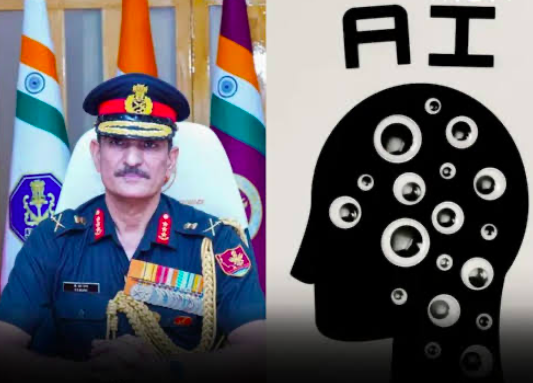
AI based warfare refers to the integration of artificial intelligence technologies for the purpose of the automation of military operations, processing vast intelligence data, and acceleration of tactical decision-making on the battlefield. In 2026, the application of AI warfare includes the algorithmic targeting and kill webs, autonomous weapon system and drones, minotaur warfare and cognitive warfare.
War of the future is won by the generals, but AI drone warfare, as said by Lt. General Raj Shukla at NDTV Defense Summit, is a ‘once in three centuries’ moment. AI based warfare is of national security importance. The Ukraine war as well as the Operation Sindoor bear testimony to the fact that AI has become an important component of warfare. The Niti Aayog has emphasized on the role of AI in national development. India has no formal AI military doctrine yet.
What is the Status of India’s AI Incorporation in the Indian Weapon System?
Firstly, India has the ETAI Framework in place where all the AI based deployments are to be within the human command. India has deployed the tactical intelligence along the LAC namely the indigenous AI based system, such as the AGNI-D in the strategic sectors like the Eastern Ladakh and Arunachal Pradesh. These are the live surveillance feeds for the identification of the adversarial tanks, missiles, and troops which are an essential asset to get warning about any Chinese military buildup with an accuracy rate of 94%. In the Andhra Pradesh sector along the LAC, the Indian Army has deployed an AI predictive tool for the continuous analysis of the movement of the Chinese build up.
The specificities of the China challenge are due to the mountainous rugged terrain. The Line of Actual Control (LAC) is a freezing high-altitude zone. To tackle this, the Chinese have deployed the autonomous sentry hardware including Norinco’s Fusky humanoid robots which are trained for all-weather mountain reconnaissance and border patrolling systems. This is the trap wherein India has not succeeded much.
It would be safe to say that China has adopted an aggressive posture in the domain with rapid usage of AI integration in its weapon systems, which is quite challenging for India. China’s model of military-civil fusion has been integrated in its state policy since 2015 and today it manufactures almost 70% of the commercial drones. China has mastered the art of production of drones at low cost, wherein the cost of production of a Chinese military drone is $2000 vs the standard $200,000. The Xiaomi ecosystem is an integral asset. China’s civilian tech is basically the military reserve. So, there is a structural and functional difference in both countries’ systems. India, on the other hand, is a combination of mostly defensive structures.
Secondly, Project Sanjay and Project Trinetra have been implemented in the sensitive border regions for integrating the multi-sensor feeds for automation of tactical battlefield surveillance. The system is autonomous in the sense of ‘sensor-to-shooter’ kill webs which filters out the noise and scans the feed and removes the noises (like moving animals and wind-blown trees) only highlights an enemy soldier or vehicle and automatically feeds the exact GPS coordinates to the nearest artillery guns. These are aimed at neutralizing China’s advanced Intelligence, Surveillance and Reconnaissance capabilities.
Thirdly, India has such capabilities such as the Kamikaze Drones and missile guidance systems and AI Computer Vision which allows the weapons for the visual targeting component. If the enemy jams all the GPS and radio signals, the weapon’s AI chip identifies the target matching it with the pre-trained visual memory and targeting the weapon autonomously. India uses the Edge AI weapon systems as an anti-spoofing measure, as seen in case of the Operation Sindoor. This off network helps in the hitting of the targets without AI deployment in case the system is hacked.
Fourthly, in order to counter China’s state-sponsored groups like Mustang Panda and GTG-1002 and other cyber espionage capabilities of China, India’s core military AI models such as Sarvam AI’s Chanakya and DRDO’s homegrown cyber warfare LLM and sovereign infrastructure such as the NeevCloud’s defense framework and RDP Technologies’ Make in India Hardware OEM. Cognitive warfare is another important operational element which is aimed at dismantling real-time disinformation campaigns. This kind of warfare has the potential for brain control which can spoof intelligence networks and break down the strategic morale of the opposing commanders.
Fifthly, India combats the Chinese hardware level Trojan Horses which operates with the Indian Army’s cyber testing labs which is specifically tasked with the scanning of the military hardware, especially unmanned aerial vehicles (UAVs). These labs hunt down the hidden backdoors and the malicious firmware updates which could allow the Chinese actors to hijack the sensor mid-flight. India also deploys the visual odometry and pre-trained geographic maps for overseeing the terrain and navigating the electronic spoofing. India does not rely on the GPS system for the same. India has developed the specialized Defence AI Agency (DAIA) and the Baaz Battalions, which are dedicated to tactical AI and drone operations. The DRDO has been building an indigenous cyber-defense engine which is trained on the decades of the historical hacking data and known malware for shielding India’s cyber infrastructure against the zero-day vulnerabilities. To verify the commands, systems such as the Tatva Edge propose that every military algorithm be signed and verified for preventing ‘data poisoning’ which might potentially target friendly assets. India is actively engaged in the development of the indigenous models as this would secure India’s security from any third-party information leaks. This has also made India’s defence hyper-economical in nature.
Sixthly, the Chinese military drone emphasizes on the ‘intelligentized warfare’ for complete autonomation, and on the other hand, India’s doctrine is focused more on the use of AI in the ISR (Intelligence, Surveillance and Reconnaissance) and defensive cybersecurity. The intelligentized warfare of China has been effectively omitting the need for human components at all, making it risky. India has also integrated the AI systems for analyzing the pattern of the enemy movements using the historical data on the points of attack. This has optimized the artillery deployments and tightened the command loop. In 2023, the Indian Military involved themselves in the successful testing of the autonomous drone swarms which could be successful in coordination of the attacks against the enemy air bases without continuous manual instructions. This is the offensive component of India’s warfare. In the Indian Ocean Region, the Indian Navy has deployed the INS Valsura for tracking of the movements of the Chinese submarine deployments in the strategic region.
Lastly, India’s military drone market is being driven by a massive $2 billion procurement push for building an indigenous arsenal development mainly in the field of the armed unmanned systems and advanced counter-drone weaponry. The ecosystem has been supported by the Make in India and Production Linked Incentive (PLI) scheme. Industry clusters in Hyderabad and Bengaluru are leading in the manufacturing of the avionics and autonomous systems.
India has also been investing in the defence corridors such as the recent Tamil Nadu Defence Corridor. India AI mission is aimed at scaling its compute sovereign capacity past 58,000 GPUs for securing the military data. India’s emphasis has been on the technological sovereign element of AI. India’s iDEX (Innovations for Defence Excellence) and ADITI Scheme aims to provide financial support to the local startups and MSMEs for developing the next generation AI weaponry.
Challenges
Firstly, India needs to understand the risks associated with the humans out of the loop lethal autonomous weapons systems. China has integrated the advanced autonomous cooperation which allowed the single soldier to command a swarm of 200 soldiers for reconnaissance and strike missions. India needs to integrate both the autonomous and the human element in the system. Currently, the Indian Army, Navy and Air Force operate separate IT networks and there is a lack of seamlessness in their joint functioning. The structure and institutional mechanism are fragmented in nature.
The Chinese PLA force recently exercised the theatre scale AI command structure networks which can coordinate over 100 tactical units simultaneously. The Chinese are also employing the advanced AI models for optimization of the decision-making process in the drone swarms by training them in group dynamics like hawks and wolves for better adaptation in the battlefield. In this case, China has a “humans-out-of-the-loop’ advantage in the speed of the mobilization in the battlefield.
Secondly, India faces a huge gap between innovation and absorption in the manufacturing ecosystem. India’s heavy reliance on the importing of these systems namely the US AI-piloted drones or French AI Targeting systems, black boxes. The main risk is that the repair of the same cannot be done indigenously, so, if wartime emergency demands the scale production of these, it would not be possible. Secondly, there might be a possible supply chain risk during the crisis. India is trying to derisk and reduce its dependence on the Chinese parts for the manufacture of these autonomous military vehicles. The 2020 Galwan crisis shows the importance of real-time intelligence. India also needs to protect its nuclear weapons from cyber-attacks.
Thirdly, the drone makers heavily relied upon the import of the various components of the drones, namely the import motors, chips, carbon fibre. There is a tendency of assemblage and not incubation. India is facing a massive computational infrastructure deficit which can potentially slow down the speed of the AI deployment.
Fourthly, there are issues in the procurement of the same. iDEX has been funding around 400 startups however it has an order value of less than 2% of the defence budget. India should update the procurement policy to encourage the acquisition of the indigenous manufacturing.
WAY FORWARD
Firstly, India should update its defence procurement lists. India’s long-term vision should be the mass manufacturing of the drones at low cost, and specialized civilian drones that can serve militarily as well. For the specific challenge of the rugged terrain, India needs to develop low-cost edge AI hardware for the extreme altitude. Secondly, India must also invest in the building of the defence corridors with regional variation models. For example, India needs to combine the potential capabilities of the Bengaluru (civilian tech) and the Coimbatore (defence manufacturing). India needs to secure its supply chains under the Semiconductor Mission and India’s AI mission so that most of the microchips are designed, packaged and verified within the domestic limits securely.
Thirdly, For the AI to become fully automated in its nature, India needs to merge its Army, Navy and Air Force networks into a unified Joint All-Domain Command and Control system. The lack of data integration has led to significant gaps in the system. The Indian Army, Navy and Air Force need to have unified data especially regarding the nature of the China border. It needs to develop a tri-service cloud for filling in the data integration gap. India’s data infrastructure in cognitive warfare is in the developing stage.
Fourthly, India needs to strategically leverage its vast highly skilled engineering talent pool in the manufacturing sector of drones and invest in their upskilling of the same. India needs to connect the academics and military in this way. India’s AI workforce exceeds the 4 lakh professionals, so we need to tap onto this strategic resource.
But India does not need to match China’s AI capabilities, and it should focus on the asymmetric capabilities such as the ruggedized mountain terrain drone webs and localized tri-service communications for countering the China threat. India should not try to match the expenditure level and more focus on disproportionate efficiency.
Fourthly, in international space, there should be overall discussion and treaties with regard to the ethical and legal boundaries of AI usage in this warfare. There is currently no treaty in place for the use of AI in warfare. The use of AI creates a black box of lack of accountability. It is quite unclear if the responsibility lies with the programmer, the military commander, the manufacturer, or the State. Therefore, the human element cannot be completely pushed out of the loop. Few examples of misuse include the algorithmic bias and failure to distinguish between a soldier and a civilian and ‘flash wars’ due to wrong interpretation. The international community must push for a consensus on the CCW (UN Convention on Certain Conventional Weapons) Framework which bans killer robots. In this way, India needs to define its defence strategy which comprises both the elements of the hardcore military weapons and diplomatic initiatives in the International Humanitarian Law.



