
By : Soumya Dutta, Research Analyst, GSDN
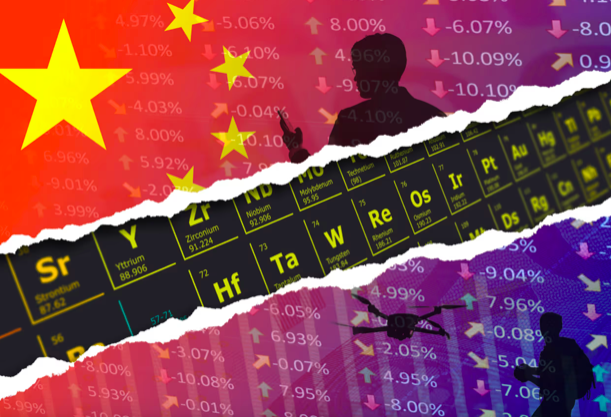
Indonesia, the country with the world’s largest nickel reserve at approximately 60% had decided to halt its export in 2020. Jakarta wanted to control its domestic production, attract investment, and add itself to the value chain of the global EV and clean energy market. For a while this worked, with its economy making a fivefold jump between 2013 and 2022, but this push towards resource nationalism came at the expense of foreign investments controlling its downstream production process, a large part of which is now dominated by China. Therefore, while Indonesia successfully turned its nickel resources into riches, a large part of its operational output is still generated with reliance over foreign capital and technology, which is in contrast with how China has managed its control over rare earth materials. Beijing has not just found its control of critical minerals economically viable, but its approach includes supply-chain management, which mean China not only extracts, it processes and refines and it is this end-to-end management with a tight grip on its exports that has generated considerable anxiousness in the world.
An overview of the industry now operating in China shows the underlying process, beginning from the extraction of rare earth elements (REE) which is concentrated in two large belts: the region of Baotou in Inner Mongolia and the other in Ganzhou located at the Jiangxi Province and is largely operated through a government duopoly which are the China Northern Rare Earth Group working in the Bayan Obo mining district of the Baotou region as well as China Rare Earth Group (or more commonly China Southern) in a couple of regions down south, including Jiangxi, Hunan, Guangdong, with both of these companies being a descendant of the ‘Big Six’, a major conglomerate in China that dominated this critical sector. According to the International Energy Agency (IEA), its 2024 report showed that China accounts for nearly 60 per cent of the total REE production and the refinement accounting for 91 per cent of the total output. Banking on this advanced production process Beijing’s approach has allowed it to actually connect and strengthen its domestic supply chain visible from its 94 percent share of permanent magnets and fueling the broader ecosystem by supplying EVs such as the BYD automobile group, wind turbines manufacturers such as Goldwind and drone companies such as DJI who are reliant on the REE and subsequently absorb them rather than procuring it and connecting to foreign competitors. This gives Beijing the ability to set down the agenda and leverage its position in a way best explained by Deng Xioaping remarks in 1992, “The Middle East has oil. China has rare earths.” allowing it to further dabble in chokepoint politics of intentional delays and interruptions that reverberate throughout the supply lines.
A recent occurrence has been the halt in REE exports to US, which comes ahead of Xi Jinping’s high stakes visit to Washington in the end of September, which will also shape the trajectory of the Busan agreement that both the countries had reached in October 2025 over relaxing export restrictions. By using its edge China has repeatedly banned the extraction and separation of these critical elements, while simultaneously restricting its intellectual know-how making it difficult to close the capability gap between Beijing and other nations. There is a total of 17 elements found in China and according to two successive notifications released the catalogue now includes 12 elements which are now restricted including both medium and heavy elements such as scandium, yttrium, samarium and terbium. The ‘Busan truce’, then seen as a move towards easing policy relations, therefore had quite a troubled longevity. Succeeding the ‘Busan truce’, a future ‘Washington truce’ may pave the way with exchanges between Trump-Xi at the end of this month, providing relief not only to the US but to those who are equally reliant on these critical elements. But despite diplomatic signaling and rapprochement China remains by far the largest possessor and manufacturer with an entire industrial ecosystem built around it, and with the ability to cut off the flow anytime an uneasiness has continued to remain with REE as a strain in relations for those dependent on it.
Why does China dominate?
At the juncture, an inquisition of why China continues to dominate despite the countries’ growing apprehensions about it, is rooted in the contradiction of globalization. This approach has created an ecosystem that is interconnected and interdependent, therefore breaking away and creating a value chain outside the current dominant structure will result in significant incurring of cost and a political vision that must compete against time itself. Experts argue that the process will take a decade if not more, to reproduce what China has achieved incrementally since the 1990s and to do this, the process will need two major grounds: absorbing the environmental costs that the Ministry of Industry and Information Technology in China had highlighted in 2011 to be estimated at ¥38 billion (or $5.6 billion) and sharpening the midstream and downstream capacity which means building both infrastructure and human capital skilled in this sector.
So for countries who has embedded themselves in the phenomenon of globalization must ask how far they are willing to go to reduce this dependence that has built up over the years through the 3Ds of de-risking (stockpiling the essential REE and to ensure that the countries are able to absorb the shock); diversification (how well are the US, EU, India, Australia, Japan willing to cooperate to have a ‘China +1’ strategy at a time when they are equally worried about a single country dominating the chain) and decoupling (creating a supply chain within the boundaries of its own geography, which will be difficult to execute as market rationality and national security pull each other from the opposite sides).
The Way Forward
Moving forward, rather than relying on a single approach, countries are applying a mix of strategies that is de-risking, diversifying and building indigenous capabilities, although not outright decoupling. The primary focus has therefore been self- development through stockpiling efforts as reflected in strategies from the US ‘National Defense Stockpile: Actions Needed to Improve DOD’s Efforts to Prepare for Emergencies’ as well as the EU ‘Critical Raw Materials Act’, which is not only limited to stockpiling but actively sets down a path of shifting reliance on domestic productions and recycling REE, to India who too has been at the receiving end of China’s unpredictable restriction policies and now through the ‘National Critical Mineral Mission’ of 2025 aims to arm itself through greater exploration of its reserves with Dedicated Rare Earth Corridors and bolstering its production capabilities especially in the midstream where a more dedicated concern is required. The other significant step has been diversifying partnerships, a clear example being the Quad Critical Minerals Initiative, which is aiming to meet the objectives of reducing the single country reliance while simultaneously overcoming institutional lag, part of which is related to each of its members trying to reach the goal on their own while trying to embed themselves at the top of a ‘new’ value chain as possible.
As these overlapping policies try to secure the supply chain of REE, real success will remain in trying to sustain them against the race of time. As the EU ‘Critical Raw Materials Act’ note part of its goal, that by 2030 no more than 65 per cent of REE should be sourced from a third country, which means that only through long term resilience can this become commercially and strategically viable, if one keeps in mind the embedded dependence that prompted the efforts in the first place.



