
By : by Bhavika Bhartiya, Research Analyst, GSDN
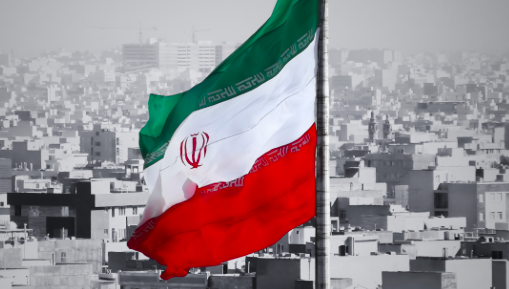
A nation that has been discussed repeatedly during negotiations in the Middle East is Iran. They have created a vast infrastructure of Allied Militias across the region including Lebanon, Iraq, Yemen, Syria, and Gaza. Collectively, these groups are referred to as the “Axis of Resistance” by various media organizations. At first glance, it may appear as though Iran has a very dominant position within the Middle East; however, recent developments indicate that Iran’s grip on the area is not complete nor as strong as it once seemed. This paper focuses on understanding how Iran established its influence within the Middle East so that we can analysewhether Iran truly has control over the region today.
How Did Iran Build its Influence?
Following the 1979 Islamic Revolution, Iran has been trying to increase its influence throughout the Middle East and develop its power by exporting its ideology to as many other Muslim nations as possible to reduce the amount of influence the United States and Israel have in the region. To do this, the Iranian regime has created and supported armed proxy groups throughout the region that can advance Iranian interests and fight on Iran’s behalf without engaging in conventional warfare. The largest proxy organization supported by Iran is Hezbollah, a Lebanese organization formed in 1982, which has grown into an extremely powerful military organization with an estimated 150,000 rockets/missiles and thousands of trained fighters.
The Iranian regime has been able to establish relationships with Shia militia groups in Iraq post-2003, when the US-led invasion removed Saddam Hussein and created a power vacuum that Iran quickly filled. Many of these groups have been formed and managed by the Islamic Revolutionary Guard Corps (IRGC), a branch of the Iranian military that manages and funds proxy groups globally. Iran reportedly spends $1-2 billion annually supporting these groups.
Iran’s Reach: From Lebanon to Yemen
Iran has a considerable amount of influence in Yemen-through the Houthi movement (Ansar Allah) who seized control of Yemen’s capital (Sanaa) and started a civil war there in 2014. Iran began to supply the Houthis with weaponry and military training, and because of Iranian assistance and training over time the Houthis demonstrated their growing capabilities by launching missiles and drones at Saudi Arabia and subsequentlyachieving long-range accuracy against Israeli targets.
After Hamas attacked Israel on October 7, 2023, Houthis began to attack vessels in the Red Sea (a vital global shipping lane) disrupting international trade and forcing ships to reroute around Africa with the potential to cripple the global economy. Additionally, after January 2024, the US and UK conducted a series of air strikes against the Houthis, which included an air campaign (Operation Rough Rider) that comprised approximately 1,100 strike missions conducted in 2025. However, despite these operations the Houthis continued their conflict demonstrating how heavily Iran has invested in developing this militant group over many years.
Recent Setbacks for Iran
The years between late 2023 and 2025, were a significant period of decline for Iran, and thus Iran’s strength in the region suffered greatly from this period. Bashar al-Assad, the president of Syria at the time, was ousted from power in December 2024, which would be the biggest blow to Iran to date. Syria was considered one of Iran’s most important allies and was the main route for Iran to send arms and fighters to Hezbollah in Lebanon. Once Assad was no longer in power, the new Syrian government would not allow Iranian citizens to enter Syria and would not permit shipments of Iranian weapons to be sent into Syria. A leader of the Syrian opposition said that the fall of Assad would delay Iran’s regional plans by over 40 years.
In addition to losing its major ally and dispensing with the ability to send arms and fighters to its main ally in the region, Hezbollah, Iran also suffered a significant loss in Hezbollah’s conflict with Israel in 2024. In September 2024, Israel killed Hassan Nasrallah, Hezbollah’s leader for many years, which was a huge loss for the organization. By April 2025, Hezbollah would have given up 190 of its 265 military positions in southern Lebanon to the Lebanese Armed Forces, which was a significant retreat for an organization that had been viewed as one of the most powerful non-state armed forces in the world.
Iran Itself Came Under Attack
One of the most shocking things was the fact that attacks on Iran were really something that one wouldn’t be able to guess. In July 2024, for example, Israel assassinated Hamas leader Ismail Haniyeh in Tehran. This was humiliating to Iran. Showed clearly that even the capital of Iran was not safe from being attacked. In June 2025, Israel attacked Iranian nuclear and ballistic missile facilities with air strikes that were fired from outside of Iran. After this, in April and October of 2024, Iran launched large scale missile and drone attacks against Israel; however, the majority of these were intercepted and did not do nearly as much damage to Israel as had been anticipated. This demonstrated that although Iran has considerable military strength, it also has many weaknesses.
So, Is the Middle East in Iran’s Grip?
There are a lot of things to consider when it comes to Iran’s influence in the Middle East, so it may not be easy to answer whether Iran has total control of the region. From one perspective, Iran has accomplished something extraordinary: despite being a heavily financially sanctioned country, it was able to build and maintain influence outside of its own borders across numerous countries with very low investments in proxy organizations. No other country has accomplished over time anything like the construction and maintenance of an entire country’s influence spread across five countries/territories. Iran has continued to have active allies in Yemen, Iraq, Lebanon, and it has attempted to rebuild its influence in areas where it has had difficulty or lost its ability to continue its support for its proxy organizations.
From the other side, recent events during 2024 and 2025, demonstrate that Iranian control over the Middle East is not absolute. Syria was lost as a supporting ally and supply route, Hezbollah was weakened, Hamas was devastated in Gaza as an indirect result of an Israeli attack on Iranian territory, and in July 2025, Iranian military support in the form of a large shipment of approximately 750 tons of deadly weapons to Houthi forces was intercepted demonstrating the pressure there are on Iran’s logistical supply chains as well.
Conclusion
The last several decades, Iran has undoubtedly demonstrated its importance as a major actor in the Middle East. By using a strategy of supporting allied militias, Iran has been able to project its power into regions far outside its borders. Many recent events have revealed the limitations of this influence. Iran’s network is being challenged on multiple fronts simultaneously, and the setbacks of 2024 and 2025 have been profoundly significant; whereas the Middle East cannot yet be said to be completely under Iran’s control, Iran has ensured that no matter what happens next in the region, it will remain an essential and unavoidable player.
Author



