
By: Khushbu Ahlawat, Consulting Editor, GSDN
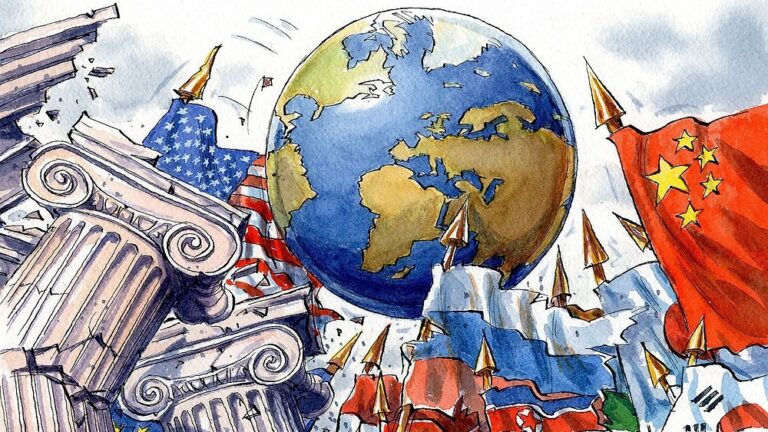
India in a Fragmented Global Order
The contemporary global economic landscape is increasingly shaped by geopolitical tensions, supply chain disruptions, and energy market volatility. Against this backdrop, India finds itself navigating a complex intersection of external shocks and domestic priorities. The ongoing conflicts and strategic rivalries across regions have not only disrupted global trade flows but have also heightened uncertainty in financial and commodity markets. For an emerging economy like India, which remains closely integrated with global systems, these developments carry significant implications. Yet, despite these pressures, India continues to demonstrate a degree of economic resilience, supported by strong domestic demand and calibrated policy responses.
Energy Shocks, Inflation, and External Pressures
One of the most pressing challenges highlighted is the volatility in global crude oil prices. The data indicates sharp fluctuations in Brent crude, particularly during periods of geopolitical escalation, followed by only partial stabilisation. For India, which imports nearly 85% of its crude oil requirements, this translates into a rising import bill and persistent pressure on the current account deficit. The cascading impact of higher energy prices is visible across sectors, contributing to elevated transportation costs, increased production expenses, and ultimately higher consumer prices.
Inflation dynamics further reflect this stress. While headline inflation has moderated from earlier peaks, it remains sensitive to food and fuel price shocks. Food inflation has been particularly volatile due to supply-side constraints and climate-related disruptions. This combination of imported inflation and domestic supply issues has limited the flexibility of monetary policy, necessitating a cautious approach to interest rate adjustments. As a result, macroeconomic management continues to balance growth imperatives with the need to maintain price stability.
A closer examination of recent macroeconomic data further reinforces the complexity of India’s economic positioning in a turbulent global environment. India’s GDP growth has remained in the range of 6.5–7.5% in recent fiscal estimates, significantly higher than the global average of around 3%, reflecting strong domestic demand and investment momentum. However, this growth coexists with notable external vulnerabilities. The current account deficit (CAD) has fluctuated between 1.5% to 2.5% of GDP, largely driven by elevated crude oil imports, which alone account for nearly a quarter of total imports. The article’s visual data on fiscal trends also indicates that while the fiscal deficit has been reduced from pandemic highs of above 9% to around 5.8–6%, public capital expenditure has increased by over 30% in recent budgets, signalling a strategic push toward infrastructure-led growth. On the inflation front, Consumer Price Index (CPI) inflation has averaged around 5–6%, with food inflation occasionally crossing 8–9%, underlining persistent supply-side challenges. Additionally, foreign exchange reserves, though stable at approximately $600–650 billion, have seen intermittent declines during periods of global capital outflows, reflecting sensitivity to global financial conditions. Trade data also reveals that while services exports have crossed $300 billion, providing a cushion, the merchandise trade deficit remains above $200 billion annually, indicating structural imbalances. Furthermore, global crude prices, as depicted in the article, have hovered between $75–95 per barrel, with spikes during geopolitical escalations, directly influencing India’s import bill and inflation trajectory. These data points collectively illustrate that India’s economic resilience is underpinned by strong domestic fundamentals, but remains intricately linked to global economic shifts, making policy agility and structural reforms indispensable.
Fiscal Strategy, Growth Momentum, and Structural Resilience
Amid these external challenges, India’s fiscal trajectory reveals a deliberate effort to balance consolidation with growth. The fiscal deficit, which had widened during the pandemic, is gradually being brought under control, reflecting a commitment to macroeconomic stability. At the same time, government capital expenditure remains robust, indicating a strategic emphasis on infrastructure development and long-term growth creation. This sustained public investment has played a critical role in supporting economic activity and crowding in private investment.
Growth indicators remain relatively strong compared to global peers, driven largely by domestic consumption and investment. The resilience of the services sector, particularly in information technology and business services, continues to provide a steady stream of foreign exchange earnings. However, the external sector presents a mixed picture. While services exports perform well, merchandise exports face headwinds from weakening global demand. The trade deficit remains elevated, largely due to high imports of energy and essential commodities, although foreign exchange reserves offer a cushion against short-term external shocks.
Beyond immediate macroeconomic indicators, structural strengths are increasingly shaping India’s economic outlook. The expansion of the digital economy, policy-driven efforts to boost manufacturing, and diversification of trade partnerships are gradually reducing dependence on external vulnerabilities. These initiatives reflect a broader strategic shift towards enhancing self-reliance while remaining globally competitive.
Beyond macroeconomic indicators, expert assessments provide deeper insight into India’s evolving economic resilience amid global uncertainty. According to the International Monetary Fund, India is expected to remain one of the fastest-growing major economies, driven by robust domestic consumption and sustained public investment, but it also cautions that “geoeconomic fragmentation” could disrupt trade efficiency and capital flows. Similarly, the World Bank highlights that while India’s medium-term growth outlook remains strong, external risks such as commodity price shocks and tightening global financial conditions could weigh on investment and exports. Data from recent estimates suggest that India’s investment rate has improved to around 33–34% of GDP, reflecting a gradual revival in private sector confidence, yet remains below the peak levels seen in the mid-2000s. At the same time, unemployment rates have hovered between 7–8%, indicating that job creation has not fully kept pace with economic expansion, a concern often flagged by economists. Experts also point to the importance of supply chain diversification, with analysts noting that India’s share in global manufacturing exports is still below 2%, compared to significantly higher shares held by East Asian economies. Furthermore, global financial experts have warned that higher-for-longer interest rates in advanced economies could trigger capital outflows from emerging markets, including India, thereby exerting pressure on the rupee and external balances. The Reserve Bank’s cautious stance reflects this reality, as maintaining currency stability and controlling inflation remain key priorities. Overall, expert opinion converges on a critical point: while India’s growth story is intact, sustaining it will require deeper structural reforms, enhanced export competitiveness, and resilience-building measures to navigate an increasingly fragmented global economy.
Recent global and domestic developments further underscore the dynamic nature of India’s economic landscape within an increasingly uncertain world order. The ongoing geopolitical disruptions, particularly the prolonged impact of the Russia-Ukraine War and tensions in the Middle East affecting key shipping routes like the Red Sea, have significantly altered global trade logistics and energy flows. According to recent assessments by the Reserve Bank of India, such disruptions have increased freight costs by nearly 15–20% in certain corridors, thereby raising import costs and adding to inflationary pressures. Simultaneously, India’s manufacturing Purchasing Managers’ Index (PMI) has remained above 55 in recent months, indicating expansion, supported by strong domestic demand and government incentives such as Production-Linked Incentive (PLI) schemes. However, experts caution that global demand uncertainty continues to weigh on export-oriented sectors. The Organisation for Economic Co-operation and Development has also noted that while India benefits from supply chain diversification trends, it must address structural bottlenecks such as logistics costs, which remain around 13–14% of GDP, higher than global benchmarks. Additionally, recent financial market movements show that foreign portfolio investment (FPI) flows have been volatile, with intermittent outflows during periods of global risk aversion, reflecting sensitivity to interest rate cycles in advanced economies. Climate-related events have also emerged as a growing economic risk, with erratic monsoons affecting agricultural output and food inflation. Experts increasingly emphasize that India’s resilience will depend on integrating climate adaptation strategies with economic planning. Furthermore, India’s push towards renewable energy, targeting 500 GW of non-fossil fuel capacity by 2030, is seen as a long-term strategy to reduce dependence on imported energy and mitigate external vulnerabilities. Collectively, these recent developments highlight that while India continues to exhibit strong growth fundamentals, its economic trajectory remains closely intertwined with global geopolitical, financial, and environmental shifts, necessitating agile and forward-looking policy responses.
A broader examination of sector-specific trends and recent global developments further enriches the understanding of India’s economic resilience. For instance, the global semiconductor shortage over the past few years has prompted India to accelerate its domestic manufacturing ambitions, with investments exceeding $10 billion announced under semiconductor incentive schemes. Experts from the NITI Aayog argue that such strategic interventions are crucial for reducing import dependency and enhancing technological sovereignty. At the same time, India’s digital economy continues to expand rapidly, with digital transactions crossing ₹15,000 crore per month through UPI platforms, reflecting both financial inclusion and technological adoption. Meanwhile, disruptions in global food supply chains—exacerbated by climate events and export restrictions by countries such as rice-exporting nations—have reinforced the importance of India’s calibrated trade policies, including selective export controls to ensure domestic food security. According to the Food and Agriculture Organization, global food price indices have shown periodic spikes, directly influencing domestic inflation patterns in developing economies. Additionally, India’s energy diversification efforts provide another compelling example. The country has significantly increased its crude oil imports from non-traditional suppliers, including discounted purchases from Russia following the Russia-Ukraine War, which helped moderate import costs despite global price volatility. On the financial front, the Indian equity markets have remained relatively buoyant, with benchmark indices showing resilience even amid global downturns, supported by strong domestic institutional investment. However, experts caution that household financial savings have declined to around 5–6% of GDP, raising concerns about long-term capital formation. Furthermore, the services sector, particularly IT and Global Capability Centers (GCCs), continues to attract multinational corporations, positioning India as a global hub for back-end operations and innovation. These diverse examples collectively highlight that India’s economic resilience is not confined to macroeconomic stability alone but is deeply rooted in sectoral adaptability, policy innovation, and strategic positioning in response to evolving global challenges.
Turning Global Disruptions into Strategic Opportunity
In addition to immediate policy priorities, India’s long-term economic resilience will increasingly depend on how effectively it aligns growth with structural transformation in a rapidly changing global order. A critical dimension of this transformation lies in enhancing productivity across sectors, particularly in manufacturing and agriculture, where efficiency gaps continue to persist. Experts have consistently emphasized that while India’s growth trajectory remains strong, sustaining high growth over the next decade will require pushing the manufacturing share of GDP beyond the current ~16–17% toward the targeted 25%, alongside generating large-scale employment opportunities. At the same time, strengthening human capital through investments in education, skilling, and healthcare will be essential to fully leverage the country’s demographic advantage. According to assessments by the International Labour Organization, improving labour force participation—particularly among women—could significantly boost India’s economic output and consumption base.
Equally important is the need to deepen financial sector resilience and expand access to credit for small and medium enterprises, which form the backbone of employment generation. While India’s banking sector has shown improved asset quality in recent years, global financial uncertainties and tightening liquidity conditions necessitate continued vigilance. Climate change also emerges as a defining challenge for the future, with increasing frequency of extreme weather events posing risks to agriculture, infrastructure, and overall economic stability. Integrating climate resilience into development planning—through investments in sustainable infrastructure, renewable energy, and disaster preparedness—will therefore be crucial.
Furthermore, India’s ability to navigate global economic fragmentation will depend on its trade strategy and diplomatic engagement. Strengthening bilateral and multilateral trade agreements, while positioning itself as a reliable partner in global supply chains, can enhance export competitiveness and attract foreign investment. As global firms seek to diversify away from concentrated production hubs, India has a unique opportunity to emerge as a preferred destination, provided it continues to improve ease of doing business, logistics efficiency, and regulatory predictability. Ultimately, India’s economic future will be shaped not only by its response to current global disruptions but by its capacity to anticipate and adapt to emerging challenges. By combining prudent macroeconomic management with forward-looking structural reforms, India can transform present uncertainties into a foundation for sustained, inclusive, and resilient growth in the decades ahead.

About the Author
Khushbu Ahlawat is a research analyst with a strong academic background in International Relations and Political Science. She has undertaken research projects at Jawaharlal Nehru University, contributing to analytical work on international and regional security issues. Alongside her research experience, she has professional exposure to Human Resources, with involvement in talent acquisition and organizational operations. She holds a Master’s degree in International Relations from Christ University, Bangalore, and a Bachelor’s degree in Political Science from the University of Delhi.



