
By:Sonalika Singh, Consulting Editor, GSDN
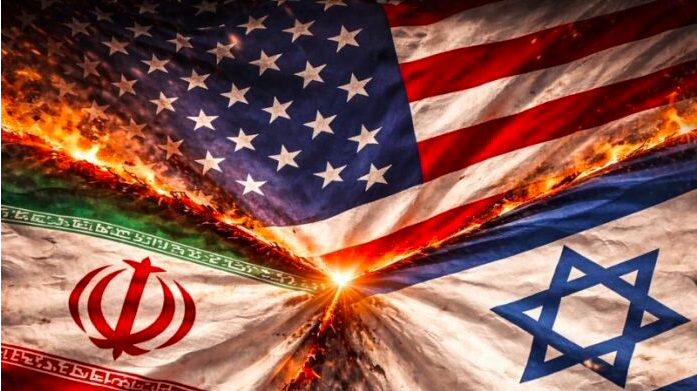
Iran’s asymmetric warfare strategy in its confrontation with the United States and Israel represents a sophisticated, deeply embedded doctrine that reflects both structural necessity and strategic innovation. Confronted with adversaries that possess overwhelming superiority in conventional military capabilities ranging from advanced air power and missile defense systems to global logistical reach Iran has deliberately chosen a different path to contest power. Rather than attempting to match its opponents symmetrically, which would almost certainly lead to rapid military defeat, Tehran has developed a multidimensional approach designed to offset its weaknesses, exploit adversary vulnerabilities, and prolong conflict in ways that reshape the very definition of victory. In this framework, success is not measured by territorial conquest or decisive battlefield dominance but by survival, resilience, and the ability to impose sustained political, economic, and psychological costs on stronger opponents. This strategic recalibration is rooted in historical experience, particularly lessons drawn from the Iran-Iraq War, the 2003 invasion of Iraq, and the broader pattern of U.S. military engagements in the Middle East, where technologically superior forces often struggled to achieve durable political outcomes. Iran’s leadership has internalized these precedents and translated them into a doctrine that emphasizes endurance over escalation, dispersion over concentration, and indirect confrontation over direct engagement.
At the core of Iran’s asymmetric warfare is the principle of cost imposition. Tehran recognizes that while it cannot outspend or outgun the United States and Israel, it can force them into a position where the financial, political, and strategic costs of sustained engagement become increasingly burdensome. This is evident in its use of relatively low-cost technologies such as drones and short- to medium-range ballistic missiles, which, when deployed in large numbers or coordinated waves, can overwhelm even advanced defense systems like Patriot and THAAD. The economic asymmetry is striking intercepting a single inexpensive drone may requirethe expenditure of a missile costing several million dollars. Over time, this imbalance creates a form of strategic attrition, draining the resources of the defending side while allowing Iran to maintain pressure with comparatively modest investments. This approach is not intended to deliver a decisive blow but to create a persistent state of insecurity that forces adversaries to remain on high alert, thereby increasing operational fatigue and financial strain. In this sense, Iran’s military actions are inseparable from a broader economic strategy aimed at destabilizing markets, particularly in the energy sector, where even limited disruptions can have global repercussions.
A central pillar of this strategy is the deliberate targeting of economic chokepoints, most notably the Strait of Hormuz, through which a significant portion of the world’s oil and gas supply transits. By threatening or temporarily disrupting this vital maritime corridor, Iran effectively internationalizes the conflict, ensuring that its consequences are felt far beyond the immediate battlefield. The resulting volatility in global energy prices not only pressures Western economies but also places strain on U.S. allies in Europe and Asia, many of whom depend heavily on Gulf energy supplies. This tactic transforms a regional conflict into a global economic concern, thereby increasing diplomatic pressure on Washington to seek de-escalation. In addition to maritime disruption, Iran has demonstrated a willingness to target critical infrastructure such as oil facilities, desalination plants, and financial institutions, further amplifying the economic impact of its actions. These operations blur the line between military and civilian domains, operating within what analysts often describe as the “grey zone” of conflict, where attribution is complex, and responses are constrained by legal and ethical considerations.
Equally important is Iran’s extensive network of regional proxies, which serves as both a force multiplier and a mechanism for strategic deniability. Groups operating in Lebanon, Iraq, Syria, Gaza, and Yemen provide Tehran with the ability to project power across multiple fronts without deploying its own conventional forces in large numbers. This decentralized model complicates the strategic calculus of the United States and Israel, as it creates a web of interconnected conflicts that are difficult to contain. Attacks can be launched from multiple directions, stretching defensive systems, and forcing adversaries to allocate resources across a wide geographical area. At the same time, the use of proxies allows Iran to calibrate its level of involvement, escalating or de-escalating indirectly while maintaining plausible deniability. This flexibility is a key advantage in asymmetric warfare, where ambiguity itself becomes a strategic tool. However, reliance on proxies also introduces challenges, including issues of coordination, control, and the risk of unintended escalation, particularly when these groups pursue their own local agendas.
Another critical dimension of Iran’s approach is its emphasis on survivability through decentralization and hardening of military assets. Anticipating the likelihood of decapitation strikes and intensive aerial bombardment, Iran has invested heavily in underground facilities, dispersed command structures, and redundant communication networks. This “mosaic defense” system ensures that even if key leadership figures or installations are destroyed, the overall system remains functional. The ability to absorb initial shocks and continue operations is essential to Iran’s strategy, as it denies adversaries the quick victory that their superior firepower might otherwise deliver. In this context, resilience becomes a form of resistance, and the continuation of operations itself sends a powerful political message. The survival of command-and-control systems, even under sustained attack, reinforces the perception that Iran cannot be easily subdued, thereby strengthening its deterrent posture.
Iran’s asymmetric warfare also extends into the cyber domain, where it has developed capabilities to target financial institutions, critical infrastructure, and information systems. Cyber operations offer a relatively low-costmeans of inflicting disruption while maintaining a high degree of deniability. Attacks on banking networks, for instance, can undermine confidence in financial systems, trigger capital flights, and create ripple effects across global markets. When combined with physical attacks on energy infrastructure and shipping lanes, these cyber operations contribute to a comprehensive strategy of economic coercion. The objective is not merely to damage specific targets but to create an environment of uncertainty that complicates decision-making for policymakers and investors alike. In this sense, Iran’s asymmetric warfare operates across multiple domainsmilitary, economic, cyber, and psychological each reinforcing the others in a coordinated manner.
The psychological dimension of this strategy is particularly significant. By demonstrating an ability to continue fighting in the face of overwhelming force, Iran seeks to influence the domestic political landscapes of its adversaries. In democratic societies, prolonged conflicts with rising costs and unclear outcomes can erode public support and generate political pressure for withdrawal or negotiation. This dynamic was evident in past conflicts such as Vietnam and Iraq, where superior military power did not translate into decisive political victory. Iran’s leadership appears to be relying on a similar erosion of will, expecting that the longer the conflict persists, the more likely it is that divisions will emerge within the United States and Israel regarding the continuation of military operations. Statements from opposition politicians, debates over war expenditures, and concerns about economic impacts all serve to reinforce this aspect of Iran’s strategy. In effect, the battlefield extends beyond physical territory into the realm of public opinion and political discourse.
However, while Iran’s asymmetric approach has demonstrated a degree of effectiveness, it is not without limitations and risks. The very tactics that enable it to challenge stronger adversaries also expose it to significant vulnerabilities. Precision strikes by the United States and Israel have successfully targeted key military and leadership assets, indicating that Iran’s defensive measures are not impenetrable. Economic sanctions continue to constrain its ability to sustain prolonged conflict, limiting access to resources and technology. Furthermore, the reliance on proxies can lead to fragmentation and loss of control, as different groups may pursue divergent objectives. This can increase the risk of escalation beyond Tehran’s intent, potentially drawing it into a broader conflict that it seeks to avoid. Additionally, the targeting of civilian infrastructure and global economic systems may alienate potential allies and international opinion, undermining Iran’s diplomatic standing.
Despite these challenges, Iran’s asymmetric warfare has succeeded in reshaping the strategic landscape of the conflict. It has prevented a rapid and decisive victory by the United States and Israel, transformed the war into a protracted and costly engagement, and expanded its impact beyond the immediate theater of operations. By leveraging a combination of military innovation, economic pressure, and political strategy, Tehran has demonstrated that even a conventionally weaker state can exert significant influence in a confrontation with more powerful adversaries. The outcome of such conflicts is inherently uncertain, as it depends not only on military capabilities but also on factors such as political will, economic resilience, and international dynamics. In this context, Iran’s strategy can be seen as a calculated gamble one that seeks to turn its weaknesses into strengths and to redefine the terms of engagement in a way that favors endurance over force.
Ultimately, the question of whether Iran’s asymmetric warfare constitutes a “strong response” depends on how success is defined. If the standard is the ability to survive, impose costs, and avoid defeat, then the strategy has achieved notable results. If, however, success is measured in terms of achieving clear political or territorial gains, the picture is more ambiguous. What is clear, however, is that Iran has fundamentally altered the nature of the conflict, challenging conventional assumptions about power and warfare in the modern era. Its approach underscores a broader transformation in global security dynamics, where non-traditional methods and hybrid strategies play an increasingly central role. As the conflict continues to evolve, the interplay between asymmetric tactics and conventional military power will remain a defining feature, shaping not only the immediate outcome but also the future of warfare in the region and beyond.

About the Author
Sonalika Singh began her journey as an UPSC aspirant and has since transitioned into a full-time professional working with various organizations, including NCERT, in the governance and policy sector. She holds a master’s degree in political science and, over the years, has developed a strong interest in international relations, security studies, and geopolitics. Alongside this, she has cultivated a deep passion for research, analysis, and writing. Her work reflects a sustained commitment to rigorous inquiry and making meaningful contributions to the field of public affairs.



