
By: Khushbu Ahlawat, Consulting Editor, GSDN
Introduction
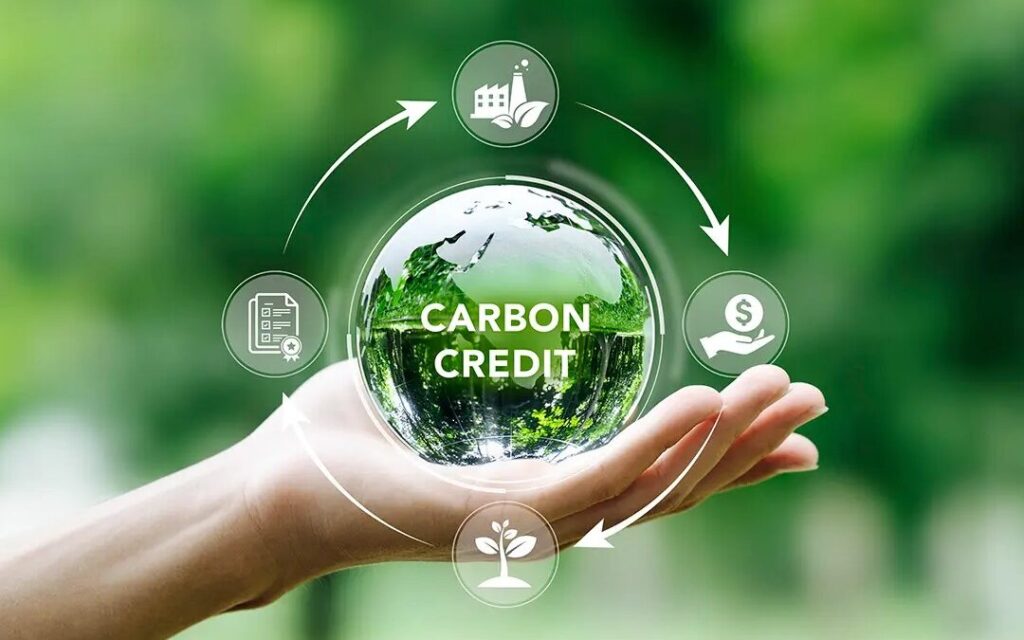
Carbon credits have emerged as a central instrument in global efforts to combat climate change, offering a market-based mechanism to reduce greenhouse gas emissions. A carbon credit typically represents one metric ton of carbon dioxide (CO₂) either reduced or removed from the atmosphere. These credits can be traded in compliance markets—regulated by governments—or in voluntary markets, where corporations purchase them to offset their emissions and meet sustainability goals. As the urgency of climate change intensifies, carbon credits have gained prominence as a flexible and economically efficient tool that allows emission reductions to occur where they are most cost-effective.
Recent developments highlight the growing importance and complexity of carbon markets. The operationalization of Article 6 under the Paris Agreement marks a significant shift toward structured global carbon trading. For instance, in 2026, the United Nations approved the first batch of internationally transferable carbon credits under this mechanism, signaling the transition from fragmented voluntary systems to a more standardized global framework. At the same time, countries such as India have begun formalizing domestic carbon markets, with policy discussions around a national carbon trading scheme gaining momentum. Scholars such as Nicholas Stern emphasize that while carbon markets are essential, they must operate alongside strong regulatory policies and technological innovation to deliver meaningful climate outcomes.
Historical Evolution of Carbon Credits: From Kyoto to Paris
The concept of carbon credits originated in the late 20th century as part of international climate negotiations. The 1997 Kyoto Protocol marked the first major attempt to institutionalize carbon trading through mechanisms such as the Clean Development Mechanism (CDM) and Joint Implementation (JI). These frameworks allowed developed countries to invest in emission-reduction projects in developing nations, thereby achieving cost-effective mitigation while promoting sustainable development. Countries like India and China became major hosts for CDM projects, particularly in renewable energy and industrial efficiency.
However, early carbon markets faced substantial challenges. Issues such as over-allocation of credits, weak monitoring systems, and questionable additionality undermined their effectiveness. Over time, reforms led to more robust systems such as the European Union Emissions Trading System (EU ETS), which introduced stricter caps and improved verification mechanisms. In recent years, the EU ETS has undergone further tightening, with carbon prices crossing record highs before experiencing volatility due to the 2025–2026 energy crisis. This highlights the dynamic nature of carbon markets, where policy, economics, and geopolitics intersect. The transition to the Paris Agreement represents a paradigmatic shift, emphasizing nationally determined contributions (NDCs) and cooperative approaches under Article 6, further strengthening global coordination.
Carbon Markets in Transition: Regulation, Corporate Demand, and Geopolitical Shifts
The contemporary carbon credit landscape is undergoing a profound transformation, driven by regulatory innovation, corporate participation, and geopolitical dynamics. Governments across the world are expanding emissions trading systems and introducing new regulatory tools. For example, the European Union is advancing its Carbon Border Adjustment Mechanism (CBAM), aimed at taxing carbon-intensive imports to prevent carbon leakage. Similarly, countries in Asia, including India and Indonesia, are exploring domestic carbon trading frameworks to align with global climate commitments.
Corporate demand for carbon credits has also surged significantly. Major global companies, particularly in the technology sector, are increasingly relying on carbon offsets to meet their net-zero targets. Firms such as Microsoft and Google have invested heavily in carbon removal projects, including afforestation and direct air capture technologies. This reflects a broader trend where private sector participation is shaping the scale and direction of carbon markets. However, it also raises concerns about the credibility of offsets, especially when companies rely on them instead of reducing emissions at source.
Geopolitical factors further complicate this landscape. The global energy crisis and ongoing geopolitical tensions have influenced carbon pricing and regulatory decisions. For instance, fluctuations in energy markets have led the EU to reconsider certain carbon pricing measures to protect industries from rising costs. Additionally, developing countries are increasingly leveraging carbon markets as a source of climate finance. Nations such as Kenya have recently established carbon registries to attract investment and ensure transparency, highlighting the growing importance of carbon markets in global development strategies.
Challenges and Critiques of Carbon Credit Systems
Despite their growing prominence, carbon credit systems face significant structural and ethical challenges. One of the most critical concerns is environmental integrity. Questions about additionality, permanence, and leakage continue to undermine confidence in carbon offset projects. For example, recent investigations into forest-based carbon offset projects in regions like the Amazon have revealed discrepancies between claimed and actual emission reductions, raising doubts about their effectiveness.
Another major critique centers on the political economy of carbon markets. Critics argue that carbon credits can perpetuate inequalities by allowing developed countries and large corporations to offset their emissions instead of reducing them. Scholars such as Naomi Klein argue that this approach risks commodifying nature while failing to address the root causes of climate change. Additionally, countries in the Global South often receive a disproportionate share of carbon offset projects, raising concerns about land use, local community rights, and equitable distribution of benefits.
Furthermore, the reliance on carbon credits may slow down the transition to cleaner technologies. If companies find it cheaper to purchase credits rather than invest in renewable energy or innovation, it could delay structural transformation. This concern is particularly relevant in industries such as aviation and heavy manufacturing, where carbon credits are often used as a primary compliance tool. Addressing these challenges requires stronger regulatory oversight, improved verification systems, and a clear distinction between offsetting and actual emission reductions.
The Future of Carbon Credits: Innovation, Governance, and Climate Justice
Looking ahead, the future of carbon credits will be shaped by technological innovation, evolving governance structures, and increasing demands for climate justice. Emerging technologies such as blockchain are being explored to improve transparency and traceability in carbon markets. Additionally, advancements in carbon capture and storage (CCS) and nature-based solutions are expanding the scope of carbon credit generation, creating new opportunities for emission reductions.
At the governance level, international cooperation will be crucial. The implementation of Article 6 under the Paris Agreement is expected to standardize global carbon trading, but challenges remain in ensuring fairness and preventing double counting. Countries such as India are actively working on frameworks to integrate domestic markets with global systems, positioning themselves as key players in the evolving carbon economy. Similarly, African nations are increasingly engaging in carbon markets to attract climate finance and support sustainable development.
Equity and justice will play a defining role in shaping the future of carbon markets. Developing countries, which are often most vulnerable to climate change, must have access to fair and transparent carbon finance mechanisms. Carbon credits can contribute to this goal, but only if they are designed to prioritize local communities and sustainable outcomes. This requires a shift from purely market-driven approaches to more inclusive and accountable frameworks.
Carbon Credits and the Political Economy of Climate Governance
An increasingly important dimension of carbon credits lies in their intersection with the broader political economy of global climate governance. Carbon markets do not operate in a vacuum; they are deeply embedded within power structures, economic inequalities, and institutional frameworks that shape their outcomes. Developed economies, which historically contributed the most to global emissions, often possess the financial and technological capacity to dominate carbon markets. This asymmetry allows them to outsource emission reductions to developing countries through offset projects, raising critical questions about fairness and accountability. Scholars such as Thomas Piketty have highlighted how global economic inequalities influence climate policy outcomes, suggesting that market-based mechanisms can sometimes reinforce existing disparities rather than resolve them.
At the same time, carbon credits have become a tool of climate diplomacy, influencing negotiations and cooperation between states. Under frameworks like the Paris Agreement, developing countries are increasingly positioning themselves as key suppliers of carbon credits, leveraging their natural resources—such as forests and biodiversity—to attract climate finance. For instance, countries in Africa and Southeast Asia are actively promoting forest conservation and renewable energy projects as part of carbon trading schemes. While this creates opportunities for sustainable development, it also raises concerns about “carbon colonialism,” where land and resources in the Global South are utilized primarily to offset emissions in the Global North. This dynamic underscores the need for governance mechanisms that ensure local communities benefit equitably from carbon market projects.
Another critical aspect of the political economy of carbon credits is the role of international financial institutions and private capital. Investment funds, multinational corporations, and development banks are increasingly shaping the direction of carbon markets by financing large-scale projects. Companies such as BlackRock and other institutional investors are incorporating carbon credits into their sustainability portfolios, reflecting the financialization of climate governance. While this influx of capital can accelerate climate action, it also introduces risks related to speculation, market volatility, and profit-driven decision-making. If left unchecked, these dynamics could undermine the environmental objectives of carbon markets, turning them into instruments of financial gain rather than genuine emission reduction.
Furthermore, the political economy perspective highlights the importance of state capacity and institutional strength in determining the effectiveness of carbon markets. Countries with robust governance frameworks, transparent regulatory systems, and strong monitoring capabilities are better positioned to implement credible carbon trading mechanisms. In contrast, weaker institutional environments may struggle with issues such as corruption, lack of enforcement, and inadequate verification systems, which can compromise the integrity of carbon credits. This creates uneven outcomes across regions, reinforcing the need for international support and capacity-building initiatives.
Finally, the evolving political economy of carbon credits reflects a broader tension between market-based solutions and regulatory approaches to climate change. While carbon markets offer flexibility and efficiency, they cannot replace the need for direct regulatory interventions, such as emission standards, renewable energy mandates, and public investment in green infrastructure. As Joseph Stiglitz argues, effective climate policy requires a combination of market mechanisms and strong state intervention to address market failures and ensure equitable outcomes. In this context, carbon credits should be viewed as one component of a multifaceted climate strategy rather than a standalone solution.
Conclusion
Carbon credits occupy a complex and evolving position in global climate governance. As a market-based instrument, they offer significant potential to reduce emissions efficiently and mobilize financial resources. Their evolution from the Kyoto Protocol to the Paris Agreement reflects the growing importance of market mechanisms in addressing global environmental challenges. However, their effectiveness ultimately depends on the integrity of the systems that govern them. Without robust standards, transparent monitoring, and strong regulatory oversight, carbon markets risk losing credibility and failing to deliver meaningful climate outcomes. Moving forward, policymakers must ensure that carbon credits complement rather than substitute direct emission reductions. In an era defined by climate urgency, carbon credits should be viewed not as a standalone solution but as part of a broader climate strategy. By integrating market mechanisms with technological innovation, policy reforms, and international cooperation, the global community can harness the potential of carbon credits while addressing their limitations, paving the way for a more sustainable and equitable future.
Looking ahead, the success of carbon credit systems will also depend on their ability to adapt to evolving climate realities and rising expectations from both governments and civil society. Strengthening global governance frameworks, particularly under mechanisms such as Article 6 of the Paris Agreement, will be crucial to ensure consistency, avoid double counting, and enhance trust among participating countries. At the same time, greater emphasis must be placed on high-quality credits that deliver verifiable, long-term environmental benefits rather than short-term or symbolic reductions. The integration of local communities into carbon projects, along with fair benefit-sharing mechanisms, will further determine the legitimacy and sustainability of these markets. Ultimately, carbon credits must evolve beyond a transactional tool into a transformative instrument that supports systemic decarbonization, fosters innovation, and aligns economic incentives with the broader goal of achieving climate resilience and global environmental justice.

About the Author
Khushbu Ahlawat is a research analyst with a strong academic background in International Relations and Political Science. She has undertaken research projects at Jawaharlal Nehru University, contributing to analytical work on international and regional security issues. Alongside her research experience, she has professional exposure to Human Resources, with involvement in talent acquisition and organizational operations. She holds a Master’s degree in International Relations from Christ University, Bangalore, and a Bachelor’s degree in Political Science from the University of Delhi.



