
By : Sonalika Singh, Consulting Editor, GSDN
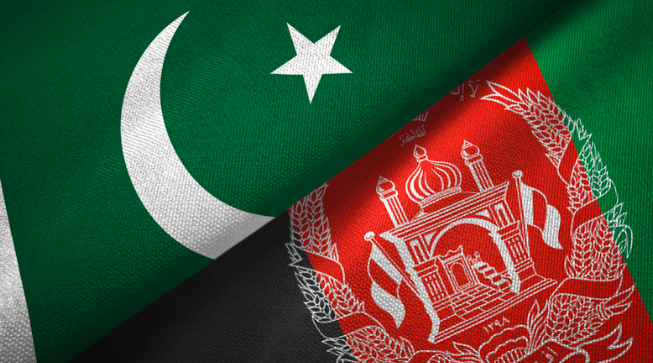
The recent escalation of hostilities between Pakistan and Afghanistan marks one of the most dangerous phases in their troubled relationship since the Taliban returned to power in Kabul in 2021. What began as periodic cross-border skirmishes along the disputed frontier has rapidly intensified into direct military confrontation involving airstrikes, drone attacks, and large-scale ground engagements. Pakistan has openly described the situation as an “open war,” while the Afghan Taliban government has vowed retaliation against what it calls unprovoked aggression. Although both sides claim significant battlefield successes, the real significance of the current crisis lies not in the casualty figures but in the strategic shift from indirect proxy competition to overt state-to-state confrontation. The central question facing regional observers and policymakers is whether this escalation could evolve into a full-scale war between the two neighbors or whether structural constraints will ultimately push both sides toward de-escalation.
The immediate trigger for the latest confrontation was a series of attacks along the Pakistan–Afghanistan border in late February 2026. Taliban forces launched operations against Pakistani military posts across multiple frontier districts, including Nangarhar, Khost, and Paktika. Islamabad quickly retaliated with extensive airstrikes targeting what it described as militant installations and Taliban military infrastructure. In a dramatic escalation, Pakistani aircraft struck locations in major Afghan cities such as Kabul and Kandahar targets that had rarely been attacked directly in previous episodes of violence. Afghanistan responded with drone strikes and cross-border artillery attacks against Pakistani positions in Khyber Pakhtunkhwa, marking an unprecedented level of military engagement between the two states. Each side has accused the other of initiating the conflict, and casualty figures released by both governments differ significantly, making independent verification difficult. Nonetheless, the scale of military activity suggests that the confrontation has moved beyond routine border skirmishes into a broader strategic contest.
At the heart of the conflict lies Pakistan’s longstanding accusation that Afghanistan’s Taliban government provides sanctuary to Tehreek-e-Taliban Pakistan (TTP), a militant group responsible for numerous attacks inside Pakistan. Islamabad regards the TTP as one of its most dangerous security threats and has repeatedly demanded that Kabul dismantle the organization’s bases on Afghan soil. Since the Taliban’s return to power in 2021, TTP attacks inside Pakistan have increased dramatically, targeting military installations, police facilities, and civilian infrastructure. Pakistani officials argue that these attacks would be impossible without safe havens across the border. The Afghan Taliban leadership, however, denies these allegations and insists that Afghanistan will not allow its territory to be used against any country. Yet analysts note that the ideological and historical ties between the Afghan Taliban and the TTP complicate Kabul’s willingness or ability to take decisive action against the group. Many TTP fighters fought alongside Taliban forces during the insurgency against NATO and Afghan government forces, creating a network of personal and ideological connections that persists today.
The relationship between the Afghan Taliban and the TTP reflects a deeper paradox in Pakistan’s regional strategy. For decades, Islamabad cultivated militant groups as instruments of influence in Afghanistan, seeking to secure what it called “strategic depth” against India. During the 1990s civil war, Pakistan strongly supported the Taliban movement as it emerged from religious seminaries in southern Afghanistan. After the U.S. invasion in 2001, Pakistani intelligence agencies were widely accused of providing covert assistance and sanctuary to Taliban fighters while officially supporting the American-led war on terrorism. When the Taliban returned to power in 2021, many in Islamabad initially believed the development would produce a friendly government in Kabul that would address Pakistan’s security concerns. Instead, the opposite occurred. Rather than suppressing the TTP, the Taliban government has adopted an ambiguous approach toward the group, occasionally mediating negotiations between Islamabad and TTP leaders but largely refraining from direct confrontation. This shift has left Pakistan feeling betrayed by a movement it once helped nurture.
Beyond militant sanctuaries, the Pakistan–Afghanistan dispute is rooted in deeper historical and territorial tensions. The central point of contention is the Durand Line, a 2,600-kilometer boundary drawn in 1893 by British colonial authorities to separate British India from Afghanistan. Successive Afghan governments have refused to formally recognize the Durand Line as an international border, arguing that it artificially divides the Pashtun ethnic community that inhabits both sides of the frontier. Pakistan, however, considers the line to be a legitimate and internationally recognized boundary. The dispute has periodically sparked tensions since Pakistan’s independence in 1947, and Afghanistan was notably the only country to vote against Pakistan’s admission to the United Nations. The Taliban government has not formally recognized the border either, and clashes frequently occur when Pakistan attempts to build fencing or fortifications along the frontier. Thus, the Durand Line remains not merely a geographical boundary but a symbol of unresolved historical grievances and competing national narratives.
Domestic political dynamics in Pakistan further complicate the crisis. Pakistan’s powerful military establishment plays a dominant role in shaping the country’s foreign and security policies, particularly regardingAfghanistan. In recent years, the military has faced growing criticism over its political influence and the imprisonment of former prime minister Imran Khan. External conflicts often strengthen the military’s position by reinforcing the perception that Pakistan faces existential security threats. Escalation along the Afghan border therefore provides the military with a justification for maintaining its central role in governance and national security. At the same time, Pakistan’s border province of Khyber Pakhtunkhwa, governed by Khan’s political allies, lies directly on the frontline of the conflict, creating potential tensions between provincial and federal authorities over security management and diplomacy with Kabul.
Economic and humanitarian factors also shape the conflict’s trajectory. Afghanistan is heavily dependent on Pakistan for trade and transit routes, as it lacks direct access to the sea. Pakistani ports, particularly Karachi and Gwadar, serve as key gateways for Afghan imports and exports. When tensions escalate, Pakistan often restricts border crossings and trade routes, placing enormous economic pressure on Afghanistan’s already fragile economy. Conversely, instability along the border disrupts economic activity in Pakistan’s frontier regions and threatens large-scale infrastructure projects linked to regional connectivity initiatives. Among the most significant of these is the China–Pakistan Economic Corridor (CPEC), a flagship project of China’s Belt and Road Initiative. Persistent insecurity near the Afghan border raises concerns about the safety of Chinese investments and personnel, potentially drawing Beijing into diplomatic efforts to stabilize the situation.
The regional geopolitical environment further complicates the conflict. Several major powers maintain strategic interests in both Pakistan and Afghanistan, though none appear eager to become directly involved in the fighting. China maintains close economic and military ties with Pakistan and has invested billions of dollars in infrastructure projects across the country. At the same time, Beijing has engaged with the Taliban government in Kabul, seeking to ensure stability in Afghanistan and prevent extremist groups from threatening China’s western region of Xinjiang. Russia has also expanded its diplomatic engagement with the Taliban in recent years and has sought closer security cooperation with Pakistan as part of its broader strategy to counter Western influence in Eurasia. India, meanwhile, has cautiously reopened diplomatic channels with the Taliban after years of hostility, prompting Pakistan to accuse Kabul of drifting toward New Delhi’s sphere of influence. Although India has not formally recognized the Taliban government, its gradual outreach has intensified Pakistani fears of strategic encirclement.
For India, the Pakistan–Afghanistan confrontation presents both opportunities and risks. On one hand, escalating tensions along Pakistan’s western frontier could divert Islamabad’s military attention away from its eastern border with India, potentially easing immediate pressure in the long-running rivalry between the two nuclear-armed neighbors. On the other hand, prolonged instability in Afghanistan could create security risks for India’s regional economic and connectivity projects, including its investments in Iran’s Chabahar port and its broader strategy of linking South Asia with Central Asia. Furthermore, militant groups operating in Afghanistan could potentially threaten Indian diplomatic missions or development projects if the security situation deteriorates further. As a result, India has adopted a cautious diplomatic stance, criticized Pakistani airstrikes while avoidedovert involvement in the conflict.
Another critical dimension of the crisis involves refugee flows and humanitarian pressures. Pakistan has hosted millions of Afghan refugees for decades, many of whom fled during successive waves of conflict in Afghanistan. In recent years, however, Pakistan has launched large-scale deportation campaigns aimed at repatriating undocumented Afghan migrants. These policies have strained relations between the two countries and increased humanitarian challenges inside Afghanistan, which is already facing severe economic hardship and food insecurity. Renewed fighting along the border could trigger additional waves of displacement, further burdening Afghanistan’s fragile institutions and increasing regional migration pressures toward Iran, Turkey, and eventually Europe.
Despite the alarming escalation, several structural factors make a full-scale conventional war between Pakistan and Afghanistan unlikely. Pakistan possesses a far more advanced military, including a modern air force, heavy artillery, and nuclear weapons. Afghanistan’s Taliban government, by contrast, commands a force primarily designed for guerrilla warfare rather than conventional interstate conflict. The Taliban’s military strength lies in asymmetric tactics, including insurgent operations, improvised explosive devices, and cross-border raids. While these tactics can inflict significant damage on Pakistani forces, they are unlikely to enable Afghanistan to sustain a prolonged conventional war. Pakistan, meanwhile, must carefully balance its military commitments across multiple fronts, including ongoing tensions with India and internal security challenges from militant and separatist groups.
Nevertheless, the possibility of prolonged low-intensity conflict remains high. Pakistan may continue to conduct targeted airstrikes against suspected militant bases in Afghanistan, while Taliban fighters and allied groups could launch retaliatory attacks along the border. This pattern of cyclical violence airstrikes followed by insurgent retaliation has characterized previous episodes of tension between the two countries. The current escalation differs primarily in scale and rhetoric, particularly Pakistan’s declaration of “open war,” which suggests a willingness to expand military operations if Islamabad believes its security is under severe threat.
Diplomatic mediation may ultimately provide the most viable path toward de-escalation. In previous crises, countries such as Qatar, Turkey, and Saudi Arabia have played important roles in facilitating negotiations between Pakistan and the Taliban government. China could also emerge as a key mediator due to its close ties with Pakistan and its growing diplomatic engagement with Kabul. However, the broader geopolitical environment, including conflicts in the Middle East and shifting global power dynamics, may limit the willingness or ability of external actors to intervene effectively. The United States, which once played a central role in Afghan affairs, appears reluctant to reengage deeply following its withdrawal from Afghanistan in 2021.
Eventually, the Pakistan–Afghanistan confrontation reflects deeper structural tensions that cannot be resolved through short-term military actions alone. The Durand Line dispute, militant sanctuaries, refugee pressures, and competing regional alliances all contribute to a volatile security environment along the frontier. Without sustained political dialogue and confidence-building measures, the region is likely to experience repeated cycles of escalation and fragile ceasefires. For Pakistan, addressing militant networks within and beyond its borders remains essential for long-term stability. For the Taliban government, demonstrating that Afghan territory will not serve as a base for attacks against neighboring countries is equally critical for gaining international legitimacy.
Therefore, while the current escalation between Pakistan and Afghanistan represents one of the most serious crises in their modern history, a full-scale conventional war remains unlikely due to significant military asymmetries and mutual strategic constraints. However, the risk of sustained low-intensity conflict and cross-border violence remains substantial. Unless both sides address the underlying drivers of hostility, particularly militant safe havens and the unresolved status of the Durand Line, the frontier will continue to serve as a flashpoint for instability in South Asia. The challenge for regional and international actors is therefore not merely to prevent immediate escalation but to encourage a broader political settlement capable of transforming one of the world’s most volatile borders into a more stable and cooperative space.

About the Author
Sonalika Singh began her journey as an UPSC aspirant and has since transitioned into a full-time professional working with various organizations, including NCERT, in the governance and policy sector. She holds a master’s degree in political science and, over the years, has developed a strong interest in international relations, security studies, and geopolitics. Alongside this, she has cultivated a deep passion for research, analysis, and writing. Her work reflects a sustained commitment to rigorous inquiry and making meaningful contributions to the field of public affairs.



