
By: Khushbu Ahlawat, Consulting Editor, GSDN
Introduction
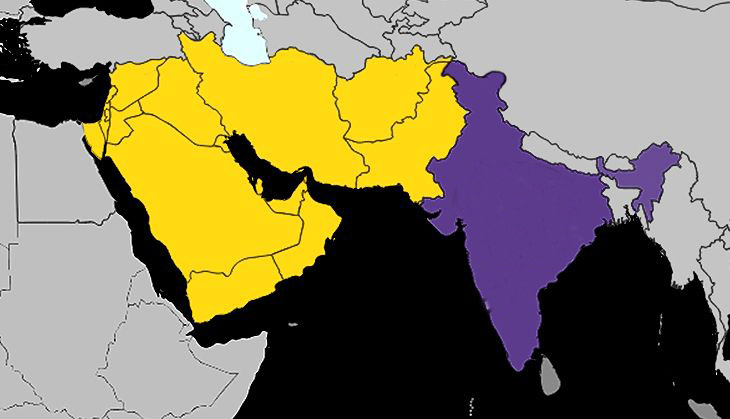
West Asia remains one of the most geopolitically volatile regions in the world, yet it continues to occupy a central position in India’s foreign policy priorities. The region is crucial for India’s energy security, trade connectivity, and diaspora welfare, while also serving as a strategic theatre where global and regional powers compete for influence. Over the past decade, India has significantly expanded its engagement with countries across the region through defence cooperation, economic partnerships, and emerging connectivity initiatives. However, the intensifying geopolitical rivalries involving Israel, Iran, the Gulf states, and external powers such as the United States have created a complex diplomatic landscape. For India, navigating these competing interests requires a careful balance between strategic autonomy and pragmatic engagement. As regional conflicts and geopolitical alignments continue to evolve, India’s approach toward West Asia reflects not only its national interests but also its broader vision of shaping a stable and cooperative regional order.
West Asia in India’s Strategic Calculus
West Asia occupies a central place in India’s foreign policy due to its strategic, economic, and geopolitical significance. The region is vital for India’s energy security as a substantial portion of its crude oil and natural gas imports originate from Gulf countries such as Saudi Arabia, the United Arab Emirates, and Iraq. In addition to energy, West Asia hosts one of the largest Indian diasporas in the world, with millions of Indian workers contributing significantly to India’s economy through remittances. These remittances constitute an important source of foreign exchange and support livelihoods across several Indian states. Furthermore, maritime routes passing through the Strait of Hormuz remain critical for India’s trade and energy transportation, making stability in the region an essential element of India’s national security.
Beyond economic interests, West Asia has also emerged as a significant arena for India’s expanding geopolitical engagement. Over the past decade, India has strengthened diplomatic and economic partnerships with multiple countries in the region while maintaining a policy of balanced engagement. India’s participation in emerging multilateral groupings and strategic partnerships reflects its growing ambition to play a larger role in shaping regional economic and security frameworks. However, ongoing conflicts and geopolitical rivalries in the region—particularly those involving Israel, Iran, and the United States—have created a complex environment that requires careful diplomatic navigation. As global power competition intensifies, India’s engagement with West Asia increasingly reflects the broader challenge of balancing national interests with evolving geopolitical realities.
Diplomacy of Balance: Navigating Rival Regional Powers
India’s West Asia policy has traditionally been guided by a principle of strategic balance, allowing it to maintain constructive relationships with multiple actors that often have conflicting interests. One of the most notable examples of this approach is India’s simultaneous engagement with Israel and Iran. India has developed strong defence and technological partnerships with Israel, making it one of its key security partners. Cooperation in areas such as defence technology, agriculture, cybersecurity, and intelligence sharing has grown steadily over the years. At the same time, India has preserved historically significant ties with Iran, driven by civilizational connections, energy cooperation, and strategic connectivity projects such as the Chabahar Port, which provides India access to Afghanistan and Central Asia.
This balancing strategy has also extended to India’s deepening partnerships with Gulf monarchies such as Saudi Arabia and the United Arab Emirates. Economic cooperation with these countries has expanded significantly, with bilateral trade, investment, and infrastructure partnerships growing rapidly. Recent economic agreements and strategic partnerships illustrate India’s intention to build long-term economic and technological collaboration with Gulf states. However, increasing geopolitical polarization in the region poses challenges for India’s diplomatic balancing. As rivalries intensify between Iran and Israel or between the United States and Iran, maintaining equidistance becomes more difficult, forcing India to carefully calibrate its diplomatic responses to regional crises. In such a complex environment, India must continue to pursue a pragmatic diplomatic approach that safeguards its economic interests while avoiding entanglement in regional conflicts and preserving its long-standing principle of strategic autonomy.
Connectivity and Geoeconomics: The Promise of New Trade Corridors
In recent years, economic connectivity has become a central pillar of India’s West Asia strategy. One of the most ambitious initiatives in this regard is the India–Middle East–Europe Economic Corridor (IMEC), which aims to connect India to Europe through a network of railways, ports, energy pipelines, and digital infrastructure across West Asia. The proposed corridor has the potential to significantly reduce transportation time between India and Europe while strengthening trade integration among participating countries. By linking South Asia, the Gulf, and Europe through a modern connectivity network, the project reflects a broader shift toward geoeconomic cooperation in international relations.
Beyond trade facilitation, IMEC also carries important strategic implications. Many analysts view the initiative as part of a broader effort to diversify global supply chains and offer alternatives to existing infrastructure networks dominated by other major powers. For India, the corridor could strengthen its position as a major hub in global trade networks while deepening economic partnerships with Gulf and European economies. However, the success of such large-scale connectivity projects depends heavily on regional stability and sustained political cooperation among participating countries. Ongoing geopolitical tensions in West Asia therefore pose potential challenges to the implementation of such initiatives, particularly in terms of investment security, infrastructure coordination, and long-term political commitment among partner states.
Emerging Security Challenges in West Asia
The security environment in West Asia has become increasingly complex due to persistent conflicts, shifting alliances, and the growing involvement of external powers. Regional rivalries—particularly those involving Israel, Iran, Saudi Arabia, and various non-state actors—continue to generate instability that affects global security and economic networks. For India, these tensions carry direct implications for maritime security, energy supply routes, and the safety of its diaspora. The Strait of Hormuz, through which a large share of India’s oil imports transit, remains one of the most strategically sensitive maritime chokepoints in the world. Any escalation of military confrontation in the region could disrupt shipping routes, trigger volatility in global energy markets, and significantly increase India’s import costs. Consequently, developments in West Asia are closely monitored in New Delhi as part of its broader national security planning.
Recent geopolitical developments highlight the persistence of these challenges. Periodic confrontations between Israel and Iranian-backed groups, the continuing tensions surrounding Iran’s nuclear program, and sporadic missile and drone attacks in the Gulf region underscore the fragile nature of regional stability. These security dynamics not only affect regional actors but also create broader economic repercussions for countries that rely on West Asian energy resources and trade routes. For India, the challenge lies in protecting its strategic interests while avoiding direct involvement in regional conflicts. This requires a combination of diplomatic engagement, maritime cooperation, and crisis management mechanisms with regional partners. By strengthening naval coordination, participating in multilateral security dialogues, and maintaining open communication channels with all major stakeholders, India seeks to mitigate the risks posed by an increasingly uncertain regional security environment.
India’s Expanding Role in Regional Diplomacy
As its global profile rises, India is gradually assuming a more active diplomatic role in West Asia. Unlike many external powers whose involvement in the region has historically been shaped by military alliances or ideological commitments, India’s engagement is largely driven by economic cooperation, development partnerships, and political dialogue. This approach has allowed India to maintain constructive relations with countries across the region despite their differing geopolitical alignments. By emphasizing economic development, infrastructure cooperation, and technology partnerships, India presents itself as a reliable partner focused on mutual growth rather than geopolitical competition.
India’s growing diplomatic presence is also reflected in its participation in emerging regional frameworks and multilateral initiatives. Platforms that bring together countries from South Asia, the Gulf, and the broader Indo-Pacific region increasingly recognize India’s potential role as a bridge between different geopolitical spaces. Through such initiatives, India seeks to promote economic connectivity, technological collaboration, and sustainable development across the region. At the same time, India’s long-standing diplomatic relationships provide it with a unique capacity to engage with actors who may otherwise have limited channels of dialogue. By encouraging communication and cooperation among diverse stakeholders, India can contribute to confidence-building measures and broader regional stability. In the long term, this diplomatic engagement may enable India to play a constructive role in shaping a more cooperative regional order.
Strategic Autonomy and the Future of India’s West Asia Policy
India’s approach to West Asia continues to reflect its broader foreign policy principle of strategic autonomy. Rather than aligning exclusively with any particular geopolitical bloc, India has sought to maintain flexible partnerships with multiple actors while prioritizing its national interests. This strategy allows India to engage simultaneously with competing regional powers, expand economic opportunities, and avoid direct involvement in regional conflicts. In a region characterized by shifting alliances and recurring tensions, such diplomatic flexibility has been a crucial element of India’s foreign policy success.
However, the evolving geopolitical environment may test the sustainability of this approach. Intensifying conflicts, growing great-power competition, and increasing expectations from strategic partners could limit India’s room for manoeuvre in the future. India will therefore need to strengthen diplomatic engagement, expand economic cooperation, and support multilateral dialogue to protect its interests in the region. By combining economic connectivity initiatives with proactive diplomacy, India can continue to play a constructive role in promoting stability and cooperation in West Asia while safeguarding its long-term strategic objectives.
Conclusion
India’s engagement with West Asia illustrates the delicate balance between geopolitical pragmatism and strategic autonomy that defines its foreign policy. The region’s importance for India extends far beyond energy imports, encompassing trade corridors, maritime security, diaspora welfare, and emerging economic partnerships. As geopolitical tensions persist and global power competition increasingly intersects with regional rivalries, India’s ability to maintain balanced relationships with diverse actors will remain a key diplomatic challenge. At the same time, initiatives focused on economic connectivity and multilateral cooperation provide opportunities for India to contribute constructively to regional stability and development. Ultimately, the success of India’s West Asia policy will depend on its capacity to combine diplomatic flexibility with long-term strategic vision, ensuring that its engagement with the region continues to support both national interests and broader goals of regional peace and economic integration.
At the same time, the rapidly evolving geopolitical environment in West Asia demands that India remain proactive rather than reactive in its diplomatic approach. Conflicts, shifting alliances, and economic transformations in the region will continue to influence global energy markets, trade routes, and security dynamics, all of which have direct implications for India’s strategic interests. By strengthening political dialogue with regional partners, enhancing maritime cooperation, and actively participating in multilateral platforms, India can play a constructive role in promoting stability and conflict management. Furthermore, deeper economic engagement through infrastructure projects, technology partnerships, and trade initiatives will help institutionalize long-term cooperation between India and West Asian states.
Looking ahead, India’s West Asia policy must also integrate emerging global priorities such as sustainable development, renewable energy collaboration, and digital connectivity. As Gulf countries diversify their economies and invest in new sectors, opportunities for partnership in innovation, green energy, and logistics are likely to expand. By aligning its strategic and economic initiatives with these transformations, India can strengthen its position as a trusted and long-term partner in the region. In this sense, West Asia will remain not only a critical component of India’s foreign policy but also an important arena where India’s aspirations for greater global influence and regional cooperation will increasingly unfold in the coming decades.

About the Author
Khushbu Ahlawat is a research analyst with a strong academic background in International Relations and Political Science. She has undertaken research projects at Jawaharlal Nehru University, contributing to analytical work on international and regional security issues. Alongside her research experience, she has professional exposure to Human Resources, with involvement in talent acquisition and organizational operations. She holds a Master’s degree in International Relations from Christ University, Bangalore, and a Bachelor’s degree in Political Science from the University of Delhi.



