
By: Khushbu Ahlawat, Consulting Editor, GSDN
Introduction
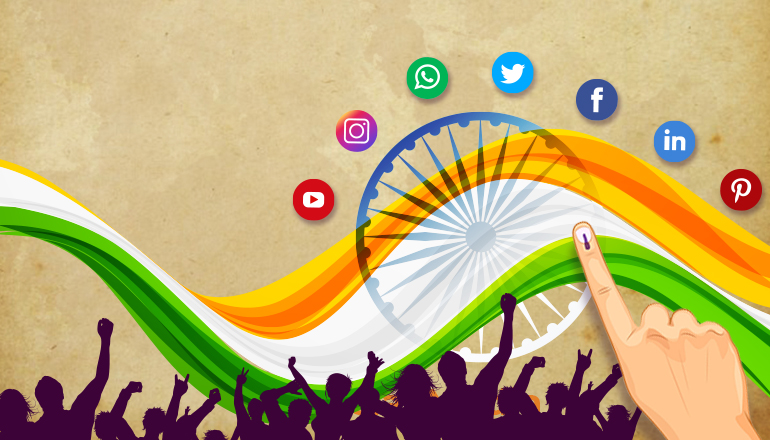
Over the past decade, India has witnessed a profound transformation in the nature of its electoral politics as digital technologies and social media platforms have become central to political communication and democratic participation. The rapid expansion of internet access, the widespread availability of affordable smartphones, and the proliferation of social networking platforms have fundamentally altered how political actors engage with citizens. Platforms such as WhatsApp and X (Twitter) have evolved into powerful political arenas where campaigns are organized, narratives are constructed, and public opinion is shaped. In a country that conducts the world’s largest democratic elections, the integration of digital communication tools has allowed political actors to reach voters with unprecedented speed and precision. Unlike traditional campaign methods that relied heavily on mass rallies, television advertising, and print media, digital platforms enable continuous interaction between politicians and voters, allowing political communication to occur instantly and across geographic boundaries. This transformation has also been facilitated by initiatives aimed at expanding digital connectivity, including government programs designed to increase internet access and digital literacy across rural and semi-urban areas.
This digital transformation first became highly visible during the 2014 Indian General Election, often described by political analysts as India’s first “social media election.” The campaign strategy of Narendra Modi and the Bharatiya Janata Party demonstrated how digital platforms could be used to mobilize support, amplify political messaging, and shape national narratives. The use of social media to broadcast speeches, engage supporters, and promote campaign slogans marked a significant shift from traditional electoral strategies. By the time of the 2019 Indian General Election, digital campaigning had become even more sophisticated, with political parties operating extensive networks of online volunteers, data analytics teams, and social media managers. During the 2024 Indian General Election, the integration of artificial intelligence, meme culture, targeted advertising, and real-time digital engagement further expanded the scope of online political communication. Political leaders increasingly used short videos, live streams, and interactive digital campaigns to engage young voters who form a significant portion of India’s electorate.
At the same time, the rise of digital campaigning has also intensified debates about the implications of social media for democratic governance. Scholars of digital politics argue that while social media platforms have enhanced citizen participation and expanded access to political information, they have also introduced new challenges related to misinformation, algorithmic bias, and the commercialization of political communication. The ability of political actors to micro-target voters using personal data has raised concerns about privacy and transparency in electoral processes. Consequently, understanding how digital technologies are reshaping electoral politics is essential for evaluating both the opportunities and the risks associated with the evolving landscape of digital democracy in India.
Social Media and the Transformation of Election Campaign Strategies
Social media platforms have fundamentally transformed the strategies used by political parties during election campaigns in India. Campaigns that once depended on physical rallies and traditional media coverage now rely heavily on digital communication strategies that operate continuously throughout the electoral cycle. Political parties today maintain dedicated “digital war rooms,” where teams of strategists monitor social media trends, analyze public sentiment, and design messaging campaigns aimed at influencing voters. These digital teams track online conversations, identify emerging political issues, and craft responses that can quickly gain traction on social media platforms. The ability to respond instantly to political developments allows parties to shape narratives before they are widely reported in mainstream media. For instance, leaders from major political parties frequently use X (Twitter) to make policy announcements, criticize opponents, and respond to breaking news events, thereby transforming the platform into a key arena of political competition.
A prominent example of digital campaigning occurred during the 2019 Indian General Election with the viral hashtag #MainBhiChowkidar, promoted by supporters of Narendra Modi. Millions of social media users adopted the slogan in their online profiles, creating a large-scale digital campaign that reinforced the political narrative of anti-corruption and national security. The campaign was amplified across platforms such as X (Twitter) and Facebook through short videos, graphics, and coordinated posts by party leaders and volunteers. In response, opposition parties such as the Indian National Congress used digital platforms to highlight issues such as unemployment, economic inequality, and agrarian distress, attempting to counter the ruling party’s narrative by promoting alternative hashtags and campaign messages. Another significant example is the Bharat Jodo Yatra led by Rahul Gandhi between 2022 and 2023. Although the campaign involved a physical march across several states, social media played a crucial role in amplifying its message by broadcasting speeches, sharing images of public interactions, and mobilizing supporters nationwide. Daily updates, short clips, and photographs from the march were widely circulated on digital platforms, helping the campaign maintain continuous visibility in national political discourse. Supporters and volunteers also used hashtags and online discussion forums to promote the campaign’s themes of social unity and economic justice. Digital media therefore allows political campaigns to combine physical mobilization with online engagement, creating hybrid campaign strategies that extend their reach far beyond traditional campaign methods while sustaining political momentum throughout the electoral cycle.
WhatsApp and Grassroots Political Mobilization
While elite political debates often unfold on platforms like X (Twitter), the messaging application WhatsApp has emerged as the most influential tool for grassroots political mobilization in India. With hundreds of millions of users spread across urban centers, semi-urban towns, and rural villages, WhatsApp allows political campaigns to communicate directly with voters through decentralized networks of messaging groups. These groups frequently function as localized political communication channels where party workers distribute campaign materials, share political updates, organize community meetings, and coordinate voter outreach activities. Political parties have developed sophisticated hierarchical messaging structures in which national-level campaign teams create standardized campaign content that is circulated to state-level coordinators, who then forward it to district leaders and grassroots volunteers. This layered communication model enables political messages to travel rapidly across thousands of communities, ensuring that campaign narratives reach even remote constituencies within hours. In many cases, these groups also include local influencers such as community leaders, teachers, or small business owners who help legitimize and further disseminate political messaging among their social networks.
The role of WhatsApp networks became particularly evident during the 2019 Indian General Election, when political parties reportedly operated tens of thousands of WhatsApp groups to coordinate campaign activities and maintain continuous communication with supporters. These groups were used to circulate short videos, policy explanations, campaign posters, and speeches from political leaders, often translated into multiple regional languages to reach diverse voter bases. During the 2024 Indian General Election, WhatsApp groups were widely used to highlight government welfare initiatives such as the Pradhan Mantri Ujjwala Yojana and PM Kisan Samman Nidhi, which provide cooking gas subsidies and financial assistance to farmers. Campaign workers circulated testimonials from beneficiaries, short explanatory videos, and infographics to illustrate how these programs affected local communities. In addition, WhatsApp was frequently used to mobilize voters by sharing reminders about voter registration deadlines, polling dates, and booth locations. In several states, party volunteers also used WhatsApp to coordinate transportation for elderly voters and to organize local campaign events. This form of localized digital communication allows political parties to tailor their messaging to specific communities, languages, and socio-economic groups, thereby strengthening grassroots mobilization and transforming WhatsApp into a powerful instrument of electoral politics in contemporary India.
Public Discourse, Polarization, and Regulatory Challenges
The growing influence of social media has significantly reshaped public discourse in India, creating both new opportunities for democratic participation and new challenges for political stability. Platforms such as X (Twitter) have become key spaces where journalists, activists, political leaders, and citizens debate public policy issues in real time. Many major political controversies now emerge and gain momentum on social media before reaching mainstream news outlets. For example, debates surrounding the Citizenship Amendment Act and the 2020–2021 Indian Farmers’ Protest gained widespread visibility through viral hashtags, live video streams, and online campaigns. Activists used social media platforms to coordinate protests, share real-time updates from demonstration sites, and mobilize supporters across different regions of the country and the Indian diaspora abroad. Similarly, discussions surrounding policies such as the Farm Laws of 2020 and debates on unemployment, inflation, and governance frequently trend on digital platforms, shaping national conversations even before they appear in television debates or newspaper editorials. These developments illustrate how digital platforms have expanded the scope of democratic engagement by enabling citizens, journalists, and civil society groups to participate actively in political debates and hold political leaders publicly accountable.
However, the rapid spread of political content on social media has also intensified concerns about misinformation, hate speech, and digital manipulation. False rumors, edited videos, and misleading narratives often circulate widely on encrypted platforms such as WhatsApp, making it difficult for regulators to track their origin or verify their authenticity. During several election cycles, viral messages containing unverified claims or communal narratives have spread quickly within private messaging groups, sometimes influencing public perceptions and local political tensions. Scholars studying digital democracy argue that algorithm-driven content distribution on platforms like X (Twitter) can create “echo chambers,” where users are primarily exposed to viewpoints that reinforce their existing ideological preferences, thereby deepening political polarization. Concerns have also emerged regarding the use of coordinated online campaigns, automated bots, and AI-generated political content during elections. In response, the Election Commission of India has introduced guidelines requiring political parties to disclose digital campaign expenditures and label AI-generated political advertisements during election periods. Fact-checking organizations such as Alt News and BOOM Live have also become crucial actors in identifying and debunking viral misinformation. Despite these efforts, regulating digital political communication remains extremely challenging because encrypted messaging networks and decentralized content sharing make monitoring and enforcement difficult. As a result, balancing the protection of free expression with the need to maintain electoral integrity continues to be one of the most complex policy dilemmas confronting India’s evolving digital democracy.
Conclusion
The rise of social media has fundamentally transformed electoral politics in India by reshaping how political campaigns are conducted, how citizens engage with political information, and how public narratives are formed. Digital platforms have expanded the reach of political communication, enabling leaders to connect directly with voters and mobilize supporters across geographic and social boundaries. Platforms such as WhatsApp and X (Twitter) have created new opportunities for citizen participation by allowing individuals to share opinions, debate policy issues, and engage directly with political leaders. In many ways, these platforms have democratized political communication by reducing the barriers that once limited access to national political discourse. Political actors now operate in an environment where speeches, campaign rallies, and policy announcements can be instantly broadcast to millions of citizens, generating immediate public responses and online debates. Moreover, digital media has enabled regional leaders, grassroots activists, and civil society groups to gain visibility in national political conversations, thereby broadening the scope of democratic engagement beyond traditional political elites.
At the same time, the growing reliance on digital platforms for electoral communication introduces significant risks that must be addressed to safeguard democratic institutions. The spread of misinformation, the use of coordinated digital propaganda campaigns, and the emergence of artificial intelligence–generated political content raise serious concerns about the integrity of electoral processes. Instances of viral misinformation during elections have demonstrated how quickly unverified claims can shape public perceptions, particularly when shared within private messaging networks. In response, institutions such as the Election Commission of India have begun developing guidelines to regulate online political advertisements and monitor digital campaign practices. Technology companies are also under increasing pressure to strengthen content moderation systems and improve transparency in political advertising. Strengthening digital literacy among citizens, improving transparency in online political advertising, and developing robust regulatory frameworks will therefore be essential for ensuring that digital technologies strengthen rather than undermine democratic governance. As India continues to expand its digital infrastructure and internet connectivity, the influence of social media on political life is likely to grow even further. Ultimately, the future of digital democracy in India will depend on how effectively political institutions, technology companies, and civil society organizations collaborate to balance technological innovation with the core democratic principles of transparency, accountability, and inclusive participation.

About the Author
Khushbu Ahlawat is a research analyst with a strong academic background in International Relations and Political Science. She has undertaken research projects at Jawaharlal Nehru University, contributing to analytical work on international and regional security issues. Alongside her research experience, she has professional exposure to Human Resources, with involvement in talent acquisition and organizational operations. She holds a Master’s degree in International Relations from Christ University, Bangalore, and a Bachelor’s degree in Political Science from the University of Delhi.



