
By: Gayathri Pramod
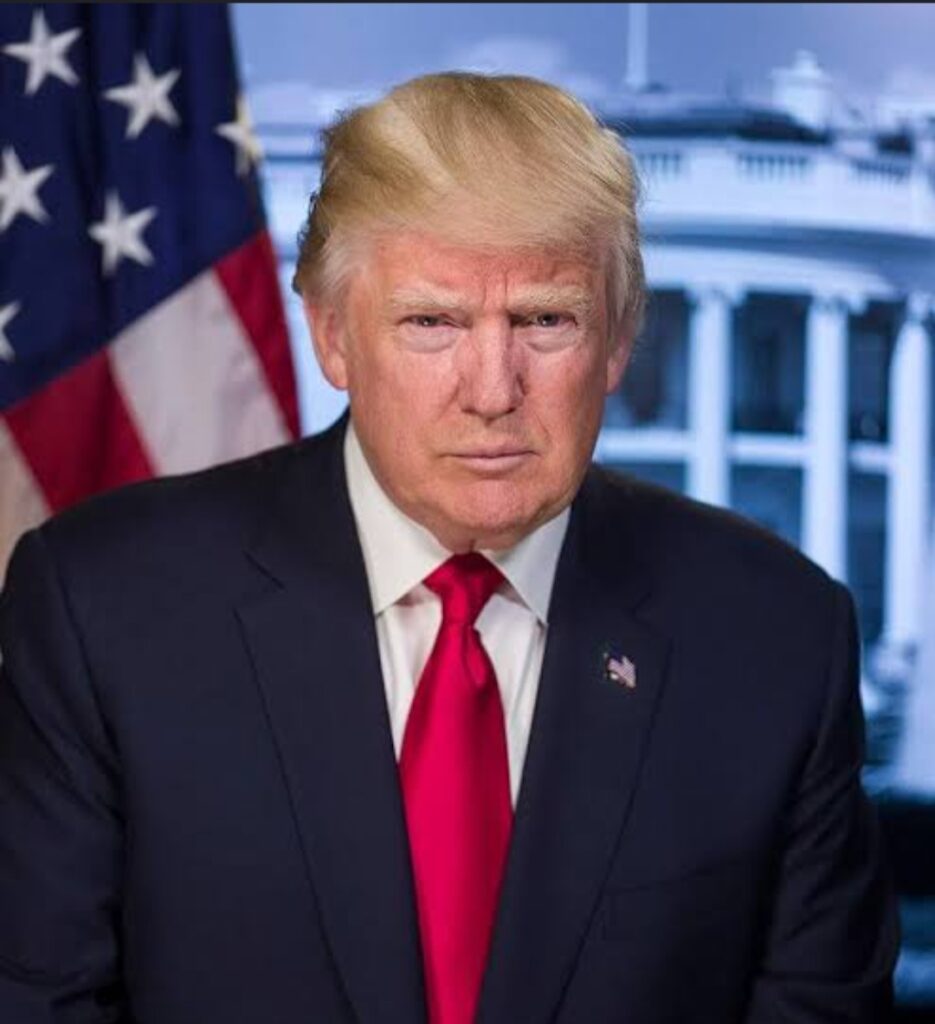
The Trump Corridor has rapidly become a defining geopolitical pivot in the South Caucasus because it alters the balance of power in a region which has largely shaped by the vast clash of regional and global interests. The creation of Trump Corridor 2025 has rapidly become a defining geopolitical pivot in the South Caucasus, capable of transforming the region into a new transit hub envisaged for fostering peace between Armenia and Azerbaijan through the strategic infrastructure diplomacy. As it alters the balance of power in a region which has largely shaped by the vast clash of regional and global interests. Although the agreement was presented as a pragmatic step toward economic integration and peace building mechanism its true meaning lies in the strategic transformations it sets in motion through Infrastructure Development. . The corridor reconfigures the region’s geopolitical architecture by creating new avenues of influence for some states while constraining or displacing the traditional power of others. The corridor is not a transfer of sovereignty; rather, it functions as a legally regulated commercial and transit route, guaranteed under Armenian law and administered by a multinational consortium. Its purpose is expansive: the route is designed to carry road and rail transport, energy pipelines, fiber-optic communications, and related infrastructure, laying the foundation for what Washington framed as a new “Economic Peace Corridor” across a historically conflict-ridden region.
Although the agreement was presented as a pragmatic step toward economic integration and peace building, its true meaning lies in the strategic transformations it sets in motion. The corridor reconfigures the region’s geopolitical architecture by creating new avenues of influence for some states while constraining or displacing the traditional power of others. Its impact is amplified not only by the infrastructure it enables but by the geopolitical symbolism embedded in a 99-year US-brokered transit agreement—a commitment long enough to redefine expectations about the future of Eurasian connectivity. The first and most immediate geopolitical shock generated by the corridor concerns Russia. For the last three decades, Russia asserted itself as the principal arbiter of security in the South Caucasus, leveraging its military bases in Armenia, its peacekeeping missions, and its role as mediator in the Nagorno-Karabakh conflict. Armenia, isolated by closed borders with Turkey and Azerbaijan, relied on Russia not only for defense but also for energy, trade routes, and political support. Azerbaijan, despite pursuing an independent foreign policy, still balanced its relationships with Russia to avoid provoking Moscow’s hostility. The Trump Corridor undermines this system by establishing a major transit route that circumvents Russian territory and, more importantly, excludes Russian oversight. The United States has, for the first time in decades, directly shaped the territorial configuration of the region without Russian approval. This represents not only a tangible loss of influence but a symbolic break with Moscow’s long-standing assumption that the South Caucasus falls within its uncontested sphere of influence.
Russia’s weakened position has been sharpened by structural vulnerabilities. Its prolonged war in Ukraine, combined with the economic pressure of international sanctions, has reduced Moscow’s ability to project power or sustain diplomatic leverage across neighboring regions. The corridor deal thus arrived at a moment when Russia lacked both the capacity and political bandwidth to challenge US involvement. As a consequence, regional actors read the Trump Corridor as evidence of Russia’s declining primacy. This perception is itself a strategic fact: it influences the calculus of smaller states, encourages diversification away from Russian dependency, and erodes Moscow’s credibility as a guarantor of security.
The United States, conversely, has used the corridor to re-establish itself as a central strategic actor in the South Caucasus after years of diminished visibility. Washington’s involvement signals a renewed interest in shaping the Eurasian connectivity agenda and counterbalancing the influence of Russia, Iran, and even China. Unlike previous Western initiatives that were largely diplomatic or value-driven, this agreement binds US influence to tangible infrastructure, regulatory frameworks, and commercial governance mechanisms that will persist for nearly a century. The United States achieves a durable geopolitical presence without deploying soldiers or establishing military bases. Instead, it embeds itself through what might be described as “strategic infrastructure diplomacy,” where long-term economic corridors double as instruments of political alignment and geopolitical stabilization.
The corridor also supports broader US energy and economic goals. It creates new opportunities for transporting Caspian oil and gas to Europe in ways that reduce dependence on Russian energy supplies. Simultaneously, it fits within global strategies aimed at diversifying supply chains and establishing alternative trade routes that bypass chokepoints dominated by rival powers. The United States thus positions itself as an architect of Eurasian transit systems at a time when global infrastructure competition—particularly with China’s Belt and Road Initiative—has become a defining element of international strategy.
Turkey emerges as another major beneficiary of the corridor. For years, Ankara has sought to consolidate its influence across the Turkic world, stretching from Turkey through Azerbaijan to Central Asia and the Caspian Sea. The Trump Corridor creates a new link that fulfills many of Ankara’s long-term strategic aspirations. It enhances Turkey’s direct physical connection with Azerbaijan and strengthens east–west trade paths that run through Turkish territory. Beyond logistics, the corridor enhances Ankara’s symbolic leadership among Turkic-speaking nations, reinforcing Turkey’s role in organizations such as the Organization of Turkic States. It also opens new economic opportunities for Turkish construction firms, energy companies, and telecommunications enterprises. Turkey therefore becomes not just a regional power but a central connector between Europe and Asia, extending its influence deeper into Eurasia.
In contrast, Iran views the corridor with considerable anxiety. For decades, Iran played a crucial role as a transit route for both Armenia and Azerbaijan, leveraging its geographic position to influence regional politics, collect transit revenues, and balance against Turkish and Russian influence. The Trump Corridor directly threatens these functions by offering Armenia and Azerbaijan a route that bypasses Iranian territory. More troubling for Tehran is the fact that the corridor introduces long-term US strategic involvement along Iran’s northern border—a scenario Iranian policymakers have long feared. In Tehran’s view, the corridor is not a neutral economic project but part of a broader Western strategy to marginalize Iranian influence, reshape regional connectivity in ways that exclude Iran, and potentially encircle Iran with US-aligned infrastructure. This perception creates new tensions and introduces the possibility of Iranian pushback, whether diplomatic, economic, or through indirect regional tactics.
Perhaps the most transformative geopolitical shift is unfolding in Armenia. After decades of dependence on Russia—politically, militarily, and economically—Armenia finds itself re-evaluating its entire strategic orientation. The failures of Russian peacekeeping after 2020, coupled with Moscow’s diminished attention and capability due to its war in Ukraine, left Armenia increasingly vulnerable. The Trump Corridor provides Armenia with an opportunity to diversify its alliances, attract Western investment, and embed itself in new international partnerships. While the agreement remains controversial within Armenia, it also symbolizes a potential escape from isolation. Participation in the corridor aligns Armenia more closely with Western economic systems, reduces its reliance on Russian-controlled transit routes, and opens the possibility for improved relations with its neighbors, including Azerbaijan and Turkey. Whether this marks a permanent realignment or a pragmatic adjustment remains to be seen, but the shift is undeniable.
Azerbaijan, meanwhile, consolidates its strategic position through the corridor. The long-standing desire to obtain secure access between mainland Azerbaijan and Nakhchivan is achieved not through military escalation but through a multinational, legally guaranteed corridor. This strengthens Azerbaijan’s regional influence, deepens its strategic relationship with Turkey, and enhances its ability to position itself as a critical transit hub between Europe and Asia. The corridor provides Azerbaijan with new economic advantages, increased geopolitical leverage, and greater autonomy in its foreign policy decision-making.
In this way, the Trump Corridor functions as a geopolitical prism through which each regional actor reconfigures its strategic priorities. It weakens old alliances, forges new ones, and transforms the South Caucasus into a contested arena of 21st-century connectivity politics. While the infrastructure itself is important, its geopolitical implications are far more consequential. The corridor initiates a profound regional realignment with implications extending from the Black Sea to Central Asia and from the Persian Gulf to Europe. Whether this new configuration evolves into a stable system of cooperation or a new geography of competition will depend on how regional powers manage the tensions and opportunities created by this strategic pivot.
Regional Security Dynamics After the Trump Corridor Agreement
The announcement of the Trump Corridor in August 2025 generated immediate and powerful reactions across the region, revealing both the magnitude of the agreement and the fragility of the geopolitical environment into which it was introduced. Unlike conventional infrastructure projects, which tend to provoke technical and logistical questions, the Trump Corridor triggered a deep recalibration of political expectations and security anxieties. For some, it represented a historic opportunity to stabilize one of the world’s most volatile borderlands and integrate it into the global economy. For others, it signified an alarming redistribution of influence, a potential challenge to territorial sovereignty, or even a threat to national survival. The intensity of these reactions underscores the complex regional security dynamics that have shaped the South Caucasus since the collapse of the Soviet Union.
Understanding these reactions requires situating the Trump Corridor within a suitable theoretical framework. Three frameworks in particular illuminate the motivations and behaviours of regional actors: classical and neorealist theories, liberal institutionalism perspectives, and Regional Security Complex Theory (RSCT). Realist frameworks help explain the competitive pursuit of power, influence, and territorial control that shape the decisions of states like Russia, Iran, and Azerbaijan. Liberal institutionalism offers insight into the economic and cooperative motivations underlying Armenia’s and the United States’ support for the corridor. Meanwhile, RSCT, developed by Barry Buzan and Ole Wæver, provides a valuable lens through which to analyse the South Caucasus as a region where intense security interdependence binds the fates of Armenia, Azerbaijan, Georgia, Russia, Turkey, and Iran (Buzan & Wæver 2003). Together, these frameworks reveal the multi-layered security dynamics that emerged in response to the corridor.
Role of Big Power Nations
From the perspective of Russia, the Trump Corridor represents a structural threat to its strategic depth in the Caucasus. Over time, Moscow may develop countermeasures that aim to undermine the corridor’s potential or at least dilute American influence in its administration, whether through the promotion of alternative transit projects, diplomatic pressure on Yerevan, or closer military-technical cooperation with Iran. Russia’s ability to mobilize these levers will depend heavily on its own domestic stability and its foreign policy bandwidth, especially in the aftermath of prolonged conflict involvement elsewhere. If Russia’s power projection capacity continues to be limited, the Trump Corridor could accelerate the erosion of its regional sphere of influence, leading not only to geopolitical retreat but also to the emergence of new power vacuums that might invite competition among NATO states, Iran, and Türkiye. Over several decades, such vacuums often produce new security dilemmas, including arms build-ups, proxy dynamics, or covert operations targeting infrastructure networks.
Iran’s long-term posture toward the corridor reflects a deeper concern that transcends immediate bilateral relations. The Trump Corridor cuts across the broader north-south and east-west connectivity matrix that Iran has attempted to shape through projects such as the International North–South Transport Corridor (INSTC). As the new corridor solidifies, Iran fears that it will be strategically bypassed in trans-Eurasian trade routes, marginalizing its role as a connector node and amplifying Western influence in a geographic space Tehran considers vital to its border security and ethnic politics. Over the long term, Iran is likely to adopt a dual strategy of containment and accommodation. The containment dimension may involve closer alignment with Russia, deepening military ties, and supporting Armenian defense capabilities in indirect ways. The accommodation dimension may entail pragmatic adjustments, such as negotiating partial integration with the corridor’s energy, customs, or rail systems, should geopolitical conditions shift. Iran’s reaction over the next several decades will also be shaped by domestic political evolution, economic resilience under sanctions, and the stability of its northern provinces populated by ethnic Azerbaijanis, who have historically played a significant role in the country’s internal political balance. If Tehran interprets the corridor as a threat to its territorial integrity or ethnic cohesion, its long-term opposition may harden into a more assertive regional security posture.
Türkiye, by contrast, stands to gain considerably in the long run. The corridor strengthens Ankara’s longstanding objective of creating a direct land link to the Turkic world, from the Caucasus to Central Asia. This vision, couched in the language of cultural affinity and strategic depth, aligns with broader Turkish aspirations to become a pivotal Eurasian power capable of influencing trade, energy, and military dynamics across multiple regions. As decades pass, Türkiye could capitalize on the corridor by integrating it into larger projects such as the Trans-Caspian Gas Pipeline, expanded fiber-optic grids, and transcontinental railway systems. Over time, the corridor may also support Turkiye’s emerging military-industrial footprint in the region, especially as Azerbaijani procurement of Turkish drones, missiles, and air-defense systems continues to grow. The corridor thus forms part of a long-term strategic condominium between Ankara and Baku, which may reshape the regional balance of power and challenge Iran’s security perception. Turkiye’s NATO membership further complicates this trajectory, because the corridor indirectly increases Western access to the Caspian Basin, a trend that Russia and Iran will likely perceive as destabilizing.
The United States’ long-term strategic calculus is fundamentally tied to the corridor’s ability to rewire Eurasian connectivity away from Russian and Iranian spheres of influence. Over several decades, the corridor could become a component of a wider American approach to diversify energy routes, secure Western access to Caspian resources, and counterbalance China’s Belt and Road Initiative (BRI). The corridor can serve as a stepping stone for U.S. engagement with Central Asian republics seeking alternatives to Russian and Chinese economic dominance. From a long-term perspective, the Trump Corridor is not only a logistical asset but also a symbolic assertion that American diplomacy can still shape critical infrastructure outcomes in geopolitically sensitive regions. The endurance of this influence, however, depends on Washington’s ability to maintain consistent foreign policy engagement, which historically has oscillated with changes in administration. Should U.S. strategic focus drift toward the Indo-Pacific or domestic priorities, a geopolitical vacuum may arise that other regional powers would eagerly fill.
China’s long-term position is more ambivalent. On one hand, Beijing benefits from any diversification of trans-Eurasian routes, because redundancy in infrastructure strengthens the resilience of trade networks under the Belt and Road Initiative. On the other hand, the Trump Corridor could undermine Chinese influence if it becomes part of a Western-led connectivity architecture designed to counterbalance the BRI. Over decades, China may attempt to integrate the corridor into its broader Eurasian strategy through investment, construction contracts, or digital-connectivity projects. Alternatively, it may view the corridor as a Western intrusion and opt to reinforce its ties with Iran and Russia. The long-term direction will depend on how the corridor intersects with China’s economic interests and its competition with the United States.
Within the South Caucasus itself, the domestic political durability of the corridor is perhaps the most decisive variable. Armenia’s long-term compliance with the land-lease agreement will depend on its internal political stability and its evolving perception of national security. If the corridor becomes a symbol of national humiliation or foreign imposition, domestic actors may mobilize opposition that could undermine the agreement. Conversely, if the corridor generates tangible economic growth, employment, and infrastructural development, Armenian public opinion could shift toward cautious acceptance. In Azerbaijan, long-term support is more likely to remain stable, because the corridor serves a central national objective: strengthening territorial connectivity and consolidating the post-2020 regional order. Nevertheless, Azerbaijan’s domestic stability, elite cohesion, and succession politics will shape its approach over several decades. Any internal instability could affect the reliability or militarization of the corridor.
Another long-term implication concerns the militarization potential of critical infrastructure. Historically, strategic corridors often become flashpoints for coercion, sabotage, or hybrid warfare, particularly in regions characterized by deep-seated rivalries. The Trump Corridor is no exception. Over decades, it may become a contested space where states or non-state actors attempt to disrupt transport flows, undermine the legitimacy of host governments, or leverage the corridor as a bargaining chip in diplomatic disputes. The long-term security of the route will depend on robust monitoring mechanisms, cross-border communication channels, intelligence-sharing frameworks, and international oversight. If these mechanisms remain weak, the corridor could evolve into a site of recurrent crises that destabilize the broader South Caucasus. Over several decades, the corridor may strengthen the diversification of oil and gas routes to Europe, reducing dependency on Russia and contributing to the continent’s broader energy-security strategy. As renewable energy transitions deepen globally, the corridor may additionally become central to the transport of critical minerals, green-technology components, or new-generation fiber-optic infrastructure. These long-term developments could elevate the South Caucasus from a peripheral region to a key node in the global digital and energy economy. However, they also carry risks: increased strategic value often invites geopolitical contestation, making the region more vulnerable to interference, sanctions pressure, or coercive diplomacy by rival powers.
Hybrid Security Threats and the Vulnerability of Infrastructure
The Trump Corridor also introduces new forms of hybrid security vulnerabilities. As a major transport and communications artery, the corridor becomes a potential target for cyber-attacks, sabotage, misinformation campaigns, and political pressure. The involvement of American companies in the telecommunications dimension—particularly fiber-optic infrastructure—heightens the strategic value of the corridor while increasing the likelihood of cyber conflict, espionage, or technological interference (Drake 2024). Infrastructure corridors often become focal points for criminal networks, smuggling routes, and illicit trade. The South Caucasus, with its complex borders and history of trafficking across black markets, faces heightened risks of criminal exploitation. These hybrid threats blur the line between national security, economic security, and law enforcement, requiring sophisticated coordination between states that do not fully trust one another.
Yet beneath the optimistic language of economic integration lies a landscape of profound risks, contested narratives, and structural uncertainties that could shape the fate of the corridor—and the stability of the region—for decades to come. Far from offering a straightforward path toward cooperation, the corridor exposes unresolved historical grievances, introduces new geopolitical competitions, and creates potential flashpoints that could ignite under the wrong conditions. Understanding these risks requires an expansive analytical lens that examines political, economic, security, legal, normative, and infrastructural dimensions of the agreement. The corridor is not merely a physical pathway connecting Azerbaijan to Nakhchivan; it is a geopolitical infrastructure which aimed to strengthen the estranged relation through the strategic allocation of ambitious infrastructural programmes. The trump logically tries to underpin the strategic ambitions of six major actors: Armenia, Azerbaijan, the United States, Turkey, Russia, and Iran. Its implementation intersects with power transition dynamics, securitization logics, state-fragility concerns, and competing visions of regional order. While the corridor holds the promise of prosperity, the structural conditions in which it emerges suggest that peace building will not be automatic and may instead depend on resolving systemic vulnerabilities that—if ignored—could derail the project or turn it into a source of new instability. These geopolitical tensions introduce long-term uncertainties that may overshadow the corridor’s potential benefits if not carefully managed. Potential escalation pathways include:
- Russian pressure on Armenia via political proxies
- Iranian military signaling escalating into localized incidents
- Turkey–Iran tensions over influence in Nakhchivan
- Sabotage or hybrid operations against corridor infrastructure
- Armenian domestic instability spilling into regional politics
The corridor thus becomes both a symbol of peace and a potential flashpoint for conflict. The Trump Corridor marks a profound transformation of the South Caucasus security environment. It creates opportunities for cooperation and economic revival but simultaneously amplifies longstanding suspicions, rivalries, and power struggles. By applying theoretical frameworks—RSCT, balance-of-threat, and power transition theory—we see that the corridor operates as both a regional integrator and a geopolitical disruptor. It is not simply infrastructure. It is a reconfiguration of power, identity, and strategic vision across Eurasia.
Implications of Trump Corridor
While the corridor celebrated in certain geopolitical circles as a transformative infrastructure project capable of unlocking new economic potential in the South Caucasus, simultaneously carries profound risks that cast shadows across the region’s security landscape. These risks are neither abstract nor peripheral. Rather, they are deeply embedded in the historical animosities, power asymmetries, and geopolitical rivalries that have defined the South Caucasus for centuries. As with any major restructuring of regional connectivity, the corridor exposes all participating states to a complex interplay of uncertainty, suspicion, and strategic vulnerability. The dramatic reconfiguration of transit routes, alliances, and regional influence opens opportunities for cooperation, but it also imposes destabilizing pressures that may be exploited by actors seeking to enhance their own strategic positions at the expense of others.
The corridor’s critics in Armenia also point to the political fragility of the region, arguing that a long-term agreement of ninety-nine years requires a stable geopolitical environment that is unlikely to materialize in a region historically marked by conflict fluctuation and sudden shifts in alliances. Furthermore, they argue that no legal guarantee can fully compensate for the shifting balance of power. Changes in leadership, security doctrines, or external alliances could render the corridor a point of leverage in unexpected ways. From the standpoint of political realism, this criticism resonates strongly. The structural environment of the South Caucasus is fundamentally anarchic in the classical realist sense described by Kenneth Waltz, meaning that states cannot fully rely on external guarantees or international law when their survival is at stake. Armenia’s vulnerability lies not in the corridor itself but in the broader structural imbalance that shapes its foreign policy options.
On the Azerbaijani side, the corridor is widely celebrated as a historical achievement, yet it also introduces uncertainties that complicate Baku’s strategic calculus. While the infrastructure strengthens Azerbaijan’s role as a regional transit hub, it simultaneously increases its exposure to geopolitical friction. Iran’s hostile reaction to the corridor, for example, creates a set of risks that Azerbaijani policymakers cannot ignore. Tehran’s perception that the corridor enhances Western and Turkish influence near its borders could lead to a long-term deterioration of Iranian-Azerbaijani relations. Although these tensions may manifest primarily in diplomatic rhetoric or shows of force, the possibility of more acute confrontation cannot be ruled out. Iran’s strategic culture, shaped by perceived encirclement and external threats, is particularly sensitive to American-supported projects. This sensitivity is heightened by the presence of a large Azerbaijani minority in Iran, who’s cultural and linguistic affinities with the Republic of Azerbaijan occasionally provoke anxiety within Tehran’s political establishment. Iran’s security institutions may fear that an enhanced Azerbaijan, empowered by new transit routes and closer ties to Turkey and the United States, may inadvertently inspire ethnic assertiveness or separatist sentiments within its own population. Even if Azerbaijan’s leadership has no interest in pursuing such outcomes, the mere perception of risk can influence Iranian policy in ways that create unpredictable security consequences.
Iran’s criticism of the corridor also reflects a broader geopolitical concern: the gradual erosion of its regional influence as major international actors redesign connectivity routes that bypass Iran entirely. For centuries, Iran benefited from its strategic location as a land bridge between the Caucasus, Central Asia, and the Middle East. The Trump Corridor threatens to diminish this role by redirecting trade, energy, and logistics flows through Armenia, Azerbaijan, and Turkey, thereby weakening Iran’s leverage over regional transport. The competition between transit routes is not merely commercial; it carries significant political implications. States that control key corridors accrue geopolitical relevance, diplomatic leverage, and economic resilience. Iran’s exclusion from the emerging network places it at a strategic disadvantage, leading Tehran to portray the corridor as a zero-sum project aligned with hostile Western objectives. This interpretation aligns with Barry Buzan and Ole Wæver’s Regional Security Complex Theory, which suggests that regional security patterns tend to be shaped by clusters of interconnected threats and rivalries. In the South Caucasus, the corridor recalibrates these clusters, isolating Iran while strengthening Turkey, Azerbaijan, and the United States.
Russia’s criticism of the corridor is rooted in geopolitical decline and strategic anxiety. For decades, Moscow maintained an unchallenged position in the South Caucasus, supported by military bases in Armenia, peacekeeping missions in contested areas, a pervasive intelligence network, and strong economic ties. However, the war in Ukraine, international sanctions, and the deterioration of Russia-Armenia relations have weakened Moscow’s ability to influence regional affairs. The Trump Corridor underscores this erosion by enabling Western-backed infrastructure in a region Russia has long considered its near-abroad. Russian analysts argue that the corridor undermines the territorial continuity of the “Russian sphere of influence,” a strategic doctrine central to Russian foreign policy since the 1990s. Moscow’s muted public reaction reflects not acceptance but incapacity: Russia’s diminished power prevents it from exerting meaningful leverage over Armenia or Azerbaijan. This power vacuum presents risks because regional actors, sensing Russia’s diminished authority, may pursue bolder or more independent strategies, which could lead to destabilizing competition.
Another major source of uncertainty stems from the complex political landscape within Armenia itself. The corridor has deepened fissures between pro-government reformists and opposition forces that accuse the government of betraying national interests. The opposition frames the corridor as part of a perceived pattern of capitulation following Armenia’s military defeats and diplomatic concessions. This narrative may be politically expedient, but it also inflames nationalist sentiment in ways that risk destabilizing Armenia’s internal politics. Protests, street mobilizations, and attempts to force early elections could create domestic instability at precisely the moment when the corridor requires political consensus to be implemented smoothly. A weakened or divided Armenian government may lack the capacity to oversee the corridor’s operation effectively, increasing the likelihood of accidents, sabotage, or politically motivated obstruction. Domestic instability also risks inviting external interference. Historically, regional powers have exploited Armenia’s internal divisions to influence its foreign policy orientation, and the corridor may once again become a tool in such geopolitical maneuvering.
The Trump Corridor as a geopolitical pivot reflects deeper transformations in global power distribution. The United States, after years of relative disengagement from the South Caucasus, has reasserted its influence through a strategic approach that combines diplomatic brokerage with economic incentives and security assurances. The corridor becomes a tangible expression of American strategic resurgence in a region long contested by rival powers. At the same time, Türkiye has emerged as a central player, advancing its ambitions for Turkic connectivity and leveraging its close partnership with Azerbaijan to reshape the regional order. The corridor strengthens the Ankara–Baku axis and creates new avenues for Turkish influence, not only in trade and energy but also in military affairs, technological cooperation, and cultural diplomacy. Iran, by contrast, faces a strategic predicament, watching the corridor undermine its long-standing role as a transit state and potentially altering the ethnic, political, and economic dynamics along its northern frontier. For Tehran, the corridor represents more than an infrastructural threat; it symbolizes the encroachment of Western-aligned connectivity into what Iran considers a vital sphere of national security.
Conclusion
The Emergence of the Trump Corridor in 2025 represents one of the most consequential geopolitical developments in the South Caucasus since the dissolution of the Soviet Union. As this research has demonstrated across multiple analytical layers, the corridor is not merely an infrastructural project but a strategic reconfiguration of the region’s political, economic, and security landscape. At its core, it symbolizes the reopening of physical connectivity in a region long fractured by war, mistrust, and competing spheres of influence. But more significantly, it reveals the extent to which external powers, domestic political shifts, and long-standing territorial grievances intersect to shape the future of Trans-Regional order. The Trump Corridor, therefore, should be seen as both an artifacts of diplomatic negotiation and a structural force with the capacity to reshape alliances, redefine borders of influence, and alter the trajectory of interstate relations in the South Caucasus for decades to come. Ultimately, the Trump Corridor’s greatest risk lies in its dependence on a volatile regional order. The South Caucasus sits at the intersection of three civilizational, strategic, and ideological blocs: the Russian sphere, the Turkic sphere, and the Iranian-Persian sphere. The corridor introduces a fourth element—the United States—without resolving tensions among the existing three. Thus, the corridor sits atop a foundation of uncertain stability, vulnerable to geopolitical tremors that could reshape the region. The Trump Corridor is a bold attempt to reimagine the South Caucasus through connectivity, cooperation, and economic integration. Yet it also introduces an unprecedented array of risks: domestic political instability, unresolved historical grievances, hegemonic resentment, regional power struggles, infrastructural vulnerabilities, and profound legal uncertainties. Whether the corridor ultimately stabilizes or destabilizes the region will depend on how these risks are managed, mitigated, or ignored. In this sense, the corridor embodies both the promise and peril of 21st-century geopolitics.

About the Author
Gayathri Pramod works on the genealogy of governance over life and death in times of war, with a particular focus on the West Asian front. Her research interests centre on the thematic study of war crimes and other geopolitical flashpoints. She is presently Assistant Professor of Political Science, Faculty of Law, Marwadi University.



