
By: Khushbu Ahlawat, Consulting Editor, GSDN
Introduction
Women’s political participation is a crucial indicator of democratic inclusiveness and institutional equality. In India, the world’s largest democracy, women constitute nearly half of the population and an increasingly active segment of the electorate. Over the past few decades, women’s engagement in politics has expanded significantly through rising voter turnout, grassroots leadership, and growing public visibility. Yet, despite these advances, their representation in legislative institutions and positions of political power remains limited. Recent debates surrounding institutional reforms and gender quotas have renewed attention to this imbalance. Examining women’s political participation therefore provides critical insights into the broader challenges and opportunities shaping democratic governance in contemporary India.
Historical Evolution and Structural Barriers to Women’s Political Participation
Women’s political participation in India has evolved through a complex historical trajectory shaped by democratic inclusion and enduring structural inequalities. At the time of independence, India adopted a universal adult franchise, granting women equal voting rights alongside men. This decision distinguished India from several Western democracies where women achieved suffrage only after prolonged political struggle. Women had already demonstrated their political agency during the nationalist movement through the leadership of figures such as Sarojini Naidu, Aruna Asaf Ali, and Kasturba Gandhi, who mobilized women across regions in mass political movements. However, the transition from nationalist activism to institutional politics did not translate into proportional representation in legislatures. While women continued to participate actively as voters and grassroots mobilizers, leadership positions within political parties and legislative bodies remained largely dominated by men. This historical paradox—where women enjoy equal voting rights but limited representation—continues to shape contemporary debates about gender equality in Indian democracy.
Recent data further highlights the persistence of these structural inequalities. Despite steady progress over the decades, women remain significantly underrepresented in India’s political institutions. According to recent analysis, the 18th Lok Sabha elected in 2024 includes only 74 women MPs—about 13.6 percent of the total membership, reflecting only marginal improvement compared to earlier decades. At the broader national level, an assessment of legislators reveals that only about 10 percent of MPs and MLAs across India are women, underscoring the continued gender gap in political representation. Scholars such as Niraja Gopal Jayal argue that political parties function as gatekeepers that often restrict women’s access to nominations and leadership positions. Socio-cultural norms, financial constraints, and patriarchal expectations further reinforce these barriers. As feminist scholar Nivedita Menon notes, gender hierarchies embedded in social institutions continue to influence women’s access to political power. Consequently, while women constitute nearly half of India’s population, their representation within political decision-making institutions remains disproportionately low.
Institutional Reforms and Gender Quotas in Expanding Political Representation
Institutional reforms have played a crucial role in expanding opportunities for women’s participation in political governance. One of the most significant milestones was the adoption of the 73rd and 74th Constitutional Amendments in the early 1990s, which introduced reservations for women in local governance institutions. These amendments mandated that at least one-third of seats in Panchayati Raj institutions and urban local bodies be reserved for women, dramatically transforming the political landscape at the grassroots level. As a result, India today has over 1.3 million women serving as elected representatives in local governance bodies, accounting for roughly 44 percent of all positions in these institutions. This transformation has made India one of the largest democratic experiments in gender quotas globally. Studies conducted by scholars such as Esther Duflo demonstrate that women leaders often prioritize developmental issues directly affecting community welfare, including water supply, education, sanitation, and healthcare infrastructure. The presence of women in grassroots governance has therefore not only expanded political participation but also influenced policy priorities and development outcomes.
Recent developments further demonstrate the evolving institutional commitment to gender equality in political representation. In 2023, the Indian Parliament passed the Nari Shakti Vandan Adhiniyam, which mandates 33 percent reservation for women in the Lok Sabha and state legislative assemblies, although its implementation is expected after the next census and delimitation exercise. The legislation represents a historic milestone in India’s democratic journey, reflecting decades of advocacy by women’s movements and political reformers. However, recent developments also highlight ongoing challenges in ensuring meaningful participation. For example, authorities in Haryana recently directed municipal corporations to prevent male relatives from speaking on behalf of elected women councillors—a practice known as “proxy representation”—to ensure that women exercise their political mandate directly. Such examples demonstrate that while institutional reforms have expanded women’s access to political office, the deeper transformation of gender norms within political institutions remains an ongoing process.
Electoral Mobilization and the Emergence of Women as a Political Constituency
In recent years, women have emerged as a powerful electoral constituency capable of influencing political outcomes and policy agendas. The expansion of women’s participation as voters represents one of the most significant transformations in India’s democratic landscape. In the 2024 Lok Sabha elections, women recorded a voter turnout of 65.8 percent, slightly higher than the 65.6 percent turnout among men, reflecting the growing political engagement of women across the country. This trend has been particularly visible in several states where women voters have participated in large numbers and, in some cases, surpassed male turnout by substantial margins. For instance, recent electoral analysis in Bihar revealed that female voter turnout exceeded that of men by over ten percentage points in nearly half of the state’s constituencies. Such developments indicate that women voters are increasingly shaping electoral outcomes and compelling political parties to address issues affecting their lives, including healthcare access, social welfare schemes, and economic opportunities. Increasingly, welfare initiatives targeting women voters have become a central component of electoral campaigns. Schemes such as Pradhan Mantri Ujjwala Yojana, which provides subsidized LPG connections to rural households, and Ladli Behna Yojana have significantly influenced electoral discourse by focusing on women’s economic and social empowerment. These policies not only address gender-specific development challenges but also illustrate how women voters have become a decisive constituency capable of shaping policy priorities.
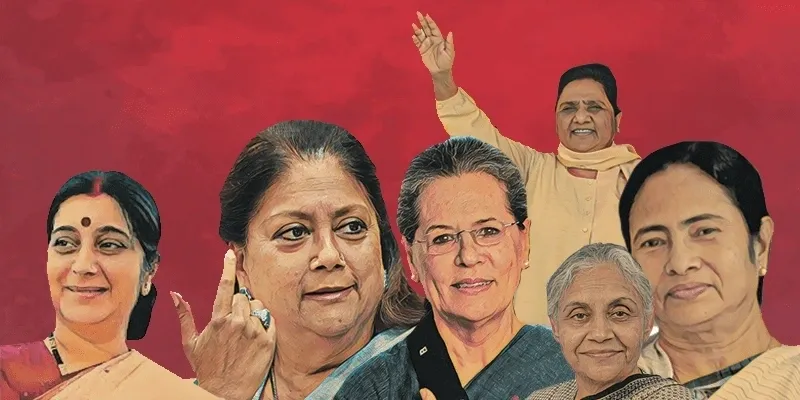
The growing influence of women voters has also transformed political leadership and campaign strategies. Women leaders such as Indira Gandhi historically demonstrated that women could exercise national political authority, while contemporary leaders like Mamata Banerjee and Mayawati have mobilized large political constituencies through welfare-oriented governance models. In southern India, leaders such as J. Jayalalithaa built strong support among women voters through social welfare initiatives including subsidized food programs and women-focused development schemes. At the same time, the number of women contesting elections has steadily increased. In the 2024 general election nearly 800 women contested parliamentary seats, reflecting a significant rise compared to earlier decades and demonstrating greater political participation among women candidates. Additionally, the growing visibility of leaders such as Nirmala Sitharaman and Smriti Irani highlights the expanding presence of women in key national political roles. Despite this progress, however, the proportion of women elected remains relatively modest, highlighting the persistent gap between electoral participation and political representation. The rising visibility of women voters and candidates nonetheless signals a gradual transformation of India’s electoral politics, where gender considerations increasingly influence campaign strategies, governance priorities, and political discourse.
Toward Inclusive Governance: The Future of Women’s Political Leadership
The future of women’s political participation in India will depend on the ability of institutions, political parties, and civil society organizations to address structural barriers and create more inclusive political environments. One important priority is strengthening women’s leadership within political parties, which act as gatekeepers in determining electoral nominations and political opportunities. Increasing women’s representation in party leadership roles can help create more inclusive candidate selection processes and encourage more women to contest elections. Leadership training initiatives, mentorship programs, and political capacity-building efforts are also essential for empowering women leaders at both local and national levels. Programs such as initiatives connecting grassroots women leaders with national policymakers—like meetings between tribal women representatives from Panchayati Raj institutions and Droupadi Murmu—illustrate how institutional support can strengthen pathways from local governance to national political leadership.
Comparative international experiences further highlight the transformative potential of sustained institutional reforms. Countries such as Rwanda have achieved some of the highest levels of female parliamentary representation in the world through constitutional quotas and proactive gender equality policies. Similarly, Sweden has promoted gender balance in politics through party-level commitments to equal representation and strong social welfare policies. India’s experience demonstrates that institutional reforms, electoral participation, and social transformation must work together to advance gender equality in political leadership. While women’s participation as voters and grassroots representatives has expanded significantly, translating this progress into equitable representation at the highest levels of governance remains a key challenge. Achieving this transformation will be essential not only for gender equality but also for strengthening democratic legitimacy and ensuring that political institutions reflect the diverse voices and aspirations of Indian society.
Several recent Indian developments further illustrate both progress and continuing challenges in advancing women’s leadership in politics. The election of Droupadi Murmu in 2022 marked a historic milestone, as she became the first tribal woman to occupy the country’s highest constitutional office, symbolizing the growing recognition of women’s leadership in national governance. At the regional level, leaders such as Mamata Banerjee and Mayawati have demonstrated the capacity of women to build powerful political movements and influence state-level governance through welfare-oriented policies and grassroots mobilization. Similarly, the leadership of Nirmala Sitharaman in one of the most important economic ministries highlights the increasing presence of women in strategic policymaking roles. At the grassroots level, millions of women elected through Panchayati Raj reservations continue to reshape local governance by addressing issues such as sanitation, healthcare, and rural infrastructure. Together, these examples demonstrate that while women’s political participation in India is expanding across multiple levels of governance, sustained institutional support and social change remain essential for achieving genuine gender parity in political leadership.
Conclusion
Women’s political participation in India has expanded significantly in recent decades, reflecting both institutional reforms and the growing political awareness of women voters. However, the persistent gap between electoral participation and legislative representation highlights the structural barriers that continue to shape political opportunities. While initiatives such as grassroots reservations and the Nari Shakti Vandan Adhiniyam represent important steps toward gender equality, their effectiveness will depend on sustained political commitment and supportive institutional frameworks. Strengthening women’s leadership within parties, ensuring safe political environments, and promoting socio-economic empowerment will be crucial for translating participation into power and deepening the democratic character of India’s governance.
Recent developments further demonstrate both the progress achieved and the challenges that remain. The election of Droupadi Murmu marked a historic milestone for representation, symbolizing the increasing visibility of women in national leadership. At the same time, the growing electoral participation of women voters across states indicates a broader shift in democratic engagement where women are no longer peripheral participants but central actors in shaping political outcomes. As women increasingly influence voting patterns, policy debates, and governance priorities, political institutions must adapt to reflect these changing realities.
Ultimately, the future of Indian democracy will depend on its ability to translate women’s expanding electoral participation into substantive political representation and leadership. A political system that genuinely incorporates women’s voices is better equipped to address issues such as social welfare, healthcare, education, and inclusive economic growth. Ensuring greater representation of women in legislatures and leadership positions will therefore not only advance gender equality but also strengthen democratic legitimacy and policymaking effectiveness. In this sense, expanding women’s political participation is not merely a matter of representation—it is fundamental to building a more inclusive, responsive, and resilient democratic order in India.

About the Author
Khushbu Ahlawat is a research analyst with a strong academic background in International Relations and Political Science. She has undertaken research projects at Jawaharlal Nehru University, contributing to analytical work on international and regional security issues. Alongside her research experience, she has professional exposure to Human Resources, with involvement in talent acquisition and organizational operations. She holds a Master’s degree in International Relations from Christ University, Bangalore, and a Bachelor’s degree in Political Science from the University of Delhi.



