
By: Aasi Ansari, Research Analyst, GSDN
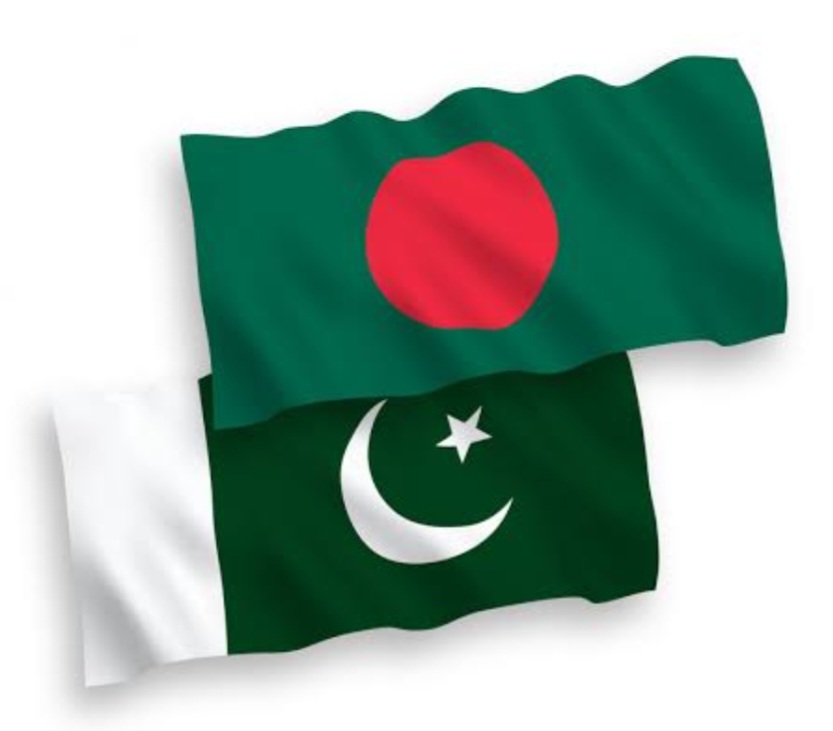
The possibility of Pakistan assisting Bangladesh in acquiring nuclear capabilities is one of the most provocative questions in South Asian geopolitics today. Nuclear weapons have historically been at the centre of the rivalry between India and Pakistan, while Bangladesh has largely remained outside this discourse, focusing instead on economic development and civilian nuclear energy. But since Muhammad Yunus was appointed as an interim government in 2024, Bangladesh sims getting closer to Pakistan and distancing itself from India. This recent political changes in Dhaka and the warming of ties with Islamabad have reignited speculation about whether Bangladesh could one day seek nuclear weapons, and whether Pakistan might play a role in facilitating such ambitions.
Bangladesh’s relationship with Pakistan is rooted in the traumatic events of 1971, when the country fought a war of independence against West Pakistan. The legacy of that conflict left deep scars, and for decades relations between Dhaka and Islamabad were marked by mistrust and estrangement. Pakistan formally recognized Bangladesh in 1974, but political and diplomatic ties remained limited. During the 1980s and 1990s, relations began to normalize, with trade and cultural exchanges slowly increasing. However, Bangladesh’s foreign policy under Sheikh Hasina was firmly aligned with India, and this alignment limited the scope of cooperation with Pakistan.
The political upheaval in Bangladesh in 2024, which saw the fall of Hasina’s government and the rise of Muhammad Yunus’s interim administration, marked a turning point. The new leadership sought to diversify Bangladesh’s foreign relations, opening the door to closer ties with Pakistan. Since august 2024, there has been multiple talks between military officials of both nations. These talks include several memorandums of understanding (MoUs) covering training, military exercises, and information exchange. The two countries are now working on mutual defence agreement and a joint Mechanism has been established. Reports of intelligence and military exchanges between the two countries suggest that Dhaka and Islamabad may be exploring even deeper strategic cooperation. This historical shift raises the question of whether nuclear collaboration could be part of this evolving relationship.
The narrative of Islamic solidarity plays an important role in this relationship as well. Pakistan has historically framed its foreign policy around pan-Islamic ties, and assisting Bangladesh could be portrayed as strengthening Muslim-majority states against India. Military cooperation could take the form of intelligence sharing, joint training, or defense agreements. Whether this cooperation extends to nuclear collaboration remains uncertain, but the possibility cannot be dismissed outright. The warming ties between Pakistan and Bangladesh reflect a convergence of strategic interests. Both countries share concerns about India’s regional dominance, and both may see value in closer military cooperation. For Pakistan, supporting Bangladesh could strengthen its position in South Asia and reduce India’s influence. For Bangladesh, diversifying its alliances beyond India could provide greater strategic autonomy.
Bangladesh has traditionally maintained modest armed forces, focused primarily on internal security and peacekeeping missions abroad. However, in recent years, Dhaka has embarked on an ambitious modernization program known as Forces Goal 2030. This initiative aims to strengthen Bangladesh’s air defense, expand its naval capabilities, and enhance its missile systems. The program reflects a growing awareness of the need to secure national sovereignty in a region dominated by larger powers. In Hasina’s 15-year reign, the Armed Forces of Bangladesh (AFB) have been substantially upgraded. The new interim government of Muhammad Yunus has initiated plans to reform key sectors and institutions of the country, including the police, judiciary, and constitution.
Currently Bangladesh is trying to buy JF-17 jet from Pakistan. The Bangladesh Army already acquired modern Russian BTR-80 and Turkish Otokar Cobra Armed Personnel Carrier (APCs) for its newly formed mechanized infantry units. Sophisticated MBT-2000 tanks and VT-5 light tanks were introduced to the Armored Corps from China. The Artillery Corps was inducted with multiple launch rocket systems (MLRS) like the Turkish TRG-230 and TRG-300 Kasirga alongside the Chinese WS-22. Self-propelled artillery systems like the Serbian Nora B-52 were also added to the inventory. The Air Defense Artillery (ADA) Corps received FM-90 Short Range Air Defense Surface to Air Missiles, coming out from the legacy of operating only obsolete self-propelled guns for air defense and protection of key point installations. Turkish Bayeraktar TB-2 drones were bought for Army Aviation alongside transport aircraft and multipurpose helicopters from the West and Russia, respectively.
The toppling of Bangladesh’s former Prime Minister Sheikh Hasina in a popular mass uprising has changed the strategic, political, and social dynamics of South Asia’s second-largest economy. Given the country’s pacifist foreign policy motto, it often gets overlooked that Bangladesh has the third most powerful armed forces in the region, only behind nuclear-armed India and Pakistan. Thus, Bangladesh is militarily the most powerful non-nuclear weapons state in South Asia.
In the nuclear domain, Bangladesh has concentrated on civilian energy projects. The most significant of these is the Rooppur Nuclear Power Plant, developed with Russian assistance, which is intended to address the country’s chronic energy shortages. Bangladesh remains a signatory to the Nuclear Non-Proliferation Treaty (NPT) and has consistently emphasized peaceful nuclear use. There is no evidence that Dhaka has pursued nuclear weapons, but the political realignment of 2024 has raised questions about whether this stance could change under new leadership.
Pakistan’s nuclear program is one of the most controversial in the world. For Pakistan, nuclear weapons are not merely military assets but symbols of national pride and strategic deterrence. The program has long been associated with clandestine proliferation activities, most notably through the A.Q. Khan network. In the 1980s and 1990s, Khan operated a global nuclear black market, supplying technology to Iran, Libya, and North Korea. Pakistan has recently signed a defence deal with Saudi Arabia. Closeness between Pakistan and Bangladesh increase speculation that Pakistan is trying to make a similar deal with Bangladesh as well. This precedent demonstrates Pakistan’s capacity and willingness to share nuclear know-how under certain conditions. Assisting Bangladesh in acquiring nuclear capabilities could theoretically create another pressure point against India, reshaping South Asia’s strategic balance. However, such assistance would come with enormous risks, given Pakistan’s history of international scrutiny and sanctions related to proliferation.
For India, the possibility of Pakistan assisting Bangladesh in nuclear development represents a serious strategic challenge. India has long been accustomed to managing its rivalry with Pakistan, but the emergence of a nuclear-armed Bangladesh would open a new front in its security calculus. India is already neighbouring two nuclear states making northern India a Nuclear flash point. If Bangladesh becomes Nuclear power, India would face the prospect of being encircled by three nuclear-armed neighbors, forcing it to strengthen Army, Navy and Air defence on all its borders. India would likely respond by accelerating its own nuclear modernization program, strengthening its eastern command, and enhancing surveillance along the Bangladesh border. This will also change the ‘Credible Minimum Deterrence’ for India, considering Pakistan will ask security help form Bangladesh in crisis in exchange to helping them with nuclear technology assistance.
Diplomatic countermeasures would also be deployed, with India mobilizing international pressure against Dhaka and leveraging its partnerships with the United States and European Union to isolate Bangladesh. Bangladesh has ratified both the Treaty on the Non-Proliferation of nuclear weapons (NPT) and the Comprehensive Nuclear-Test-Ban Treaty (CTBT). A nuclear-armed Bangladesh, even if its arsenal were small, could embolden Dhaka to adopt a more assertive foreign policy. The risk of miscalculation would increase significantly. This could lead to heightened tensions along the border, particularly in areas where India and Bangladesh have unresolved disputes. India must therefore prepare for the possibility of a more complex and volatile security environment, where nuclear deterrence is no longer confined to its rivalry with Pakistan but extends to its eastern neighbor as well.
The prospect of Bangladesh acquiring nuclear weapons with Pakistani assistance would have profound implications for global nuclear politics as well. First, it would represent a major violation of the NPT, undermining the credibility of international non-proliferation regimes. Second, it would destabilize South Asia, forcing India to recalibrate its defense posture and potentially accelerating an arms race in the region. Third, the United States, India, and European Union would pressure Dhaka to abandon nuclear ambitions, while China would have little worry to see Bangladesh go nuclear despite being a part of P5+1 country. Beijing prefers stability in South Asia to protect its economic interests, and a nuclear-armed Bangladesh would introduce new uncertainties. The precedent of sanctions against North Korea and Iran illustrates the risks Bangladesh would face. Both countries suffered crippling economic isolation due to their nuclear pursuits. Bangladesh, with its export-dependent economy and reliance on international aid, cannot afford similar penalties.
The idea of Pakistan helping Bangladesh go nuclear is intriguing but ultimately improbable. Pakistan has both the capability and historical precedent to assist another country in nuclear development, but the risks far outweigh the benefits. International sanctions, diplomatic isolation, and potential backlash from India and western nations would make such cooperation a dangerous gamble. Bangladesh’s commitments to non-proliferation and its economic vulnerabilities further constrain the likelihood of nuclearization. The warming ties between Dhaka and Islamabad may lead to enhanced military cooperation, intelligence sharing, or symbolic gestures of solidarity, but crossing the nuclear threshold would be a radical and risky move. The speculation surrounding nuclear cooperation reflects broader anxieties about South Asia’s security dynamics, but the reality is that both Pakistan and Bangladesh have more to lose than to gain from pursuing such a path.



