
By: Tushar Jain
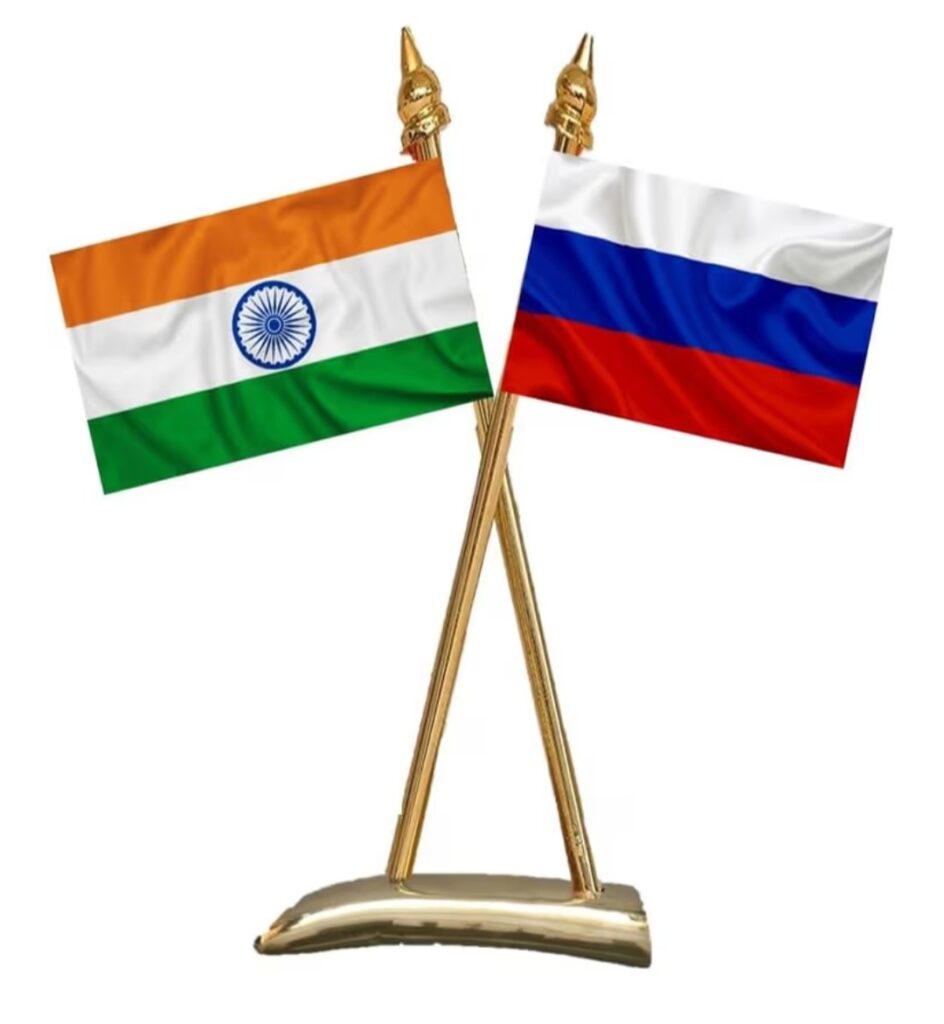
India and Russia share one of the most trusted and long-lasting friendships in the world. This relationship began during the time of the Soviet Union, when India was still a young and growing nation. At that time, the Soviet Union treated India as an equal partner. This was important because most Western countries were either not close to India or openly supporting states that were against India’s interests.
A major moment that built permanent trust between India and Russia was the Bangladesh Liberation War of 1971. During this war, Pakistan received strong support from the United States (US) and the United Kingdom (UK). India needed a powerful ally, both in military strength and global diplomacy. The Soviet Union came forward and stood firmly with India. It signed the Treaty of Peace, Friendship and Cooperation with India on August 9, 1971. The Soviet Navy also moved into the Indian Ocean to counter pressure from the US and the UK. This support helped India win the war and protect its national interests. India has never forgotten this moment, and it became the foundation of the friendship between the two countries.
After the Soviet Union collapsed in 1991, many countries thought the relationship between India and Russia would weaken. But both countries decided to continue the partnership. Russia was facing economic challenges and political change, and India was opening up its economy. Yet the trust between them remained. A major turning point came on October 01, 2000, when President Vladimir Putin visited India. During this visit, both countries signed the “Declaration on the India–Russia Strategic Partnership.” Later, the partnership was upgraded to a “Special and Privileged Strategic Partnership.” This title is rare and shows that the relationship is deeper and more stable than normal diplomatic ties.
Today, India works with many countries around the world, including the US, Japan, and European nations. But Russia still remains important because Russia has always supported India’s independent foreign policy. Russia also backs India’s demand for a permanent seat in the United Nations Security Council (UNSC). India and Russia meet regularly through annual summits and the India–Russia Intergovernmental Commission. Even when global politics becomes tense, this partnership continues without major problems. This long history of trust, support, and cooperation explains why Russia still matters so much to India today.
Expanding Trade and Economic Relations Between India and Russia
Trade between India and Russia has grown faster in recent years than at any time in history. In the financial year 2024–25, the total trade reached around US$ 68.7 billion. This is a major increase and shows that the economic connection has become very strong.
Russian Oil and Its Impact on India
The biggest reason for the rise in trade is Russian oil. After the Russia–Ukraine conflict began on February 24, 2022, Western countries placed heavy sanctions on Russia. This forced Russia to find new markets. Russia started selling oil at discounted prices, and India used this opportunity wisely. Since India imports a large amount of oil every year, discounted crude helped India save money and control fuel prices.
This shift was so big that Russia moved from being a minor oil supplier to providing almost 40 percent of India’s entire oil basket by 2024. This changed the balance of global energy trade. Even the US could not ignore this. Washington saw that Russia had become extremely important to India’s energy security. This highlighted the growing strength of India–Russia ties, not only in trade but also in strategic matters.
Discounted oil helped India reduce inflation, support its economy, and avoid pressure from global fuel prices. For Russia, India became one of the most important buyers, giving Russia financial stability during sanctions. This created a win-win situation for both sides.
Fertilizers, Agriculture, and Other Essential Goods
Russia does not only export oil to India. As sanctions limited its markets, Russia increased the supply of fertilizers, agricultural products, minerals, and other raw materials to India. India often faces fertilizer shortages, and Russia became a strong and reliable partner during this time. Cheaper fertilizers help Indian farmers and support India’s agricultural system.
Russia also exports wheat, metals, timber, and other essential goods. These supplies help India diversify its import sources and reduce dependence on any single country or region.
Local Currency Trade: The Rule of Ruble and Rupee
A major development in India–Russia trade is the shift toward using local currencies instead of the United States dollar (USD). After sanctions made it difficult for Russia to use the USD, both countries began exploring new ways to trade. They started using the Russian ruble and the Indian rupee in several transactions.
This shift reduces dependence on the USD and strengthens both countries’ financial systems. It shows that India and Russia are creating their own path in global trade. If this continues, it could even inspire other countries to explore similar systems in the future which will affect the power of USD in the markets.
Trade Facilitation and Possible Free Trade Agreement
India and Russia are also discussing ways to make trade easier. They are studying the possibility of a Free Trade Agreement (FTA) with the Eurasian Economic Union (EAEU), a group led by Russia. If this agreement becomes a reality, trade between the two countries could grow even faster. This would help both nations increase cooperation in areas like pharmaceuticals, machinery, technology, and agriculture.
India’s Growing Defence Strength with Russia: S-400, BrahMos, and More
Defence cooperation is the strongest part of the India–Russia partnership. Russia has supported India in building a powerful and capable defence system. This support includes selling advanced weapons, sharing technology, providing emergency supplies, and working on joint projects.
The S-400 Air Defence System: India’s Shield
The S-400 air defence system is one of the most advanced systems in the world. It can detect, track, and destroy enemy drones, aircraft, and missiles from long distances. When India decided to buy the S-400 from Russia, the US strongly opposed it. The US warned India about possible sanctions under its law called the Countering America’s Adversaries Through Sanctions Act (CAATSA), which punishes countries that buy major defence systems from Russia.
But India did not give in to the pressure. It continued with the S-400 deal because national security was more important than international pressure. In the end, the US did not sanction India because it understood that pushing India too hard could make India move closer to Russia.
The S-400 proved very important for India. When Pakistan attempted drone activity and cross-border threats, the S-400 helped India defend its airspace. The system strengthened India’s security and made Pakistan more cautious. Today, the S-400 is one of India’s most valuable defence assets.
The BrahMos Missile: A Joint Achievement
The BrahMos missile is another great example of the depth of India–Russia defence cooperation. BrahMos is one of the fastest cruise missiles in the world. It is known for its accuracy and speed. It can be launched from land, sea, and air. It is extremely difficult for enemy systems to stop the missile.
The missile was developed jointly by India and Russia. It is not just a product bought by India, but the result of teamwork and shared technology. The BrahMos gives India a strong advantage over its neighbouring countries. Pakistan and Bangladesh do not have a missile system that can match BrahMos in speed or precision.
Other Russian Defence Support
India also uses many other Russian defence systems, such as T-90 tanks, Sukhoi Su-30MKI fighter jets, submarines, and helicopters. The INS Vikramaditya, India’s aircraft carrier, came from Russia. Russia even leased nuclear submarines to India, helping India gain advanced naval experience.
Russia has also supported India during emergencies. After the Galwan clash on June 15, 2020, with China, Russia immediately supplied India with ammunition and spare parts. This helped India remain prepared during a sensitive time.
How India–Russia Relations Influence Other Countries
Beijing’s Calculations and the Asian Power Balance
China closely watches the India–Russia partnership because it directly affects power dynamics in Asia. Even though Russia and China have strong ties, Russia does not allow China to dominate the region completely. Russia maintains a balance between both countries. India’s access to Russian defence systems like the S-400 and BrahMos makes China more cautious at the border.
When Russia supplied emergency ammunition to India during the Galwan clash on June 15, 2020, it reminded China that India is not alone. Russia’s silent backing gives India more confidence and limits China’s ability to pressure India.
Islamabad’s Strategic Dilemma
Pakistan is directly affected by the India–Russia defence partnership. India’s advanced systems like the S-400 and BrahMos give India a strong military advantage. These systems can detect and prevent Pakistani drone activity and also provide India with offensive capability. Pakistan knows that its defence systems cannot match the capability of Russian-supported Indian systems. This creates pressure and reduces the chances of aggression.
Washington’s Cautious Respect for India’s Autonomy
The United States views India as an important partner to balance China’s rise. But the US also understands that India has deep ties with Russia. Because of this, the US acts carefully and avoids forcing India to choose sides. The US did not impose sanctions on India for buying the S-400 system, even though it sanctioned other countries. The US also understands that discounted Russian oil, which fills nearly 40 percent of India’s oil needs, has made Russia an essential partner. This situation forces the US to respect India’s independent foreign policy.
Ukraine and the Message of Indian Neutrality
Ukraine watches India’s position on the Russia–Ukraine conflict closely. India has taken a balanced position, calling for peace without directly criticizing Russia. India has continued to trade with Russia, especially in oil. Ukraine understands that India cannot break a long-standing partnership that supports its defence, energy, and economy. India’s balanced position shows the world that India follows its national interest and remains neutral during global conflicts.
Bangladesh and Smaller Neighbours Observing India’s Strength
Countries like Bangladesh, Sri Lanka, and Nepal also observe the India–Russia relationship. They understand that India’s strong defence capabilities come partly from Russian support. The presence of systems like BrahMos and S-400 influences their foreign policy choices. These countries prefer to maintain good relations with India because they know India plays a stabilizing role in the region.
A Wider Global Influence: Challenging Old Power Structures
The India–Russia partnership also challenges old global systems. When India buys large quantities of Russian oil and trades in rupees and rubles, it reduces dependence on the USD. This challenges traditional financial systems and shows that countries can find their own ways to trade. Many nations are watching this and may consider similar steps in the future.
Conclusion
Russia matters to India because of history, trust, defence cooperation, and growing economic ties. From Soviet support in the 1971 war to modern defence systems like BrahMos and the S-400, Russia has helped India become stronger. Discounted Russian oil now fills a large part of India’s energy needs, and trade continues to grow. The shift toward trading in rupees and rubles shows that both countries are creating their own economic path. Their partnership affects China, Pakistan, the US, and smaller neighbours like Bangladesh. It strengthens India’s position in Asia and the world. For all these reasons, Russia remains one of India’s most important partners, and the “rule of ruble and rupee” represents the rise of a powerful and independent partnership shaping the future global order.



