
By: Jaiwant Singh Jhala, Research Analyst, GSDN
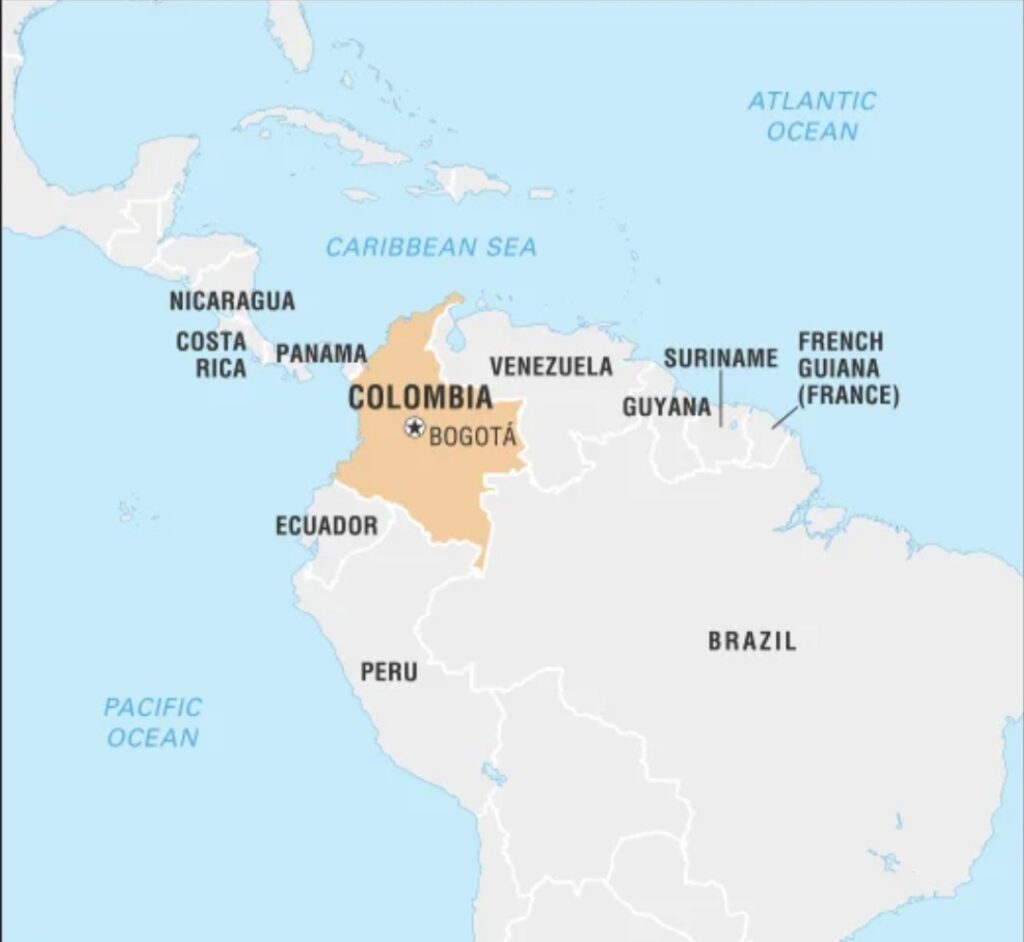
Colombia occupies a unique and strategically significant place in the foreign policy architecture of the United States. Located at the crossroads of Central and South America, bordering both the Caribbean Sea and the Pacific Ocean, Colombia has long served as a geopolitical hinge between North America, South America, and global maritime routes. Over the past three decades, Colombia’s importance to the United States has expanded beyond traditional security concerns to encompass counter-narcotics cooperation, regional stability, economic integration, energy security, democratic governance, and competition with extra-hemispheric powers such as China and Russia. For US, Colombia is not merely another Latin American partner; it is arguably the United States’ closest strategic ally in South America. From the implementation of Plan Colombia in the early 2000s to contemporary cooperation on migration, climate security, and counter-terrorism, the bilateral relationship reflects broader US interests in maintaining influence, stability, and democratic norms in the Western Hemisphere. This article examines why Colombia matters to the United States by analysing its strategic geography, security partnership, economic ties, role in regional stability, and its place within the evolving global order.
Geography
Colombia’s geography alone makes it indispensable to US strategic calculations. It is the only South American country with coastlines on both the Atlantic and Pacific Oceans, giving it access to major maritime trade routes and proximity to the Panama Canal, one of the most critical chokepoints for global commerce and US naval operations. From a US security perspective, Colombia serves as a buffer and bridge. It connects Central America with South America. It borders Venezuela, Ecuador, Peru, Brazil, and Panama regions often affected by political instability, insurgency, and illicit trafficking. It lies close to the Caribbean Basin, historically viewed by the United States as part of its strategic sphere of influence. This geographic positioning allows Colombia to function as a forward partner in monitoring maritime security, combating transnational crime, and preventing destabilizing forces from spreading northward toward the United States.
Counter-Narcotics Cooperation
Perhaps the most defining aspect of US–Colombia relations has been cooperation against drug trafficking. Colombia has long been one of the world’s largest producers of cocaine, and for decades, narcotics flowing from Colombia have fuelled crime, addiction, and public health crises in the United States. Launched in 2000, Plan Colombia represented one of the most ambitious foreign assistance programs in US history. The United States provided over $10 billion in military aid, intelligence support, training, and economic assistance to help Colombia dismantle drug cartels, reduce coca cultivation and strengthen state institutions. While controversial, Plan Colombia significantly weakened insurgent groups, professionalized Colombia’s armed forces, and enhanced state control over previously ungoverned territories. For US, this success demonstrated that sustained engagement could stabilize a key partner while protecting US domestic security interests. Even today, counter-narcotics cooperation remains central. Coca cultivation has resurged in recent years, making Colombias collaboration vital for US efforts to address the drug crisis at its source rather than solely at its borders.
Security and Military Partnership
Colombia is a security exporter, not just a consumer of US assistance. It has one of the most experienced militaries in counter-insurgency and jungle warfare. Colombia has hosted US military cooperation programs, participated in joint training exercises and trained security forces from Central America and the Caribbean with US backing. In 2018, Colombia became NATO’s first global partner in Latin America, underscoring its strategic alignment with Western security frameworks. For the United States, this partnership strengthens interoperability, reinforces alliance networks, and signals commitment to democratic security cooperation in a region where US influence has been challenged.
Regional Stability
Colombia’s importance to the United States has grown sharply due to the crisis in neighbouring Venezuela. Political collapse, economic mismanagement, and authoritarianism in Venezuela have triggered one of the largest refugee crises in the world. Colombia has absorbed over 2.5 million Venezuelan migrants, demonstrating remarkable humanitarian leadership. For the United States, Colombia’s role is crucial because unmanaged migration can destabilize the region, humanitarian crises can fuel organized crime and radicalization and Venezuela’s instability invites external actors like Russia, Iran, and China. By supporting Colombia’s migration response, USA indirectly safeguards its own interests by preventing broader regional destabilization and limiting the influence of hostile powers near US borders.
Economic and Trade Relations
Economic integration is another pillar of Colombia’s importance to the United States. The US–Colombia Trade Promotion Agreement 2012 eliminated tariffs on most goods, significantly boosting bilateral trade. The United States is Colombia’s largest trading partner. Colombia is a major destination for US foreign direct investment. US companies operate in Colombia’s energy, manufacturing, agriculture and technology sectors.
Energy Security and Critical Resources
Colombia plays a quiet but important role in US energy security. It is a significant exporter of oil, coal and natural gas. Although the United States is increasingly energy-independent, diversified sources of supply remain important for global market stability. Colombia energy exports contribute to reducing reliance on politically volatile regions. Colombia possesses critical minerals and biodiversity resources essential for clean energy transitions, pharmaceuticals, and environmental research, areas increasingly central to US strategic planning.
Democracy and Governance
In a region marked by democratic backsliding, Colombia has largely maintained democratic continuity despite decades of internal conflict. For the United States, Colombia represents a model of imperfect but resilient democracy. US support has focused on judicial reform, anti-corruption efforts, human rights protection and strengthening civil society. The 2016 peace agreement with the Revolutionary Armed Forces of Colombia (FARC), while contentious, demonstrated Colombia’s commitment to resolving conflict through democratic institutions rather than prolonged warfare. For US, this aligns with broader goals of promoting stability through governance rather than coercion.
Strategic Competition with China and Russia
As global power competition intensifies, Colombia’s alignment matters even more. China has expanded its economic footprint across Latin America through infrastructure loans, technology exports, and trade. Russia has deepened ties with Venezuela and sought influence in the region. The United States views Colombia as a counterweight to authoritarian influence, partner in defending a rules-based order in the Western Hemisphere and a reliable ally in multilateral institutions. Maintaining strong ties with Colombia helps US prevent strategic drift and preserve influence in its near abroad.
Environmental and Climate Significance
Colombia is one of the most biodiverse countries in the world and hosts large portions of the Amazon rainforest. Environmental degradation, illegal mining, and deforestation have global implications. For the United States, cooperation with Colombia on climate change mitigation, conservation and sustainable development is increasingly important as environmental security becomes a core component of national security policy. Protecting Colombia’s ecosystems aligns US interests with global climate commitments.
Challenges
Despite its importance, the US–Colombia relationship is not without friction. Disagreements persist over drug policy approaches, human rights concerns and environmental protections. Changes in Colombia domestic politics have occasionally created uncertainty in US. However, the depth of institutional ties ensures that the relationship remains resilient despite leadership changes.
As the United States recalibrates its global priorities, Colombia’s value is not diminishing, it is expanding. In an era of multipolar competition and transnational threats, Colombia offers US something increasingly rare. A capable, committed and strategically located partner willing to shoulder shared responsibilities. For these reasons, Colombia remains not just important, but indispensable to US interests in the 21st century.



