
By: Prachi Kushwah, Research Analyst, GSDN
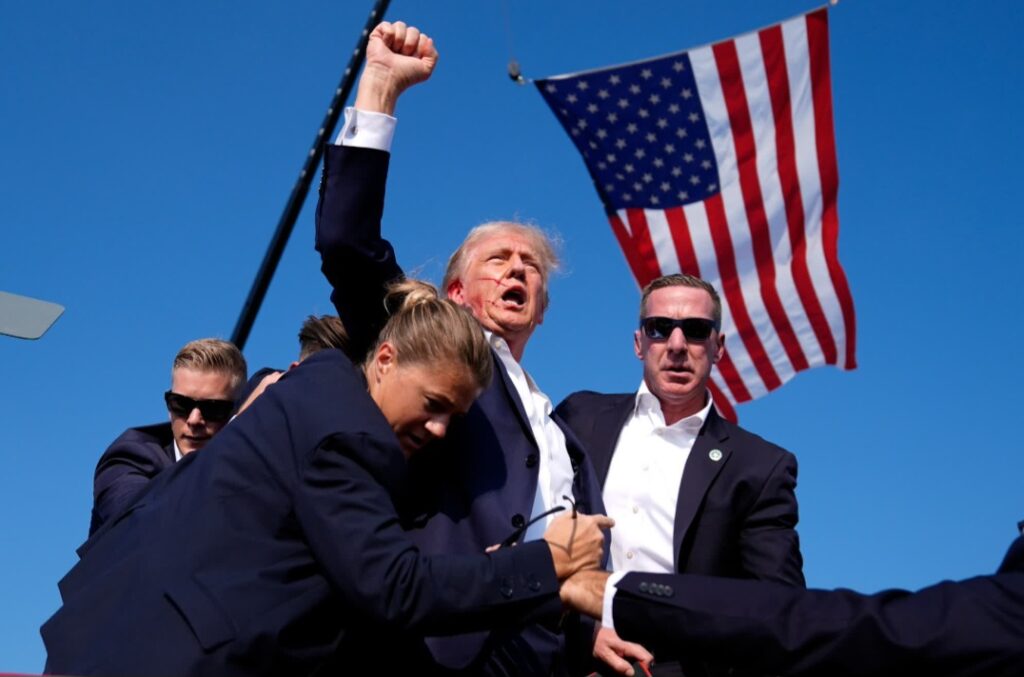
The political slogan “Make America Great Again” (MAGA) has emerged as one of the most influential and debated ideas in modern United States politics. Popularized during the presidential campaign of Donald Trump, the phrase has grown far beyond a campaign tagline into a broader ideological movement. Since Trump formally announced his candidacy on June 16, 2015, MAGA has represented a call for economic revival, national sovereignty, and cultural reassertion. However, the central question remains whether MAGA has fulfilled its promise as a dream realized or whether it continues as a work-in-progress shaped by political, economic, and global challenges.
At its core, MAGA reflects a sense of dissatisfaction among sections of the American population who believe that the country’s global standing and domestic prosperity have declined. The movement appeals to nostalgia, invoking an era when the United States was perceived to have stronger economic dominance, stable industrial growth, and clearer national identity. Yet, translating this aspiration into policy outcomes has proven complex, raising questions about feasibility, inclusiveness, and long-term sustainability.
Origins and Ideological Foundations of MAGA
The origins of MAGA lie in a blend of populism, nationalism, and economic protectionism. While the phrase itself has historical precedents, its modern articulation during the 2016 United States presidential election transformed it into a cohesive political doctrine. The campaign emphasized reducing dependency on foreign economies, strengthening domestic industries, and prioritizing American workers.
A significant aspect of the ideology is its opposition to what it terms as “globalism,” which is viewed as responsible for outsourcing jobs and weakening national borders. By advocating for stronger immigration controls and trade protections, MAGA positioned itself as a corrective force against decades of liberal economic policies. This ideological framing resonated particularly with working-class communities affected by deindustrialization and wage stagnation.
However, critics argue that the ideological foundation of MAGA relies heavily on selective historical interpretation. The notion of returning to a “great” past often overlooks structural inequalities and global interdependence that define the modern world. As such, while the vision is compelling to its supporters, its practical implementation remains contested.
Economic Policies: Promise and Performance
Economic reform stands at the heart of the MAGA agenda. One of the most notable legislative achievements was the Tax Cuts and Jobs Act (TCJA), signed into law on December 22, 2017. The policy aimed to reduce corporate tax rates and stimulate economic investment. Proponents claim that it boosted business confidence and contributed to job creation, while critics highlight that a significant portion of the benefits accrued to corporations and high-income groups.
Trade policy also underwent substantial changes. The North American Free Trade Agreement (NAFTA), originally implemented on January 1, 1994, was replaced by the United States-Mexico-Canada Agreement (USMCA) on July 1, 2020. This renegotiation sought to create fairer conditions for American workers, especially in manufacturing sectors. Additionally, tariffs imposed on imports from countries such as China were intended to reduce trade deficits and encourage domestic production.
While these measures produced mixed outcomes, they also introduced economic uncertainties. Retaliatory tariffs affected exporters, and supply chain disruptions created challenges for industries reliant on global networks. The economic trajectory was further complicated by the COVID-19 pandemic, declared a global crisis on March 11, 2020, which required stimulus measures exceeding US$ 2 trillion. This demonstrated that while MAGA policies aimed for self-reliance, global events continued to shape economic realities.
Immigration and Border Security
Immigration policy has been one of the most defining aspects of the MAGA movement. A central promise was the construction of a border wall to prevent illegal immigration. On January 25, 2017, an executive order was issued to begin this process. The policy symbolized a broader commitment to national security and control over borders.
In addition to physical infrastructure, the administration introduced stricter enforcement measures, including changes to asylum rules and travel restrictions for certain countries. Supporters viewed these steps as necessary to protect jobs and ensure safety, while critics argued that they undermined humanitarian values and damaged the country’s global image.
The debate over immigration under MAGA reflects a deeper ideological divide. It raises questions about identity, diversity, and the balance between security and openness. While the movement emphasizes sovereignty, its long-term implications for a nation historically shaped by immigration remain uncertain.
Foreign Policy and Global Positioning
MAGA’s foreign policy is characterized by the principle of “America First,” which prioritizes national interests over multilateral commitments. This approach led to significant decisions such as the withdrawal from the Paris Agreement, announced on June 1, 2017. The rationale was to protect domestic industries from regulatory constraints, though it drew criticism for undermining global climate efforts.
Diplomatic strategies also shifted, including direct engagement with adversaries. A notable example was the meeting between Donald Trump and Kim Jong Un on June 12, 2018. While it marked a historic moment in diplomacy, its long-term effectiveness remains debated.
Relations with allies were also redefined, with increased emphasis on shared financial responsibilities within international organizations. This recalibration reflected a broader attempt to reshape global leadership dynamics, though it sometimes strained traditional alliances.
Cultural and Political Impact
Beyond policies, MAGA has significantly influenced the cultural and political landscape of the United States. It has mobilized a strong base of supporters who view it as a defense of national identity and traditional values. At the same time, it has intensified political polarization, contributing to divisions across social and ideological lines.
The United States presidential election held on November 3, 2020, demonstrated the enduring strength of the movement. Despite electoral defeat, MAGA continued to shape political discourse and party dynamics. Events such as those on January 6, 2021, further highlighted the intensity of political engagement associated with the movement.
MAGA has also redefined the direction of the Republican Party, aligning it more closely with populist and nationalist themes. This transformation suggests that its influence extends beyond a single leader, embedding itself within broader political structures.
Achievements and Criticisms
Evaluating MAGA requires a balanced perspective. On one hand, it successfully brought attention to critical issues such as trade imbalances, industrial decline, and border security. It demonstrated the power of political messaging in mobilizing large segments of the population.
On the other hand, the movement has faced criticism for policy inconsistencies and unintended consequences. Economic measures such as tariffs created disruptions, while foreign policy decisions sometimes weakened alliances. Additionally, critics argue that its rhetoric has contributed to social divisions and challenged democratic norms.
These contrasting outcomes indicate that while MAGA has achieved certain objectives, it has also generated new challenges, reinforcing the idea that it remains an evolving project rather than a completed vision.
Conclusion
In conclusion, “Make America Great Again” represents both an aspiration and an ongoing process. It is a dream in its promise to restore national strength and identity, and a work-in-progress in its practical implementation. The movement has reshaped political discourse, influenced policy decisions, and mobilized millions of supporters.
However, its long-term success depends on its ability to address structural challenges, adapt to global realities, and balance competing priorities. As of 2026, MAGA continues to evolve, reflecting the complexities of governance in a rapidly changing world. Whether it ultimately fulfills its promise or remains a contested vision will depend on how its principles are translated into sustainable and inclusive outcomes.



