
By: Simran Sodhi, Guest Author, GSDN
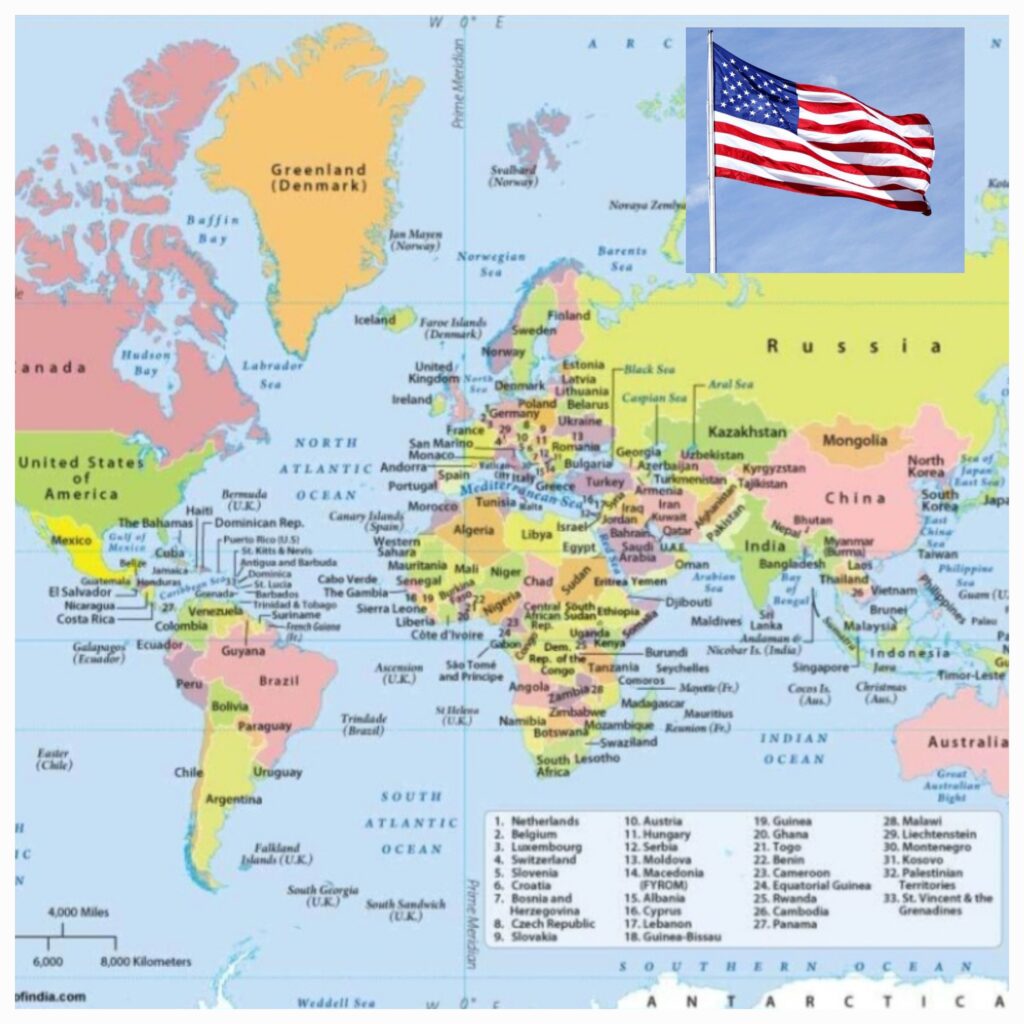
As the world economy suffers as a result of the Middle East conflict, another outcome that is becoming rather obvious is the decline of the United States as the hegemon that seemed invincible and all powerful before Feb 28. Post World War II, the US has been regarded as the world’s foremost power in economic and military terms. Even in terms of diplomacy and the international arena, the multiple alliances that the US forged with Europe, countries in Asia and elsewhere made the US the world’s superpower.
The Middle East conflict, which is now a month old, has however revealed many of the cracks in this argument now. Militarily, the US has the world’s best armies, navies and air forces. Yet, even after a month of bombing Iran relentlessly, the US is not in a position to declare victory. The asymmetric warfare employed by Iran has brought down US planes, hit US military bases in the Gulf States and infrastructure facilities in the region. Most significantly, Iran has de facto closed the Strait of Hormuz through which 20% of the world’s oil passes through. This has resulted in the oil prices crossing $100 a barrel and fears of inflation and recession spreading globally.
The US has fumed and issued threats and tantrums to the Iranians. But to no avail. The Strait remains closed and Iran is now allowing ships to pass through it on a case by case basis. Some reports suggest that Iran is now charging the ships that are allowed to pass through the Strait of Hormuz a transit fee in Chinese Yuan. This is a direct challenge to the supremacy of the dollar and a win for China. The fact that the US, with all its military might, has failed to get the Strait of Hormuz opened also is the beginning of the end of the US hegemony.
Further, the fact that the US’s NATO allies have refused to back the US on this war or become a party to it, further points to the alienation of the US from Europe. It would not be an overstatement to state at this point that the ongoing Middle East conflict has permanently damaged the EU-US alliance. US President Donald Trump, in his posts on social media, has criticized the EU and made fun of the EU leaders. His mimicry of leaders like the French President have further made this alliance ‘almost over’.
For the Gulf States, Saudi Arabia, the United Arab Emirates (UAE), Qatar, Bahrain and Oman, this conflict has exposed their vulnerabilities to Iran. It has also painfully revealed at how ineffective the US has been in protecting the Gulf States. Further, another harsh reality that has emerged is that for the US, the priority would always be the interests of Israel. This is despite the fact that the Gulf States have invested heavily in the US economy and have always looked upon the US as a reliable security guarantee. Whenever this conflict gets over, whether in the next few weeks or months, it will lead to the Gulf States doing a serios re-assessment of their security concerns. One can expect more bilateral defense pacts like the one inked by Saudi Arabia with Pakistan. In short, there is likely to a movement away from the US orbit as the Gulf will need to invest more domestically in defense and search for new partners in that direction. This will ensure that the Middle East moves away from the US sphere of influence, much like Europe.
Much of the Asian nations are also watching this rapid change of international order. China is the biggest winner here. The more the US power is dented, the more it benefits the rise of China. For Russia, which is entangled in Ukraine for almost four years now, this conflict has both gains and losses. The gain again is watching the US depleting its military resources but the worry is Ukraine getting a foothold in the Gulf as it sells its anti-drone technology in the region which has been heavily attacked by the Iranian drones. Countries like India which have sought to cultivate deeper ties with the US have already done a re-think. India is today talking directly to Iran so that its ships can transit the Strait of Hormuz. For Japan, South Korea and others in the Indo-Pacific, the fear of an even stronger China will keep them in the neutral zone. But the failure of the US to protect the interests of the Gulf States has an important lesson for Japan and South Korea who rely heavily on US guarantees of security.
History teaches us that all empires rise and then decline. The world has witnessed the rise and fall of the Roman empires to the Ottomans and the British empire. Today, we sit at the beginning of the decline of the US hegemony and every nation-State must make fresh calculations about its role in a new world order. Whether this will usher in a multipolar world with players like Russia, China and the EU or an era led by a new superpower like China, only time will tell.

About the Author
Simran Sodhi is Director-India, TRENDS (Abu Dhabi Media Research & Advisory). In a journalistic career spanning over two decades, she has written for a number of national and international publications. She has also reported from various corners of the world like Tokyo, Beijing, Pakistan and Bhutan, among others. She tweets at @Simransodhi9



