
By: Khushbu Ahlawat, Consulting Editor, GSDN
Introduction
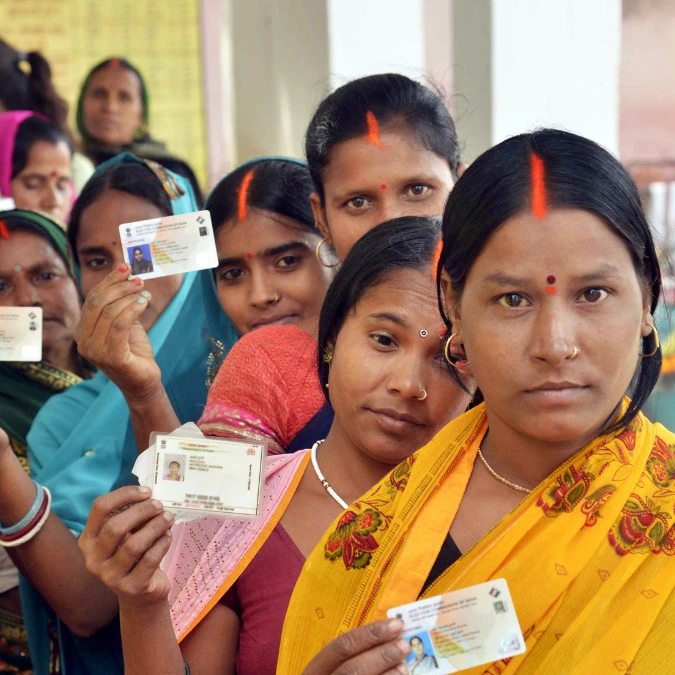
India’s electoral democracy is undergoing a structural transformation—subtle in appearance but profound in impact. At the heart of this shift lies the growing political agency of women voters, who are no longer peripheral participants but central actors in shaping electoral outcomes. Data from the Election Commission of India underscores that this transition is not incidental but systemic. In the 2024 general elections, women’s turnout reached approximately 65.8 percent, nearly matching—and in several states surpassing—that of men. Notably, women recorded higher turnout in 19 out of 36 states and Union Territories, pointing to a nationwide pattern rather than isolated trends.
As India moves deeper into the 2025–26 electoral cycle, this phenomenon has intensified. Electoral politics is gradually shifting away from traditional determinants such as caste and identity, toward a more performance-oriented paradigm. At the center of this evolution is a politically aware, welfare-conscious female electorate whose voting behavior reflects autonomy, pragmatism, and a growing insistence on accountability.
Women as the New Electoral Vanguard
The consolidation of women as a decisive electoral force is vividly reflected in recent state elections. The 2025 Bihar Assembly elections marked a watershed moment, with women recording a turnout exceeding 71 percent—significantly higher than male participation, which hovered around 62–63 percent. This nearly 9 percentage point gap represents one of the widest gender differentials in India’s electoral history and signals a fundamental shift in voter dynamics. Political scientist Yogendra Yadav has described the emergence of a “new voter” in India—one who is less constrained by identity and more guided by lived realities and governance outcomes. This characterization resonates strongly with women voters, who are increasingly exercising independent political choice. Surveys conducted by the Centre for the Study of Developing Societies suggest that a significant majority of women now vote autonomously, marking a decisive break from traditional patriarchal voting patterns.
This transformation is further reinforced by demographic shifts. Women now outnumber men in electoral rolls across multiple states, and in regions like Puducherry, they constitute a majority of the electorate. Their numerical strength, combined with higher turnout rates, has effectively repositioned women as the pivot around which electoral outcomes are increasingly determined.
From Identity Politics to Welfare Governance
One of the most consequential outcomes of this shift is the reorientation of political incentives. The growing influence of women voters has compelled political parties to prioritize governance delivery over identity-based mobilization. Welfare policies that directly impact household well-being have assumed central importance in electoral strategies. Flagship initiatives such as the Pradhan Mantri Ujjwala Yojana have not only improved access to clean energy but have also reshaped voter expectations. Women voters are increasingly evaluating governments based on tangible improvements in their daily lives, including access to healthcare, food security, and financial support mechanisms. Empirical data from CSDS reinforces this trend, indicating that women voters are more likely than men to prioritize issues such as inflation, welfare delivery, and social security over identity-based considerations. This shift signifies a broader transformation in Indian politics—from symbolic representation to substantive governance—where electoral success is increasingly tied to performance and accountability.
A critical yet often underexplored dimension of this transformation is the intersection of women’s political participation with economic empowerment and digital inclusion. The rapid expansion of self-help groups (SHGs), particularly under initiatives like the National Rural Livelihoods Mission, has created new channels of political awareness and mobilization among women in rural India. According to government data, over 90 million women are now linked to SHGs, many of whom are first-time voters who engage actively in community-level decision-making. Scholars such as Nirmala Buch and Bina Agarwal have long argued that economic participation enhances political agency, a proposition that is increasingly visible in India’s electoral landscape. Additionally, the proliferation of smartphones and affordable internet access has enabled women voters to access political information independently, reducing reliance on traditional gatekeepers such as family or local elites. A 2024 survey by Lokniti-CSDS found that nearly 42 percent of women voters reported using mobile platforms to gather election-related information, marking a significant shift toward informed and autonomous decision-making. Recent state elections further illustrate this trend: targeted digital campaigns focusing on welfare schemes, LPG subsidies, and direct benefit transfers have been particularly effective in influencing women voters. However, this growing digital-political interface also raises concerns about misinformation and unequal access, especially among marginalized groups. Therefore, while the convergence of economic empowerment and digital connectivity is strengthening women’s electoral agency, it also underscores the need for robust digital literacy initiatives and inclusive policy frameworks to ensure that this transformation remains equitable and sustainable.
State-Level Evidence: Women as Election Deciders
State-level electoral trends provide compelling evidence of the decisive role played by women voters. The Bihar elections of 2025 demonstrated how high female turnout can significantly influence electoral outcomes, with analysts attributing a substantial portion of the verdict to women’s support for welfare-oriented governance.
Similarly, in the evolving 2026 electoral landscape, regions such as Puducherry are witnessing intensified political focus on women voters, who now form the majority of the electorate. Campaign strategies are increasingly tailored to address issues that resonate with women, including price stability, healthcare access, and safety.
At the same time, emerging data highlights persistent structural challenges. Variations in voter registration, particularly in states like Uttar Pradesh, point to systemic barriers such as documentation gaps and migration-related exclusions. These disparities underscore the need for sustained institutional reforms to ensure that the expansion of women’s electoral participation remains inclusive and equitable.
Another significant development in the 2025–26 electoral cycle is the increasing political salience of targeted cash transfer schemes and gender-specific welfare guarantees, which have emerged as decisive factors shaping women’s voting behavior. Recent state elections across India—including Madhya Pradesh (2023 spillover effects into 2025 political discourse), Karnataka, and emerging campaign narratives in 2025 assembly polls—demonstrate a clear pattern: women voters are responding strongly to direct, tangible economic benefits. Schemes such as Ladli Behna Yojana in Madhya Pradesh and Gruha Lakshmi in Karnataka, which provide direct financial assistance to women, have not only improved household liquidity but also enhanced women’s decision-making power within families. Preliminary post-poll analyses and CSDS-Lokniti insights in 2025 suggest that women beneficiaries of such schemes exhibited higher turnout rates and a stronger inclination to support incumbent governments perceived as welfare-delivering. Political economist Yamini Aiyar has noted that India is entering an era of “welfare competition,” where states are innovating aggressively to secure women’s electoral support through targeted benefits. Importantly, this trend is not limited to rural or economically weaker sections; urban women voters are also increasingly prioritizing cost-of-living concerns, inflation management, and income support mechanisms. However, critics argue that the growing reliance on cash transfers raises questions about fiscal sustainability and long-term economic productivity. Despite these concerns, the immediate electoral impact is unmistakable: women voters are rewarding governments that deliver direct, visible, and reliable benefits. This evolving dynamic underscores a broader shift in Indian politics, where electoral legitimacy is increasingly tied to welfare effectiveness, and women voters are at the forefront of this transformation.
Recent electoral developments in 2025–26 further reinforce the structural consolidation of women as a decisive political constituency, while also revealing emerging complexities within this transformation. The Bihar Assembly elections of 2025 marked a historic milestone, with female voter turnout reaching approximately 71.6 percent—significantly higher than the 62–63 percent recorded among men, representing one of the widest gender participation gaps in recent electoral history. This trend is not isolated. In the run-up to the 2026 elections, regions such as Puducherry have witnessed women not only turning out in greater numbers but also constituting a numerical majority of the electorate, fundamentally altering electoral arithmetic and campaign strategies. At the same time, localized data from 2025–26 highlights a parallel trajectory of institutional efforts and structural challenges. States like Himachal Pradesh have achieved near gender parity in voter rolls, with ratios reaching as high as 983 women per 1,000 men, reflecting successful voter awareness and inclusion drives. Conversely, recent electoral roll revisions in Uttar Pradesh (2026) have exposed vulnerabilities, with a significant decline in registered women voters due to documentation gaps, migration, and bureaucratic filtering processes. These contrasting trends underscore a critical reality: while women’s electoral participation is expanding rapidly, it remains uneven and contingent on institutional capacity and policy design. Experts argue that this phase represents a “second-generation shift” in India’s gendered political participation—moving beyond turnout parity toward consolidation, influence, and issue-based voting behavior. As women increasingly determine electoral outcomes, the challenge for policymakers lies not only in mobilizing participation but in ensuring sustained inclusion, accurate registration, and equitable access to the democratic process.
Reframing Political Narratives
The rise of women voters is not merely altering electoral outcomes; it is fundamentally reshaping political discourse. Campaign narratives are increasingly centered on governance, welfare, and quality of life—issues that align closely with the priorities of women voters. Inflation, food security, healthcare, and safety have emerged as dominant themes, displacing traditional identity-driven rhetoric. As Milan Vaishnav observes, Indian voters are becoming more “aspirational and transactional,” seeking tangible benefits from political choices. Women voters exemplify this shift, as their decisions are closely linked to measurable improvements in their everyday lives.
This transformation has prompted political parties to adopt more inclusive and targeted campaign strategies. Manifestos are increasingly focused on welfare delivery and economic empowerment, reflecting a broader shift toward accountability-driven governance.
Global Comparisons: India in Perspective
India’s experience is part of a broader global trend in which women are playing an increasingly influential role in electoral politics. In countries such as the United States, women have consistently recorded higher voter turnout than men, shaping electoral outcomes and policy debates. Similarly, in the United Kingdom, gender-based voting patterns have influenced discussions on welfare, healthcare, and social policy.
However, India’s case stands out due to its scale and rapid transformation. With over 400 million women voters, India represents one of the largest female electorates in the world. Unlike many Western democracies, where gender gaps in voting have stabilized, India is experiencing a dynamic expansion in both participation and influence. This makes the Indian case not only unique but also globally significant as a model of evolving democratic engagement.
Bridging Participation and Representation
Despite their growing electoral influence, women remain underrepresented in legislative institutions, highlighting a critical gap between participation and political power. Structural barriers, including socio-cultural norms and limited access to political networks, continue to restrict women’s entry into formal politics. The passage of the Women’s Reservation Bill 2023 represents a significant step toward addressing these disparities. By institutionalizing greater representation, the legislation has the potential to align political structures with the realities of voter participation. However, its success will depend on effective implementation and sustained political will.
Conclusion
The rise of women voters represents one of the most transformative developments in contemporary Indian democracy. The 2025–26 electoral cycle has demonstrated that women are not only participating in unprecedented numbers but are also decisively shaping electoral outcomes and policy priorities. From record-breaking turnout in Bihar to demographic dominance in regions like Puducherry, women voters are redefining the contours of political engagement. This silent revolution is pushing Indian politics toward a more inclusive, accountable, and performance-driven model. Women voters are demanding governance that delivers, policies that matter, and leadership that responds to their aspirations. In doing so, they are not merely influencing elections—they are redefining democracy itself. Looking ahead, the consolidation of women voters as a decisive political force will likely redefine not just electoral strategies but also the institutional architecture of governance in India. Political parties will be compelled to move beyond short-term welfare assurances toward long-term investments in health, education, employment, and safety—areas that directly shape women’s lived experiences. Moreover, as women voters become more organized and politically conscious, their role in demanding transparency, curbing local-level corruption, and influencing grassroots governance is expected to grow significantly. This shift holds the potential to deepen democratic accountability and foster a more participatory and responsive political system.As India moves forward, the trajectory of its political system will increasingly depend on how effectively it engages with this powerful and evolving electorate. The message is unequivocal: the future of Indian politics will not just include women—it will be shaped by them.

About the Author
Khushbu Ahlawat is a research analyst with a strong academic background in International Relations and Political Science. She has undertaken research projects at Jawaharlal Nehru University, contributing to analytical work on international and regional security issues. Alongside her research experience, she has professional exposure to Human Resources, with involvement in talent acquisition and organizational operations. She holds a Master’s degree in International Relations from Christ University, Bangalore, and a Bachelor’s degree in Political Science from the University of Delhi.



