
By: Sk Md Assad Armaan, Research Analyst, GSDN
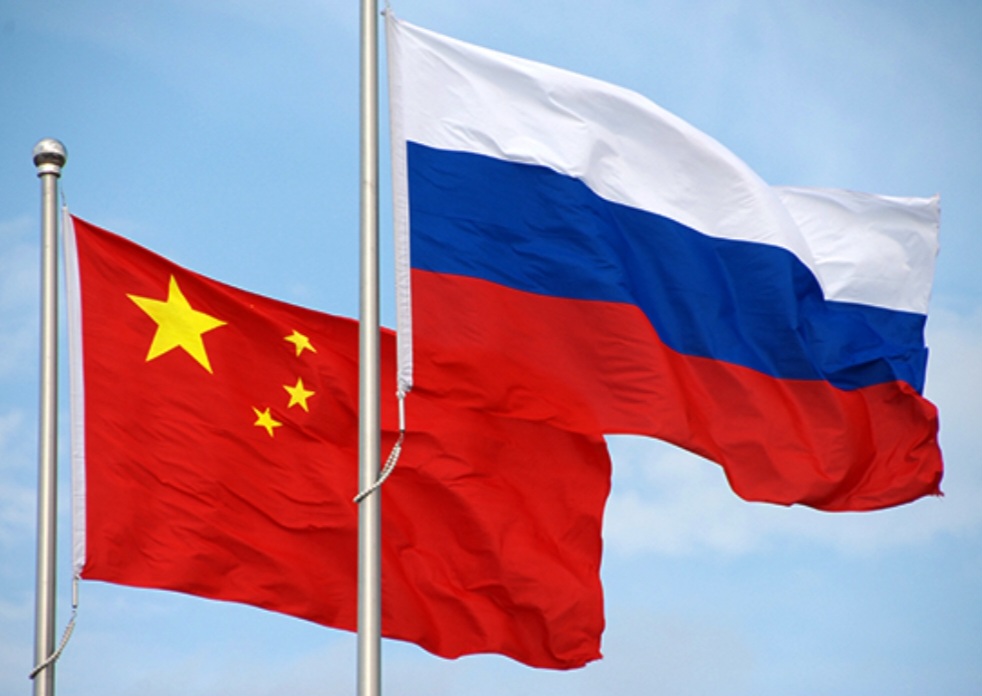
The United States’ recent military operation in Venezuela involving strikes, capture of President Nicolás Maduro, and efforts to reshape political authority has reverberated far beyond Latin America. The move triggered global condemnation, particularly from Russia and China, which framed the action as a violation of international law and an affront to sovereignty. At an emergency United Nations Security Council meeting, both Moscow and Beijing condemned the U.S. military action as an act of aggression, asserting Venezuela’s right to determine its own future absent foreign intervention.
While the operational fallout in Venezuela continues to unfold, Russia and China are already positioning themselves to leverage the situation. The U.S. move offers these powers multiple strategic advantages in the broader contest with Washington, reinforcing narratives of Western overreach, weakening U.S. legitimacy in global governance, and providing opportunities to expand their influence in Latin America and beyond.
Russia and China have both capitalised on the optics of the U.S. intervention to critique American foreign policy. Beijing described Washington’s action as a “clear violation of international law” that undermines the UN Charter and infringes on Venezuela’s sovereignty. Similarly, Moscow labelled the operation an act of “armed aggression” threatening the principle of self-determination. These condemnations serve multiple purposes. First, they reinforce sovereignty and non-intervention core pillars of Russian and Chinese diplomatic rhetoric. For China, in particular, this narrative bolsters its own arguments against perceived Western interference in Xinjiang, Tibet, or Taiwan by portraying the U.S. as the real threat to international norms.
For Russia, which has defended regimes in Syria and elsewhere, critically positioning itself against U.S. unilateralism helps maintain its claim to be a defender of a multipolar world. These portrayals align with broader efforts by both states to delegitimise U.S. global leadership and promote alternative norms of international order. Moreover, sustained criticism resonates in the Global South. Countries in Latin America, Africa, and Asia frequently cautioned against external intervention and warned of a dangerous precedent. This shared concern provides Russia and China with an opening to build diplomatic coalitions and present themselves as partners willing to engage on terms that emphasise mutual respect and sovereignty.
Strategic Economic Levers and Narrative Competition
The Maduro regime’s capture also has significant implications for global energy politics, particularly for China, which has been Venezuela’s largest oil buyer and a key financier of its economy for years. U.S. efforts to assert control over Venezuelan oil resources and reopen markets to Western producers could disrupt existing commercial arrangements favoured by Beijing. China’s strategic response is likely to involve economic recalibration rather than direct confrontation. Beijing’s investments in Venezuela have been extensive, involving loans, joint ventures, and long-term contracts for heavy crude exports. Chinese authorities have criticised U.S. actions as targeting these economic interests under a veneer of law enforcement and have used this framing to argue that Washington’s intervention threatens stable commercial relations and discourages long-term investment.
In response, China can pursue diversified engagement with other Latin American economies, offering infrastructure financing, trade partnerships, and investment packages to countries that may feel threatened by U.S. unilateralism. These economic relationships, often delivered through mechanisms like the Belt and Road Initiative, provide Beijing leverage in diplomatic and geopolitical conversations, effectively offsetting losses in Venezuela with expanded influence elsewhere. Russia, although less economically intertwined with Venezuela than China, also stands to benefit strategically. Moscow’s energy companies have historically supplied petroleum products and technical assistance to Caracas, and Russia has used such ties to symbolise opposition to Western dominance. The erosion of the Maduro alliance could prompt Russia to seek new forms of political and economic cooperation with other states wary of U.S. actions, particularly in Africa and Central Asia.
Beyond diplomacy and economics, Russia and China are intensifying efforts to shape global perceptions of the Venezuela crisis. State-backed information operations have amplified narratives questioning the legality and legitimacy of the U.S. intervention, portraying Washington as unpredictable and imperialistic. These campaigns are not restricted to traditional media channels; they use social media platforms and AI-driven content to sow confusion, highlight perceived U.S. hypocrisy, and appeal to audiences sceptical of Western media. Such narrative competition serves multiple strategic goals.
It undermines confidence in U.S. leadership among allied publics, strengthens scepticism about Western intentions in the Global South, and reinforces the image of Russia and China as defenders against external coercion. In ideologically aligned media spaces, these narratives can tilt public opinion and influence political elites in key regions, further entrenching geopolitical blocs.
Russia, Ukraine, and the Logic of Opportunistic Escalation
Beyond narrative and economic leverage, the Venezuela episode may also create permissive conditions for Russia to recalibrate its military posture in Ukraine. Moscow closely monitors U.S. strategic bandwidth and political focus. Any perception that Washington is stretched across multiple theatres. Latin America, Ukraine, the Middle East, and the Indo-Pacific creates what Russian strategists describe as a “window of opportunity.” This does not automatically translate into immediate large-scale offensives, but it lowers the perceived costs of escalation. From Moscow’s perspective, U.S. actions in Venezuela reinforce a pattern of selective intervention driven by political expediency rather than consistent adherence to international norms.
This perception strengthens Russia’s long-standing argument that power, not law, governs global politics. In such an environment, restraint becomes strategically irrational. If Washington is willing to use force to reshape political outcomes in its perceived sphere of influence, Russia can justify intensified military pressure in Ukraine as reciprocal behaviour rather than escalation. Importantly, escalation need not mean dramatic territorial breakthroughs. It may take the form of intensified missile strikes or renewed offensives designed to test Western resolve and Ukrainian resilience. The goal would be strategic signalling rather than decisive victory demonstrating that U.S. credibility erodes when it applies norms selectively. Even limited escalation serves a broader purpose: forcing the West to divide attention, resources, and political capital.
Thus, Venezuela does not cause escalation in Ukraine, but it contributes to a permissive strategic environment where Russia calculates that the risks of intensified pressure are manageable and potentially advantageous.
China, Taiwan, and the Precedent Problem
China’s response to U.S. actions in Venezuela is unlikely to be immediate or overtly military, but the precedent matters deeply for Beijing’s Taiwan calculus. Chinese strategic thinking places enormous emphasis on patterns of behaviour. If Washington demonstrates willingness to use force to remove or detain political leadership in another sovereign state, Beijing will study not the justification offered, but the international response it generates. For China, the critical lesson is not Venezuela itself, but the elasticity of global norms. If international opposition remains fragmented, short-lived, or symbolic, it reinforces Beijing’s belief that decisive action particularly when framed as law enforcement, counterterrorism, or internal security can be absorbed without catastrophic consequences. This does not mean China is preparing for imminent invasion of Taiwan.
Rather, it strengthens confidence in incremental coercion. The most likely outcome is intensified grey-zone pressure rather than immediate kinetic action. China may expand military drills, legal warfare, economic coercion, and political influence operations while closely observing U.S. responses. Each step tests thresholds and normalises higher levels of pressure. The Venezuela episode contributes to this logic by weakening the moral clarity of U.S. deterrence messaging. Beijing can argue both domestically and internationally that Washington itself violates sovereignty when convenient. This rhetorical symmetry reduces reputational costs for Chinese coercive actions around Taiwan. In strategic terms, Venezuela becomes another data point reinforcing China’s belief that power precedes legitimacy, not the other way around.
From Regional Crisis to Systemic Signal
What makes the Venezuela episode particularly consequential is not its regional impact, but its systemic implications. Great power competition today is increasingly shaped by how crises in one region recalibrate expectations elsewhere. Russia and China do not require direct involvement in Latin America to benefit strategically. They benefit when U.S. actions weaken the coherence of the normative order Washington claims to defend. This dynamic accelerates a broader shift toward a precedent-based international system, where states justify actions not through law, but through comparison. If intervention becomes a tool selectively applied by great powers, restraint loses its strategic value. In such a system, escalation is not triggered by intent alone, but by opportunity.
For Russia, this means testing limits in Ukraine when U.S. attention is fragmented. For China, it means refining coercive strategies against Taiwan without crossing thresholds that would unify opposition. For both, Venezuela becomes a reference point used to legitimise future actions, even if those actions occur thousands of kilometres away. The danger is cumulative rather than immediate. Each precedent lowers barrier to the next. Each selective intervention erodes the credibility of deterrence built on rules. Over time, this transforms the international system from one governed by constraint to one governed by competitive permissibility.
Conclusion: Strategic Advantage Through Narrative and Structure
In multilateral forums, Russia and China are leveraging the Venezuela situation to advocate for reforms in global governance that mitigate U.S. dominance. Their calls for emergency UN Security Council sessions and demands for respect for sovereign rights, even if symbolic, allow them to project leadership on principle and challenge U.S. narratives about international law and intervention. This movement toward an alternative multilateral discourse resonates with many states in Africa, Latin America, and the Middle East that share concerns about unilateral military actions.
For China and Russia, positioning themselves as proponents of a more equitable international system enhances their soft power and paves the way for broader strategic partnerships including cooperation on technologies, infrastructure, and defence. The U.S. operation in Venezuela has presented Russia and China with a strategic opportunity: to delegitimise American unilateralism, reinforce their own narratives of sovereignty and non-intervention, and strengthen economic and diplomatic ties with states wary of Western dominance. While neither Russia nor China has direct military options to reverse U.S. actions in Latin America, they can exploit the situation to shape global norms, strengthen alliances, and expand their influence in ways that counterbalance U.S. power.
In the contest of global influence, the Venezuela crisis provides an example of how great powers use moments of geopolitical tension not just for immediate gain, but to reshape narratives, recalibrate economic alignments, and build alternative architectures of authority in the international system.



