
By: Simran Sodhi, Guest Author, GSDN
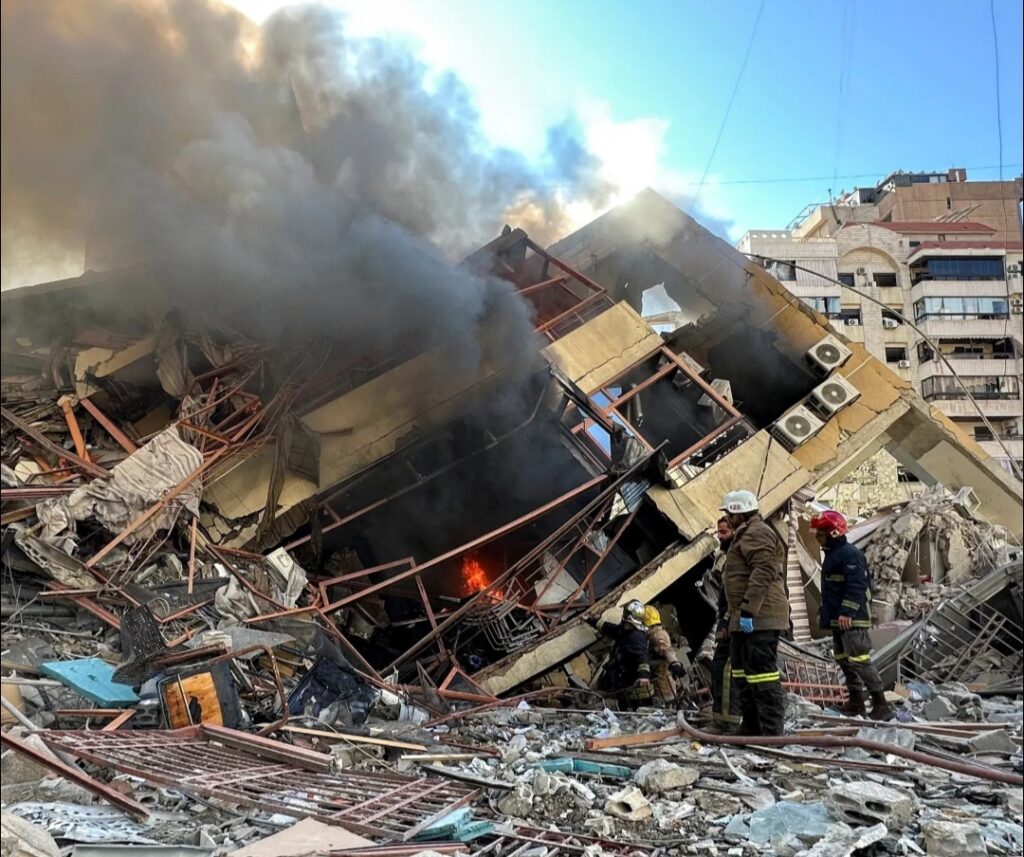
As the conflict in the Middle East rages on, the world economy is showing the signs. With the rise in oil prices, the concern globally is recession and a slow down of economic growth. The closure of the vital Strait of Hormuz, through which 20 per cent of the world’s oil and gas pass through, is already causing panic as gas and oil shortages send most nations looking for alternatives. The United States-Israel bombing of Iran is only getting worse and Iran seems to be in a retaliation mood. Both sides, so far, show no signs of wanting to end this conflict with the leadership on both sides giving statements that indicate a prolonged conflict. However, the longer this conflict goes on, the world stands to suffer economically.
While the Gulf nations like the United Arab Emirates (UAE), Saudi Arabia, Qatar and Bahrain have all been hit by Iran, so far, they have avoided getting sucked into the conflict directly. The economies of the Gulf nations, India, Japan and Europe all are and will get affected even more if this drags on. Which brings us to the question of dialogue and mediation. One is well aware that Oman tried to mediate between US-Israel and Iran before the conflict and going by the public statements of many in Oman, they were able to get Iran to agree to many concessions. Oman, has on the record stated, that “peace was within reach” and the attack by the US-Israel then even more surprising. Iran of course feels that it was tricked by the Americans and Israelis who under the pretense of negotiations, were already planning to bomb Iran.
While Oman was not successful in its role as a mediator, there are many who believe that even today Oman is one of the best choices the world has to step in and talk to the warring factions. There have been calls on other countries like France for instance to use its good offices and to step in as a possible mediator. China is being considered as another possibility since China had also been the one who got Saudi Arabia and Iran to normalize their ties. But while China maintains good ties with the US and Iran, the US-China rivalry might make this a little tricky for the Chinese. US President Donald Trump’s much anticipated visit to China later this month has also been postponed. Other Gulf States that can potentially step in are Qatar, Turkey and the UAE.
India has also been named by many as a potential mediator in this conflict. India does enjoy good ties with the US and Iran, though of late India’s slant towards Israel, makes this a difficult option. There has been a fair amount of commentary within and even outside India over what role can India play in this conflict. I would argue that it would be difficult for India to project itself as the sole meditator, something that Oman did. It would be a more pragmatic approach for India at this point to project itself as one of the mediators, or to posture itself as being part of a larger grouping that can talk to various players in this conflict. India has shown that despite the slant towards Israel, it still is in a position where it can talk to the Iranian leadership. External Affairs Minister S. Jaishankar has spoken to his Iranian counterpart four times so far and the Indian Prime Minister Narendra Modi also spoke to the Iranian President. India has also managed to get the Iranians to allow two of its ships safe passage in the Strait of Hormuz. But India’s silence on the killing of the Supreme Leader of Iran as also on the sinking of an Iranian naval ship by the US in India’s backwaters has somewhat muddied the waters for India and its position as a potential mediator.
Modi has also spoken to the leaders of various Gulf States like the UAE, Jordan, Kuwait and Bahrain. In a statement regarding his talks with the UAE President, Modi condemned the attacks on the UAE and both sides also agreed on the importance of ensuring a safe passage through the Strait of Hormuz. It is a credit to India’s diplomacy that it today shares excellent ties with all Gulf states from the UAE to Saudi Arabia. There is a large Indian diaspora, about 10 million, who work and live in the Gulf. That is another factor that brings this conflict much closer to home for India.
India has always enjoyed a place of pride in global affairs. It has always been looked upon as a nation that has always shown great moral courage in the face of harsh situations. India needs to step up and offer its good offices as a mediator. The current situation might demand India to be a part of a grouping of like-minded nations that want peace to return to the region. India should step up to that role, and make its contributions towards peace and stability.
About the Author
Simran Sodhi is Director-India, TRENDS (Abu Dhabi Media Research & Advisory). In a journalistic career spanning over two decades, she has written for a number of national and international publications. She has also reported from various corners of the world like Tokyo, Beijing, Pakistan and Bhutan, among others. She tweets at @Simransodhi9




Your articles always leave me thinking.