
By: Sonalika Singh, Consulting Editor, GSDN
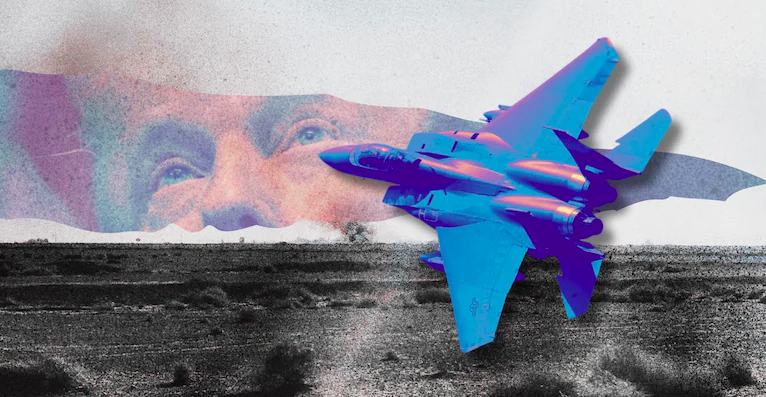
The dramatic rescue of a United States airman deep within Iranian territory stands as one of the most complex and high-risk special operations missions in recent military history. Conducted under intense geopolitical tension and active hostilities, the operation combined advanced technology, elite military training, and rapid decision-making to retrieve a stranded weapons systems officer (WSO) from hostile terrain. More than a story of tactical success, the mission reflects the evolving nature of warfare, where precision, coordination, and resilience define outcomes in environments far beyond conventional battlefields.
The episode began with the downing of an American F-15E Strike Eagle over southwestern Iran, an incident that immediately escalated tensions in an already volatile conflict. The aircraft, a twin-seat fighter designed for both air-to-air and air-to-ground missions, carried two crew members, a pilot and a WSO. While the pilot was located and extracted relatively quickly, the WSO landed in far more dangerous circumstances, isolated in mountainous terrain within Iran’s Kohgiluyeh and Boyer-Ahmad province. From that moment onward, the situation transformed into a race against time, as both American and Iranian forces sought to locate him.
The urgency was not merely tactical but strategic. For Iran, capturing an American serviceman would have represented a significant political and psychological victory, offering leverage in an ongoing conflict marked by escalating strikes and counterstrikes. Tehran’s decision to publicly announce a bounty and mobilize local networks underscored the importance it placed on capturing the airman. For the United States, the imperative was equally clear no soldier could be left behind, particularly in enemy territory where capture could have far-reaching consequences for morale, diplomacy, and domestic politics.
At the center of this unfolding drama was the airman himself. Trained under the rigorous Survival, Evasion, Resistance, and Escape (SERE) doctrine, he became the first line of defense in his own rescue. SERE training is designed precisely for such scenarios when a pilot is isolated behind enemy lines with limited resources and must rely on instinct, discipline, and adaptability. Reports indicate that the WSO demonstrated these principles effectively, moving through rugged terrain, avoiding detection, and maintaining communication readiness. His decision to climb to an elevated ridge near Dehdasht and activate an encrypted emergency beacon proved pivotal, transforming his uncertain position into a traceable point for rescue planners.
The beacon became the operational anchor for the United States military. Once the signal was confirmed, planning shifted from search to extraction. The responsibility for the mission fell to the Joint Special Operations Command (JSOC), which assembled a multi-layered rescue package combining airpower, special forces, and intelligence assets. The operation involved elite units such as Delta Force and Pararescuemen from the 24th Special Tactics Squadron, supported by the 160th Special Operations Aviation Regiment widely known as the “Night Stalkers.” These units represent the pinnacle of American military capability, trained specifically for high-risk, time-sensitive missions in hostile environments.
Air support played a critical role in enabling the operation. A-10 Warthog aircraft provided close air support, targeting advancing Iranian forces and establishing a defensive perimeter around the extraction zone. These aircraft, known for their durability and precision in ground attack roles, were instrumental in suppressing threats from the Islamic Revolutionary Guard Corps (IRGC) and Basij militia units converging on the area. Meanwhile, HC-130J tankers ensured sustained aerial operations by refueling aircraft involved in the mission, highlighting the logistical complexity required to maintain such an operation deep within enemy territory.
The execution phase of the mission was marked by both precision and unpredictability. Special operations forces were inserted under the cover of darkness, navigating a highly contested environment where the risk of detection and engagement was constant. Reports suggest that the United States established a temporary “fire zone” around the WSO’s location, using precision strikes to neutralize potential threats and restrict enemy movement. This approach created a controlled operational space within hostile territory, allowing rescue teams to maneuver with reduced risk.
However, the mission did not proceed without complications. One of the most striking developments was the reported malfunction and subsequent destruction of two C-130 transport aircraft at a forward arming and refueling point inside Iran. Rather than risk sensitive equipment falling into enemy hands, American forces deliberately destroyed the aircraft. This decision reflects a critical aspect of modern military operations, the prioritization of technological security alongside personnel recovery. The destruction of these aircraft echoed historical precedents, notably the failed Operation Eagle Claw in 1980, yet with a key difference the mission ultimately succeeded despite the setback.
The extraction itself unfolded under sustained enemy fire, transforming what was intended as a rapid “get-in, get-out” operation into a prolonged engagement. Iranian forces, including local militias and possibly irregularfighters, engaged the rescue teams, forcing them to adapt in real time. The presence of small arms of fire reported strikes on helicopters, and the need for continued air support illustrates the intensity of the firefight. Despite these challenges, the rescue teams successfully secured the WSO and evacuated him from Iranian territory without any reported American fatalities.
The success of the mission carries significant implications for both military strategy and geopolitical dynamics. From a tactical perspective, it demonstrates the capability of American special operations forces to conduct complex missions deep within hostile environments. The integration of intelligence, airpower, and ground operations highlights the effectiveness of a networked approach to warfare, where multiple assets operate in coordination to achieve a single objective. The role of intelligence, particularly in locating the airman, underscores the importance of advanced surveillance and tracking capabilities in modern conflicts.
At the same time, the mission reveals the inherent risks and limitations of such operations. The need to deploy elite forces, multiple aircraft, and extensive logistical support for the recovery of a single individual underscores the high stakes involved. It also highlights the vulnerability of even advanced military systems in contested environments, where unexpected challenges can quickly alter the course of an operation. The destruction of aircraft, the engagement with local forces, and the prolonged duration of the mission all point to the complexity of operating in a region with active resistance and uncertain conditions.
From a geopolitical standpoint, the rescue operation reinforces the broader dynamics of the ongoing conflict between the United States and Iran. The downing of the F-15E itself signals the presence of effective Iranian air defense capabilities, challenging assumptions about air superiority. The subsequent rescue mission, while successful, underscores the extent to which the conflict has escalated, requiring direct military engagement on Iranian soil. This escalation carries implications for regional stability, particularly in relation to critical areas such as the Strait of Hormuz, where tensions have already impacted global energy markets.
The psychological dimension of the operation is equally significant. For the United States, the successful rescue reinforces a longstanding military ethos, the commitment to recover personnel under any circumstances. This principle serves as a powerful motivator for service members, reinforcing trust in the institution and its leadership. For Iran, the inability to capture the airman represents a missed opportunity to gain strategic leverage, particularly in a conflict where symbolic victories can carry substantial weight.
The narrative surrounding the operation has also been shaped by differing accounts from both sides. While American officials have emphasized the success and precision of the mission, Iranian authorities have contested these claims, asserting that the operation was disrupted and that multiple American aircraft were destroyed. These conflicting narratives reflect the broader information dynamics of modern warfare, where control over perception is as important as control over territory.
Ultimately, the rescue of the stranded airman stands as a testament to the capabilities and complexities of contemporary military operations. It illustrates how individual survival, advanced training, and coordinated force projection intersect in moments of crisis. The airman’s reliance on SERE training, the precision of the rescue forces, and the adaptability of the mission all contributed to an outcome that could easily have been far more costly.
Yet, the operation also serves as a reminder of the broader context in which such missions occur. It highlights the fragile balance between capability and risk, success, and escalation. While the rescue itself may be viewed as a tactical triumph, it is embedded within a larger conflict that continues to evolve, carrying implications far beyond the immediate circumstances of a single mission.
Hence, the US pilot rescue in Iran is not merely a story of daring and heroism, but a reflection of the realities of modern warfare. It encapsulates the intersection of human resilience, technological sophistication, and geopolitical tension, offering a glimpse into the challenges and possibilities that define military operations in the twenty-first century.

About the Author
Sonalika Singh began her journey as an UPSC aspirant and has since transitioned into a full-time professional working with various organizations, including NCERT, in the governance and policy sector. She holds a master’s degree in political science and, over the years, has developed a strong interest in international relations, security studies, and geopolitics. Alongside this, she has cultivated a deep passion for research, analysis, and writing. Her work reflects a sustained commitment to rigorous inquiry and making meaningful contributions to the field of public affairs.



