
By: Ankit Raj, Research Analyst, GSDN
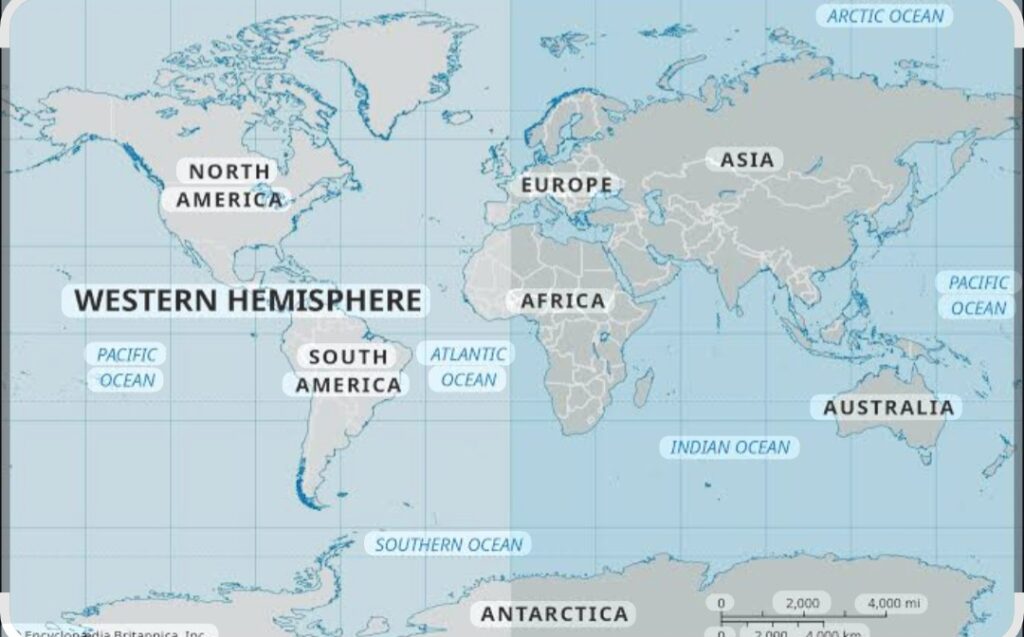
The Western Hemisphere has been at the centre stage of the United States foreign policy, economic strategies, and national security. The chronological spread of this geographic region, which starts in Canada in the north and extends to Central America and the Caribbean, as well as the southern end of South America, is much more than just ease of access to the American border. The relevance of the Western Hemisphere remains critically important to the United States; to see this, one needs to consider several aspects of this relationship and how the progress of other nations directly affects the prosperity, safety, and values of the American nation.
Historical Context and Strategic Vision
The history of U.S. intervention in the Western Hemisphere dates back to the early nineteenth century. On December 2, 1823, President James Monroe issued the Monroe Doctrine, stating that the European powers should not again colonise the independent nations of the Americas. The doctrine made the hemisphere one of the United States’ fields of special interest and responsibility.
With the inaugural address on March 4, 1933, President Franklin D. Roosevelt changed the perception of non-intervention and mutual respect when dealing with Latin American countries, and the Good Neighbor Policy was announced. This strategy was aimed at establishing a sense of trust and collaboration following the decades-long American military conflicts in the Caribbean and Central America.
Economic Integration and Trade Relationships
Perhaps the strongest argument for the Western Hemisphere’s importance to the United States is the profound economic interdependence that has developed over decades. The region is a massive market of American products and services, as well as the source of critical imports that support the American economy.
In January 1994, NAFTA came into effect, establishing one of the largest free trade zones in the world and interconnecting the economies of the United States, Canada, and Mexico. Over the course of NAFTA’s existence, the three countries tripled their trade, reaching about $ 1.3 trillion annually.
On July 1, 2020, the United States-Mexico-Canada Agreement (USMCA) replaced NAFTA, renewing trade regulations for the digital age, reinforcing labor and environmental protections, and strengthening intellectual property protection.
Canada is always among America’s top trading partners, with which it trades bilaterally over $ 700 billion per year. These two countries have the longest undefended border in the world and have adapted their supply chains across automotive manufacturing, aerospace, energy, and agriculture.
Mexico has emerged as America’s largest trading partner in recent years, with trade volumes surpassing those with China. International Mexican factories are assembling products with American parts, providing employment on both sides of the border.
The United States has been seeking trade agreements with other countries in the Western Hemisphere beyond North America. The Dominican Republic-Central America Free Trade Agreement (CAFTA-DR) entered into force for El Salvador on March 1, 2006, followed by Honduras and Nicaragua on April 1, 2006, Guatemala on July 1, 2006, the Dominican Republic on March 1, 2007, and Costa Rica on January 1, 2009. This agreement made the markets more open and strengthened economic relations with Central America and the Caribbean.
American companies gain access to export markets and investment opportunities in South American countries. Being the biggest economy in South America, Brazil has more than 200 million consumers. Chile has maintained a free trade agreement with the United States since January 1, 2004, facilitating billions of dollars in bilateral trade. On May 15, 2012, Colombia’s free trade agreement with the United States took effect, opening new opportunities in both countries.
Latin America provides a large share of imported coffee, cocoa, bananas, and tropical fruits, among other products, that cannot be produced in the United States. At the same time, American agricultural exports such as corn, soyabeans, wheat, and meat products have huge markets across South America.
Energy Security and Natural Resources.
Another aspect of significance to the Western Hemisphere and American interests is energy security. The energy resources and supply networks available in the region strengthen U.S. energy security and minimise its reliance on regions that may become unstable at any time.
Canada, the largest foreign supplier of crude oil to the United States, supplies more than 4 million barrels per day. This is a safe, trustworthy source of supply by a solid democratic neighbor possessing common values and regulatory systems that do not clash. Energy relations will not be limited to oil but also to natural gas, electricity, and nuclear power generation using uranium.
Mexico also has a two-sided presence in the North American energy markets. Although Mexico is a major exporter of crude oil to the United States, it is also a major importer of natural gas and refined petroleum products from America.
Venezuela is the country with the world’s largest crude oil reserves, estimated at more than 300 billion barrels. Despite the devastating effects of political and economic crises on Venezuelan oil output over the last several years, the possible role of such sources in the hemisphere’s long-term energy security cannot be ruled out.
The huge offshore oil deposits in pre-salt geological reservoirs have made Brazil a major oil producer. The Lula oil field, discovered in 2006 and producing in the latter years, showcased Brazil as an energy giant.
In addition to hydrocarbons, there are vast reserves of minerals needed for modern technology, defense, and the clean energy transition in the Western Hemisphere. Chile is the world leader in copper, which is used in the wiring of electrical systems, electronics, and renewable energy systems. A portion of the world’s lithium is found in the lithium triangle of Chile, Argentina, and Bolivia; the triangle encompasses over 50% of all known lithium reserves. That is the primary component of electric vehicles and energy storage, representing rechargeable batteries.
Rare earth elements, important for high-tech applications and national security, are found in deposits throughout the Americas. As the United States seeks to reduce its dependence on Chinese sources for critical minerals, developing Western Hemisphere supplies becomes strategically important.
Immigration, Demographics, and Human Connections
The Latin American and Caribbean migration has a significant impact on American society, creating demographic and cultural ties that bind the hemisphere together. The U.S. Census Bureau reports that in 2023, over 62.3 million Hispanic or Latino people were living in the United States, and this group comprises approximately 19 percent of the total population. This makes Hispanics the nation’s largest ethnic minority group.
These demographic relations create vast family connections that cross national borders. Millions of American citizens and residents are close to their relatives living in Mexico, Central America, South America, and the Caribbean. Immigration from the Western Hemisphere addresses critical labor market needs in the United States. The agriculture, construction, hospitality, food service, and healthcare industries are full of workers born in Latin America.
The remittances sent by immigrants working in the United States to their families in their home countries constitute a large flow of funds. According to the World Bank (2023, around 150 billion dollars of remittances to Latin America and the Caribbean, which is a crucial economic aid to millions of households. In countries such as El Salvador, Guatemala, Honduras, and Haiti, remittances account for significant portions of their GDP, even exceeding foreign direct investment and development aid.
Still, there are major challenges in policies associated with irregular migration and asylum seekers. The humanitarian crisis at the U.S.-Mexico border has become the subject of sharp political discourse, and it has prompted the need to collaborate amongst states to control the migration flows in a way that is humane and does not jeopardize border security.
Security Challenges and Cooperative Responses
The issue of security can provide powerful justifications for a lasting U.S. presence in the Western Hemisphere. The transnational criminal gangs directly affect the American communities by trafficking drugs, human beings, trafficking weapons, and gang violence.
Production of cocaine in the Andean region of South America continues to be high even after decades of counter-narcotics efforts. Colombia has always been the largest producer of cocaine worldwide; these days, Peru and Bolivia also keep a significant cultivation and production potential.
Other transnational organized crimes like human trafficking, illegal trade in wild animals and fish, and money laundering, among others, have to be met by cooperation within the hemisphere. Corruption and financial crimes are undermining governance and economic progress, while also aiding more criminal activity.
Democratic Government and Human Rights.
The United States has both an idealistic and a realistic agenda on pushing democratic governance and human rights across the Western Hemisphere. Democracies are more likely to be stable, thriving, and cooperative allies, thereby creating regional conditions that can favor American interests.
Inter- american democratic charter, which was signed by member countries of the OAS on 11 September 2001 in Lima, Peru, binds signatory countries to uphold democratic institutions and to act collectively in response to a threat to democracy in any member state. This charter has made democracy a prerequisite for the region’s stability and prosperity.
However, democratic leadership is very difficult in many countries. Since Venezuela has fallen under the authoritarian rule of Nicolás, the country has degenerated into a regime of human rights abuses, observed economic decline, and witnessed the biggest refugee crisis ever witnessed in the recent history of the Western Hemisphere. Since 2015, over 7 million of their citizens have fled, posing a humanitarian problem for neighboring states.
One-party communist rule still persists in Cuba, though since President Miguel Díaz-Canel took office on 19 April 2018, there have been small-scale economic reforms. These changes are accompanied by human rights constraints, political oppression, and economic stagnation.
Geopolitical Competition and External Actors
China is offering more opportunities and posing more challenges to the United States in the Western Hemisphere. Since 2000, the Chinese investment in the infrastructure, mining, agriculture, and technology in Latin America has increased manifold. The Belt and Road Initiative has engaged 19 Latin American and Caribbean countries in seeking development funding.
Between 2005 and 2023, Chinese loans to Venezuela, Ecuador, Brazil, among others, have reached well above 140 billion dollars, usually for future commodity supply or natural resource concessions. Although this financing meets the infrastructure gaps and development requirements, it also creates dependency and potential political leverage for Beijing.
Chinese telecommunications firms, especially Huawei Technologies, have penetrated deeply into Latin America, developing 5G and selling equipment to telecommunications companies. The United States has raised cybersecurity risks and the potential for surveillance inherent in Chinese technology infrastructure.
Russia has also tried to increase its influence in the hemisphere mainly by selling weapons, energy, and military relations with Venezuela, Cuba, and Nicaragua. Power projection has been demonstrated by the Russian military aircraft and naval ships that have been exercising in the Caribbean.
Conclusion
The United States is heavily concerned with the Western Hemisphere because the region is geographically close to the country, and consequently, the two have strong economic and demographic ties, which are security-dependent, and share values that define American prosperity and security.
With the growing competition around the globe and the transnational conditions of climate change, migration, pandemics, and organized crime covering all other national boundaries, the United States cannot afford to neglect its own hemisphere. A successful, democratic, and safe Western Hemisphere will advance major American interests and promote global stability and growth. The future of U.S. engagement in the Americas will determine not only regional outcomes but also America’s capacity to lead globally in an increasingly complex world.



