
By: Dr. Abhishek Karmakar
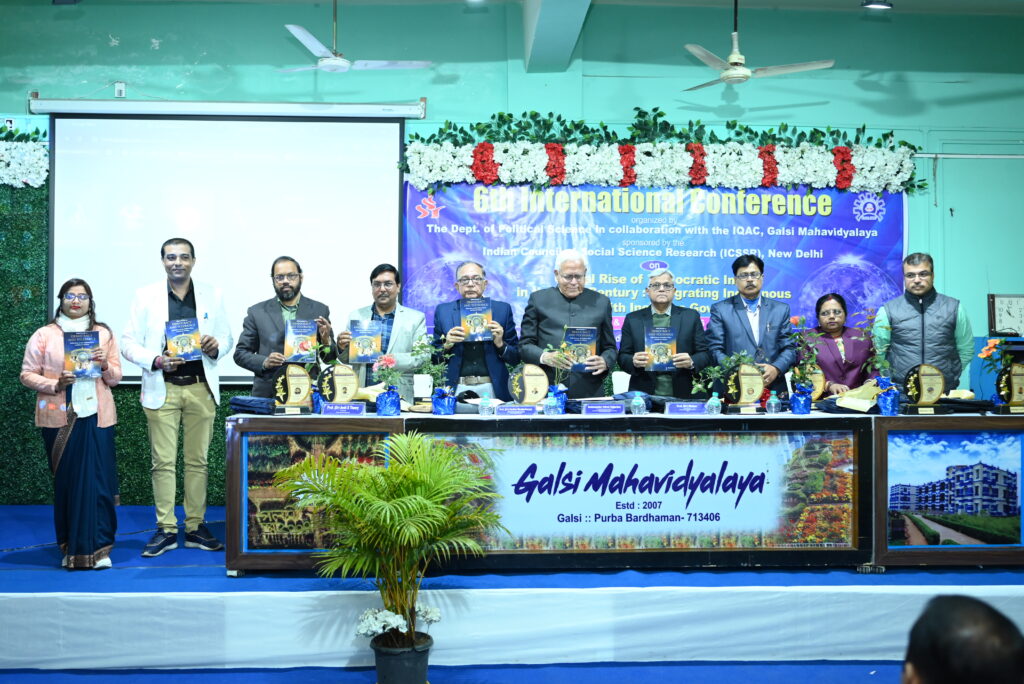
The Department of Political Science, in collaboration with the Internal Quality Assurance Cell (IQAC) of Galsi Mahavidyalaya, successfully organised its Sixth International Conference on January 9 and 10, 2026, on the theme “Global Rise of Democratic India in the 21st Century: Integrating Indigenous Wisdom with Inclusive Governance.” Sponsored by the Indian Council of Social Science Research (ICSSR), New Delhi, the two-day international academic event brought together eminent diplomats, vice-chancellors, distinguished scholars, academicians, and researchers from across India and abroad. The conference emerged as a significant intellectual platform for critically engaging with India’s democratic journey, its indigenous knowledge systems, and its expanding global leadership in contemporary international politics.
The conference commenced with a solemn inaugural ceremony marked by the traditional watering of plants by the distinguished guests, symbolising intellectual growth, sustainability, and the nurturing of democratic and civilisational values. The inaugural session was graced by an eminent panel of dignitaries, including Ambassador Ashok Sajjanhar, former Ambassador of India to Sweden, Latvia, and Kazakhstan; Professor Dr Mohan, Honourable Vice Chancellor of Sri Venkateshwara University, Sikkim; and Professor Harihar Bhattacharyya, Publius Distinguished Scholar and former Professor of Political Science at the University of Burdwan, who delivered the keynote address.
The inaugural ceremony was further enriched by the presence of academic leaders from MoU partner colleges of Galsi Mahavidyalaya. Among those present were Dr Sukanta Bhattacharyya, Principal of Mankar College; Dr Pradip Kumar Bandhopadhay, Principal of Vivekananda College; Dr Sudip Chatterjee of Gushkara Mahavidyalaya; Dr Shrabanti Banerjee, Principal of Jamalpur College; and Dr Bhim Chandra Mondol, Principal of Nikhil Banga Sikshan Mahavidyalaya. Their presence reflected the spirit of academic collaboration and institutional partnership, which continues to strengthen research culture and intellectual exchange among higher education institutions in the region.
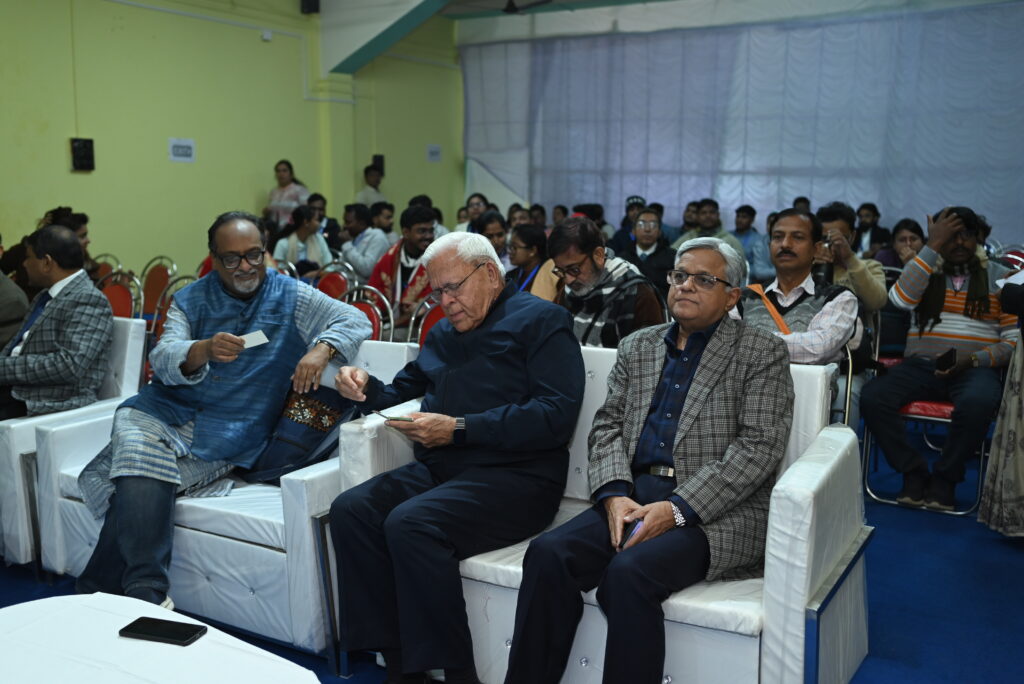
Delivering the welcome address, the Principal of Galsi Mahavidyalaya, Dr Amit S. Tiwary, warmly welcomed the distinguished dignitaries, resource persons, scholars, faculty members, and participants. He emphasised the increasing global footprint of India in political, economic, and intellectual domains. Highlighting the relevance of the conference theme, he observed that India’s indigenous wisdom, rooted in centuries-old traditions and community-based governance practices, provides a strong foundation for inclusive and democratic governance. He expressed gratitude to ICSSR, New Delhi, for its generous support and acknowledged the guidance of the University of Burdwan and the contributions of partner institutions and organisers. He expressed confidence that the conference would generate meaningful academic dialogue and contribute to understanding India’s democratic evolution.
The introductory remarks were delivered by Dr Abhisek Karmakar, Associate Professor of Political Science, IQAC Coordinator, and Convener of the conference. In his address, Dr Karmakar highlighted the pluralistic and heterogeneous character of Indian society, noting that India’s democracy has successfully accommodated vast diversity in terms of caste, religion, language, ethnicity, and culture. He emphasised that despite numerous challenges arising from diversity and socio-economic inequalities, India’s democratic framework has demonstrated remarkable resilience and adaptability. He further stressed that integrating indigenous knowledge systems with modern governance practices is essential for strengthening inclusive democracy and sustainable development.
A major highlight of the inaugural session was the formal release of the edited volume titled “Democracy and Tolerance: Reflections on the Political Ideas and Recent Debates,” edited by Dr Abhisek Karmakar, which represented the scholarly outcome of the department’s previous (Fifth) international conference. The book release symbolised the department’s continued commitment to promoting academic research and intellectual engagement.
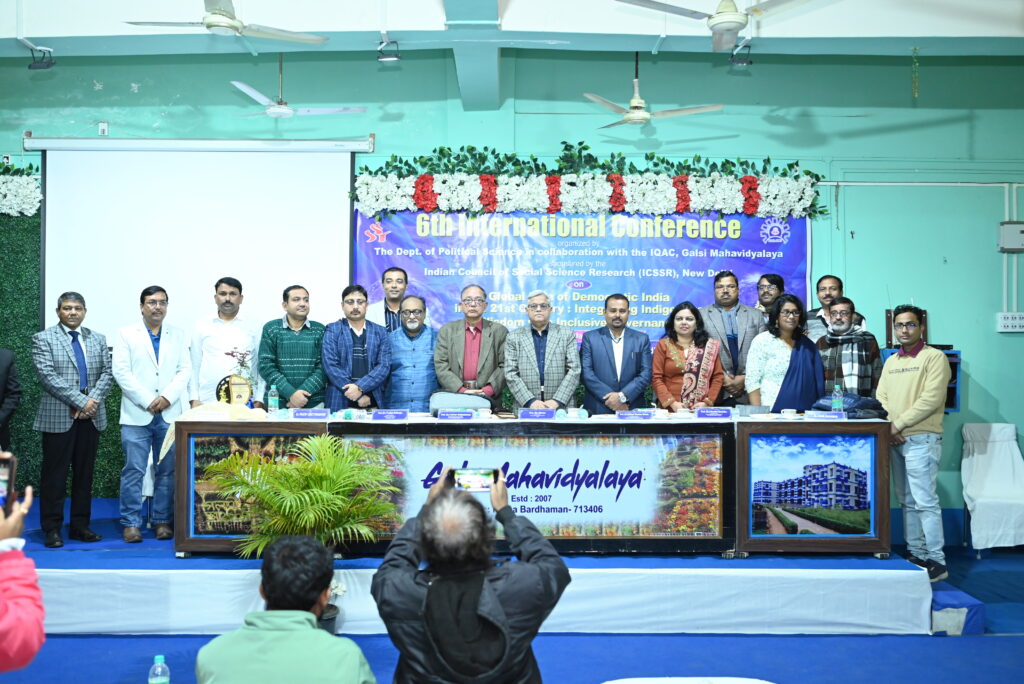
In his inaugural address, Ambassador Ashok Sajjanhar emphasised the contemporary relevance of indigenous knowledge systems in shaping India’s governance and foreign policy. He noted that India’s civilisational heritage of over 5,000 years has provided a strong foundation for its democratic resilience and global leadership. Referring to India’s rise as one of the world’s fastest-growing economies and its emergence as a leading voice of the Global South, he highlighted the importance of democratic institutions, constitutional values, and rule of law in sustaining India’s global credibility. He emphasised that India’s foreign policy reflects its civilisational ethos of peaceful coexistence, mutual respect, and global cooperation, embodied in the philosophy of Vasudhaiva Kutumbakam.
Vice Chancellor of the Sri Venkateshwara University Professor Dr Mohan, in his address, emphasised that India’s democratic traditions have deep roots in ancient institutions such as Sabha and Samiti, which embodied participatory governance. He observed that India’s democratic system integrates technological progress with humanistic values and constitutional responsibility. He highlighted India’s successful conduct of democratic elections involving millions of voters as evidence of its democratic vitality and emphasised the importance of combining indigenous wisdom with technological innovation to achieve inclusive development and global leadership.
The keynote address by Professor Harihar Bhattacharyya stood out as one of the most intellectually profound moments of the conference. In his deeply analytical and theoretically rich lecture, Professor Bhattacharyya emphasised that India’s democratic evolution must be understood through multiple intersecting discourses, including democracy, development, identity, and federalism. He argued that India’s democracy has evolved through continuous negotiation between diversity and unity, inclusion and development, and tradition and modernity. He highlighted that India’s federal structure and democratic institutions have played a critical role in accommodating diverse identities and ensuring political inclusion, thereby strengthening democratic legitimacy.
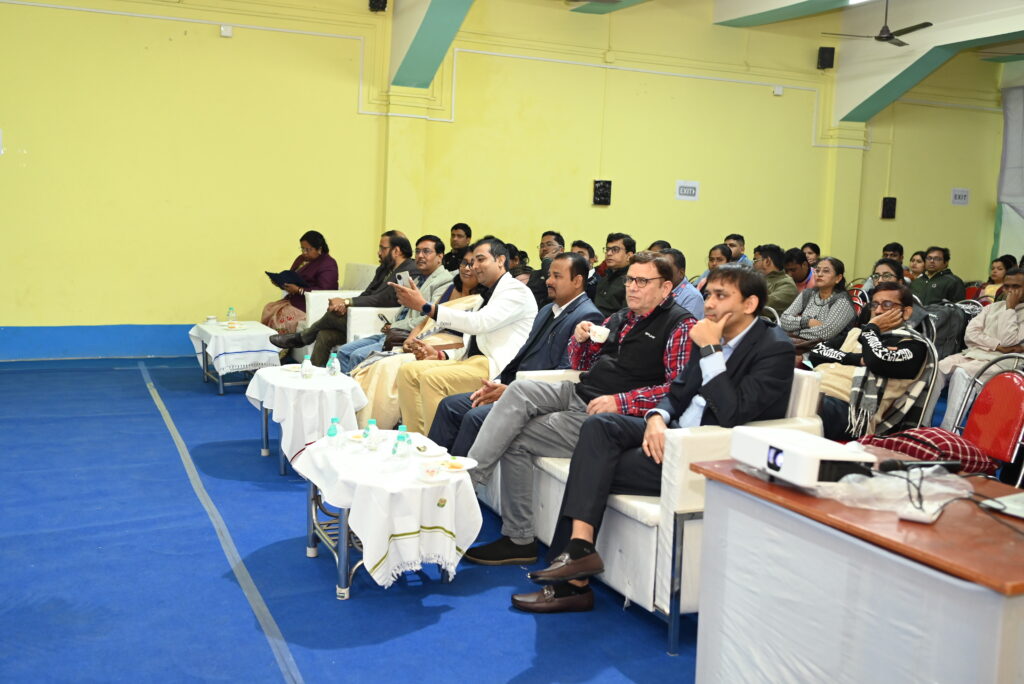
Professor Bhattacharyya emphasised that India’s democratic resilience is remarkable given its immense cultural diversity, historical inequalities, and socio-economic challenges. He reflected on historical challenges such as the Emergency period of 1975–77, noting that democracy was ultimately restored through popular will, demonstrating its institutional strength. He further observed that India has successfully transformed its global image from a developing postcolonial nation to an emerging global power with stable economic growth and political continuity. He emphasised that India’s democracy derives strength not only from its constitutional institutions but also from its civilisational knowledge systems, cultural diversity, and participatory political culture. He concluded by emphasising that democracy is not a fixed achievement but an evolving process shaped by political actors, institutions, and citizen participation. His keynote address provided a powerful theoretical framework for understanding India’s democratic resilience, inclusivity, and global rise.
The technical sessions featured distinguished scholars from India and abroad who presented insightful analyses on diverse aspects of India’s democratic and global transformation. Professor Dr Rajkumar Kothari, Honourable Vice Chancellor of Sanskrit University, Kolkata, delivered a significant lecture on India’s foreign policy and global engagement. He emphasised that India’s foreign policy reflects a unique synthesis of national interest and ethical values rooted in its civilisational traditions. He observed that India has emerged as a major global actor through its participation in international organisations such as BRICS, SCO, and multilateral forums, reflecting its growing diplomatic influence. He introduced the concept of “Realpolitik Plus,” explaining that India’s foreign policy integrates strategic interests with moral and philosophical values such as non-violence, cooperation, and mutual respect.
Professor Kothari further emphasised that India’s global engagement reflects not merely a pursuit of power but also a commitment to promoting peace, dialogue, and cooperative international order. He highlighted that India’s foreign policy demonstrates a balanced approach that integrates traditional civilisational values with modern diplomatic strategies, enabling India to maintain constructive relations with both developed and developing nations. He also noted that India’s ability to balance realism with ethical values enhances its credibility and moral authority in international politics, positioning India as a responsible global leader in the 21st century.
Dr Nisanka Sanjeewani Ariyarathne from the University of Ruhuna, Sri Lanka, examined indigenous epistemologies and their role in shaping governance in South Asia. She emphasised the importance of indigenous knowledge systems in addressing contemporary challenges and highlighted India’s potential leadership role in integrating traditional wisdom with modern governance frameworks.
Professor Maidul Islam of Keimyung University, South Korea, provided a comparative analysis of economic development in India and South Korea. He emphasised the importance of export-led growth, human capital development, industrial policy, and infrastructure investment for sustainable economic development.
Dr Payal Ray Chowdhury Dutt of Rabindra Bharati University highlighted the importance of indigenous lived experiences and human rights in shaping inclusive governance. She emphasised that governance must be sensitive to cultural diversity and local realities to ensure democratic legitimacy and social justice.
A major highlight of the conference was the presentation of 126 research papers in 12 parallel technical sessions, where scholars, assistant professors, and researchers from across the country presented their research on diverse themes related to democracy, governance, indigenous knowledge, political theory, public policy, and international relations. These sessions were charied by academicians like Dr Shilpa Nandy, Associate Professor of Khudiram Bose Central College; Dr Amrita Banerjee, Assistant Professor of Bidhan Chandra College, Asansol; Dr Bimalendu Ghosh, Associate Professor of Kanchrapara College; Dr Partha Sarathi Dey, Assistant Professor of Dinabandhu Mahavidyalaya, Dr Jayprakash Mondal, Assistant Professor of Bangabasi Evening College; Dr Tulika Chakravorty, Associate Professor of Bangabasi Morning College; Dr Sriparna Dutta, Principal of the Sonarpur College, Dr Selvakumar, Associate Professor and many. These sessions facilitated vibrant academic dialogue, critical engagement, and exchange of ideas among participants, significantly enriching the intellectual depth of the conference.
The second day of the conference featured additional technical sessions chaired jointly by Professor Harihar Bhattacharyya and Professor Dr Mohan. Distinguished speakers including Professor Dr Sunil Mahawar, Dr Pratip Chatterjee, Dr Bibhuti Bhusan Biswas, Dr Nandini Basistha, and Dr Pradipta Mukherjee presented insightful analyses on Indian political culture, indigenous knowledge systems, consociational democracy, and inclusive governance.
Professor Dr Sunil Mahawar, in his address on Indian Political Thought through the Lens of Indian Knowledge System, critically examined the dominance of Eurocentric frameworks in political theory and emphasised the need to rediscover India’s indigenous intellectual traditions rooted in ancient democratic practices such as Sabha and Samiti. He argued that India’s democratic legacy is deeply embedded in its civilisational ethos, which prioritises dialogue, coexistence, and ethical governance.
Dr Pratip Chatterjee focused on the regional dimensions of India’s democratic rise and emphasised the importance of institutional strength, democratic culture, and constructive engagement with neighbouring countries. He highlighted that India’s global leadership is closely linked to its ability to maintain democratic stability internally while fostering regional cooperation and diplomatic synergy externally.
Dr Bibhuti Bhusan Biswas, in his lecture on Understanding Indian Political Culture, emphasised that Indian political culture is shaped by historical experiences, social diversity, and citizens’ attitudes toward governance. He stressed the importance of civic education, transparency, youth participation, and institutional accountability in strengthening democratic participation and ensuring political stability.
Dr Nandini Basistha highlighted the crucial but often overlooked role of women in preserving and transmitting indigenous knowledge systems. She explained how women contribute significantly to sustainable practices in agriculture, environmental conservation, and community life, and emphasised that recognising their knowledge is essential for building inclusive and sustainable development models.
Dr Pradipta Mukherjee discussed the concept of consociational democracy in the Indian context, emphasising how India’s pluralistic society has successfully accommodated diversity through inclusive democratic institutions. He highlighted that India’s secular and federal framework plays a crucial role in integrating diverse social, linguistic, and cultural groups, thereby strengthening democratic unity and national cohesion.
Collectively, their presentations highlighted the importance of institutional accountability, civic participation, indigenous epistemologies, and democratic inclusion in strengthening India’s democratic framework and reinforcing its position as a resilient and inclusive democracy.
The valedictory session featured a thought-provoking address by Professor Shibashis Chatterjee, who examined India’s global rise through multiple theoretical perspectives. He emphasised that India’s rise cannot be understood solely through conventional frameworks of power politics but must be analysed in terms of its civilisational identity, democratic values, and cultural diversity.
Certificates were distributed to participants and paper presenters in recognition of their scholarly contributions. In his concluding remarks, Principal Dr Amit S. Tiwary expressed sincere gratitude to ICSSR, distinguished guests, MoU partner institutions, scholars, faculty members, participants, and organisers for their invaluable contributions.
The conference concluded with a formal vote of thanks delivered by Convener Dr Abhisek Karmakar, who acknowledged the contributions of dignitaries, partner institutions, scholars, and participants. He emphasised that the conference successfully fulfilled its objective of promoting academic dialogue on India’s democratic journey and its emerging global leadership.
The ICSSR-sponsored international conference reaffirmed India’s position as a vibrant and resilient democracy rooted in civilisational wisdom and inclusive governance. It also strengthened academic collaboration, fostered intellectual exchange, and contributed significantly to scholarly discourse on India’s democratic evolution and global rise in the 21st century.
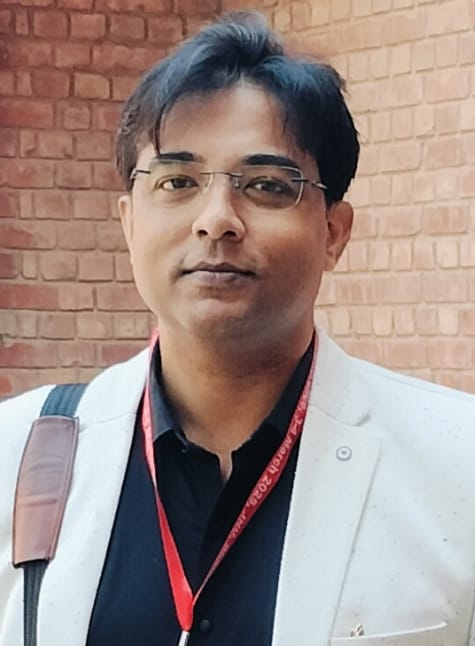
About the Author
Dr Abhisek Karmakar is an Associate Professor in the Department of Political Science at Galsi Mahavidyalaya, West Bengal, India. He also teaches in Rabindra Bharati University as an ad-hoc faculty. He completed his MPhil and PhD at the University of Burdwan. His book, Making of a Democratic Intellectual Tradition in India, was published in 2019 from Germany and Mauritius. He has authored over 41 articles in international and national journals including UGC CARE listed journals. In 2025, his co-authored book Federal Thought, is set to be published as it is signed by Routledge. He edited Challenges to Democracy in South Asia (2021) and has co-edited three additional books. A regular contributor to major English dailies, Dr. Karmakar has participated in international conferences in Germany, Italy, South Korea and Bangladesh. He is a life member of several academic associations and frequently appears in electronic media as a political analyst.



