
By: Anusreeta Dutta
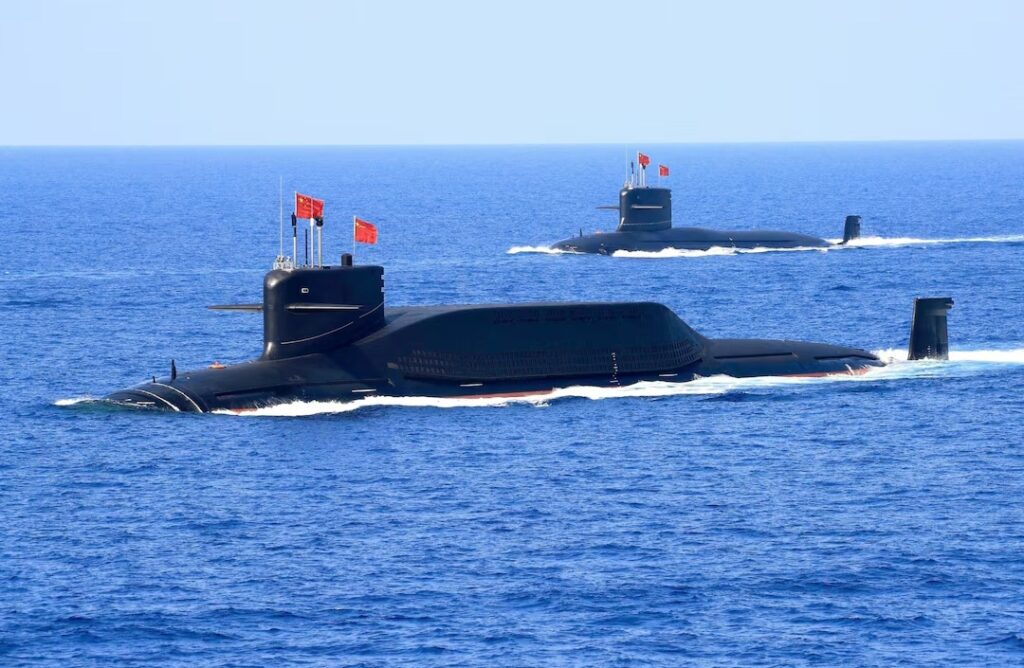
There is usually no fanfare when the most important changes in geopolitics happen. They happen in silence, with slow deployments, logistical arrangements, and patrol patterns that change from irregular to normal. This change is happening below the surface of the Indian Ocean.
In the last ten years, China’s People’s Liberation Army Navy (PLAN) has been able to operate much farther away from its usual coasts. The navy started out as a way to protect coastal areas, but it has grown into a force that can stay in faraway waters for a long time. The fact that there are more Chinesenuclear-powered submarines in the Indian Ocean Region (IOR) is not because of anti-piracy operations or diplomatic visits to ports. It is the maritime expression of a larger strategic goal.
The Indian Ocean is no longer on the outside of Asia’s power struggles. It’s becoming more basic to it.
From weak to strong
China’s strategic thinking about the Indian Ocean starts with weakness. About 80% of the oil that China buys from other countries comes through the IOR’s sea lanes. These include the Strait of Hormuz and the Strait of Malacca, which are both important shipping routes. Chinese experts have called this dependency the “Malacca Dilemma” for years. They were worried that rivals would stop important energy flows during a crisis. Submarines are a quiet way for Beijing to deal with its worries.
Unlike surface fleets, nuclear-powered submarines can go long distances without coming to the surface. They can patrol for a long time, collect information, and, in the case of ballistic missile submarines, carry the strongest deterrent of a country. The fact that Type 093 (Shang-class) attack submarines and Type 094 (Jin-class) ballistic missile submarines are being used in the Indian Ocean shows that there is a plan to turn weakness into strategic reach. The doctrinal shift that led to this approach was explained in China’s 2015 Defence White Paper, which talked about moving from “near seas defence” to “far seas protection” (State Council Information Office, 2015). President Xi Jinping has made maritime policy an important part of national renewal. The Indian Ocean is a part of that idea.
The Nuclear Undercurrent
It’s important that nuclear-powered attack submarines are in remote waters. The possible use of ballistic missile submarines (SSBNs) is a game changer.
People think that China’s Type 094 SSBNs carry JL-2 submarine-launched ballistic missiles that can travel about 7,000 km. In the past, Chinese SSBN patrols were mostly in the waters near Hainan Island in the South China Sea. At the same time, other navies are keeping a close eye on that situation. Operating in the Indian Ocean’s deeper waters could make it easier to survive and give patrols more options. According to traditional deterrence theory, the ability to survive a second strike makes strategic stability better. A submarine that is hard to find makes nuclear weapons more believable.
But stability isn’t always the same on both sides. The Indian Ocean has historically been less nuclearized than the Pacific. The fact that SSBNs are often around adds a new level of strategic competition. India, which is building up and strengthening its sea-based deterrent, can’t see these kinds of deployments as neutral.
The goal of submarine operations is to be secret. But being opaque is dangerous. Shadowing maneuvers, sonar tracking, and intelligence missions happen when no one is looking. It’s harder to find and fix mistakes that happen underwater.
Logistics: The Architecture under Pressure
Infrastructure is needed for a long-term presence underwater. The opening of China’s military base in Djibouti in 2017 was a turning point. It is officially called a logistical station that helps fight piracy in the Western Indian Ocean by providing docking, maintenance, and resupply services.
Chinese investments in Gwadar and Hambantota as part of the Belt and Road Initiative are often called “commercial” investments, even though they are not in Djibouti. But the idea of dual-use infrastructure makes simple differences hard to understand. Under certain conditions, ports built for trade can also be used by the navy.
India’s Maritime Reckoning
Not symbols, but persistence, determines strategic change. When deployments happen a lot, they change what people expect. When logistics become permanent, they change the balance of power. The Indian Ocean has always been a strategic anchor for India. The Andaman and Nicobar Islands are in a good location because they are on the Malacca Strait, which is a key chokepoint. The Indian Navy has always had a pretty easy time operating in the IOR.
Chinese submarines patrolling make things less comfortable. Submarines don’t send power through visibility like surface ships do. They make things more expensive by making them uncertain. Every reported deployment needs surveillance resources. Anti-submarine warfare (ASW) tools, like underwater sensors and maritime patrol planes, must always be ready to go. India has reacted by becoming more modern and working with others. The purchase of P-8I planes, the strengthening of the Andaman and Nicobar Command, and the growth of cooperation within the Quad framework all point to a changing maritime situation.
In the undersea domain, however, competition is measured by how long you can last, not by how exciting your encounters are. India’s challenge is to uphold credible deterrence while preventing rivalry from escalating into conflict.
The Bigger Indo-Pacific Equation
The use of Chinese submarines in the Indian Ocean is closely related to bigger trends in the Indo-Pacific. China wants to spread out its operations as the US strengthens its allies and increases freedom of navigation operations in the Western Pacific.
The Indian Ocean gives you more strategic depth. China makes it harder for enemies to plan by moving west and reduces the risk of concentration. A fleet that can stay in many places at once gives diplomats more power and makes the military stronger. This is not a piecemeal reaction to a specific catastrophe. It is a structural adjustment.
The 2023 US Department of Defense assessment on Chinese military advancements emphasizes the PLAN’s ongoing modernization and desire to become a “world-class navy” by mid-century. Sustained Indian Ocean operations are consistent with this trajectory.
Conclusion: The Shape of Power Under the Waves
China’s growing nuclear submarine presence in the Indian Ocean is more than just moving ships around. It shows a change in the balance of power, from focusing on the continent to asserting power at sea, from being weak to being strong. India’s response can’t be just a reaction. It needs to use skill, diplomacy, and strategic patience all at once. The goal is not to rule the seas but to keep your credibility in deterrence and make escalation less likely.
There are no flags on submarines in the Indian Ocean. They don’t talk. Still, they are changing Asia’s strategic future in a big way, but in a quiet way that will have long-lasting effects.



