
By: Khushbu Ahlawat, Consulting Editor, GSDN
Introduction
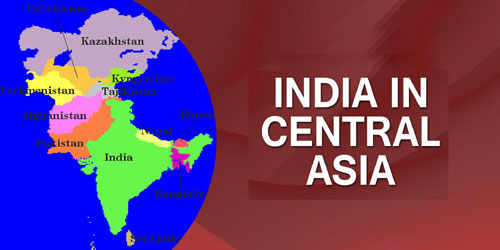
Central Asia has re-emerged as a strategically critical region in the post-9/11 global landscape, driven by its geostrategic location, proximity to conflict-prone zones, and abundant natural resources. The region’s vast reserves of oil, gas, and uranium, coupled with its position at the crossroads of Eurasia, have made it a central arena for major powers, including the United States, China, and Russia, to pursue overlapping security, economic, and political objectives. Simultaneously, regional actors such as India have increasingly sought to assert influence, balancing strategic interests with economic and security imperatives. India’s engagement is characterized by a multidimensional approach, combining energy cooperation, infrastructure and connectivity initiatives, counterterrorism collaboration, and multilateral diplomacy to navigate great power competition while addressing regional instability. Initiatives such as the Connect Central Asia Policy (CCAP) and the Comprehensive Central Asia Policy (CCP) reflect India’s strategic intent to strengthen trade, enhance regional connectivity, secure energy access, and promote stability. This paper critically examines India’s evolving role in Central Asia, exploring both opportunities and constraints, analyzing the effectiveness of policy measures, and assessing the potential for India to consolidate its influence amid shifting regional and global power dynamics.
India’s Evolving Foreign Policy and Regional Institutional Engagement
A focused analysis of evolving regional dynamics underscores the role of key international organizations—such as the United Nations, NATO, and the Shanghai Cooperation Organisation (SCO)—while assessing the strategic impact of the United States’ withdrawal from Afghanistan. These developments directly influence regional cooperation, security frameworks, and mechanisms for conflict resolution. India’s evolving foreign policy emerges as a central theme, particularly through the strengthening of its strategic partnerships with the United States, Japan, Australia, and South Korea. Attention is drawn to initiatives such as the “Look North” policy and the establishment of air bases in Tajikistan. At the same time, India’s absence from important regional groupings like the SCO and the Collective Security Treaty Organization (CSTO) is highlighted as a constraint on deeper regional integration. A brief assessment of India’s engagement with Central Asia over the past two decades provides historical context and underscores the complexities surrounding its regional strategic ambitions. The reference to the “Connect Central Asia” Policy (CCAP) is framed as a response to these challenges, though a more detailed examination of its components and alignment with India’s interests amid competing regional actors would add greater analytical depth.
Recent developments further illustrate India’s calibrated engagement with Central Asia. The convening of the India–Central Asia Dialogue at the foreign ministers’ level in recent years has underscored India’s emphasis on political dialogue, trade, connectivity, and development cooperation with the region. India has also sought to enhance regional access through initiatives such as the International North–South Transport Corridor (INSTC) and the Chabahar Port, aimed at bypassing geographical constraints and improving connectivity with Central Asian markets. Additionally, India’s humanitarian assistance to Afghanistan following the Taliban takeover reflects its continued security and stability concerns in the region. Participation in SCO platforms has provided India with limited multilateral engagement, even as institutional constraints persist.
Great Power Competition in Central Asia: Strategic Interests of the US, China, and Russia
Central Asia has become an increasingly contested geopolitical space as the strategic interests of the United States, China, and Russia intersect and compete. The United States’ engagement has evolved in the post-Afghanistan withdrawal phase, shifting from a direct military presence to diplomatic outreach, counterterrorism coordination, and selective economic engagement aimed at maintaining regional stability and preventing extremist spillover. Continued political engagement with Central Asian states and efforts to support connectivity and development initiatives reflect Washington’s attempt to retain strategic relevance despite a reduced footprint.
China’s expanding presence in Central Asia reflects a strategic blend of economic integration and security engagement, with infrastructure development, energy cooperation, and counterterrorism initiatives aimed at securing its western borders and deepening regional influence. At the same time, Russia continues to assert its traditional dominance through military cooperation, defense agreements, and energy partnerships, positioning itself as the primary security guarantor. The overlapping engagement of Beijing and Moscow highlights a shifting balance of power, where Central Asian states are increasingly caught between economic incentives offered by China and security assurances provided by Russia. This dual dynamic not only intensifies strategic competition but also reshapes regional alignments, compelling states to navigate a complex environment of great power rivalry while safeguarding their own political and economic interests.
India’s Strategic Imperatives in Central Asia Amid Shifting Power Dynamics
India’s strategic imperatives in Central Asia are shaped by the need to counterbalance rising great‑power competition, enhance regional connectivity, and safeguard its economic and security interests in a rapidly evolving geopolitical environment. With China expanding its economic footprint and Russia maintaining its traditional security role, New Delhi has shifted from symbolic engagement to a development‑centric approach that combines economic cooperation with strategic outreach. The 4th India–Central Asia Dialogue in June 2025 exemplifies this, bringing together regional foreign ministers to advance trade, connectivity, counterterrorism, and financial integration—including initiatives like rupee vostro accounts and potential adoption of India’s UPI system for cross‑border transactions. Historical ties, energy considerations such as the TAPI pipeline, China’s influence, and the US withdrawal from Afghanistan further drive India’s multifaceted strategy, which blends politics, economy, and security to counter radicalization, mitigate Pakistan’s influence, and strengthen regional partnerships with the US, Russia, and China. By navigating Afghanistan’s instability and offering alternatives to dominant powers, India reinforces its strategic autonomy while contributing to a more balanced and stable regional order.
Russia–China Convergence and Its Implications for India’s Regional Influence
India’s engagement in Central Asia is increasingly challenged by the deepening strategic convergence between Russia and China, which reshapes the regional balance of power. Strengthened Russia–China cooperation, evident in joint military exercises, energy deals, and coordinated multilateral diplomacy through platforms like the SCO, limits New Delhi’s leverage in advancing its security and economic interests. India’s position has been constrained by Russia’s historical opposition, as seen in the Ayni base issue, while the Sino-Pak alignment further complicates New Delhi’s strategic calculus, particularly regarding energy corridors such as the TAPI pipeline. Recent developments—including UN vetoes affecting regional diplomacy, China’s growing control over strategic ports, and ongoing tensions in Ladakh—underscore the multidimensional pressures on India’s influence. Despite these challenges, India continues to pursue a multifaceted approach, combining political outreach, economic initiatives, and strategic partnerships with the US, Russia, and Central Asian states, aiming to secure connectivity, counter radicalization, and safeguard energy and security interests. This evolving dynamic highlights the urgency for India to recalibrate its regional strategy to navigate a more consolidated Russia–China front while preserving strategic autonomy.
Energy Security and India’s Engagement with Central Asia
India’s energy strategy increasingly prioritizes Central Asia as a critical source to address domestic shortages and support economic growth. Kazakhstan, with its vast oil and gas reserves, has emerged as a key partner, exemplified by deepening bilateral cooperation in hydrocarbons, atomic energy, and infrastructure projects. In 2025, Indian companies significantly expanded investments in Kazakhstan’s energy sector, while both countries explored collaboration on critical minerals and renewable energy initiatives. Kazakhstan’s potential integration into the TAPI pipeline project further highlights opportunities to diversify India’s energy supply, provided geopolitical and security challenges—such as transit through Afghanistan—are managed. Nevertheless, India’s efforts face barriers, including competition from China and Russia, infrastructure limitations, and regional instability, which constrain the full realization of these energy partnerships. Strategic engagement, therefore, combines investment, diplomacy, and regional cooperation to secure reliable energy access while strengthening India’s influence in Central Asia.
Economic Diplomacy and the Comprehensive Central Asia Policy (CCP)
India’s Comprehensive Central Asia Policy (CCP) aims to transform its historic ties with the five newly independent Central Asian states into a substantive economic partnership capable of competing with dominant actors such as China, Russia, and the EU. While New Delhi has steadily promoted trade, investment, and connectivity through mechanisms like the India–Central Asia Dialogue and business councils, recent developments indicate tangible progress: at the June 2025 Central Asia–India Business Council meeting, Kazakhstan’s leadership signaled a desire to triple bilateral trade and expand cooperation in energy, digital transformation, critical minerals, and infrastructure, reflecting a shared vision for deeper economic integration. Additionally, ongoing efforts to enhance logistical linkages via the International North‑South Transport Corridor (INSTC) and new container train services connecting India with Kazakhstan and Uzbekistan through Iran and Central Asia demonstrate practical steps toward reducing transit times and diversifying trade routes. Despite these strides, significant structural constraints persist: limited banking and trade finance mechanisms, infrastructural bottlenecks, and asymmetric trade flows continue to hinder growth. Collaborative initiatives like the EDB–India Exim Bank trade finance webinar underscore the pressing need for enhanced financial tools to unlock the region’s untapped economic potential.
Overall, CCP’s economic diplomacy reflects a calibrated strategy to expand influence and offer alternatives to other major powers, but realizing its full promise will require addressing persistent logistical, financial, and institutional barriers.
Counter-Radicalism, Security Cooperation, and Regional Stability
India’s strategic engagement in Central Asia increasingly prioritizes counter-radicalism and regional security, recognizing the enduring challenge posed by the post-Soviet resurgence of radical Islamic activity. Extremist groups such as the Islamic Movement of Uzbekistan (IMU) and the Turkistan Islamic Party (formerly ULO) continue to exploit socio-economic vulnerabilities, fueling instability across Afghanistan, Pakistan, and regions of Jammu and Kashmir. Tajikistan, given its geographic proximity to Pakistan-occupied Kashmir and porous borders with Afghanistan, emerges as a critical partner in India’s security calculus. Through the Comprehensive Central Asia Policy (CCP), India has pursued multifaceted security cooperation, including intelligence-sharing, counterterrorism training, and joint capacity-building initiatives with Central Asian states. Economic engagement, development assistance, and humanitarian programs further complement these efforts by addressing the structural drivers of radicalization, reinforcing stability, and fostering goodwill. Simultaneously, India navigates a complex diplomatic landscape, balancing aspirations for deeper involvement in the Shanghai Cooperation Organisation (SCO) with the realities of the China-US rivalry and Russia-China strategic convergence. Recent collaborations, such as India’s 2025 joint counterterrorism exercise with Tajikistan and Uzbekistan, demonstrate a practical integration of military, economic, and diplomatic tools to safeguard regional stability. Effective implementation of such a holistic approach is essential for mitigating extremism while advancing India’s broader strategic objectives in Central Asia.
Conclusion
Central Asia occupies a pivotal position in the evolving architecture of global geopolitics, where security concerns, energy competition, and great power rivalry intersect. The region’s strategic importance has been further amplified by post-9/11 developments, the US withdrawal from Afghanistan, and the growing assertiveness of China and Russia. Within this complex landscape, India’s engagement with Central Asia reflects both strategic necessity and long-term ambition. Through initiatives such as the Connect and Comprehensive Central Asia Policies, India has sought to advance its interests in energy security, counterterrorism, economic cooperation, and regional stability.
However, India’s ability to translate intent into influence remains constrained by structural challenges, including limited connectivity, institutional exclusion from key regional groupings, and intensifying Russia–China convergence. At the same time, persistent security threats, particularly radical extremism and instability in Afghanistan, continue to shape India’s strategic calculations. Moving forward, a more coherent and sustained approach—combining diplomatic engagement, economic investment, security cooperation, and regional multilateralism—will be essential for India to consolidate its presence in Central Asia. As power equations continue to shift, India’s strategic adaptability and policy coherence will ultimately determine its role and relevance in this increasingly contested region.

About the Author
Khushbu Ahlawat is a research analyst with a strong academic background in International Relations and Political Science. She has undertaken research projects at Jawaharlal Nehru University, contributing to analytical work on international and regional security issues. Alongside her research experience, she has professional exposure to Human Resources, with involvement in talent acquisition and organizational operations. She holds a Master’s degree in International Relations from Christ University, Bangalore, and a Bachelor’s degree in Political Science from the University of Delhi.




Great post! I’m going to share this with a friend.