
By: Trishnakhi Parashar, Research Analyst, GSDN
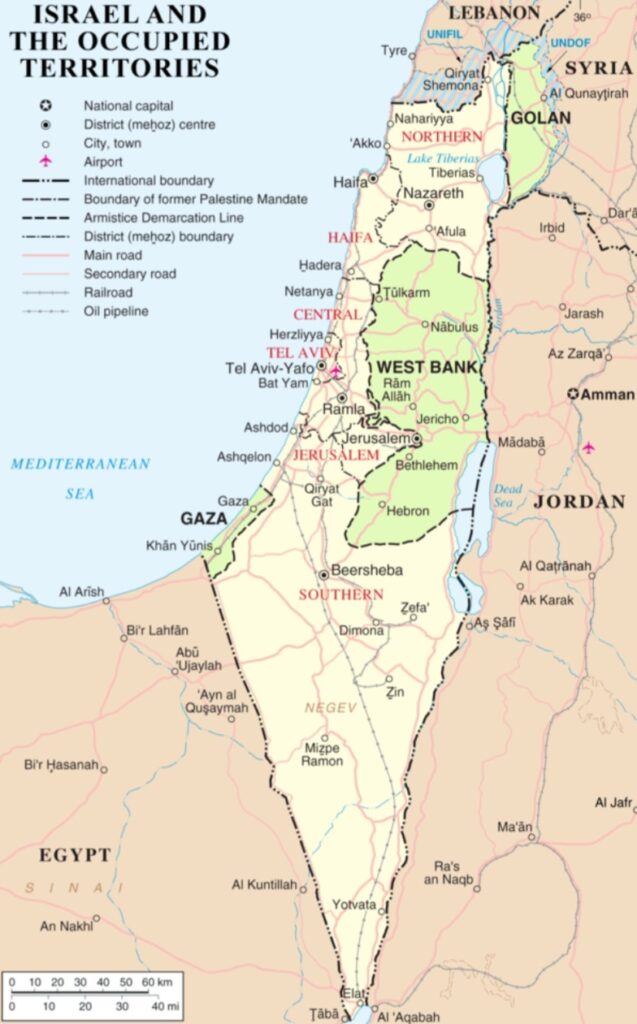
An international momentum is building as a growing number of nations now have formally recognise the State of Palestine, representing one of the most significant diplomatic shifts in recent years. According to media reports, out of 193 UN member states, more than 157 states — including several Western countries that had long sidestepped doing so, have now recognised Palestine. However, this current wave of recognition reflects a fascinating shift from the prevailing pattern, where support mostly came from the Global South and Arab League members. In 2024–25, states such as France, the United Kingdom, Portugal, Canada, and Australia announced official recognition, stressing the necessity to “keep the two-state solution alive”. Amid deteriorating conditions in Gaza and the West Bank, such increasing number of recognitions within Europe and North America has transformed Palestinian statehood from just a regional aspiration into an increasingly accepted aspect of the global diplomatic order.
This moment is significant because it marks a turning point in the balance of international legitimacy. Governments nowadays view recognition not as a reward after negotiations, but as a prerequisite for initiating a meaningful diplomacy. Widespread recognition strengthens Palestine’s legal standing in the UN general assembly, allowing it to pursue accountability apparatuses that are previously seemed out of reach. More recognitions stretch Palestine’s greater voting support in other global platforms like UNESCO, UNHRC, FAO and WHO etc.
In international law, recognition is the formal acknowledgment or acceptance by one existing state that another state meets the criteria of statehood laid down by international community and is therefore entitled to the rights and duties of a sovereign state. It influence a state’s legal personality at the global level, including its ability to claim sovereignty, to participate in treaties and engage in international institutions such as the UN. Thus, recognition enhances the legitimacy of Palestine’s claims and strengthens its standing to invoke international conventions, particularly in matters concerning occupation and human rights violations.
The legal arguments that supports Palestinian statehood primarily depend on international law principles of self-determination, territorial integrity, and the right to sovereignty. The UN Charter along with common Article 1 of the International Covenants on Civil and Political Rights affirm the right of all peoples to self-determination—a major basis for the Palestinian argument. Moreover, the Montevideo Convention (1933) further outlines the four criteria for statehood—defined territory, permanent population, effective government, and capacity for foreign relations. According to its supporters, Palestine substantially fulfils all these conditions. Furthermore, in 2012 the UN General Assembly Resolution 67/19, granted Palestine non-member observer state status, and subsequent recognitions by states and international bodies, have consolidated its de facto legal personality.
However, there are numerous constraints and counterarguments challenging full recognition of Palestinian statehood. Critics in this regard, including Israel and some Western legal scholars, argue that Palestine does not adequately meet the “effective government” criterion under the Montevideo Convention, citing divided governance. The Palestinian territories remain politically and administratively divided between the Palestinian Authority (PA) in the West Bank and Hamas in Gaza. Countries, such as the United States, the European Union, the United Kingdom, and other states have designated Hamas as a terrorist organisation, stating the use of armed attacks and its refusal to recognise Israel’s right to exist. On the other hand, the PA continues to maintain cooperation with Israel in security and administrative matters but has weak public legitimacy due to corruption, lack of elections, and perceived ineffectiveness.
Either way, countless failures to achieve a meaningful and broadly accepted two-state solution have renewed global debate over effectiveness of existing peace initiatives. In the meantime, Israel’s position appears to be more tenuous, both diplomatically and politically. Israel faces growing diplomatic isolation. Sanctions and condemnations has been mounting across various international platforms. This could also mean that Israel will face more frequent UN resolutions challenging its activities in Gaza and the West Bank. Similarly, the European Union – Israel’s largest trading partner has proposed sanctions, though it’s still waiting for approval by member states, but that could partially suspend its free trade agreement with Israel. Recognition has its most direct impact at the United Nations, firming up Palestine’s observer status and advancing its effort for full membership status. The repercussion has started to extend beyond diplomacy, evidently reaching economic, cultural, and even sporting spheres. At the same time, reports suggested that the Israeli government is also encountering growing dissent at home, demanding to bring back hostages and most importantly end the war and massacre in Gaza.
Notably, this wave of recognition has come from some of Israel’s traditional allies, many of whom are now questioning its settlement policies and continued occupation. This shift has turned the issue into a matter of serious diplomatic concern. The West initially affirmed Israel’s right to self-defence but have gradually grown critical of its conduct, particularly over civilian harm, and restricted humanitarian access along with intensified military actions in Gaza and tightened control and settlement expansion in the West Bank. Several of its closest allies have also urged Israel to halt its military operations and lift aid blockades to allow relief into the enclave. Except for the United States, most international support now appears to be leaning towards Palestinian statehood. The US is increasingly placed in the position of blocking and vetoing pro-Palestine initiatives. But, by repeatedly doing so it risks being perceived as partial and diminishing its role as a credible mediator. “They are very quickly losing support and sympathy all around the world. Even their closest ally, the United States, I believe, is beginning to have second thoughts about what they’re seeing unfolding in Gaza,” former Irish Prime Minister Leo Varadkar’s remark about the on-going situation.
To put it in perspective, the recent recognition of Palestine by several Western countries is driven by a combination of legal, moral, and political factors. Western countries abstained from recognition not due to negation of Palestinian rights, but because they consider it as diplomatically risky. Israel as a dependable ally for the West in the Middle East has been another important reason. Only recently—amidst a prolonged deadlock and Israel’s hardline policies, several European states have begun reconsidering this stance. Recent developments on the ground along with shifts in international opinion have amplified these dynamics. Reoccurring conflicts, particularly civilian casualties have made public scrutiny and moral pressure on governments stronger. French President Emmanuel Macron during his speech at the UN session in New York said that “we must do everything within our power to preserve the very possibility of a two-state solution, Israel and Palestine living side by side in peace and security,”. However, France, whose decision to recognise Palestine has been interpreted by some critics as politically motivated, aiming to appeal to certain segments of its domestic voter base. Norwegian Prime Minister Jonas Gahr Store also commented that Israel “has damaged its reputation in countries that have always had sympathy for it”. In different parts of the world, public sentiment has increasingly pushed their governments to recognize Palestine. “Recognition” here is seen as a way to put pressure on Israel diplomatically to return to negotiations. The growing support for Palestinian statehood, as a stand for human rights and international law, has apparently intensified advocacy for a two-state solution. Palestinian-led civil society has warmly welcomed the recent developments, projecting them as a step toward greater international legitimacy and justice.
Such support demonstrates not just sympathy for Palestinian statehood, but also frustration with Israel’s political decisions and more importantly proves that international efforts to push for a two-state solution also remain active. Meanwhile, the Middle East’s political scenario is also changing. Israel’s growing cooperation with some Gulf states, like the UAE and Bahrain has given a greater room for the Western countries to recalibrate their position on Palestine without destabilizing broader alliances. Countries that initially followed the U.S. stance on the Israeli-Palestinian issue are now more and more willing to act independently.
When the international community offers recognition, it raises a complex question about representation. Countries essentially acknowledging the PA’s role in the West Bank, given its limited control in Gaza, yet this complicates international consensus on what a recognised Palestinian state truly represents. The division further challenges the prospect of a unified negotiating partner in the table, making it easier for Israel to argue that statehood recognition is premature or legally inconsistent.
These perceptions are increasingly viewed as underestimate the two-state framework that much of the world still considers essential for regional stability. Even without immediate on-the- ground consequences, this gradual shift is reshaping how Israel is perceived today—less as a regional stabilizer and more as a state resisting international consensus on conflict resolution.
While this act of recognition is received in some parts of the world as a step in the right direction, but Israel has strongly condemned the recognitions by Western nations. Israeli Prime Minister Benjamin Netanyahu considered the move as an “absurdity,” and a “reward for terrorism”. Experts also noted that, there is little chance that it will alter Israel’s policy. The Israeli government holds firmly that its military actions in Gaza are conducted in self-defence and in accordance with international law, strongly denying all allegations against it. “This will not have one millimetre of influence on policymaking,” said Yaakov Amidror, a former Israeli national security adviser.
Despite the mounting diplomatic drawbacks, Israel continues to hold significant ground, whether it be politically, militarily, or economically. Though recent events hit its economy but Israel still maintained strong support from the US and enjoys leverage through its economic and security capabilities. Israel’s strong domestic institutions, military deterrence capacity, and ability to withstand diplomatic pressure have historically helped it to navigate moments of isolation and crises. Recognition challenges and could weaken Israeli claims but certainly redefine the diplomatic dynamic and political parameters of the conflict. It signals that the international community is increasingly willing to legitimise Palestinian statehood, in spite of Israeli objections and prioritising negotiation frameworks and regional stability. However, these recognitions do not immediately alter any of the on the ground realities. Israel still maintains authority over most of the West Bank and Gaza.
Thus, even now as the recognition of Palestine grows, Israel’s practical control, alliances, and economic interdependence allows it to maintain significant ground in regional and global politics. In essence, Israel’s position is not collapsing, but it is gradually fading in terms of global legitimacy and moral authority. Netanyahu already has rejected numerous calls to end the war until Hamas is destroyed and has maintained the status of not recognizing a Palestinian state. Israel has also reportedly considered measures it could take against countries recognising Palestine, including expelling diplomats and closing consulates. Israel’s diplomatic isolation risks developing further strategic challenges. Its relationships and policies with Arab and Western states may become more cautious in the future. At the same time, Israel appears to be more prepared to endure a period of diplomatic isolation, acknowledging the reality that efforts to counter such situations may continue for years.

About the Author
Trishnakhi Parashar is an enthusiastic and dedicated learner with a Master’s degree in International Relations/Politics from Sikkim Central University. Her academic journey is further enriched by a certification in Human Rights and Duties, a Postgraduate Diploma in Human Resource Management from Tezpur University, and a Diploma in International Affairs and Diplomacy from Indian Institute of Governance and Leadership.
Having begun her career at Tech Mahindra, Trishnakhi transitioned into the research field to pursue her deep-rooted passion for international affairs. She is currently interning at Global Strategic and Defence News, where she continues to refine her analytical skills. Her core interests include international relations, terrorism, diplomacy, and geopolitics—fields she explores with rigor and critical insight. Trishnakhi is committed to meticulous research and driven by a determination to contribute meaningfully to global discourse. With a vision to carve out her own niche, she aspires to leave a lasting impact on contemporary international issues.



