
By: Sanya Singh, Research Analyst, GSDN
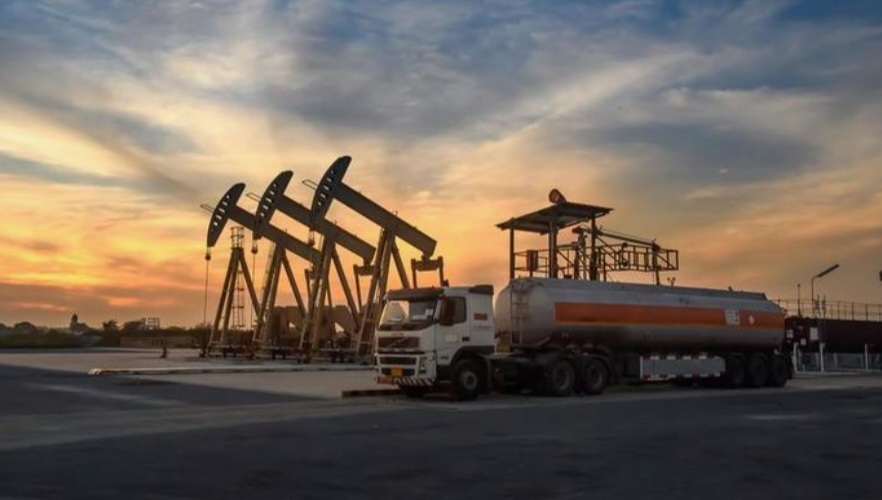
In today’s era of climate diplomacy, renewable energy milestones, and ambitious net-zero pledges, oil is often depicted as a relic of the industrial age, an outdated fuel destined to fade into irrelevance. Yet the realities of global politics tell a different story. Far from disappearing, oil remains a central axis of international power, shaping alliances, fuelling rivalries, and driving interventions. It is not simply an energy source but a strategic instrument, deeply embedded in the calculations of major powers.
Venezuela, endowed with the largest proven oil reserves in the world, offers one of the most compelling illustrations of this paradox. Despite the rhetoric of energy transition, Venezuela’s oil wealth continues to attract intense geopolitical interest. The evolving role of the United States in Venezuela’s political economy demonstrates how energy security, strategic competition, and economic pragmatism frequently override ideological commitments to decarbonization.
The so-called American “takeover” of Venezuela is not a conventional military occupation or colonial annexation. Instead, it represents a modernized form of dominance, subtle yet powerful, exercised through sanctions, selective diplomatic engagement, privileged corporate access, financial leverage, and conditional negotiations. This is a twenty-first century strategy of control, where influence is asserted not through territorial conquest but through the manipulation of economic lifelines and political dependencies.
This dynamic reveals a broader truth: Oil remains a cornerstone of global order. Control over oil-rich states continues to shape the architecture of international relations, even as governments publicly champion renewable energy. Venezuela’s predicament highlights the dual nature of resource wealth, it can empower national development, but it also exposes states to external pressures, interventions, and dependency.
Venezuela: An Oil State Par Excellence
Venezuela’s contemporary trajectory is inseparably bound to petroleum. Since vast oil deposits were uncovered in the early twentieth century, hydrocarbons have shaped the nation’s economic framework, political institutions, and external relations. By the 1970s, Venezuela had risen to prominence as one of the globe’s foremost oil exporters, channelling petroleum revenues into social welfare initiatives, infrastructure development, and regional diplomacy.
At present, Venezuela holds more than 300 billion barrels of confirmed oil reserves, exceeding even Saudi Arabia. The majority of these resources lie within the Orinoco Oil Belt, composed of extra-heavy crude that demands sophisticated technology and immense capital to extract and refine. This technical challenge has left Venezuela reliant on foreign expertise, particularly from American and Western energy corporations.
Yet decades of mismanagement, entrenched corruption, chronic underinvestment, and the politicization of the state-owned oil giant PDVSA have devastated production capacity. From a peak of over 3 million barrels per day, Venezuela’s output plummeted to unprecedented lows by the late 2010s. The collapse of its oil sector unleashed a broader economic catastrophe, hyperinflation, widespread poverty, mass emigration, and humanitarian turmoil, transforming the country from a regional energy leader into a weakened petro‑state struggling for survival.
This decline underscores the paradox of resource wealth: while oil endowed Venezuela with immense potential, it also entrenched dependency, vulnerability, and external pressures. The nation’s modern history illustrates how petroleum can simultaneously empower and destabilize, serving as both a foundation of prosperity and a catalyst of crisis.
The United States and Venezuelan Oil: A Historical Relationship
The oil relationship between the United States and Venezuela stretches back well before the Cold War era. American energy giants such as Exxon and Chevron were instrumental in laying the foundations of Venezuela’s petroleum sector throughout the twentieth century. Even after the landmark nationalization of the industry in 1976, Venezuela remained firmly tied to U.S. energy markets, channelling vast quantities of crude to American refineries specifically engineered to process Venezuela’s dense, heavy oil.
This mutual dependence endured despite recurring political frictions. During the presidency of Hugo Chávez, an era defined by fiery anti-U.S. rhetoric and sweeping socialist reforms, the flow of oil between the two nations continued largely uninterrupted. Venezuela relied on American markets and technological expertise, while the United States depended on Venezuelan heavy crude to sustain its refining system.
The eventual rupture was driven less by ideology than by shifting geopolitical alignments. As Caracas deepened its partnerships with China, Russia, and Iran, Washington began to view Venezuela not only as an unreliable energy partner but also as a broader strategic risk. What had once been a pragmatic interdependence evolved into a contested relationship, where oil was no longer simply a commodity but a lever of geopolitical rivalry.
This trajectory underscores a larger truth: energy ties are rarely severed by rhetoric alone. They unravel when strategic realignments alter the calculus of power, transforming economic partners into perceived threats. Venezuela’s pivot toward alternative global allies illustrates how oil remains at the heart of international politics, binding nations together when interests converge, and driving them apart when alliances shift.
Sanctions as a Tool of Energy Warfare
Starting in the mid‑2010s, Washington enacted sweeping sanctions against Venezuela, aimed at government elites, financial institutions, and most decisively the petroleum sector. These measures effectively severed Venezuela’s access to international capital markets and curtailed its ability to sell crude abroad, particularly to the United States.
Although officially justified as instruments to restore democratic governance and penalize human rights violations, the sanctions carried a clear strategic energy dimension. They:
- Undermined Venezuela’s ability to operate autonomously within global oil markets
- Stripped the Maduro administration of vital revenue streams
- Established conditions under which American companies could potentially re-enter the sector on advantageous terms
In this way, oil was weaponized not only against the Venezuelan state but also against rival powers such as China, Russia, and Iran that sought to expand their influence in Caracas. Yet these punitive measures also deepened Venezuela’s economic collapse, fuelling hyperinflation, worsening humanitarian distress, and accelerating mass migration.
The sanctions thus embody a dual reality: they functioned as tools of geopolitical leverage while simultaneously intensifying the suffering of ordinary Venezuelans. This raises profound ethical and political questions about the underlying motives of U.S. policy, whether the true objective was democratic restoration, strategic containment of adversaries, or the reconfiguration of Venezuela’s oil industry in ways favourable to American interests.
From Maximum Pressure to Strategic Pragmatism
By the early 2020s, Washington’s stance toward Venezuela began to undergo a notable recalibration. Global energy markets had been thrown into turmoil first by the COVID‑19 pandemic, which disrupted demand and supply chains, and then by the Russia–Ukraine war, which destabilized oil and gas flows worldwide. In this volatile context, the continued isolation of a nation holding the world’s largest proven oil reserves suddenly appeared strategically self-defeating.
In response, the United States introduced selective sanctions relief, authorizing limited licenses for American firms, most prominently Chevron, to restart operations in Venezuela under tightly managed conditions. This represented a clear departure from the earlier policy of uncompromising regime‑change pressure, shifting instead toward a framework of cautious engagement and pragmatic coexistence.
This policy evolution underscores a deeper reality: when energy security is imperilled, ideological rigidity gives way to flexibility. The United States did not discard its democratic discourse, but it adjusted its hierarchy of priorities. Oil, once again, assumed primacy serving as both a stabilizing resource in global markets and a strategic lever in U.S. foreign policy.
More broadly, this shift illustrates the enduring paradox of energy geopolitics. Even as Washington champions renewable energy and climate diplomacy, the imperatives of oil supply continue to dictate foreign policy choices. Venezuela’s re-entry into the U.S. energy calculus demonstrates that hydrocarbons remain central to global power dynamics, reminding us that the transition to a post-oil world is neither linear nor insulated from geopolitical realities.
The Nature of the American “Take-Over”
The American presence in Venezuela is best interpreted not as a territorial occupation but as a structural form of dominance. It functions through interconnected mechanisms that embed U.S. influence deep within Venezuela’s political economy and energy system:
Corporate Reinsertion: By permitting U.S. energy companies to re-establish operations in Venezuela’s oil sector, Washington ensures that production processes, technological expertise, and export channels remain aligned with American interests. This diminishes Venezuela’s reliance on Chinese and Russian firms while weaving U.S. influence into the very fabric of its energy infrastructure.
Financial and Institutional Control: Reviving Venezuela’s oil industry requires access to global capital, debt restructuring, and regulatory modernization arenas where U.S. sway over institutions such as the IMF and World Bank is decisive. Through these levers, Washington shapes the terms of Venezuela’s economic recovery, effectively dictating the conditions under which investment and reform can occur.
Conditional Diplomacy: Sanctions relief is neither permanent nor unconditional. Its reversibility grants Washington leverage over Venezuela’s political behaviour, creating a framework of constrained sovereignty. In this system, Venezuela’s economic survival hinges on compliance with external expectations, embedding U.S. oversight into the country’s domestic decision-making.
Market Reintegration: By reintegrating Venezuelan crude into U.S. and Western energy markets, Washington stabilizes global oil prices while curbing the influence of alternative energy blocs led by China and Russia. This re-entry not only secures supply but also reasserts U.S. dominance in shaping the architecture of global energy flows.
Taken together, these mechanisms illustrate how modern power operates less through territorial conquest and more through structural entanglement. Venezuela’s sovereignty is not erased but conditioned, its oil wealth transformed into a lever of geopolitical influence. The American “take‑over” thus reflects a twenty-first century model of dominance where finance, diplomacy, corporate access, and market integration replace traditional military occupation as instruments of control.
Geopolitical Rivalry: China and Russia in Venezuela
Venezuela has historically functioned as a strategic outpost for non-Western powers within the Western Hemisphere, drawing significant involvement from China and Russia. Beijing extended billions in oil‑collateralized loans, embedding itself in Venezuela’s economic lifelines, while Moscow provided military cooperation and forged energy partnerships that bolstered Caracas’s international standing. For Washington, this convergence transformed Venezuela into a critical arena of great‑power rivalry.
The recent American re-engagement is therefore not merely about oil supply but about geopolitical recalibration. By reasserting control over Venezuela’s energy sector, the United States seeks to dilute the influence of its rivals, curtail their strategic reach, and restore its own primacy in Latin America. In this sense, Venezuela becomes more than an energy partner it is a battleground for spheres of influence, where oil serves as both a commodity and a geopolitical weapon. This dynamic underscores how resource politics continues to shape global power struggles, even in an era ostensibly defined by energy transition.
The Energy Transition Paradox
The Venezuelan experience highlights the deep contradictions embedded within the global narrative of energy transition. Even as the United States presents itself as a champion of renewable energy and climate leadership, oil continues to underpin its strategic calculations. Petroleum remains indispensable for stabilizing international markets, sustaining industrial and military strength, and preserving geopolitical leverage. This reliance does not necessarily render the energy transition disingenuous, but it does reveal its uneven, pragmatic, and power-driven character.
In practice, the transition is less a clean break from fossil fuels than a managed reordering of priorities, where hydrocarbons remain vital during the interim phase. As a result, nations endowed with vast reserves, such as Venezuela, retain significant geopolitical weight, serving as both energy suppliers and strategic battlegrounds. The case demonstrates that while the rhetoric of decarbonization dominates global discourse, the realities of oil politics continue to shape international order, ensuring that resource-rich states remain central to the balance of power in the twenty-first century.
Implications for Venezuela
For Venezuela, renewed American involvement presents a dual reality of promise and peril. On one hand, expanded oil production has the potential to ease economic hardship, generate much-needed revenue, and support national reconstruction. On the other hand, it risks deepening structural dependency, constraining policy autonomy, and perpetuating extractive models dominated by entrenched elites.
Absent meaningful institutional reform and genuine economic diversification, Venezuela may remain locked in a recurring cycle where petroleum wealth functions less as a driver of national development and more as a magnet for external control. In this scenario, oil ceases to be a foundation for sovereignty and instead becomes a conduit through which foreign powers shape the country’s trajectory, reinforcing vulnerability rather than resilience.
Conclusion
The American reassertion of influence in Venezuela highlights a fundamental truth of global politics: oil continues to matter. Despite lofty climate pledges and the pursuit of renewable energy, fossil fuels remain central to shaping power dynamics, guiding foreign policy, and structuring international hierarchies. Venezuela’s immense petroleum reserves guarantee its status as a coveted strategic asset in an increasingly competitive world order.
The United States’ shifting posture from punitive sanctions to calibrated engagement demonstrates how energy security, geopolitical rivalry, and economic pragmatism consistently outweigh ideological uniformity. In the era of energy transition, oil has not lost its significance; rather, its role has been transformed, becoming a more nuanced instrument of statecraft. Venezuela serves as a vivid reminder that mastery over energy resources equates to mastery over influence, sovereignty, and the trajectory of global order itself.



