
By : Sonalika Singh, Consulting Editor, GSDN
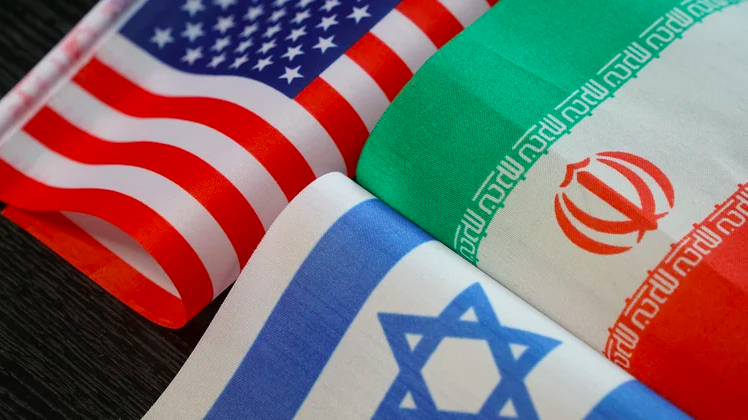
The joint military offensive launched by the United States and Israel against Iran in late February 2026 represents one of the most consequential escalations in Middle Eastern geopolitics in decades. Framed by Washington and Jerusalem as a necessary act of pre-emptive self-defence, the strikes targeted Iran’s nuclear infrastructure, missile facilities, senior military leadership, and elements of its command-and-control apparatus. The killing of Iran’s Supreme Leader, Ayatollah Ali Khamenei, marked an unprecedented moment in the history of the Islamic Republic and signaled that the campaign extended beyond limited deterrence into the realm of strategic transformation. To understand why the United States and Israel undertook such a high-risk operation, one must examine the convergence of nuclear concerns, regional proxy warfare, missile proliferation, domestic political calculations, and the collapse of diplomatic efforts that had attempted unsuccessfully to restrain Tehran’s ambitions.
At the heart of the confrontation lies Iran’s nuclear program, a project that has generated international controversy for more than two decades. Iran insists its nuclear activities are peaceful and oriented toward civilian energy production and medical isotope development. However, Western intelligence agencies and the International Atomic Energy Agency (IAEA) have repeatedly raised concerns over enrichment levels and verification gaps. Under the 2015 Joint Comprehensive Plan of Action (JCPOA), Iran agreed to strict limitations on uranium enrichment and intrusive inspection regimes in exchange for sanctions relief. That agreement, endorsed by the United Nations Security Council, was designed to lengthen Iran’s “breakout time” the period required to accumulate sufficient fissile material for a nuclear weapon. The United States withdrew from the JCPOA during President Donald Trump’s first term, reimposed sanctions, and adopted a “maximum pressure” strategy aimed at compelling Tehran to negotiate a more comprehensive accord covering missiles and regional activities.
Following Washington’s withdrawal, Iran gradually reduced compliance with JCPOA restrictions, increasing enrichment levels and expanding stockpiles of uranium. By 2026, U.S. officials alleged that Iran possessed approximately 460 kilograms of uranium enriched to 60 percent purity technically below weapons-grade, but significantly above levels required for civilian reactors. American officials, including Special Envoy Steve Witkoff and Vice President JD Vance, argued that such a stockpile could be further enriched to weapons-grade levels within days or weeks. Tehran countered that enrichment at 60 percent remained legal under the Nuclear Non-Proliferation Treaty and was reversible in the context of a credible diplomatic settlement. Nonetheless, Israeli intelligence assessments concluded that Iran’s “threshold” status maintaining the capacity to rapidly assemble a weapon without formally crossing the line posed an intolerable existential risk to Israel’s security.
Israel’s security doctrine has long emphasized pre-emption against hostile states seeking nuclear weapons. Prime Minister Benjamin Netanyahu has repeatedly described a nuclear-armed Iran as a threat to Israel’s survival. Israeli leaders argue that Iran’s rhetoric calling for Israel’s destruction, combined with its sponsorship of militant groups, differentiates it from other nuclear-capable states. The strategic calculation in Jerusalem is that deterrence may not be reliable against a revolutionary regime that views confrontation with Israel as ideological. Thus, Israeli planners have for years prepared contingency operations to degrade Iran’s nuclear infrastructure, including facilities at Fordow, Natanz, and Isfahan. The joint operation in 2026 reportedly codenamed “Operation Epic Fury” by the United States and “Lion’s Roar” by Israel reflected the maturation of these plans into coordinated execution.
Beyond nuclear concerns, Iran’s ballistic missile program served as a central justification for the strikes. Iran has developed one of the largest missile arsenals in the Middle East, including medium-range systems capable of reaching Israel and U.S. bases across the Gulf. Although U.S. intelligence assessments suggested that an intercontinental ballistic missile capable of striking the American mainland might not be viable before 2035, policymakers in Washington emphasized Iran’s rapid progress in solid-fuel technologies and underground missile infrastructure. The construction of deeply buried enrichment and missile facilities some reportedly 70 to 80 feet underground fueled suspicions that Tehran was hardening assets against future attacks while advancing toward a more survivable deterrent capability.
Equally significant was Iran’s network of regional proxies, often described as the “axis of resistance.” Through the Islamic Revolutionary Guard Corps’ Quds Force, Iran has armed, trained, and financed groups such as Hezbollah in Lebanon, Hamas in Gaza, Shiite militias in Iraq and Syria, and the Houthi movement in Yemen. These organizations have engaged in hostilities against Israel, attacked U.S. personnel, and threatened maritime shipping in the Red Sea and the Strait of Hormuz. The October 7, 2023, Hamas attacks on Israel and the subsequent regional escalation intensified Israeli perceptions that Iran was orchestrating a multi-front encirclement strategy. By 2026, Israeli officials argued that allowing Iran to combine proxy warfare with nuclear threshold capability would dramatically shift the regional balance of power in Tehran’s favor.
The collapse of diplomatic engagement also contributed directly to the decision to strike. In early 2026, U.S. and Iranian negotiators engaged in indirect talks mediated by Oman and European partners. According to American officials, the United States demanded a complete halt to enrichment above low civilian levels, stringent verification, and restrictions on ballistic missile development. Iran reportedly insisted on its “inalienable right” to enrich uranium on its own soil and rejected demands to dismantle key facilities. While Omani mediators expressed cautious optimism, Washington concluded that Tehran was using negotiations to buy time and disperse sensitive materials. The perception rightly or wrongly that Iran was negotiating in bad faith hardened positions in both Washington and Jerusalem.
Domestic political considerations cannot be overlooked. In Israel, elections were approaching, and Netanyahu faced both security pressures and political vulnerabilities. A decisive strike against Iran offered the possibility of reshaping the strategic environment while reinforcing his leadership credentials. In the United States, President Trump had campaigned on preventing Iran from obtaining a nuclear weapon and restoring American deterrence credibility. After earlier limited strikes in 2025 that reportedly set back Iran’s program only temporarily, the administration may have concluded that incremental measures were insufficient. The decision to escalate reflected a belief that the strategic window for decisive action was closing.
Another dimension was the legal and normative framing of the operation. The United States invoked Article 51 of the UN Charter, asserting a right of self-defence against imminent threats. Critics, including Russia and China, described the attack as an unlawful act of aggression. European responses were divided, with some governments condemning Iranian retaliation while urging de-escalation. The legal debate underscores a broader tension in international law: whether anticipatory self-defence against a latent nuclear threat is permissible when concrete evidence of an imminent attack is contested.
The targeting profile of the strikes further illustrates their objectives. Initial waves reportedly focused on air defence suppression, missile launch sites, and command centers. Subsequentattacks struck naval assets and facilities associated with uranium enrichment. The killing of senior Iranian military commanders and ultimately Khamenei himself indicated an effort not merely to degrade capabilities but to disrupt strategic leadership continuity. Whether regime change was an explicit objective remains debated. President Trump publicly encouraged Iranians to “take back” their country, while Israeli officials called for liberation from authoritarian rule. Yet history suggests that external military pressure often strengthens hardline factions rather than catalyzes liberal transformation.
Iran’s response launching missiles at Israel and at U.S. bases in Bahrain, Qatar, Kuwait, and the United Arab Emirates demonstrated its willingness to broaden the conflict geographically. Attacks near the Strait of Hormuz and threats to maritime traffic highlighted the global economic stakes. Approximately 20 percent of the world’s petroleum flows transit that chokepoint. Any sustained disruption could trigger energy price spikes and reverberate through global markets. Thus, the decision to attack Iran carried not only military risk but systemic economic consequences.
In strategic terms, the United States and Israel appear to have calculated that the risks of inaction outweighed the risks of escalation. From their perspective, Iran was approaching a point where its nuclear threshold status, fortified underground infrastructure, and regional proxy network would become too entrenched to reverse without far greater cost. The strikes were intended to reset the strategic equation either by compelling Tehran back to the negotiating table under less favorable terms or by significantly delaying its path to nuclear capability. Whether this objective will be realized remains uncertain.
Historically, military strikes on nuclear facilities have produced mixed outcomes. Israel’s 1981 attack on Iraq’s Osirak reactor delayed Saddam Hussein’s program but did not eliminate his ambitions. Similarly, the 2007 Israeli strike on Syria’s Al-Kibar facility removed a clandestine reactor but did not spark regional war. Iran’s program, however, is far more dispersed, technologically advanced, and politically embedded. Destroying physical infrastructure does not erase technical knowledge or national resolve. Indeed, some analysts argue that the attack may incentivize Iran to pursue an explicit nuclear deterrent as a guarantee of regime survival.
Ultimately, the decision by the United States and Israel to attack Iran in 2026 reflects a convergence of strategic anxieties fear of nuclear proliferation, concern over missile and proxy warfare, frustration with stalled diplomacy, and shifting regional power balances. It also reflects divergent interpretations of deterrence and international law. For Washington and Jerusalem, the operation was a necessary act to prevent a hostile regime from acquiring irreversible capabilities. For Tehran and its supporters, it was an aggressive violation of sovereignty designed to impose regime change.
The long-term implications will depend on multiple variables Iran’s internal political transition after Khamenei’s death, the resilience of its security institutions, the stance of Gulf Arab states, and the willingness of major powers to mediate de-escalation. What is clear is that the strikes mark a watershed moment in Middle Eastern geopolitics. They underscore the fragility of nuclear diplomacy, the limits of sanctions as coercive tools, and the enduring appeal of military solutions when trust collapses. Whether this confrontation ultimately produces renewed negotiations, prolonged regional war, or a transformed Iranian political order remains to be seen. What cannot be disputed is that the attack was rooted in a complex interplay of nuclear fears, strategic rivalry, ideological hostility, and the perception shared in Washington and Jerusalem that the status quo had become unsustainable.

About the Author
Sonalika Singh began her journey as an UPSC aspirant and has since transitioned into a full-time professional working with various organizations, including NCERT, in the governance and policy sector. She holds a master’s degree in political science and, over the years, has developed a strong interest in international relations, security studies, and geopolitics. Alongside this, she has cultivated a deep passion for research, analysis, and writing. Her work reflects a sustained commitment to rigorous inquiry and making meaningful contributions to the field of public affairs.



