
By: Sk Md Assad Armaan, Research Analyst, GSDN
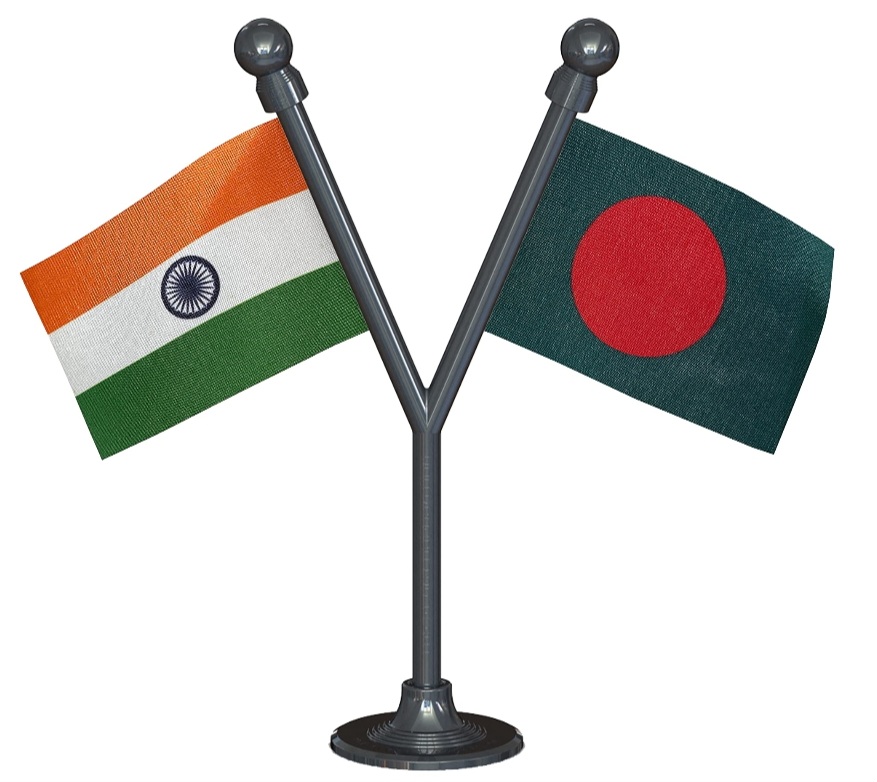
For much of the past two decades, Bangladesh stood out as one of India’s most reliable neighbors. Cooperation on counterterrorism, improved border management, connectivity projects, and trade had transformed a historically fragile relationship into a functional partnership. Dhaka under Prime Minister Sheikh Hasina was often described in New Delhi as a stabilizing force in South Asia, one that curtailed anti-India militancy, restrained cross-border insurgent activities, and aligned closely with India’s security priorities in the eastern and northeastern regions. Yet today, this image of Bangladesh as a strategic asset is under visible strain. Political instability, governance crises, rising communal tensions, and shifting external alignments have begun to alter the status. What was once viewed as a dependable partner is increasingly perceived as a source of strategic uncertainty. The transformation from friend to nightmare has not occurred overnight, but through a series of overlapping domestic and geopolitical developments that now directly affect India’s security environment. India’s relationship with Bangladesh has always carried a deeper historical weight. When Bangladesh emerged as a sovereign nation in 1971, it did so with decisive Indian support under Prime Minister Indira Gandhi. Addressing Parliament during the crisis, Gandhi famously asserted that India could not remain “a silent spectator” while violence, displacement, and instability unfolded on its eastern frontier. India’s intervention was framed not as ambition, but as moral responsibility rooted in humanitarian duty and regional stability. Bangladesh’s liberation thus became inseparable from India’s own strategic and ethical image. That shared history created expectations in New Delhi that Bangladesh would remain not merely a neighbor, but a partner anchored in political trust and strategic predictability rooted in mutual trust and partnership. It is precisely this expectation that is now under pressure.
From Strategic Partner to Structural Liability
India’s confidence in Bangladesh was built on predictability. Dhaka’s firm stance against insurgent groups operating along India’s northeastern frontier helped stabilize a historically volatile region. Intelligence cooperation improved; border coordination reduced violence, and economic integration expanded through transit routes, ports, and energy connectivity. For New Delhi, Bangladesh symbolized how neighborhood diplomacy could work when domestic governance and regional alignment reinforced each other. This strategic comfort has eroded as Bangladesh enters a phase of internal turbulence. Weakening political legitimacy following contested governance processes has produced widespread protests, violent confrontations, and administrative paralysis. Recent unrest, including clashes between protestors and security forces, attacks on media institutions, and the deaths of political activists, signals a state struggling to manage dissent. The consequences extend beyond domestic order; instability in Bangladesh has immediate spillover effects for India in the form of border pressures, diplomatic strain, and heightened communal anxieties in eastern states. The political marginalization of Sheikh Hasina long viewed in New Delhi as a predictable and cooperative political presence has further escalated uncertainty. Her public criticism of interim authorities and warnings about rising extremism reflect not merely personal grievance, but a broader institutional breakdown. For India, the concern is not who governs Bangladesh, but whether governance itself remains stable enough to sustain bilateral cooperation. A politically fractured Bangladesh complicates intelligence sharing, weakens border enforcement, and limits India’s ability to anticipate security risks. This shift marks a critical transition point. Bangladesh is no longer simply a cooperative neighbor facing internal challenges; it is increasingly a structural liability in India’s regional security architecture. When domestic unrest spills into diplomatic space through protests around diplomatic missions, visa disruptions, and communal backlash it signals a breakdown in the arena that once safeguarded India from Bangladesh’s internal politics.
Geopolitical Drift and the Security Spillover: Limits of Strategic Comfort
Beyond domestic instability, Bangladesh’s evolving external alignments further complicate India’s strategic outlook. As Dhaka seeks economic diversification and infrastructure investment, it has expanded engagement with external powers, particularly China. While diversification is not inherently threatening, the strategic nature of Chinese involvement from ports and power projects to digital infrastructure introduce long-term security concerns for India. For New Delhi, the risk lies not in immediate militarization but in gradual strategic drift. Infrastructure built without transparency, data networks integrated with foreign systems, and port access arrangements generate vulnerabilities that may be activated during regional crises. When combined with weak domestic governance, such dependencies reduce Bangladesh’s strategic autonomy and increase India’s exposure along its eastern flank. This internal–external nexus is what makes the situation particularly troubling. Political instability reduces Bangladesh’s bargaining power while increasing reliance on external actors willing to offer rapid support with fewer conditions. This dynamic mirrors patterns seen elsewhere in South Asia, where domestic fragility becomes an entry point for strategic penetration. India, despite geographic proximity and historical ties, finds itself constrained by political sensitivities and limited leverage. Security concerns are further intensified by social fault lines. Communal violence, attacks on minorities, and polarizing rhetoric resonate across borders, particularly in India’s eastern and northeastern states. Refugee pressures, cross-border criminal networks, and radicalization risks are not hypothetical they are real challenges that resurface whenever Bangladesh experiences prolonged instability. In this context, India’s dilemma is not episodic, but structural.
What makes Bangladesh’s current trajectory especially unsettling for India is the erosion of strategic comfort. For years, India’s Bangladesh policy rested on a simple assumption: internal stability in Dhaka would translate into external reliability. That assumption no longer holds. The weakening of institutions, contested legitimacy, and volatile street politics mean that bilateral cooperation is increasingly vulnerable to domestic shocks. Moreover, India’s traditional tools of influence like historical goodwill, economic interdependence, and political engagement are less effective in moments of internal crisis. Any kind of intervention risks nationalist backlash, while strategic restraint creates space for rival influence. This narrowing of options transforms Bangladesh from a manageable partner into a persistent strategic concern. Importantly, this is not a shift driven by hostility. Bangladesh is not acting as an adversary. The nightmare emerges from uncertainty rather than aggression, from unpredictability rather than intent. A neighbor in flux is often more destabilizing than a clearly defined rival.
India’s Strategic Dilemma: Intervention, Restraint or Reinvention
India now faces a strategic dilemma in responding to Bangladesh’s internal instability, one that offers no easy choices. Direct intervention, whether diplomatic or political, risks being framed as interference, triggering nationalist backlash within Bangladesh and undermining India’s long-standing image as a respectful neighbor. Even symbolic actions, such as public statements or policy signaling, can be politicized by domestic actors in Dhaka seeking to mobilize popular sentiment against perceived external pressure. At the same time, strategic restraint carries its own costs. A passive Indian approach risks allowing instability to deepen while external actors expand influence in Bangladesh’s political and economic spheres. In an environment where governance structures are weak, influence tends to flow toward actors willing to provide rapid support without political conditions. For India, this creates a paradox: restraint preserves goodwill in the short term, but disengagement may erode leverage in the long run. This dilemma highlights the limits of India’s traditional neighborhood policy, which has relied heavily on stable incumbents and bilateral trust. The Bangladesh case demonstrates that personality rooted diplomacy, while effective during periods of stability, becomes fragile when domestic political structures weaken. India’s reliance on Sheikh Hasina as a guarantor of predictability meant that institutional depth in the relationship remained underdeveloped. As leadership legitimacy erodes, so does the architecture of cooperation.
A more sustainable approach requires India to shift from crisis management to structural engagement. Rather than aligning with specific political actors, India must priorities engagement with institutions civil administration, border management mechanisms, economic regulators, and regional platforms. Strengthening people centric connectivity, educational exchanges, and sub-national cooperation can help insulate bilateral relations from elite level volatility. Regional multilateralism also offers partial positivity. Engaging Bangladesh through sub-regional connectivity initiatives, and issue-based cooperation on climate resilience and disaster management reduces the perception of bilateral dominance while maintaining strategic engagement. These platforms allow India to remain present without appearing intrusive. Ultimately, India’s challenge is not to restore an idealized past of stability, but to adapt to a more uncertain neighborhood. Bangladesh’s trajectory reflects a broader regional trend where domestic instability increasingly intersects with geopolitics. Managing such neighbors requires patience, institutional depth, and strategic humility rather than control.
Conclusion: A Question of Neighborhood Strategy or Burden?
Bangladesh’s transformation from trusted partner to strategic nightmare reflects a broader challenge in India’s neighborhood policy. India is no longer confronting a hostile state; it is confronting a fragile one. Internal instability, geopolitical uncertainty, and governance stress have combined to undermine the assumptions that once anchored bilateral trust. For New Delhi, the way forward demands recalibration rather than reaction. Stability, not alignment, must become the core objective. This requires sustained diplomatic engagement, support for institutional resilience rather than personality-driven politics, and regional multilateralism that reduces zero-sum competition. Heavy-handed intervention risks backlash, while disengagement creates strategic vacuums.
Ultimately, the question is not whether Bangladesh will remain important to India it inevitably will but whether India can adapt its neighborhood strategy to manage uncertainty rather than assume reliability. As Bangladesh stands at a crossroads between consolidation and chaos, New Delhi must confront a difficult question: can India recalibrate its regional approach in time, or will a once-friendly neighbor harden into a long-term strategic burden?



