
By: Kumar Aryan, Research Analyst, GSDN
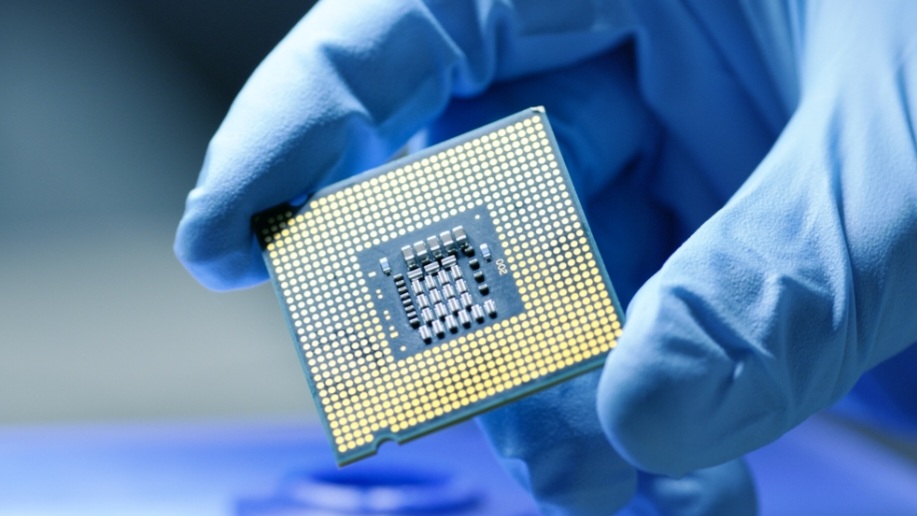
The global semiconductor industry stands at an unprecedented inflection point where technological prowess directly translates to geopolitical dominance, economic supremacy, and military capability. As artificial intelligence revolutionizes computing, autonomous systems, and defense technologies, control over semiconductor manufacturing and design has transformed from a purely commercial competition into a full-scale technological war between the United States and China, with profound implications for global stability, supply chain resilience, and the distribution of power in the international system.
Strategic Importance and Market Dynamics
The semiconductor industry, valued at approximately US$ 681.05 billion in 2024 and projected to reach US$ 755.28 billion in 2025, represents far more than a commercial sector. Semiconductors constitute the foundational layer of artificial intelligence, 5G telecommunications, advanced defense systems, autonomous vehicles, quantum computing, and virtually every critical technology that will define the next decade. The global semiconductor market is projected to grow at a compound annual growth rate of 15.4 percent, reaching approximately US$ 2,062.59 billion by 2032, indicating explosive expansion driven primarily by AI chip demand, data center infrastructure buildout, and emerging technologies.
Asia-Pacific dominates semiconductor production, accounting for 81.3 percent of global semiconductor market revenue in 2024, with the region projected to grow at 6.9 percent compound annual growth rate through 2030. Within this landscape, Taiwan commands a unique and increasingly vulnerable position as the world’s critical semiconductor chokepoint, while South Korea and Japan maintain essential roles in memory production and specialized materials.
United States Strategic Position and Policy Initiatives
The United States maintains substantial strategic advantages in semiconductor design, intellectual property, and fabrication technology, though this leadership has been steadily eroding across multiple dimensions. According to the Semiconductor Industry Association, United States-based semiconductor companies held 50.2 percent of global market share in 2023, the highest of any nation’s semiconductor industry.
However, this apparent leadership masks concerning vulnerabilities. The United States currently controls approximately 12 percent of global semiconductor manufacturing capacity, down from 37 percent in 1990. This fundamental shift reflects decades of outsourcing and off-shoring to Asia, leaving the United States dangerously dependent on Taiwan and South Korea for advanced chip production.
In response to strategic vulnerability, the United States enacted the CHIPS and Science Act in August 2022, representing the largest government industrial policy investment in decades. The legislation provides US$ 39 billion in direct subsidies for semiconductor manufacturing and US$ 13 billion for research and workforce training, bringing total semiconductor and related technology investments to approximately US$ 106 billion. The legislation includes 25 percent investment tax credits for semiconductor manufacturing equipment costs, creating powerful financial incentives for domestic production expansion.
As of December 2024, over US$ 32 billion of the US$ 39 billion designated for manufacturing incentives had been allocated. Intel received up to US$ 7.86 billion in direct funding in November 2024, in addition to US$ 3 billion for secure enclave programs, to support its US$ 100 billion investment in domestic manufacturing across Arizona, New Mexico, Ohio, and Oregon. Texas Instruments announced US$ 1.61 billion in CHIPS Act funding in December 2024 to support three new 300-millimeter wafer fabrication plants in Texas and Utah.
Taiwan Semiconductor Manufacturing Company received US$ 6.6 billion in CHIPS Act funding in April 2024 to construct advanced fabrication capacity in Arizona, with construction slated to commence in 2028 for 2-nanometer process technology. Samsung Electronics secured up to US$ 6.4 billion in CHIPS Act funding to support expansion of its Austin semiconductor facilities and construction of a new advanced manufacturing plant in the United States.
These investments represent unprecedented commitment to reshoring semiconductor manufacturing, though implementation challenges remain substantial. United States manufacturing costs for advanced semiconductors remain 30 to 50 percent higher than equivalent Asian production, driven by elevated energy costs, labor expenses, and raw material expenses. Additionally, the United States faces severe talent shortages in specialized semiconductor manufacturing and engineering disciplines, requiring sustained workforce development investments.
China’s Strategy and Self-Sufficiency Drive
China has adopted a fundamentally different approach to semiconductor dominance, pursuing vertical integration across the entire semiconductor value chain while simultaneously implementing “Made in China 2025” policies explicitly designed to achieve technological self-reliance across semiconductors, advanced materials, and critical technologies.
China originally targeted 70 percent semiconductor self-sufficiency by 2025, though current assessments indicate China will achieve approximately 30 percent self-sufficiency by the end of 2025. However, this apparent shortfall obscures remarkable progress in specific semiconductor segments, particularly mature-node production where China has become increasingly competitive.
According to United States-China Economic and Security Review Commission analysis, China’s mature-node semiconductor capacity grew more than four times faster than global demand between 2015 and 2023. China is projected to account for nearly half of new mature-node capacity additions over the next three to five years, with China’s share of global mature-node production expected to expand from 31 percent in 2023 to 39 percent by 2027.
China’s primary chipmaker, Semiconductor Manufacturing International Corporation (SMIC), is developing advanced production capabilities targeting 5-nanometer class processes, potentially achieving true 5-nanometer capability by 2025 or 2026 despite persistent exposure to United States export controls on advanced manufacturing equipment. SMIC reportedly achieved 28-nanometer production yields exceeding 90 percent and is steadily advancing process technology despite restrictions preventing access to cutting-edge extreme ultraviolet lithography equipment manufactured exclusively by Netherlands-based ASML.
China made record purchases of foreign semiconductor manufacturing equipment in 2024, spending over US$ 28 billion on equipment imports as officials accelerated domestic production expansion before anticipated further tightening of United States export controls. This extraordinary equipment procurement surge reflects China’s determination to acquire remaining equipment capable of supporting advanced node development before international restrictions become more comprehensive.
Taiwan’s Irreplaceable Role and Geopolitical Vulnerability
Taiwan has become the single most important semiconductor manufacturing location globally, with Taiwan Semiconductor Manufacturing Company commanding unprecedented market dominance that creates both strategic advantage and profound vulnerability.
TSMC secured a record 71 percent share of the global pure-play foundry market in the second quarter of 2025, up from 65 percent in 2024, according to TrendForce analysis. TSMC’s quarterly revenue surged to approximately US$ 32.47 billion by the third quarter of 2025, driven by explosive demand for advanced artificial intelligence chips, high-performance computing infrastructure, and mobile processors. The company’s dominance in 3-nanometer and leading-edge processes is unparalleled, with approximately three-quarters of TSMC’s revenue derived from nodes of 7-nanometers and below, and approximately one-quarter from 3-nanometer production.
TSMC’s competitive position reflects extraordinary technological achievement, sophisticated manufacturing operations, and unmatched capital investment. The company operates fabrication capacity exceeding 16 million 12-inch equivalent wafers annually, with facilities distributed across Taiwan, China, the United States, and Japan. TSMC announced new fabrication plants in Germany scheduled for commissioning in 2027, further diversifying production capacity.
However, TSMC’s concentration in Taiwan creates strategic vulnerability. Taiwan faces unprecedented geopolitical tensions as China continues military modernization and develops capabilities potentially enabling forced reunification or coercive scenarios. Academic research utilizing tabletop exercises and scenario analysis suggests that if China were to seek control over Taiwan, a quarantine approach targeting economic blockade would likely be adopted, with maximum effectiveness before 2027.
A Taiwan semiconductor supply chain disruption would inflict catastrophic damage on global technology industries. The entire advanced semiconductor supply chain depends on TSMC’s production, with major customers including Apple, NVIDIA, AMD, MediaTek, and Qualcomm. Disruption of TSMC’s 3-nanometer and 5-nanometer production would paralyze artificial intelligence chip supply, halt smartphone manufacturing, cripple data center expansion, and create cascading failures across dependent industries.
Taiwan’s leadership recognizes that semiconductor dominance constitutes a “silicon shield” providing strategic deterrence, yet simultaneously fears being “hollowed out” if excessive production relocates abroad. TSMC founder Morris Chang warned that excessive offshoring of Taiwan’s chip capacity could undermine the island’s strategic deterrent value by eliminating the unique concentration of advanced manufacturing capability unavailable elsewhere.
Advanced Node Competition: TSMC, Samsung, and Intel
The competition for supremacy in advanced semiconductor manufacturing has intensified dramatically as TSMC, Samsung Electronics, and Intel race to achieve leadership in the most technologically sophisticated nodes, where production expertise, yield rates, and capital investment determine competitive positioning.
TSMC commenced customer volume production of 2-nanometer chips in the second half of 2025, employing gate-all-around transistor architecture for the first time. The 2-nanometer process offers 10 to 15 percent better performance, 25 to 30 percent power reduction, and 15 percent increased transistor density compared to current 3-nanometer processes. TSMC has achieved yield rates exceeding 60 percent, crossing the threshold for stable volume production. According to TSMC Chief Executive Officer C.C. Wei, demand for 2-nanometer technology in the first two years is expected to exceed demand for 3-nanometer and earlier nodes.
Samsung Electronics initiated mass production of 2-nanometer chips in the second half of 2025, targeting production for its Exynos 2600 application processor for forthcoming Galaxy S26 smartphones expected in early 2026. However, Samsung faces significant manufacturing challenges, with reported yield rates approximately 40 percent, substantially below TSMC’s performance levels. Samsung was the industry’s first manufacturer to adopt gate-all-around architecture at 3-nanometer, but experienced low initial yield rates, illustrating the extreme difficulty of manufacturing at advanced technology nodes.
Intel, facing unprecedented competitive pressure and technical challenges, is betting its foundry business revival on an 18-nanometer process node branded as “18A,” positioned as approximately equivalent to competitors’ 1.8-nanometer capability. Intel has experienced substantial schedule delays in 18A development, with company officials acknowledging failure to deliver planned schedules. However, Intel maintains that 18A is now on track for high-volume manufacturing in the second half of 2025, with the company asserting it will soon challenge TSMC and Samsung in advanced nodes.
Intel’s new Fab52 facility in Chandler, Arizona, represents a Hail Mary effort to revive Intel’s manufacturing capabilities, with the facility comprising over one million square feet of cleanroom manufacturing space interconnected by 30 miles of overhead transport tracks. The plant is equipped with over 15 extreme ultraviolet lithography machines, the most critical and expensive equipment in advanced chip fabrication. However, wafers produced on the 18A node have exhibited defects limiting yields, with Intel officials admitting yield remains a persistent concern at advanced nodes.
Supply Chain Control and Critical Chokepoints
The semiconductor supply chain contains several critical chokepoints where single companies or countries exercise near-monopolistic control over essential technologies, creating profound vulnerabilities and leverage points in the ongoing geopolitical competition.
The Netherlands’ ASML maintains a near-absolute monopoly on extreme ultraviolet lithography systems, the essential technology enabling production of nodes below 7-nanometers. ASML’s machines cost approximately US$ 120 to 150 million each and require extraordinary technical sophistication. The Dutch government, responding to United States pressure, has restricted ASML’s export of extreme ultraviolet lithography equipment to China, effectively constraining China’s ability to develop leading-edge chip production independently.
Japan dominates production of critical semiconductor materials including photoresists, silicon wafers, and rare-earth elements essential for chip manufacturing. South Korea controls a substantial share of dynamic random-access memory and NAND flash memory production through Samsung Electronics and SK Hynix, creating additional vulnerability points.
China controls substantial reserves and refining capacity for rare-earth elements essential for semiconductor equipment, magnetic materials, and other critical technologies. China accounted for approximately 60 percent of global rare-earth element production and has increasingly weaponized export restrictions on these materials as leverage in geopolitical disputes.
The fragmented nature of semiconductor supply chains creates mutual vulnerability where no single nation or company can achieve complete independence, yet concentration in specific locations, particularly Taiwan, creates critical vulnerabilities threatening global technological systems.
Export Controls and Strategic Technology Restrictions
The United States has implemented increasingly stringent export controls targeting China’s access to advanced semiconductor manufacturing and artificial intelligence capabilities. The Department of Commerce imposed restrictions on exporting advanced computing chips exceeding specific performance thresholds, particularly targeting NVIDIA’s artificial intelligence accelerators destined for Chinese customers.
In response, China discouraged state-linked enterprises from purchasing NVIDIA’s H20 chip, designed specifically to meet United States export control thresholds while remaining legal for export. The deliberate rejection of nominally compliant technology demonstrated China’s determination to develop independent capabilities rather than accept compromised products.
In December 2025, the Trump administration announced a fundamental policy shift, authorizing conditional exports of NVIDIA’s H200 chip to approved Chinese customers in exchange for 25 percent revenue sharing with the United States government. Advanced Micro Devices was similarly authorized to export MI308 processors following Commerce Department approval. This policy reversal represents recognition that comprehensive export controls cannot indefinitely prevent China’s access to advanced semiconductors and reflects calculated judgment that controlled revenue-generating exports provide superior strategic outcomes compared to complete embargoes.
However, China has reportedly considered imposing restrictions on some approved chip imports while excluding them from domestic subsidy programs, indicating Beijing’s complex calculus regarding technology dependence versus strategic autonomy. This dynamic exchange illustrates the fundamental tension between commercial opportunity and strategic vulnerability driving semiconductor policy at the highest governmental levels.
Emerging Technologies: Quantum Computing and Next-Generation Semiconductors
Beyond conventional silicon-based semiconductor competition, emerging quantum computing technologies represent the next frontier of technological warfare where early advantages could yield irreversible strategic superiority.
China has mobilized state-scale investment and industrial coordination in quantum computing, achieving near-parity with the United States in superconducting quantum computer development while achieving leadership in quantum communications. In December 2024, China announced the Tianyan-504 superconducting quantum computer, with subsequent advancement to Zuchongzhi-3 featuring 105 qubits, becoming accessible to remote users via the Tianyan quantum computing network in October 2025.
The United States maintains distributed research efforts across universities, private companies, and government laboratories, with IBM releasing a 1,121-qubit chip and the Quantum Nighthawk processor featuring 120 linked qubits enabling computing requiring up to 5,000 two-qubit gates. Amazon, Microsoft, and others are pursuing alternative quantum computing architectures, potentially providing multiple pathways to quantum advantage.
China’s centralized, state-directed approach to quantum development provides advantages in concentrating resources and coordinating disparate efforts, whereas the United States’ decentralized model potentially provides advantages in spurring innovation through competition and diverse technical approaches. However, quantum technology remains nascent, with commercialization projected 5 to 10 years in the future, making current competition primarily focused on research dominance and foundational capabilities.
Current Status and Future Trajectory
As of December 2025, the United States retains technological leadership in advanced semiconductor design and specialized manufacturing, supported by renewed commitment through CHIPS Act investments and policy initiatives prioritizing domestic production expansion. However, this leadership faces erosion as China accelerates mature-node production and develops indigenous advanced capabilities despite United States export controls, while Taiwan’s concentration of advanced manufacturing capacity creates critical vulnerabilities threatening global technological systems.
The semiconductor war represents not a conclusion but rather an intensifying competition with no clear victor, where technological sophistication, capital investment, supply chain resilience, and geopolitical positioning determine outcomes across dimensions that reshape global economic and security relationships.
TSMC’s extraordinary market dominance, commanding 71 percent of pure-play foundry market share, creates overwhelming competitive advantage in artificial intelligence chips, the most commercially valuable semiconductor category. Yet this dominance remains vulnerable to geopolitical disruption, supply chain restriction, and the emergence of alternative suppliers developed through sustained Chinese and American investment.
The distributed geographic expansion of semiconductor manufacturing, with TSMC, Samsung, and Intel establishing new capacity in the United States, represents strategic response to geopolitical vulnerability. However, decades of outsourcing cannot be reversed through industrial policy alone, and manufacturing capacity developed today will require years to achieve maturity and competitive efficiency comparable to Asian production ecosystems.
Conclusion
The semiconductor war does not feature a clear victor but rather an evolving competitive landscape where different nations and companies dominate specific segments while facing distinct vulnerabilities across others. The United States maintains design and technology leadership but lacks manufacturing capacity; China rapidly expands production of conventional and mature-node chips while remaining constrained in advanced nodes; Taiwan commands unparalleled advanced manufacturing capability while facing extraordinary geopolitical vulnerability; and other nations including South Korea and Japan maintain critical roles in memory and specialized technologies.
The integration of semiconductor competition into broader United States-China technological rivalry ensures that semiconductors will remain at the center of national security strategy, industrial policy, and geopolitical positioning for the foreseeable future. The outcome of this competition will determine not merely commercial success but fundamental technological dominance, economic power, and strategic capability defining global security architecture in the artificial intelligence-driven era.

About the Author
Kumar Aryan is an analytical and results-oriented postgraduate from Symbiosis School of International Studies (SIU) with a Master’s in International Relations, Global Security, and International Business Strategy. He possesses a strong understanding of geopolitics and economics, expertise in research and data-driven strategy, and proven leadership in team management and is experienced in market intelligence, data analysis, and cross-cultural engagement.



