
By: Sk Md Assad Armaan, Research Analyst, GSDN
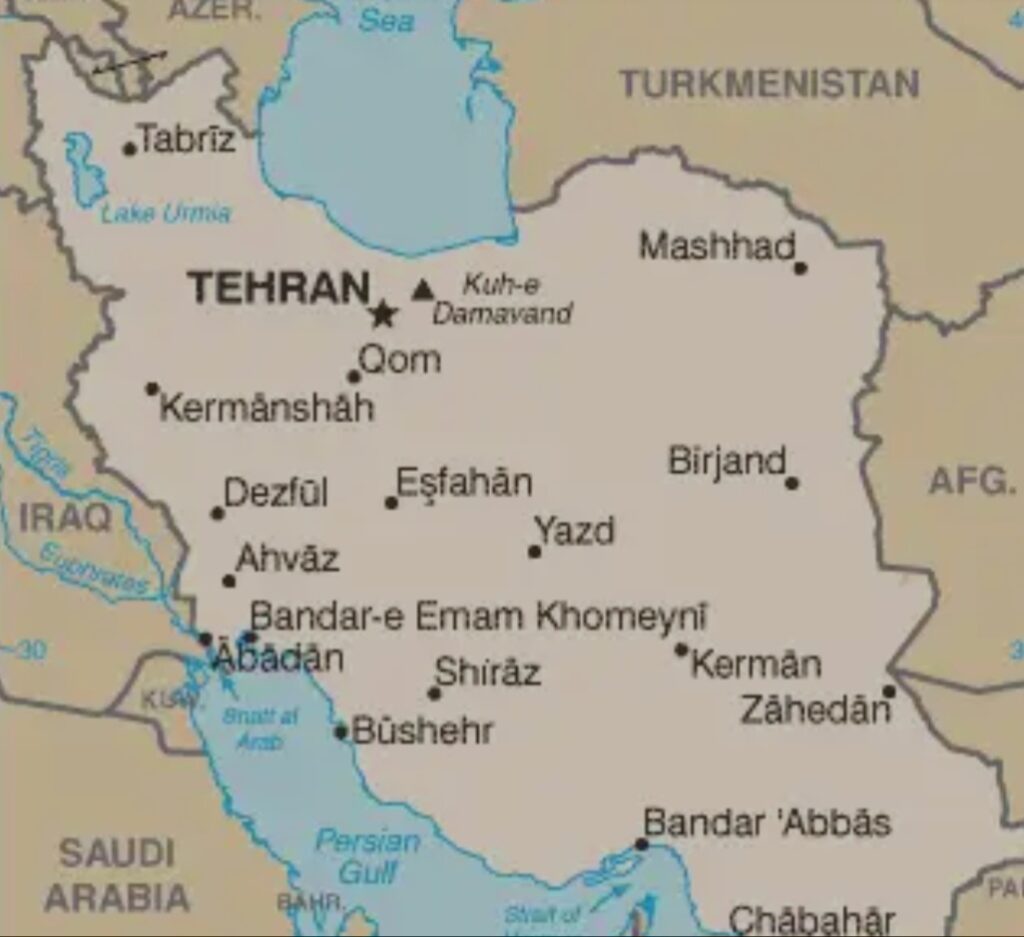
In early 2026, the United States once again found itself at a familiar strategic crossroads over Iran. President Donald Trump publicly floated the possibility of military strikes in response to Tehran’s violent crackdown on nationwide protests, reigniting speculation about whether Washington was prepared to use force against the Islamic Republic. Yet, as in previous moments of heightened tension, the rhetoric did not translate into action. Despite visible military posturing and escalatory statements, the administration ultimately stepped back, opting instead for diplomatic pressure and strategic restraint. This recurring pattern raises a central question: what is stopping the United States from striking Iran? The answer lies not in a single constraint, but in a layered convergence of military risk, regional instability, domestic political cost, legal ambiguity, and global economic repercussions. Iran is not merely another adversarial state; it sits at the intersection of multiple fault lines that make the use of force uniquely hazardous. Even for a militarily superior power, striking Iran carries consequences that extend far beyond the battlefield.
Military Realities and the Limits of Force
From a purely military standpoint, Iran presents one of the most complex operational challenges in the Middle East. Unlike weaker adversaries targeted in past U.S. interventions, Iran possesses significant asymmetric and conventional deterrent capabilities. Its extensive ballistic missile arsenal, layered air defence systems, hardened underground facilities, and dispersed command infrastructure significantly raise the costs of any strike. Critical military and nuclear-related sites are deliberately buried deep within mountainous terrain, requiring sustained and precise operations rather than symbolic or limited attacks. Equally important is Iran’s capacity for retaliation. Tehran has repeatedly signalled that any U.S. strike would trigger immediate responses against American military bases, naval assets, and regional partners. U.S. forces stationed across Iraq, Syria, the Gulf, and the Red Sea are within range of Iranian missiles and proxy networks. Protecting these assets would require not only offensive action but extensive defensive preparations, dramatically expanding the scale of any military engagement.
Beyond conventional military considerations, Iran’s deterrence posture is deliberately designed to complicate U.S. decision-making through escalation uncertainty. Iran does not rely solely on symmetrical military responses; instead, it operates through a networked deterrence strategy that integrates state and non-state actors across the region. Hezbollah in Lebanon, militias in Iraq and Syria, and allied groups in Yemen provide Tehran with multiple vectors for indirect retaliation. Any U.S. strike risks triggering a cascading response across several theatres simultaneously, stretching American and allied defensive capacities. This diffusion of retaliatory capability blurs the boundary between limited and full-scale conflict, making escalation control exceptionally difficult. For U.S. planners, the challenge is not simply defeating Iran’s conventional forces but managing a region-wide security shock whose timing, scale, and geography would be dictated by Tehran rather than Washington. Compounding these challenges is the current force posture of the United States in the region. Carrier strike group availability has been constrained, and sustained operations would depend heavily on access to regional bases and airspace. Any large-scale strike would therefore require prolonged logistical coordination with Gulf partners, cooperation that is far from guaranteed.
Regional Fragility and Allied Reluctance
Beyond military feasibility, regional dynamics significantly constrain Washington’s options. While several Middle Eastern states remain deeply suspicious of Iran’s regional ambitions, few are willing to absorb the fallout of a direct U.S.–Iran conflict. Gulf states fear retaliatory strikes on energy infrastructure, maritime chokepoints, and urban centres. The memory of missile and drone attacks on oil facilities in Saudi Arabia and the UAE has reinforced perceptions of vulnerability. Turkey, Qatar, and Egypt have all emphasised de-escalation, warning that war with Iran would destabilise an already fragile regional order. Even Israel, while rhetorically hawkish, understands that a U.S.-led strike risks triggering multi-front escalation involving Hezbollah, militias in Iraq and Syria, and potential unrest across the Levant. Without clear regional consensus or robust coalition backing, U.S. military action would appear unilateral, heightening both strategic and reputational risks.
Regional reluctance also reflects a deeper concern about precedent. Many Middle Eastern states fear that a U.S. strike on Iran would normalize regime-targeting military interventions, reinforcing instability rather than containing it. Even governments aligned with Washington remain sensitive to domestic opinion, where anti-war sentiment and scepticism toward Western interventionism run deep. A visible association with U.S. military action could provoke internal unrest, undermine regime legitimacy, and expose leaders to accusations of complicity. As a result, allies may offer rhetorical support while quietly withholding operational cooperation. This gap between public alignment and private hesitation further constrains U.S. options, as successful military operations depend not only on firepower but on political consent, access, and sustained regional buy-in.
Domestic Politics and the Burden of Escalation
Domestic political calculations further temper U.S. willingness to strike Iran. After decades of costly military engagements in the Middle East, American public appetite for another conflict remains limited. Any military action that risks U.S. casualties, civilian harm, or long-term entanglement would face intense scrutiny from Congress and the electorate. The political costs of escalation are particularly acute in an election cycle, where foreign policy missteps can rapidly become liabilities. Moreover, U.S. policymakers are acutely aware that limited strikes often fail to produce decisive outcomes. A one-off operation may satisfy short-term political signalling but risks provoking retaliation without fundamentally altering Iran’s behaviour. In strategic terms, escalation without a clear endgame could trap Washington in a cycle of action and response precisely the scenario successive administrations have sought to avoid. There is also an institutional memory within Washington shaped by past interventions. The experiences of Iraq and Afghanistan continue to influence strategic culture, reinforcing scepticism toward military solutions that promise quick results but generate long-term commitments. Senior policymakers are acutely aware that even a limited strike could entangle the United States in a prolonged confrontation without clear metrics for success. Bureaucratic caution within the Pentagon, intelligence community, and State Department thus acts as an additional brake on impulsive decision-making. This internal resistance does not eliminate the possibility of force, but it raises the threshold required to justify it, demanding clarity of objectives, exit strategies, and political consensus that are currently absent in the Iran context.
Economic Shockwaves and Global Stability
Iran’s geographic position adds another powerful constraint: the Strait of Hormuz. Roughly one-fifth of the world’s oil supply passes through this narrow maritime corridor. Even limited military confrontation risks disrupting shipping, spiking global energy prices, and triggering economic instability far beyond the Middle East. In an already fragile global economy, such shocks would reverberate through inflation, supply chains, and financial markets. For U.S. allies in Europe and Asia, the economic consequences of conflict with Iran would be severe. This reality reduces international support for military action and reinforces preferences for containment rather than confrontation. In this sense, Iran wields structural leverage not through dominance, but through its capacity to disrupt global systems. Energy markets are particularly sensitive to perception as much as reality. Even the anticipation of conflict in the Gulf can trigger speculative price spikes, insurance withdrawals from shipping lanes, and disruptions in maritime logistics. For major economies already grappling with inflationary pressures, such volatility carries political consequences. This makes Iran not only a regional security concern, but a global economic variable. U.S. decision-makers must therefore weigh military objectives against potential backlash from allies and partners whose economic stability could be undermined by conflict. In this context, restraint is not merely strategic prudence; it is economic risk management on a global scale.
Legal, Normative, and Strategic Constraints
International legal considerations further complicate the situation. An U.S. strike on Iranian soil would face significant challenges under international law. Iran has consistently framed itself as a victim of Western coercion, a narrative that resonates strongly in parts of the Global South. Military action would reinforce this perception, undermining U.S. efforts to present itself as a defender of international norms. This normative dimension matters strategically. Washington’s ability to mobilise diplomatic coalitions, impose sanctions, and shape global opinion depends on the credibility of its legal and moral claims. Striking Iran without broad international backing risks eroding that credibility at a time when the U.S. is already competing with Russia and China over the future of global order. These legal and normative considerations acquire added significance amid intensifying competition with Russia and China. Both powers actively exploit perceived inconsistencies in U.S. behaviour to challenge Western claims of rules-based leadership. A unilateral strike on Iran would provide fertile ground for narrative competition, allowing rivals to portray Washington as selective in its application of international law. This reputational cost would not be confined to the Middle East; it would reverberate across Africa, Latin America, and Asia, where scepticism toward Western interventionism remains strong. For a United States seeking to mobilise coalitions against revisionist powers, preserving normative credibility becomes a strategic asset worth defending.
Conclusion: Power, Limits, and Strategic Prudence
Taken together, these constraints explain why U.S. policy toward Iran consistently oscillates between pressure and restraint. Sanctions, diplomacy, cyber activities, and strategic signalling offer tools that impose costs without triggering uncontrollable escalation. Even when military force is discussed, it functions primarily as leverage rather than a preferred instrument. This does not mean that conflict is impossible. Miscalculation, regional incidents, or sudden political shocks could still push the situation toward confrontation. However, the structural barriers to deliberate U.S. military action against Iran remain formidable. What ultimately stops the United States from striking Iran is not weakness, but the recognition of limits. Iran represents a case where military superiority does not guarantee strategic success, and where the costs of action may outweigh its benefits. The decision to refrain from force reflects a sober assessment of risk, not indecision. In an era defined by great-power competition, economic interdependence, and regional fragility, restraint has become a strategic choice. The U.S. approach to Iran illustrates a broader lesson of contemporary geopolitics: the ability to use force does not always translate into the wisdom to do so. Whether Washington continues to manage Iran through pressure and containment, or whether future crises alter this balance, one reality remains clear, striking Iran is easy to threaten, but extraordinarily difficult to justify, execute, and control.



