
By: Prachi Kushwah, Research Analyst, GSDN
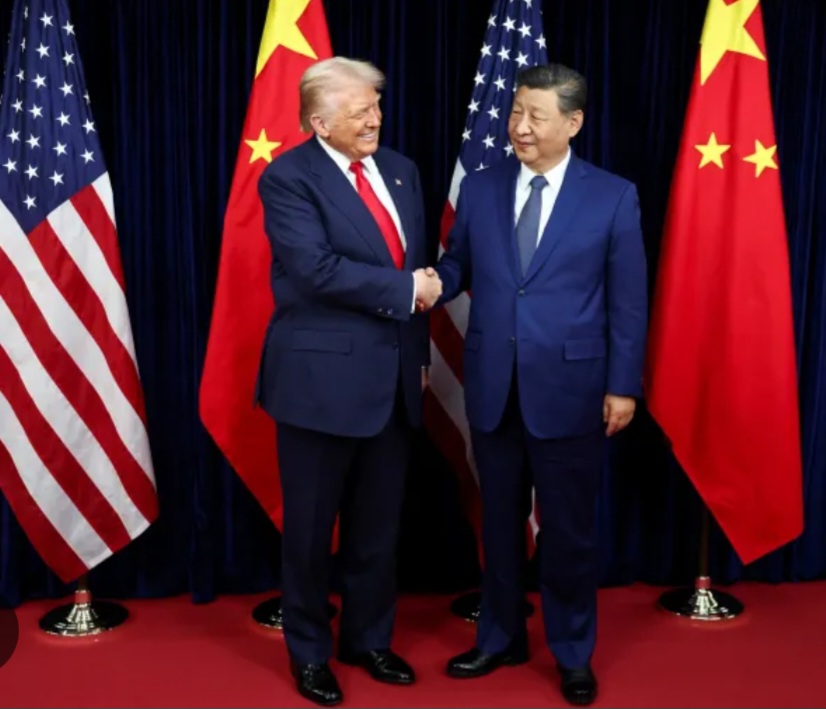
The Xi-Trump Summit held in Busan on May 20, 2020, represented a consequential moment in modern international relations. After two years of intensified economic confrontation and strategic posturing, leaders from the United States and the People’s Republic of China convened with the stated aim of stabilizing a relationship that shapes global politics, trade, and security. This analysis examines the substantive and symbolic changes in bilateral relations that unfolded after the summit, tracing developments through 2025. It evaluates economic shifts, strategic and security implications, technological competition, diplomatic realignments, and broader global consequences. The article takes an academic, analytical tone, synthesizing observable trends and policy outcomes in the period following Busan..
Background of the US-China Relationship
Prior to the Busan meeting, US-China relations had undergone a marked deterioration from the previous decades of managed engagement. Beginning in 2018, the United States implemented tariffs and sanctions aimed at reducing bilateral trade imbalances and targeting Chinese industrial policy. The Trump administration’s National Security Strategy and subsequent policy choices framed China as a strategic competitor in economic, military, and technological arenas. Chinese leadership, for its part, pursued a combination of domestic modernization goals and expanding international influence, exemplified by major infrastructure initiatives and investments across Asia and beyond. These dynamics set the stage for a summit that many observers hoped would slow the slide toward permanent strategic decoupling..
Key Outcomes of the Xi-Trump Summit in Busan
The Busan Summit did not produce a single major treaty or sweeping accord, but it yielded several measurable outcomes and important shifts in rhetoric. Leaders agreed to resume select trade talks and to create joint working groups to address intellectual property concerns, limited tariff adjustments, and constrained technology exchanges under specific licenses. Importantly, both sides indicated an interest in reestablishing lines of communication on crisis management, particularly in the maritime and cyber domains. While substantive concessions were limited, the summit delivered a reputational pay-off: it signalled a willingness to negotiate and to avoid precipitous escalation. For policy-makers, however, the meeting was a beginning rather than an endpoint — it opened channels that subsequent administrations would thread cautiously..
Economic Shifts Post-Summit
The immediate economic effect of the Busan summit was a modest easing in commercial tensions. Trade flows began to recover from the troughs of 2019 and early 2020, reflecting both political thaw and the resiliency of global supply chains. The United States saw an increase in certain exports to China, notably agricultural goods and selected industrial components, while Chinese firms gradually resumed purchases of energy commodities from US suppliers. Nevertheless, the summit did not resolve structural impediments that had driven the trade war: market access barriers, state subsidies, and divergent regulatory environments remained. Consequently, multinational corporations adopted a strategy of hedging: diversifying supply chains geographically, increasing inventory buffers, and recalibrating manufacturing footprints toward Southeast Asia and India.
By 2022 and 2023, foreign direct investment patterns reflected a more pluralized Asia, with both Chinese outbound investment and US investment into China slowing relative to the pre-2018 era. The cumulative effect was not a return to full economic integration, but a managed competition where commerce continued under tighter guardrails and clearer contingency planning..
Strategic and Security Implications
Strategically, Busan’s impact was subtle but durable. The summit reduced the probability of immediate, high-profile escalations, but it did not eliminate the deep strategic mistrust between Beijing and Washington. The United States continued to strengthen security ties with regional partners, particularly through enhanced cooperation with Japan, South Korea, Australia, and India. The Quad mechanism gained renewed emphasis as a platform to coordinate maritime security, infrastructure resilience, and technology policy. China expanded asymmetric capabilities — both military and dual-use technologies — to assert influence in the South China Sea and beyond. Taiwan remained a central flashpoint: tensions oscillated as both sides tested red lines through military patrols, diplomatic maneuvers, and messaging.
While Busan fostered crisis communication channels, the strategic competition hardened into an era where containment and competition coexisted with selective, issue-based cooperation..
Technological and Diplomatic Realignment
Technology emerged as a principal arena of contestation after Busan. The United States intensified controls on exports of advanced semiconductors and critical manufacturing equipment, citing national security and supply chain resilience. These restrictions prompted Beijing to accelerate domestic capacity-building initiatives and to prioritize research in artificial intelligence, quantum information science, and semiconductor design. In parallel, both governments pursued targeted diplomacy: cooperating on global health initiatives and climate commitments while clashing over norms for cyber conduct and data governance. The result by 2025 was a bifurcated technological architecture: certain elements of the global technology stack became regionally differentiated, with interoperability preserved only where mutual dependencies made decoupling prohibitively costly..
Global Impact and European Response
The Busan Summit reverberated across international institutions and among middle powers. European governments generally welcomed a reduction in bilateral tensions but remained wary of strategic ambiguity. The European Union accelerated efforts to preserve strategic autonomy, negotiating trade and investment rules with Asia while tightening scrutiny of foreign investment and critical infrastructure. Other states, particularly in Southeast Asia, pursued dual-track strategies — enhancing economic ties with China while strengthening security partnerships with the United States. International organizations, including the World Health Organization and climate fora, experienced episodic cooperation between Washington and Beijing as pragmatic necessity trumped ideological divides. Ultimately, Busan’s significance lay in its demonstration that great-power engagement could produce limited, cooperative outcomes even during systemic rivalry..
Domestic Political Constraints and Leadership Change
Domestic politics in both countries shaped the post-Busan trajectory. In the United States, bipartisan skepticism toward China persisted, constraining any rapid rollback of tariffs or export controls. Congressional scrutiny of technology firms and investment screening regimes intensified, reflecting concerns about intellectual property and national security. China’s domestic policy priorities — economic modernization, social stability, and technological self-reliance — limited Beijing’s willingness to make concessions perceived as undermining long-term strategic aims. Leadership changes and electoral cycles influenced policy continuity; subsequent administrations adopted cautious pragmatism rather than wholesale reversals, emphasizing calibrated competition and targeted cooperation..
Sectoral Effects: Supply Chains, Finance, and Energy
Post-Busan developments produced notable sectoral effects. Global supply chains saw structural adjustments as firms diversified suppliers, relocated certain production stages, and invested in regional logistics hubs. Financial linkages experienced both tightening and adaptation: capital flows to China remained substantial but more circumscribed, with regulatory regimes and compliance standards evolving to manage risk. Energy markets reflected pragmatic interdependence: despite geopolitical rivalry, energy trade continued where commercial incentives aligned with strategic hedging. These sectoral patterns reinforced a broader trend: economic interactions persisted but within frameworks that embedded strategic foresight and resilience planning..
Prospects for Cooperation and Rivalry (2025 and Beyond)
Looking forward from 2025, the US-China relationship is likely to remain a hybrid of competition and cooperation. Areas such as climate change, pandemic preparedness, and arms control present windows for pragmatic engagement because global public goods require joint leadership. Conversely, competition in advanced technologies, regional influence in the Indo-Pacific, and differing governance models for digital infrastructure will continue to generate friction. Policy pathways that reduce miscalculation — institutionalized dialogues, crisis communication hotlines, and sectoral coordination mechanisms — can mitigate risks, but they require sustained political will from both capitals. The Busan Summit’s legacy is therefore mixed: it demonstrated that high-level diplomacy can recalibrate relations without resolving core disputes, and it underscored the importance of managing competition to preserve global stability..
Conclusion
The Xi-Trump Summit in Busan on May 20, 2020, served as a focal point for an era defined by strategic competition and selective cooperation. From 2020 through 2025, the bilateral relationship evolved into a managed rivalry characterized by economic interdependence, technological contestation, and episodic diplomatic collaboration. While Busan did not reverse the broader trajectory toward competition, it established mechanisms and a rhetorical framework that reduced the likelihood of abrupt escalation. As policymakers assess the lessons of the past five years, the central challenge remains constructing durable institutions and norms that can accommodate both rivalry and the shared necessities of global governance..



