
By: Trishnakhi Parashar, Research Analyst, GSDN
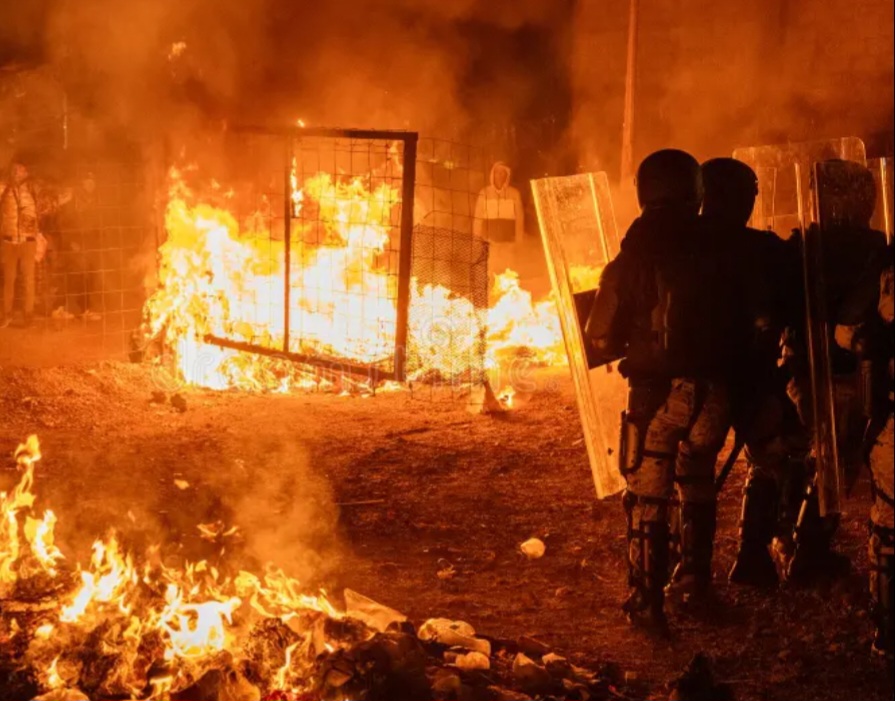
A tremor runs through Mexico’s streets as the nation’s youth demand answers from those in power. Mexico is currently experiencing a roaring wave of unrest driven by political, security, and social pressures. A wave of youth-led demonstrations, sparked by public anger over persistent corruption, rising violence, and abuse of power has brought thousands of people to rally across the streets of major cities.
Simultaneously, the government has expanded security measures in response to escalating cartel activity, further stirring public debate over the state’s capacity to ensure safety and justice. Growing mistrust in institutions clubbed with economic grievances have created a volatile scenario where widespread frustration and calls for meaningful reform are evident. Underneath the visible demonstrations, the unrest in Mexico projects a deeper structural collapse that has been ongoing for years. Communities in several states are struggling with the growing reach of criminal networks nibbling at the social fabric from within.
Triggering point for the movement
The current wave of protest was triggered by the assassination of Uruapan Mayor Carlos Manzo. During a Day of the Dead event on November 1, 2025, Manzo was fatally shot at a festival. He had been vocal in his fight against organized crimes in Michoacan. Manzo was a firm critic of cartel violence. He gained attention for urging stronger action and criticizing Mexican President Claudia Sheinbaum’s approach to handling crime.
Mexico’s security minister, Omar García Harfuch informed that the man suspected of orchestrating this attack has links to the Jalisco Nueva Generación Cartel. This particular cartel is notorious in this area for extorting money. Only a few months ago, Bernardo Bravo, a leader of lime growers in the violent western Mexican state of Michoacan, was killed after taking stand against extortion demands by criminal groups. His death has quickly fuelled momentum among protesters in Michoacan, with many arguing that his killing projects the government’s inability and possibly unwillingness to curb cartel violence.
However, beyond Manzo’s murder, this momentum has ignited a deeper sense of frustration among young Mexicans. Particularly, the presence of Generation Z (Gen Z) protesters, joined by university students, young professionals, and established civil society organisations, is expressly visible. The activities carried out under the banner of Generacion Z Mexico. They organise quickly through social media, use digital tools to coordinate protests, and rely on decentralised systems rather than traditional leadership structures. The majority of the protesters have firsthand experience with limited job security, rising living costs, and a widening gap between promises and reality.
Rise of organised crimes in Mexico
Organised crimes in Mexico is a longstanding phenomenon. It is beyond a criminal problem for many living in Mexico— it is a structural, political and societal obstacle that unfortunately shapes national life, governance and public trust. It has become one of the major causes instigating public unrest, political debate and demands for profound reforms. Mexico has been suffering from the influence of dozens of powerful criminal organisations, most notably the Sinaloa Cartel and the Cartel Jalisco Nueva Generación, among others. Such groups function across multiple states and maintain networks that extend into the U.S. and other continents as well. Their activities are not at all just limited to drug trafficking. They control arms trafficking, kidnapping, extortion, fuel theft, smuggling, illegal mining, and local taxation of businesses. Through their power and influence, they create such an environment where most of these crimes go unpunished, which means, cartels face little legal consequence.
Cartel influence, in particular has further hollowed out governance in many regions. Organized crimes exerts more power than elected authorities, shaping local economies, intimidating societies, and undermining the rule of law. These complications are exacerbated by weak institutions. Police forces struggle with capacity and trust, the judiciary is plagued by delays and impunity, and oversight bodies are vulnerable to political interference. The protesters are using Manzo’s death to highlight wide-ranging problems such as corruption, impunity, and insecurity.
What Gen Z wants
The Gen Z protesters demand reforms to hold political authority accountable, moreover, their plan goes beyond the traditional movements of the past. They are also pushing for reforms that could strengthen people’s participation in governance. They seek judicial transparency and apparatuses that would enable ordinary citizens, not just political parties or elites, to initiate institutional assessments and challenge administrative actions to demand transparency from elected officials. This involves audits of public spending, direct evaluate public spending, influence over urban planning, and scrutiny of security policies that affect their society at large. The protesters are clear about their message: “We are not for any party. We are for Mexico.”
What propels Gen Z to gather in the streets is a belief that Mexico’s future is slipping away unless they raise their voice or take action. This sense of vulnerability has gradually deepened distrust in local authorities. As a result, ordinary citizens, like farmers, health workers, and others, fear that anything could happen to them and no action will be taken by the authority. Such a perspective has left many convinced that they must cope with daily risks without any state protection.
Throughout the process, the organisers frequently asked people to remain calm and keep the demonstrations peaceful. However, there have been incidents of clashes between protesters and security forces. The protests convey both anti-government sentiments and, at the same, time a desire to rebuild government institutions. They demand that the government take more efficient actions to protect citizens, uphold the law and order, curb corruption and crime. However, many protesters precisely demanded the removal of the president, blaming her for persistent violence. Gen Z protesters hold the view that political institutions neither reflect their needs nor protect their communities, and they argue that public mobilisation is the only means to push for change.
Government stance
This amalgamation of a high-profile political assassination and longstanding institutional failures has stimulated the Mexican youth. President Sheinbaum’s administration, however, sees the protests as part of an “inorganic, paid” campaign planned by her opponents. Police actively engaged in breaking up protests escalated near government infrastructures, detaining participants and identifying groups of individuals who were provoking hostilities.
The government has responded in different ways, using both heavy security measures alongside political messaging to contain the crisis. The Mexican government launched a new initiative, “Michoacán Plan for Peace and Justice,” that includes an action plan focused on three strategic pillars— primarily centered around security and justice, economic development, and social development. In the presence of President Sheinbaum, the Secretary of National Defense, Ricardo Trevilla Trejo, announced the “Paricutín” security plan, launching a major security operation in Michoacán. Thousands of personnel from the Army, Air Force, and National Guard were deployed, with the aim of “sealing off the state” and preventing criminal groups from moving in and out of Michoacán. The Paricutín Operations also will involve the expansion of the Anti-Extortion Unit.
The plan places a special emphasis on the economic dimension. The government aims to create new opportunities, generate employment, and productive investment in the state as part of its economic strategy. It also includes security measures to protect key production zones, such as avocados and citrus, so farmers can operate without the constant fear of extortion. The initiative proposes a social development program for the state. The social policy actions are meant to rebuild trust in authority and reduce fear and community dependence on criminal groups.
External Influence
The external elements/influences on Mexican Gen Z protests can be generally categorized into global connections and social media influence. There have been claims of foreign financial and political elites’ involvement. President Sheinbaum has directly pointed out that the movement was “promoted from abroad against the government.” She further added that the demonstration is being promoted on social media by bots operating from outside the country. According to an official fact-checking agency, Infodemia, the key sponsors of the march include billionaires and prior political leaders of the state.
Over the span of the last few years, several states have experienced youth-led protest. The protest in Bangladesh in 2024 are widely known as the first successful Gen Z protest, inspiring Nepal, and have since spread to the Philippines, Morocco, Madagascar, and many more. The adoption of symbols like the “Straw Hat Pirate’’ flag from a Japanese anime “One Piece” is a pure external influence. This symbol has been used in other global youth protests to represent resistance.
Some analysis also speculates that the demonstrations have a “Pro-USA” angle, as protesters call for US intervention in Mexico. Moreover, some particular international organizations, far-right groups like the NGO Atlas Network, have been mentioned by government officials as being involved in promoting anti-government sentiment among people.
Future perspective
Mexico is apparently experiencing a tense environment, combining sensitive security operations and public suspicion. The government has intensified deployments in sensitive regions and adopted firmer security strategies in major cities, in order to reassert control. This could temporarily reduce nationwide protest, but risks a backlash. Public opinion may polarise further as other competing narratives develop about whether the protests should represent civic activism or destabilising forces.
Over time, the momentum of the demonstrations may reduce or channel in different ways. Simultaneously, the political landscape may shift as opposition groups, independent actors and youth-driven platforms attempt to alter electoral or civic influence. Looking at the present landscape, a second large-scale protest against Claudia Sheinbaum has shown significantly fewer participants and lower energy than the first wave, according to a November 23, 2025 media report. Nevertheless, the situation in Mexico is neither clear nor settled. Analysts warn that, as long as local institutions continue to be vulnerable to intimidation or penetration, security operations possibly have limited impact. These dynamics together, have shaped a tense national atmosphere where calls for reform strategies are intensifying.

About the Author
Trishnakhi Parashar is an enthusiastic and dedicated learner with a Master’s degree in International Relations/Politics from Sikkim Central University. Her academic journey is further enriched by a certification in Human Rights and Duties, a Postgraduate Diploma in Human Resource Management from Tezpur University, and a Diploma in International Affairs and Diplomacy from Indian Institute of Governance and Leadership.
Having begun her career at Tech Mahindra, Trishnakhi transitioned into the research field to pursue her deep-rooted passion for international affairs. She is currently interning at Global Strategic and Defence News, where she continues to refine her analytical skills. Her core interests include international relations, terrorism, diplomacy, and geopolitics—fields she explores with rigor and critical insight. Trishnakhi is committed to meticulous research and driven by a determination to contribute meaningfully to global discourse. With a vision to carve out her own niche, she aspires to leave a lasting impact on contemporary international issues.



