
By: Jaiwant Singh Jhala, Research Analyst, GSDN
Russia’s full-scale invasion of Ukraine which began in February 2022 is now nearing four years of devastation with massive casualties and displacement. Territorial control remained a central bone of contention. Ukraine alleges hundreds of thousands of casualties on both sides and has fought relentlessly to defend its sovereignty. Meanwhile, Russia’s military offense continued through 2025, intensifying attacks on Ukrainian cities and infrastructure even as diplomacy advanced in diplomatic corridors. After nearly four years of fighting, both Ukraine and Russia face mounting costs in lives, resources, and morale. Western allies also grapple with the economic and political strain of prolonged support.
Trump-Zelenskyy Diplomatic Talks
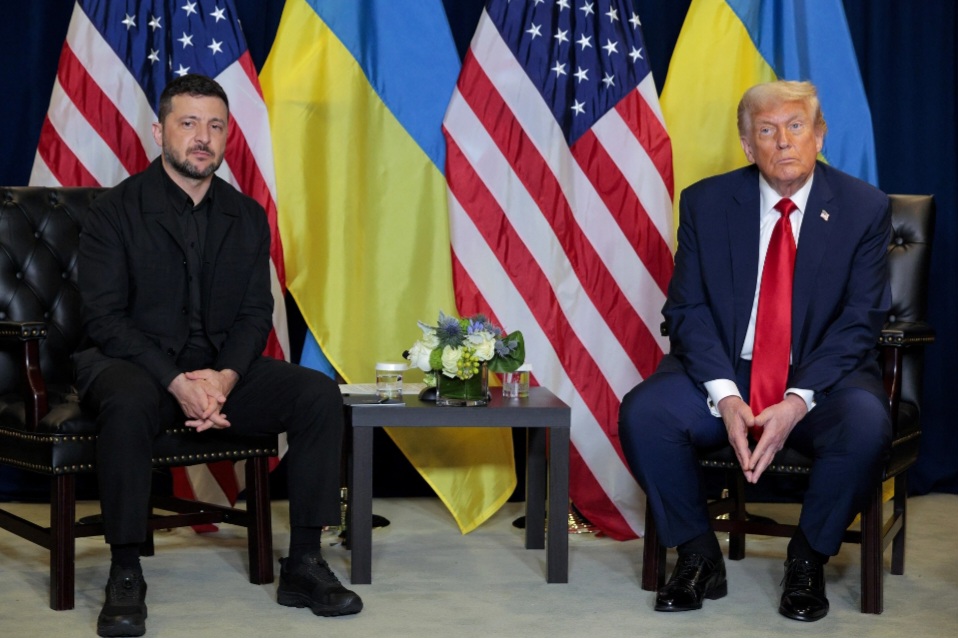
President Trump, re-elected in November 2024 and inaugurated in January 2025, pledged to end the war swiftly through direct diplomacy with Russia and Ukraine. Initial steps included envoy-led talks in Alaska and Berlin, where US negotiators floated security assurances for Ukraine resembling North Atlantic Treaty Organisation (NATO) protections in exchange for pausing NATO membership bids. The dialogue escalated through multiple phases. Round one in August 2025 saw Trump press Zelenskyy on concessions like Crimea’s status, while European allies bolstered Kyiv’s position. By round two in late 2025, Geneva discussions outlined Trump’s draft plan, including demilitarization of contested eastern zones. Round three, prior to Florida, involved joint calls with leaders like France’s Macron and Britain’s Starmer. Trump described these as laying “foundations of a deal” benefiting all parties. The fourth round in late December 2025 featured a two-and-a-half-hour Trump-Putin call followed by Zelenskyy’s US visit, where both leaders addressed reporters on progress. United States President Donald Trump and Ukrainian President Volodymyr Zelenskyy convened in the fourth high-level diplomatic engagement of a renewed peace push aimed at ending Russia’s nearly four-year war on Ukraine. The meeting generated global attention, accompanied by cautious optimism, deep skepticism, and persistent uncertainty about whether diplomacy could finally halt one of the most devastating conflicts in Europe since World War II. These meetings signal progress toward a potential peace framework despite persistent military escalations.
While Trump hails ‘final stages’ of a deal, key hurdles like territorial control and security guarantees raise doubts about an imminent resolution. Their discussions which are a part of a broader, US-led initiative, sought to bridge gaps on the most contentious issues such as territorial disputes, security guarantees, ceasefire conditions, and long-term peace mechanisms. For Ukraine, survival depends on securing guarantees of sovereignty and territorial integrity. Any deal perceived as a concession to Russia risks undermining domestic legitimacy. Both Trump and Zelenskyy emerged from their December 28 meeting projecting a degree of optimism. Trump described the parties as ‘closer than ever to a peace deal’, suggesting that a framework for ending the war was at an advanced stage of negotiation. The revised proposal, reportedly a 20-point framework, includes security guarantees, reconstruction assistance, diplomatic commitments, and mechanisms for monitoring a ceasefire.
These elements are designed to provide Ukraine with assurances that it will not face renewed aggression, while shaping a political path toward a negotiated peace. A major component of the discussions has been US security guarantees for Ukraine. Zelenskyy publicly acknowledged that Washington has offered a 15-year security guarantee in exchange for Ukraine’s willingness to commit to the plan. Trump’s strategy has included not just bilateral talks with Zelenskyy, but also continued communications with Putin. In some instances, Trump engaged Putin by phone around the time of the Florida meeting, attempting to coordinate positions and demonstrate that both sides had an interest in negotiation.
Central disputes revolve around territory, security, and neutrality. Russia demands recognition of annexed Crimea and autonomy for Donbas, plus limits on Ukraine’s Western ties. Ukraine counters with calls for full withdrawal, return of abducted children, and credible defences. Trump’s approach emphasizes mutual concessions. Ukraine cedes some NATO ambitions for protections, while Russia halts advances and accepts demilitarized zones monitored internationally. Zelenskyy deems Donbas the as the toughest issue, with differing positions stalling closure.
Trump believes Putin remains serious about peace, citing counterattacks from both sides. Trump repeatedly claims the progress to be big noting final negotiation phases after Florida talks. Zelenskyy echoes readiness for peace, thanking Trump and signalling troop withdrawals from eastern areas if reciprocated. Joint statements post-meeting stress approaching agreement on core elements. European involvement strengthens Ukraine’s leverage, countering fears of unilateral concessions. Trump’s abandonment of short-term ceasefires for a full deal reflects Russian moderation. A planned January 2026 summit could formalize outlines, with Trump open to hosting in Washington. These steps suggest momentum, potentially ending hostilities by mid-2026 if unresolved issues yield.
Challenges
Despite progress, several deep-seated obstacles remain that make the prospect of an imminent end to the war far from assured. Ongoing Russian assaults, even during talks, erode trust. Critics like Fiona Hill argue Putin gains from delays, weakening Trump’s leverage without ceasefires. Zelenskyy stresses no deal under ‘pressure of weapons’, while Trump admits one snag could derail everything. European wariness persists over pressuring Ukraine into losses. Past Trump remarks lashing Ukraine as ‘ungrateful’ fuel doubts. Donbas also remains pivotal, with both the nations entrenched. Growing of public fatigue is also a major challenge for Ukraine as well as Russia. Zelenskyy, while engaged in negotiations, also faces internal political pressures. Ukrainians are weary after years of war; many express deep distrusts of Russia and fear that territorial concessions would merely set the stage for future aggression. Zelenskyy himself has declared that he will not sign a weak deal that prolongs the war under the guise of peace.
At the heart of the dispute is occupation and control of Ukrainian territory. Russia currently occupies significant regions, including the eastern Donbas and parts of southern Ukraine. Russian leaders have demanded recognition of these gains as part of any peace deal, a stance that Ukraine rejects. Zelenskyy has insisted that no agreement will be signed that amounts to a surrender or legitimization of Russian-held territory. Russia continues to frame negotiations from a notion of strength, insisting on terms that preserve its territorial gains, while Ukraine insists on reclaiming sovereign land and maintaining its internationally recognized borders. Russia’s participation is essential, but Russia’s actions on the battlefield and in diplomacy remain inconsistent. Despite participating in indirect negotiations and making occasional conciliatory statements, Russia has refused a comprehensive ceasefire and continued bombardments of Ukrainian cities during the negotiation period. This strategic posture fuels scepticism about Russia’s true commitment to a lasting peace.
The fourth round of Trump–Zelenskyy talks has undeniably injected new energy and political focus into the quest for ending the Russia-Ukraine war. Leaders now speak of near-complete peace plans, advanced negotiations, and shared desire for an end to conflict. Still, the final outcome remains uncertain. Key issues such as territory and security have yet to be resolved and Russia’s willingness to accept terms that respect Ukrainian sovereignty remains in doubt. The current phase of diplomacy is crucial, but it is better understood as progress along a long road rather than an imminent endpoint. What lies ahead is not only diplomatic finesse but also political courage, strategic patience, and broad international cooperation. Only when all parties agree and once practical mechanisms for enforcement are established, can the world confidently say that the war in Ukraine is truly on the brink of ending.



