
By: Tushar Jain, Research Analyst, GSDN
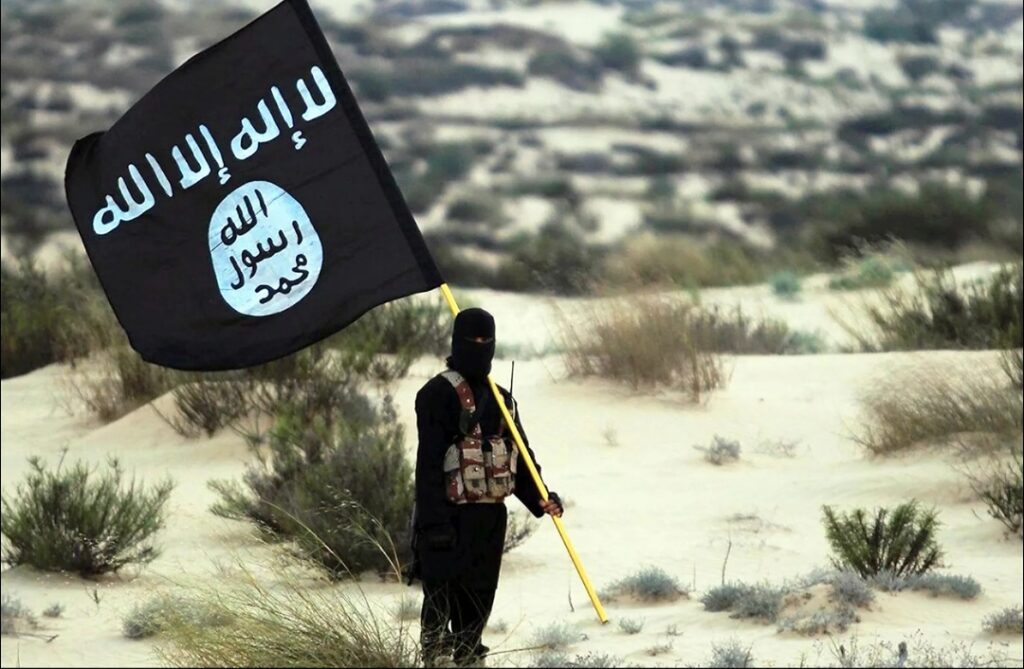
The question of whether the Islamic State (ISIS) is regaining a foothold in Syria continues to draw global attention. More than a decade after the outbreak of the Syrian civil war and over five years since ISIS lost its territorial “caliphate,” the group remains a persistent concern for policymakers, security analysts, and local populations alike. While headlines often suggest a dramatic resurgence, the reality is far more layered and complex. ISIS today is not the same organization that once ruled large parts of Syria and Iraq, yet it has not disappeared from the regional landscape either.
This dual reality creates confusion. On one hand, the group no longer controls cities, collects taxes openly, or governs millions of people. On the other, it continues to carry out attacks, maintain underground networks, and exploit political instability. The persistence of ISIS raises an important question: is the group regaining strength, or is it merely surviving in a weakened but dangerous form?
This article examines whether ISIS is truly re-emerging in Syria, the nature of its current operations, and the political, social, and security conditions that allow it to endure. It also explores the broader regional and international dynamics that shape Syria’s future and influence the long-term trajectory of extremist movements. The aim is to present a grounded and factual assessment without exaggeration or alarmism.
Understanding ISIS: From State-Building to Survival
To understand ISIS’s present condition, it is necessary to revisit its past. Between 2014 and 2016, ISIS reached an unprecedented level of power for a non-state armed group. It controlled vast territories across Syria and Iraq, including major cities such as Raqqa and Mosul. At its peak, ISIS governed millions of people, operated oil fields, imposed taxation systems, ran courts, and maintained police forces. It also developed a sophisticated propaganda network that attracted thousands of foreign fighters from across the world.
This period represented the height of ISIS’s ambition to establish a so-called caliphate. Its governance model relied on extreme violence, ideological indoctrination, and strict social control. However, this same brutality also mobilized an international military response.
By 2019, sustained military operations by the US-led coalition and local partners, particularly the Syrian Democratic Forces (SDF), dismantled ISIS’s territorial control. The fall of Baghuz marked the symbolic end of the caliphate. Yet, while territory was lost, the organization itself did not vanish.
Instead, ISIS adapted. It shifted from a state-like entity to a decentralized insurgent network. This transformation allowed it to survive military defeat by reducing its visibility and avoiding large-scale confrontations. Understanding this strategic shift is essential to evaluating ISIS’s current threat.
The Current Landscape in Syria
Syria today remains one of the most fragmented states in the world. More than a decade of conflict has left the country politically divided, economically devastated, and socially fractured.
The Syrian government, backed primarily by Russia and Iran, controls most major urban centres and western regions. Kurdish-led forces, supported by the United States, dominate much of northeastern Syria. Turkish-backed opposition groups maintain influence in parts of the north, while various militias and armed factions operate in contested zones. This fragmented control has produced governance gaps that are difficult to manage and easy to exploit.
ISIS operates mainly in central and eastern Syria, particularly in the vast desert region known as the Badia. This area stretches across multiple provinces and offers ideal terrain for insurgent activity. Its remoteness, sparse population, and limited state presence make surveillance and security operations challenging.
From these areas, ISIS conducts ambushes, assassinations, and sabotage operations. Targets often include Syrian government forces, allied militias, and occasionally local leaders accused of cooperating with authorities. These attacks are designed less to capture territory and more to demonstrate survival, weaken morale, and maintain relevance.
Crucially, ISIS does not currently govern towns or cities. Its influence is tactical rather than territorial, reflecting a significant reduction in its overall power.
Nature of ISIS Operations Today
ISIS today operates as a low-intensity insurgency. Its activities are calculated, limited, and designed to minimize risk while maximizing symbolic impact. Typical operations include:
- Attacks on military checkpoints and patrols
- Assassinations of local officials, tribal leaders, or informants
- Planting roadside bombs and improvised explosive devices
- Night-time raids and hit-and-run attacks
These operations rarely result in large territorial gains but serve strategic purposes. They reinforce the group’s image as an active force, help maintain internal morale, and attract attention from supporters and potential recruits.
Unlike during its peak years, ISIS avoids prolonged engagements with heavily armed forces. This reflects both its reduced capacity and a deliberate strategy of survival rather than expansion. The organization has learned from its past losses and now prioritizes endurance over dominance.
Detention Camps and the Risk of Radicalization
One of the most serious long-term challenges in Syria is the situation in detention camps such as Al-Hol and Roj. These camps house tens of thousands of individuals, including women and children linked to ISIS fighters.
Living conditions in these camps are extremely poor. Overcrowding, limited access to education and healthcare, and weak security structures have created an environment ripe for radicalization. Reports suggest that hardline ISIS supporters continue to enforce ideological discipline within the camps, intimidating others and spreading extremist beliefs.
Children growing up in these conditions face severe psychological trauma and lack exposure to alternative worldviews. Many have known nothing but conflict and extremist ideology. Without proper rehabilitation and reintegration programs, these children risk becoming the next generation of militants.
The international community has struggled to address this issue. Many countries are reluctant to repatriate their citizens due to political and security concerns. As a result, the camps remain overcrowded and unstable, representing one of the most serious long-term security threats linked to ISIS.
International Military Presence and Its Limits
The United States and its coalition partners maintain a limited military presence in northeastern Syria. Their objectives include supporting local forces, preventing an ISIS resurgence, and securing detention facilities.
However, this presence is politically sensitive and inherently fragile. Domestic pressures, regional tensions, and shifting foreign policy priorities could lead to a reduction or withdrawal of forces. History has shown that sudden power vacuums in Iraq and Syria often lead to rapid security deterioration.
At the same time, military presence alone cannot resolve the deeper causes of instability. Without political reconciliation, economic recovery, and inclusive governance, military operations serve only as temporary containment measures.
Is ISIS Gaining Strength?
In terms of manpower, finances, and territorial control, ISIS is significantly weaker than it was during its peak. It no longer controls oil fields, major population centres, or significant revenue streams. Its leadership has been repeatedly targeted, and its communication networks face constant surveillance.
However, weakness does not mean irrelevance. ISIS remains capable of carrying out deadly attacks and inspiring violence beyond Syria’s borders. Its ability to adapt, decentralize, and exploit instability ensures its continued presence.
Therefore, while ISIS is not “back” in the sense of rebuilding a caliphate, it is also not defeated in any final or absolute sense.
The Role of Regional and Global Politics
Regional and international politics play a decisive role in shaping Syria’s future and ISIS’s prospects. Competing interests among global and regional powers often undermine coordinated stabilization efforts.
Russia, Iran, Turkey, and the United States pursue overlapping but often conflicting objectives. These rivalries complicate governance, delay reconstruction, and weaken institutional capacity. In such an environment, extremist groups can exploit grievances and insecurity.
Economic collapse further worsens the situation. Sanctions, war damage, corruption, and lack of investment have devastated Syria’s economy. High unemployment and poverty create fertile ground for radicalization, particularly among young people with limited opportunities.
Media Narratives and Public Perception
Media coverage of ISIS often oscillates between alarmism and neglect. Isolated attacks may be framed as signs of resurgence, while long-term structural issues receive less attention.
This distortion can shape public opinion and policy in unhelpful ways. While it is important not to underestimate the threat, exaggeration can also lead to short-term, reactionary decisions rather than sustainable solutions.
A balanced understanding recognizes that ISIS remains a security concern but not an existential threat comparable to its peak years.
Comparing Past and Present Capabilities
At its height, ISIS operated like a proto-state, controlling territory the size of a small country. It managed oil production, taxation systems, courts, and a global propaganda apparatus. Tens of thousands of foreign fighters joined its ranks.
Today, its capabilities are vastly reduced. Fighters operate in small cells, funding is limited, and communication is constrained. Yet, history shows that insurgent movements can persist for decades if underlying grievances remain unaddressed.
Preventing a Future Resurgence
Preventing ISIS from rebuilding requires a comprehensive approach beyond military action:
- Political Stability: Inclusive governance that addresses grievances and restores trust.
- Economic Recovery: Investment, employment, and basic services to reduce desperation.
- Rehabilitation Programs: Education and reintegration for former fighters and affected families.
- Regional Cooperation: Shared responsibility among global and regional actors.
- Long-Term Security Planning: Avoiding abrupt withdrawals that create power vacuums.
Without addressing these structural issues, any military victory will remain temporary.
Conclusion
ISIS today is a shadow of its former self, but shadows can still cast fear. The group is not regaining territorial control in Syria, nor is it close to rebuilding a caliphate. However, it continues to exploit instability, weak governance, and unresolved humanitarian crises.
The true danger lies not in ISIS’s current strength, but in the conditions that allow it to endure. Syria’s prolonged instability, economic collapse, and political fragmentation create an environment where extremist ideologies can survive and adapt.
Defeating ISIS permanently requires more than airstrikes or counterterrorism raids. It demands long-term commitment to governance, justice, and social recovery. Until those deeper challenges are addressed, ISIS may remain weakened—but it will not fully disappear




Your blog is a breath of fresh air in the often mundane world of online content. Your unique perspective and engaging writing style never fail to leave a lasting impression. Thank you for sharing your insights with us.
My brother suggested I might like this website He was totally right This post actually made my day You cannt imagine just how much time I had spent for this information Thanks
Hi my family member I want to say that this post is awesome nice written and come with approximately all significant infos I would like to peer extra posts like this