
By: Khushbu Ahlawat, Consulting Editor, GSDN
Introduction: Reframing the Debate on Pay Equity
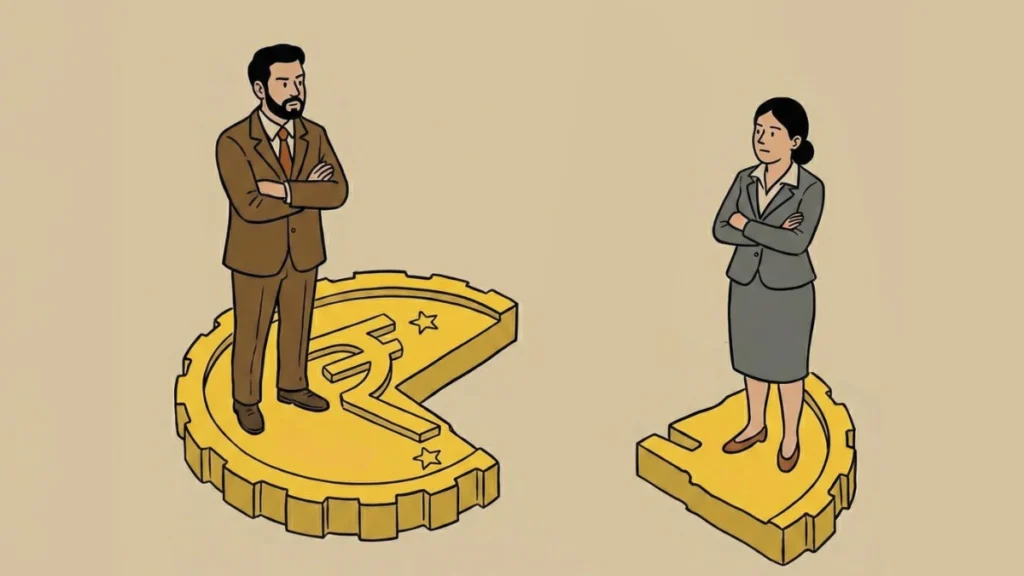
The gender pay gap has long occupied a central position in debates surrounding economic justice, social equity, and inclusive development. Defined as the difference in average earnings between men and women, it has historically been interpreted as a direct manifestation of gender discrimination within labor markets. However, by 2026, the discourse has become significantly more layered and contested. While some policymakers and industry leaders argue that the gap is steadily diminishing—especially in emerging economies—others contend that such claims obscure deeper, structural inequalities that remain firmly entrenched.
Globally, estimates suggest that women earn approximately 16–20 percent less than men on average, though this figure varies depending on methodology, sector, and region. According to research associated with World Economic Forum, at the current rate of progress, it could take more than a century to achieve full economic gender parity. This slow pace underscores a critical paradox: despite decades of advocacy, institutional reforms, and corporate diversity initiatives, gender-based wage inequality persists in both overt and subtle forms. Consequently, the contemporary debate is no longer about the existence of the pay gap alone, but about its evolving nature.
Recent estimates from the International Labour Organization indicate that women globally earn approximately 20 percent less than men, underscoring the persistence of wage inequality across both developed and developing economies. World Economic Forum data further suggests that economic gender parity remains one of the slowest dimensions of equality to close, with only 64.4% of the global gender gap addressed in India’s case as of 2025.
In India, the narrative is particularly complex. On one hand, recent corporate data suggests that wage parity is improving, especially in formal and technology-driven sectors. On the other hand, India continues to exhibit one of the lowest female labor force participation rates globally, raising questions about the inclusivity of these gains. Scholars such as Amartya Sen have emphasized that development must be assessed not merely through aggregate economic indicators but through the lens of capabilities and access. From this perspective, the narrowing of wage gaps in select sectors may signal progress, but it does not necessarily reflect broader gender equality in economic participation. According to the Periodic Labour Force Survey (PLFS) 2023–24, India’s female labour force participation rate has risen to 41.7%, marking a significant improvement from 23.3% in 2017–18. However, this progress remains uneven, as women’s participation is still structurally constrained and concentrated in low-paying and informal sectors.
The Illusion of Equality: Statistical Progress and Its Limits
Recent years have witnessed a growing body of data suggesting that the gender pay gap is narrowing, particularly in urban and formal employment sectors. Corporate compensation studies and HR analytics platforms indicate that, in certain industries such as information technology and finance, median salaries for men and women are approaching parity. These findings are often celebrated as evidence that meritocratic systems and diversity policies are beginning to yield tangible results, thereby reinforcing the narrative that the gender pay gap is gradually becoming obsolete.For instance, recent compensation data suggests that India now exhibits one of the smallest gender pay gaps globally, with median salaries for men and women nearing parity in formal sectors.
However, such conclusions must be approached with caution. As labor economist Claudia Goldin argues, aggregate wage comparisons can be misleading if they fail to account for differences in hours worked, career interruptions, and occupational choices. Goldin’s work highlights that much of the modern pay gap arises not from direct wage discrimination, but from what she terms “greedy jobs”—high-paying roles that demand long, inflexible hours, disproportionately disadvantaging women who bear greater caregiving responsibilities. Thus, apparent wage parity in median earnings may conceal significant disparities in career trajectories and long-term income accumulation.However, such conclusions are undermined by labour market realities reflected in PLFS data, which show stark gender disparities in employment. As of 2025, the Worker Population Ratio (WPR) for women stands at only 24.9%, compared to 54.8% for men, indicating that a large proportion of women remain excluded from formal income-generating activities.
Moreover, the reliance on formal sector data introduces a significant bias. In countries like India, a substantial proportion of women are employed in the informal economy, where wages are lower, job security is minimal, and labor protections are weak. By excluding this segment, statistical analyses risk presenting an overly optimistic picture of gender equality. Sociologist Guy Standing describes this phenomenon as the “precariat effect,” wherein vulnerable workers—many of whom are women—remain invisible in mainstream economic metrics. Consequently, the perception of a diminishing pay gap may be more reflective of data limitations than of genuine structural transformation.
Structural Inequalities: The Persistent Reality of Wage Disparity
Despite narratives of progress, structural inequalities continue to underpin gender-based wage disparities across economies. One of the most significant factors is occupational segregation, which channels women into lower-paying sectors and limits their access to high-growth industries. Feminist economists have long argued that labor markets are not neutral but are shaped by social norms and institutional biases that assign differential value to “women’s work” and “men’s work.” As a result, even when women achieve higher levels of education, they often remain concentrated in sectors with lower economic returns. Data from the Economic Survey 2025–26 further reveals that a significant proportion of women are engaged in self-employment and agriculture, sectors typically associated with lower and unstable earnings. This reinforces the argument that wage equality in formal sectors does not reflect the broader economic reality.Time-use data cited in the Economic Survey 2025–26 shows that women spend 363 minutes per day on unpaid work compared to 123 minutes for men, illustrating the disproportionate burden of care responsibilities that limits women’s participation in high-paying jobs.
The issue of unpaid care work further exacerbates these disparities. Women continue to shoulder a disproportionate share of domestic responsibilities, including childcare, eldercare, and household management. According to time-use surveys, women in India spend nearly three times as many hours on unpaid work as men. This imbalance not only restricts women’s participation in the labor force but also influences the types of jobs they can pursue. Feminist theorist Nancy Folbre has emphasized that the undervaluation of care work is a fundamental driver of gender inequality, as it sustains economic systems without being adequately compensated or recognized.
Beyond labour force participation and unpaid care responsibilities, emerging datasets from 2025–26 reveal deeper layers of inequality embedded within wage structures, particularly when disaggregated by sector, education, and employment type. Evidence from the Periodic Labour Force Survey (PLFS) and allied labour reports indicates that even when women enter the workforce, they are disproportionately represented in low-productivity and low-wage employment categories, such as casual labour, self-employment, and agricultural work. Approximately 57% of working women in India are self-employed, compared to a significantly lower proportion of men in similar categories, reflecting a gendered segmentation of labour that inherently limits earning potential. Furthermore, wage differentials persist even within similar employment types; for instance, in regular salaried jobs, women earn on average 15–20% less than their male counterparts, while in casual labour, the gap can widen further due to the absence of standardized wage protections. Data from international labour assessments also suggest that women are less likely to be employed in high-growth, high-paying sectors such as manufacturing, finance, and technology, where wage premiums are substantial. Instead, they remain concentrated in sectors like education, healthcare, and domestic services, which are systematically undervalued despite their social importance. Additionally, educational attainment, often assumed to be a leveling factor, does not fully mitigate wage disparities. Studies show that even highly educated women face a “returns gap,” where the economic returns on education are lower for women than for men, particularly at higher levels of professional specialization. This phenomenon is compounded by career interruptions related to marriage and motherhood, which reduce cumulative earnings and limit access to promotions and leadership roles. The Economic Survey 2025–26 further highlights that women’s participation in managerial and decision-making positions remains below 20%, reinforcing vertical segregation within organizations. Another critical dimension is the digital divide and access to skill development opportunities. While digitalization has created new avenues for employment, women’s participation in digital and gig economies remains constrained by limited access to technology, mobility restrictions, and safety concerns. Consequently, the benefits of economic transformation are unevenly distributed, with women often occupying peripheral roles in emerging sectors. Taken together, these data points illustrate that the gender pay gap is not merely a function of unequal pay for equal work, but rather a reflection of systemic inequalities across the entire employment lifecycle—from entry and sectoral allocation to career progression and wage determination. Therefore, any assessment of pay parity that does not account for these intersecting factors risks oversimplifying the issue and reinforcing the illusion of equality.
Additionally, institutional barriers and implicit biases continue to shape workplace dynamics. Research in organizational behavior suggests that women are less likely to be promoted to leadership positions, a phenomenon often referred to as the “glass ceiling.” Even when women occupy similar roles as men, they may face disparities in bonuses, incentives, and performance evaluations. Economist Marianne Bertrand has demonstrated through experimental studies that gender biases persist in hiring and promotion decisions, even in ostensibly meritocratic environments. These findings indicate that the gender pay gap is not merely a function of individual choices but is deeply embedded in organizational and societal structures.
Conclusion
The gender pay gap in 2026 cannot be dismissed as a myth; rather, it has undergone a process of transformation that makes it less visible but no less significant. While progress in certain sectors and regions is undeniable, these gains are uneven and often confined to privileged segments of the workforce. The broader reality reveals a complex interplay of economic, social, and institutional factors that continue to disadvantage women in subtle yet profound ways. This is further reflected in India’s ranking of 131 out of 148 countries in the Global Gender Gap Index 2025, highlighting that while progress has been made, substantial disparities remain in economic participation and opportunity.
This duality reflects what scholars describe as the “new gender inequality”—a form of disparity that operates not through overt discrimination, but through structural constraints and social expectations. As Silvia Federici argues, capitalist economies continue to rely on gendered divisions of labor that reproduce inequality across generations. From this perspective, the apparent narrowing of the pay gap may represent a shift in its manifestation rather than its elimination.An additional dimension that reinforces the persistence of the gender pay gap is the uneven impact of digital and economic transitions on women’s employment opportunities. While India’s rapid expansion in digital infrastructure and platform-based work has generated new forms of employment, evidence suggests that women remain underrepresented in these emerging sectors. Data from recent labour and policy reports indicate that women constitute a significantly smaller share of the gig and platform workforce, particularly in high-paying, technology-driven roles. Structural constraints such as limited digital literacy, restricted access to financial resources, and concerns over safety and mobility continue to inhibit women’s full participation in the digital economy. Furthermore, algorithmic biases and lack of regulatory frameworks in gig work often reproduce existing inequalities rather than mitigating them. At the same time, the absence of social security protections in these sectors disproportionately affects women, who are more vulnerable to income instability. This suggests that economic modernization alone is insufficient to achieve gender pay equity. Without targeted interventions that address digital inclusion, skill development, and institutional safeguards, the transition toward a technology-driven economy risks creating new forms of gender disparity, thereby reinforcing rather than eliminating the structural foundations of the pay gap.
Addressing the gender pay gap, therefore, requires a multidimensional approach that goes beyond equal pay legislation. Policymakers must prioritize investments in childcare infrastructure, promote flexible work arrangements, and challenge entrenched social norms that assign caregiving responsibilities primarily to women. Furthermore, data collection methods must be expanded to capture the realities of informal and precarious work. Until such comprehensive measures are implemented, the gender pay gap will remain a persistent reality—one that is increasingly obscured by the illusion of progress, but not eradicated by it.

About the Author
Khushbu Ahlawat is a research analyst with a strong academic background in International Relations and Political Science. She has undertaken research projects at Jawaharlal Nehru University, contributing to analytical work on international and regional security issues. Alongside her research experience, she has professional exposure to Human Resources, with involvement in talent acquisition and organizational operations. She holds a Master’s degree in International Relations from Christ University, Bangalore, and a Bachelor’s degree in Political Science from the University of Delhi.



