
By: Sanya Singh, Research Analyst, GSDN
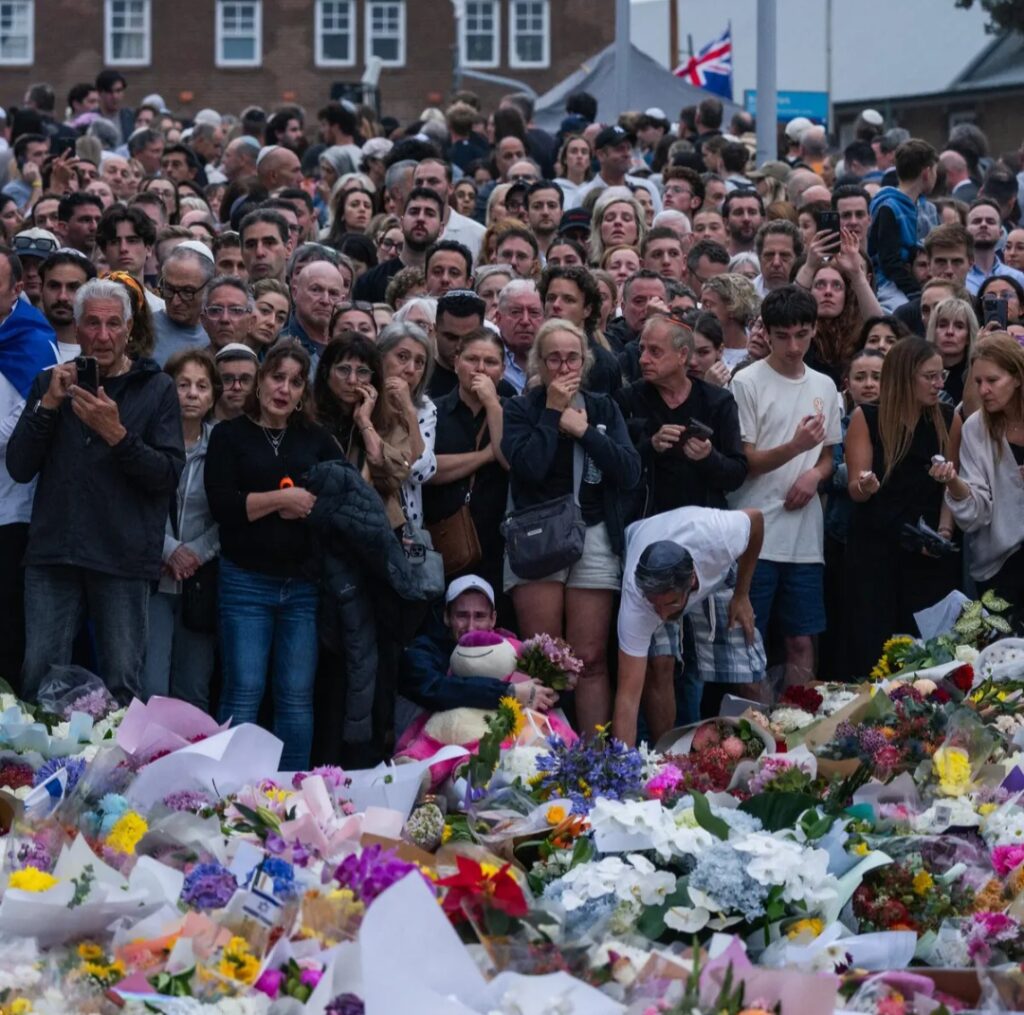
Bondi Beach has been considered one of the most iconic and symbolically Australian public areas. Lying on Sydney’s eastern coastline, the beach signifies much more than natural beauty; it is also a manifestation of social openness, multicultural coexistence, and easy public life that characterizes modern Australia. Decades on, Bondi has turned into a shared civic space in which locals, migrants, and tourists interact amongst themselves without anything getting in the way, hence signifying a national identity tied to trust, availability, and democratic principles. It was this very symbolism that made the impact of the terrorist attack near Bondi Beach last December 14, 2025, all the more profound.
In recent years, Australia has not been immune to any of the pressures common throughout most liberal democracies around the world: growing political polarization, rapid digital transformation, social isolation further exacerbated by online environments, and the spread of violent ideologies through global networks. Against this backdrop of tensions, Australia nonetheless enjoyed a pervasive sense of safety underpinned by strong institutions, effective policing, and an extensive counter-terrorism framework. The Bondi Beach attack brought this feeling of security to an abrupt end.
The attack was as much a psychological rupture as one of violence. It showed that radicalization can be homegrown, without large terrorist networks or foreign structures of command, and it can use the most mundane forms of public space to generate maximum fear and disruption. The incident made Australians confront some tough questions regarding radicalisation, the failure of prevention, and whether existing approaches were adequate to deal with current security challenges. Understanding the full context of the attack is what will enable them to prevent such tragedies in the times to come.
The Bondi Beach Attack: A Detailed Account
On December 14, 2025, Bondi Beach and its environs were teeming with people enjoying the peak of the Australian summer. The promenade along the beachfront was packed with families, joggers, surfers, and tourists, as were the nearby cafés, public walkways, and access roads. This typical setting was a holiday season afternoon filled with leisure and motion rather than tension or alertness.
Calls started rolling in about violent incidents near pedestrian zones adjacent to the beach around 4:30 p.m. Witnesses, out of breath, described two attackers making their way through crowded public spaces, targeting civilians with bladed weapons. In addition to blade-carrying individuals, there were improvised incendiary devices used to generally create widespread panic and disorientation. The attackers seemed to act together and with purpose, targeting areas where many people usually converge on foot.
Chaos spread quickly in seconds, with civilians running in all directions, some toward the open beach, others into nearby buildings or side streets. Scores of people were injured in the first few minutes while onlookers attempted to help in a scenario of confusion and terror. Fire only raised panic levels, complicating the evacuation process and making access for the emergency services difficult.
In minutes, police units from New South Wales arrived, joined by ambulance services and counter-terrorism officers of the police. Authorities went into exclusion zones, evacuated areas within proximity, and initiated mass-casualty response protocols. The attackers were neutralized shortly after a short pursuit and confrontation in a violent standoff.
There was little time to dwell upon the speed and professionalism of the response since the human cost was terrible: several civilians had been killed, and scores were suffering from serious injuries. All the hospitals in Sydney were put on emergency footing; trauma counselling services were activated for victims, eyewitnesses, and first responders. Evening fell with Bondi Beach being completely sealed off, the venue having turned from a symbol of fun and frolic to a scene of national tragedy.
Who were the perpetrators?
Further investigations showed that the attackers were a father-son duo from New South Wales. The fact that the perpetrators were related made it all the more disturbing for the public and debunked many conceptions regarding terrorism. Whereas other terrorist cells involve members unrelated to each other, this attack was the result of a personal, home-based network where ideological views had been propagated and strengthened by close personal ties.
Background checks revealed nothing significant as a criminal element tied to violent crimes. On the other hand, intelligence agencies verified that both of them previously drawn attention due to online activities related to extremist material. Digital forensic examination showed continued access to propaganda videos, ideological texts, and extremist forums. The use of encrypted messaging platforms was consistent with exchanging radical content and reinforcing ideological commitment.
The formal charge sheet listed terrorism-related offenses, murder, attempted murder, and conspiracy to intimidate the public. Authorities emphasized that the Bondi case underlined the evolving phenomenon of micro-radicalisation in which the conventional structures of organization give way to small family units or intimate networks. It allows the development of radical ideas behind closed doors, well hidden from early detection.
The perpetrators showed how extremism can breed in quiet privacy before exploding into public violence. Their actions challenged the existing intelligence models, which mainly focus on large networks rather than small self-enclosed extremist units.
Motives and Radicalisation
Preliminary investigations have established that the attackers were ideologically driven under the influence of the Islamic State, commonly referred to as the Islamic State of Iraq and Syria. Although there was no direct operational or financial linkage, it was a case of ideological allegiance through materials recovered, symbolism, and even online activities. This is in line with global trends where the influence of extremist organizations is mainly through ideologies other than by command structure.
In this case, the process of radicalization was gradual and cumulative: long-term exposure to radicalizing digital ecosystems normalized violence, and continually reinforced grievance-based narratives that framed Western societies as corrupt and hostile, and violent action was morally justified and necessary. Over time, a narrative of this kind lowers psychological barriers to committing acts of terror.
The authorities also looked into the attackers’ travel patterns. In the absence of any confirmed attendance at training camps overseas, short international trips in turn point to the potential for exposure to transnational extremist ideas. The Bondi case underlines the trend of growing radicalization devoid of any direct physical contact with terrorist organizations and often based merely on ideological indoctrination amplified by online platforms.
Security and Counterterrorism Response
Australia boasts one of the best-developed systems of counterterrorism in the Indo-Pacific: federal and state coordination, mechanisms for intelligence sharing, preventive detention laws, financial monitoring mechanisms, and community-based prevention programs. Following the attack at Bondi Beach, national threat assessments were reviewed, with security stepped up for a period at major public venues.
The security and anti-terror response to the Bondi Beach assault was rapid, coordinated, and reflective of Australia’s established crisis-handling system. Immediately after the eruption of violence on December 14, 2025, officers from the New South Wales Police Force arrived at the location within minutes. Their swift intervention subdued one assailant and captured the other, effectively shortening the attack and averting additional casualties. Emergency medical teams simultaneously initiated mass-injury protocols, ensuring quick treatment and evacuation of the wounded.
Within hours, Australian officials officially classified the event as a terrorist strike, activating the national counter-terrorism apparatus. This enabled federal bodies, notably the Australian Federal Police and the Australian Security Intelligence Organisation, to collaborate with state police in a joint inquiry. Specialized task forces carried out synchronized raids, confiscated electronic devices, and launched comprehensive forensic and intelligence reviews to uncover ideological drivers, planning details, and potential external connections.
A major emphasis of the investigation was online radicalisation. Security services scrutinized digital activity, encrypted messaging, and extremist media consumption, highlighting the shifting character of lone-offender terrorism. Intelligence sharing was strengthened between federal and state levels, while global information-exchange channels were engaged to evaluate any cross-border extremist influence.
In the immediate period following the incident, security alerts were elevated nationwide. Police presence expanded across public venues, religious sites, and large events, while risk evaluations for upcoming gatherings were updated. Politically, the reaction prioritized prevention over mere response, reigniting debate on early-intervention policies, monitoring of online extremism, and community-driven counter-radicalization programs.
In total, although the operational response succeeded in containing the assault, the episode highlighted the necessity for more robust preventive measures to tackle radicalization before it escalates into violent acts.
Societal Impact
At the society level, the attack provoked a profound sense of shared shock and fragility. Bondi Beach, long seen as an emblem of openness, recreation, and multicultural harmony, was abruptly turned into a place of dread and grief. The targeting of a public, faith-based gathering magnified the psychological effect, as it shattered the belief that social and cultural occasions were naturally secure environments.
One of the most immediate social repercussions was the intensified feeling of insecurity in everyday life. Mass assemblies, religious observances, and cultural festivities came under greater examination, with groups voicing unease about their protection. This climate of apprehension threatened to reshape daily conduct, fostering self-restraint, diminished involvement in communal activities, and increased mistrust in interpersonal relations.
The incident also deepened worries about escalating antisemitism and religious bigotry. By striking a Hanukkah event, the attackers reinforced anxieties among Jewish communities about their safety and sense of belonging. This produced a ripple across other minority groups, who interpreted the episode as a cautionary sign of how extremist beliefs could evolve into targeted aggression. Although there was a surge of solidarity and interfaith backing, there was simultaneously the danger of stigmatization and societal division.
Political Impact
Politically, the Bondi Beach attack triggered swift and resolute actions from the Australian authorities. National figures denounced the brutality without hesitation, presenting it as an assault on Australian ideals rather than a single group. This rhetorical positioning was crucial, as it aimed to avert social division while reaffirming the government’s duty to safeguard all citizens equally.
The episode rekindled discussions on homeland security and anti-terror strategies. Legislators encountered renewed demands to assess whether current intelligence systems, monitoring powers, and preventive mechanisms were sufficient to identify and counter radicalization at earlier stages. Special focus was placed on solitary actors and online-driven extremism, which strain conventional security approaches centred on organized networks.
Safety at public gatherings emerged as a major political concern. Doubts were raised about risk evaluation procedures, collaboration between national and regional agencies, and the adequacy of safeguards for religious and cultural assemblies. This spurred appeals for greater investment in community policing, intelligence sharing, and rapid-response infrastructure.
The incident also shaped political dialogue on individual rights. Although there was wide agreement on the necessity of stronger protection, worries surfaced about the possible expansion of surveillance authority and its consequences for privacy and democratic liberties. Political conversations increasingly revolved around how to balance citizen security with the preservation of Australia’s liberal democratic identity.
Why Australia Should Act Against Radicalism
Radicalism serves as the ideological foundation for terrorism. Although not every person influenced by radical ideas resorts to violence, nearly all terrorist acts are preceded by ideological indoctrination. Australia has long confronted dangers from both organized extremist groups and solitary attackers, the latter being especially challenging to identify and stop.
Contemporary radicalism often evolves gradually, largely through digital platforms, encrypted messaging systems, and global propaganda networks. Individuals may adopt radical beliefs without traveling overseas or formally joining militant organizations, thereby reducing conventional intelligence warning signs. If ignored, such radicalization heightens the risk of sporadic, high-impact assaults aimed at civilians, religious minorities, or public venues, as demonstrated in the Bondi Beach episode.
Neglecting to address extremism at an early stage compels the state into reactive counter-terrorism actions, which are more expensive, less efficient, and frequently occur only after irreversible damage has been done.
Australia should confront extremism not from fear and anxiety, but with strategic and deliberate foresight. Extremist ideologies weaken national defence, erode social unity, threaten democratic principles, and create enduring economic and institutional burdens. The Bondi Beach incident revealed that even strong societies remain susceptible when radical movements are left unchallenged.
The attack showed that radicalism is both a concrete, real-life threat and one that resides in domestic environments, online spaces, and everyday communities. The strategies to address it need to be long-term and comprehensive, going beyond reactive policing.
Education is the key to prevention: schools and universities have to develop critical thinking, digital literacy, and civic engagement to counter radical narratives. Community-based programs can help in early intervention and assist the vulnerable to radicalization. Through an integrated strategy that unites protection, learning, civic participation, and online regulation, Australia can address radicalism at its foundation rather than only its aggressive expressions. Taking firm action now is vital to safeguarding Australia’s future as a safe, welcoming, and democratic nation.
Programs of deradicalization also have to be expanded. These programs need to focus on disengagement, rehabilitation, and reintegration, not punishment. Online platforms should also be made accountable for the extremist content they host, more so, with the major revenues they amass in Australia, usually running into hundreds of millions of US dollars annually.
Conclusion
The terrorist attack at Bondi Beach on 14 December 2025 marked a real turning point in the Australian understanding of domestic security threats. It exposed something about the evolving nature of radicalism, testing assumptions about safety in public space. Beyond the immediate tragedy, it underlined the urgent need for proactive prevention and social resilience that would be sustained.
Any Australian response will have to be vigilant and inclusive, firm but principled. Reinforcing efforts to address the causes of radicalisation, strengthen community cohesion, and adapt counter-terrorism frameworks, Australia can pay homage to the victims of Bondi, taking further action toward ensuring that such an incident will never happen again.



