
By: Simran Sodhi, Guest Author, GSDN
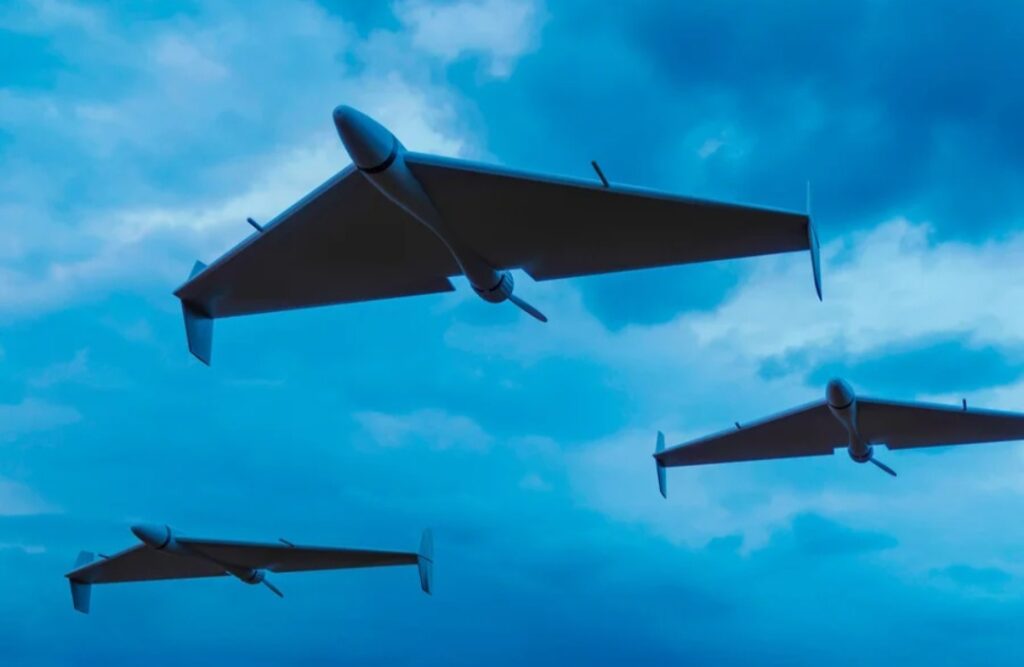
If there is one common thread or lesson coming out of the Russia-Ukraine conflict and the ongoing conflict in the Middle East, it is how drones have changed the war theatre. The Russia-Ukraine conflict has been going on for four years now and despite the Russians being the larger and bigger armed forces, Ukraine has held up. A similar scenario is being played out in the Middle East where the United States and Israel, two of the world’s largest and best equipped armies, have been held up by Iran. In both cases, much of the credit goes to the use of low-cost and high accuracy drones used in great numbers to target the enemy.
For Iran, even in the face of unrelenting bombing by the US and Israel, its secret weapon to fighting back is the cheap and easy to manufacture Shahed drone. Interestingly, the Russians reverse-engineered the Shahed to make its own drones to use in the Russia-Ukraine conflict. Shahed is also easier to launch as compared to ballistic missiles. While drones like Shahed cost between $20,000 to $50,000 to manufacture, the costs of interceptors (to neutralize them in the air) is much higher, a million apiece, as some estimates point out. A simple point here is also that as long as Iran can rely on firing more drones, it can keep a check on which shipping vessels cross the Strait of Hormuz.
It is also to be noted here that Russia which is fighting its own war with Ukraine gains with the closure of the Strait of Hormuz. Russia relies heavily on income earned by oil and gas sales. Already countries are buying oil from Russia as oil and gas from the Gulf nations is cut off. Another point is that every time the US and Israel fire an interceptor to take down an Iranian drone, it automatically reduces the interceptors Ukraine can/will get to take down Russian drones. In an increasingly globalized worlds, conflicts in one part of the world are getting inextricably linked to other conflicts.
The four-day conflict between India and Pakistan in May 2025 was another arena where the usage of drones was in full display. India used cost-effective aerial platforms like Harop, Harpy, Nagastra-1, Warmate R, Warmate 3, and ASL drones – into Pakistan’s airspace. India used the Israeli-made Harpy in large numbers during the conflict.
In turn, Pakistan also retaliated by using drones at India. This was probably one of the first illustrations of how modern warfare has changed. The use of these low-cost drones which were primarily used to target the other’s military sites nevertheless also created panic among the civilian populations. Even if the drones are intercepted, the falling debris can also cause considerable damage. Any future India-Pakistan conflict is likely to see a greater use of drones from both sides.
Thus, at this point, it would be a fair assessment to make that future military conflicts will involve a greater use of low-cost drones, probably with some inbuilt features of Artificial Intelligence (AI).
Taking a close look at the Russia-Ukraine conflict also then helps one understand how the Gulf States will need to invest in protecting their energy companies from drone attacks in the near future. This protection will mean investing in interceptors and jamming systems. Ukraine ‘s national oil and gas company Naftogaz has spent spending millions of dollars on air defences as Russian drones attack the country and its facilities. It is estimated that around 200 drone experts from Ukraine have travelled to Saudi Arabia and the United Arab Emirates (UAE) to offer their expertise in countering Iranian drones. The Gulf States had been expecting more of missile attacks by Iran but the hundreds of drones fired by Iran has taken many by surprise.
The global economy has been shaken by the Middle East conflict as the Strait of Hormuz remains closed de facto and by the strikes on their energy facilities. Asian economies like Japan, South Korea and India, who rely heavily on Gulf oil and gas, have been hit quite badly. The price of gas in Europe also went up by more than 50%. As the affects reach the US and inflation hits the global economy, it will become even more imperative that energy facilities be protected against such shocks in the future. One way forward would be investing more in technology that helps counter drone attacks by States and non-state actors.
We are already in the future of modern warfare where low-cost drones and their interceptions will decide the winners and losers. AI will increasingly play a role in this as the objective is to develop swarms of drones that can chase and hit targets by scanning locations and are controlled by a single operator from afar. As the Middle East conflict rages on, we are also witnessing the trajectory of future wars: how they will be fought and won or lost.

About the Author
Simran Sodhi is Director-India, TRENDS (Abu Dhabi Media Research & Advisory). In a journalistic career spanning over two decades, she has written for a number of national and international publications. She has also reported from various corners of the world like Tokyo, Beijing, Pakistan and Bhutan, among others. She tweets at @Simransodhi9



