
By: Brigadier AJA Pereira, SM (Retd)
It was late afternoon of September 17, 2024, the streets of Beirut were filled with sounds of a busy city when thousands of handheld pagers used by the Hezbollah exploded simultaneously across Lebanon. The attack was followed by a second wave of explosions involving walkie-talkies the next day. Approximately 6 grams of plastic explosive was concealed inside each pager designed to detonate on receiving a specific coded message, emitting a special beep, that encouraged the users to lift the device to their faces.
Incidents of similar nature like elimination of military commanders and nuclear scientists of Iran and top leadership of Hamas and Hezbollah by Israel, Operation Spider Web by Ukraine targeting multiple military airfields deep inside Russia have illustrated that how accurate, timely, and granular information enables precision operations with strategic impact.
Closer home, precision strikes conducted by the Indian Armed Forces during Operation Sindoor against terrorist infrastructure in Pakistan achieved their objectives while minimising collateral damage. These outcomes were the result of superior information dominance involving unmanned systems, remote platforms and stand-off weapons enabled by deep intelligence, surveillance, and data fusion.
Information has emerged as one of the most decisive domains of warfighting at par with land, sea, air, space, and cyber. Unlike traditional domains, the information domain is omnipresent, continuous, and largely invisible. It affects not just soldiers and states, but ordinary citizens in their daily lives. With the exponential growth of digital platforms and smart technologies, common individuals have unknowingly become targets in this domain. The ultimate realisation of this new era of conflict is that the line between combatants and noncombatants is now completely erased.
Social media platforms such as Facebook, Instagram, X, LinkedIn, etc thrive on personal information. Photos, locations, habits, relationships, beliefs, and daily routines are shared openly in real time. Beyond social media, personal data is routinely surrendered while downloading/using operating systems, applications, software, devices, online services or accessing basic digital utilities. In the background, IP addresses, device identifiers, operating systems, browsing behaviour, and location data are continuously exchanged often without explicit awareness or informed consent. This has created a situation where adversaries no longer need to expend effort to collect intelligence as much of it is provided willingly.
Indians, as a society, are among the most liberal in dispensing personal information which creates unique vulnerabilities in this digital age. Nation states today collect, correlate, and analyse open-source and commercially available data at scale. Data collected today may be stored, analysed, and exploited years later, depending on geopolitical circumstances, technological advances, or emerging vulnerabilities in devices and software. When combined with advances in artificial intelligence and big data analytics, even seemingly harmless information can be weaponized.
Tip of the iceberg was the 2020 exposure of a mass surveillance program involving Shenzhen Zhenhua Data Information Technology Co, linked to the Chinese government, which was aggregating data on millions of individuals and critical infrastructure worldwide using open-source information. Alarmingly, this data set included not only Indian political and strategic leadership but also individuals with criminal backgrounds, suggesting a plan to exploit societal cracks. This massive aggregation of personal data is not merely a privacy issue, but a national security concern.
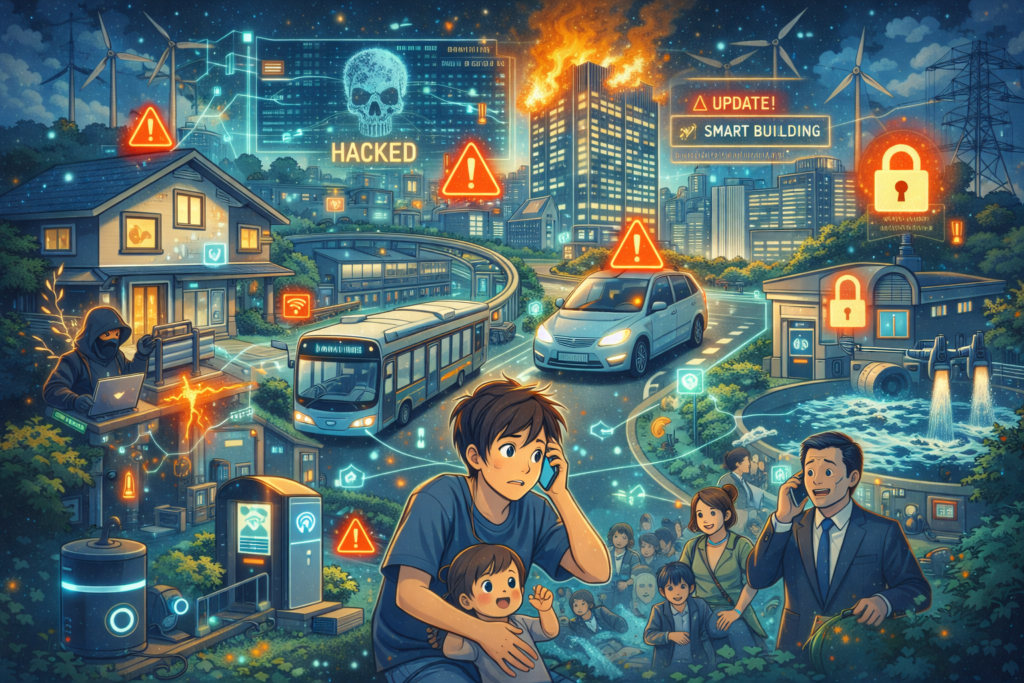
The danger becomes more acute as societies transition to modern ecosystems like smart homes, smart buildings, smart vehicles and smart public infrastructure such as transportation, power grids, and water supply systems. Many of these systems prioritise convenience and cost over security and often lack robust authentication, encryption, or update mechanisms. In such an environment, digital systems can be turned into instruments of disruption, coercion, or physical harm. As we move toward a fully digital existence where machines increasingly understand faces, voices, movements, biometrics, and behaviour, the absence of strong security controls threatens not just privacy, but personal safety and national security.
Today, India sits squarely in this invisible battlefield where our dependence on connected technology is growing faster than our awareness of its risks. While known risks such as cybercrime and fraud are acknowledged, the unknown and unseen risks are far more dangerous. Information Security is no longer the sole responsibility of the Government and the armed forces. Citizens are the first line of defence. We need to minimise data sharing to only what is necessary. Oversharing of personal details, travel plans, family information, or real-time locations on public platforms must be avoided. Always install applications from trusted sources only, review permissions carefully and deny access to what is not essential to the application’s function.
Strengthen digital hygiene by using strong, unique passwords and enable multi-factor authentication. Change default passwords on smart devices and systems. Keep devices/software updated and avoid public Wi-Fi for sensitive activities. Prefer products that offer encryption, regular updates, and transparent security practices. Digital security awareness should begin at home and extend to schools, workplaces, and communities.
Information has become the most powerful currency of conflict in the 21st century. It shapes perceptions, enables precision warfare, and determines vulnerability. In an era where information itself has become a weapon, we as citizens must realise that we are already part of this domain of warfare and taking control of our digital lives today is not a choice, but a necessity.

About the Author
Brigadier Anil John Alfred Pereira, SM (Retd) is Indian Army Veteran from Goa, who served the nation with distinction for 32 years.




Ive read several just right stuff here Certainly price bookmarking for revisiting I wonder how a lot effort you place to create this kind of great informative website
I do agree with all the ideas you have introduced on your post They are very convincing and will definitely work Still the posts are very short for newbies May just you please prolong them a little from subsequent time Thank you for the post