
By: Trishnakhi Parashar, Research Analyst, GSDN
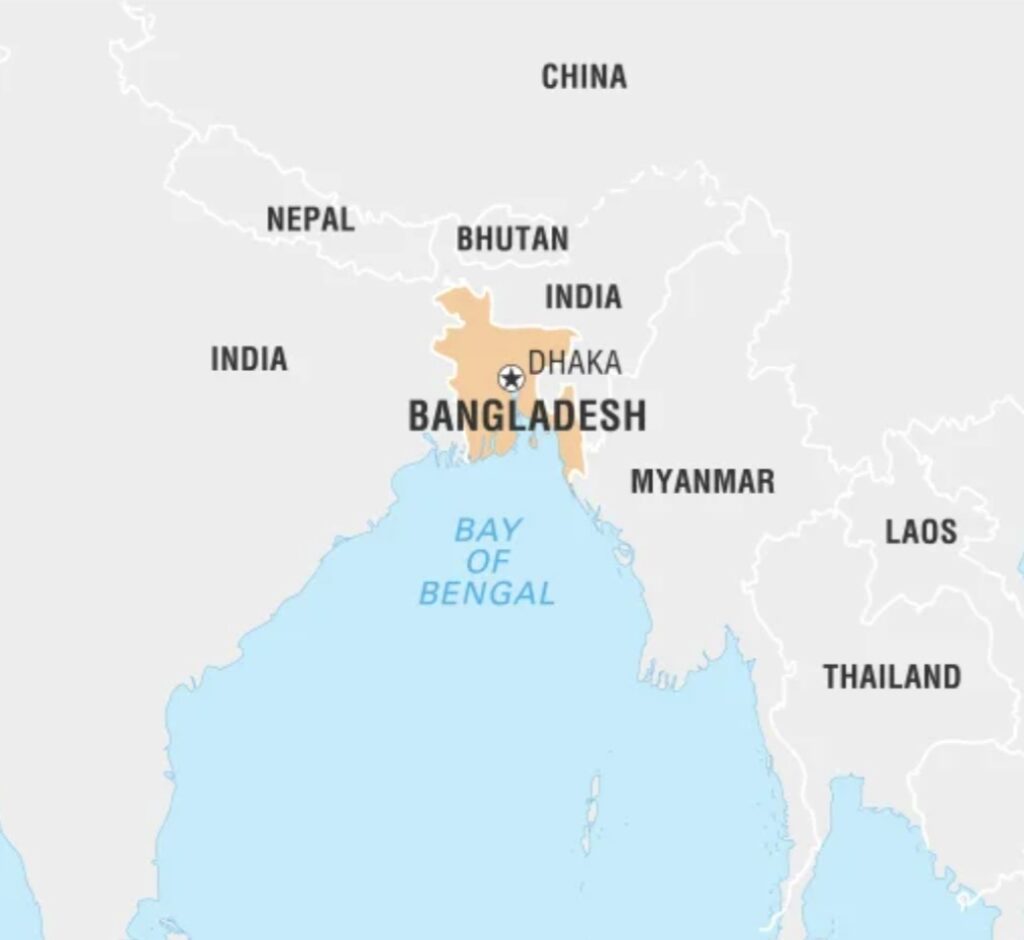
The parliamentary elections in Bangladesh were held recently on 12 February 2026. The elections marked one of the most significant political transitions in Bangladesh in decades. The victory of the Bangladesh Nationalist Party (BNP), led by Tarique Rahman, put an end of the Interim government by Muhammad Yunus and opened a new chapter in Bangladesh’s domestic politics and foreign relations.
Two years after a mass uprising that toppled the government of Sheikh Hasina, the country saw the leadership of Muhammad Yunus. Now it is in the hands of Rahman, whose party won 212 of the 300 seats in the parliament. While the election was somewhat exceptional and mostly about governance, democratic reforms, and economic recovery, however, it reignited an old question back into focus— how are relations between India and Bangladesh likely to evolve in the future? To a large extent the answer depends on the perception of India among the general population in Bangladesh.
Why India-Bangladesh Relation Became a Sensitive Issue
India has long been a crucial factor for Bangladesh’s political discourse, and Bangladesh is equally important for India. India-Bangladesh cooperation on trade, energy connectivity, and security extended very efficiently during Sheikh Hasina’s tenure. However, critics inside Bangladesh argued that Dhaka had become too dependent on New Delhi. According to many opposition leaders, India was perceived as a state backing the previous government politically and diplomatically. As a result, public sentiment towards India often became negative and begun to shape political conversation.
Anti-Indian remarks became new normal
Anti-India statements and even actions were frequently reported throughout these 18 months period. The most provocative remarks were related to India’s seven Northeastern states. At a protest rally, NCP leader Hasnat Abdullah said “seven sisters will be separated from India,”. Even the interim leader did not refrain from criticising India. In his speech during his visit to China, he specifically described India’s Northeast region as “landlocked” and suggested China to expand its presence in the region, and also Bangladesh could serve as a vital gateway to the ocean. He also added, “Bangladesh can provide huge potential for economic prosperity for the seven sister states, Nepal and Bhutan.” More shocking statement came after a terror attack in Pahalgam district of Jammu and Kashmir, when a retired Major General ALM Fazlur Rahman wrote on social media that, “If India attacks Pakistan, then Bangladesh should occupy all Northeastern states”. Even in his farewell speech, Muhammad Yunus made a point of mentioning the region. Following the political turmoil and transition, there were also incidents targeting minority Hindu communities. Several homes, businesses and temples belonging to Hindus were vandalised by mobs. On 18 December, a Hindu man named Dipu Chandra Das was reportedly lynched and burned by a mob after accusations of blasphemy in Bangladesh. During his tenure, Bangladesh witnessed a significant surge in anti-India sentiment.
Simultaneously, in India, certain politicians and civil society members have expressed a range of offensive remarks targeting Bangladeshis, with some referring to Bangladeshi migrants in derogatory terms such as “termites.” Such language has naturally sparked outrage in Bangladesh and raised concerns about communal tensions and the perception of Bangladeshis in India. Adding fuel to that was the death of Sharif Osman Hadi, who was a key figure in Bangladesh’s 2024 student-led uprising. He was a vocal critic of Indian influence in Bangladeshi politics. So, a claim that India was involved has circulated, adding another layer of sensitivity to India–Bangladesh relations leading Indian authorities to temporarily close visa centres in some areas.
A Political Recalibration in Bangladesh
In 2024, turmoil gripped Bangladesh and it wasn’t long before headlines across major media outlets reported the exile of Sheikh Hasina. Bangladesh did not hold an election during this period of 18 months as reforms were being prepared and political tensions were settling.
The BNP secured a clear parliamentary majority, allowing Rahman to form the government and begin shaping Bangladesh’s domestic and foreign policy priorities. Determined to restore democracy, he stated, “this victory belongs to Bangladesh, belongs to democracy,”. Leaders from around the world, including Indian Prime Minister Narendra Modi, congratulated Rahman on social media and later spoke with him to reaffirm India’s commitment to close bilateral ties. In response, the BNP expressed gratitude to India for acknowledging the outcome.
Following his electoral victory, Tarique Rahman signalled that Bangladesh would pursue constructive ties with India while prioritizing its own national interests first. He emphasized that Dhaka seeks cooperation with all neighbours but expects relations to be based on mutual respect, fairness, and reciprocity. Rahman stated that, “The interests of Bangladesh and its people comes first and it will determine our foreign policy.”
Rahman, the son of former Prime Minister Khaleda Zia and former President Ziaur Rahman, recently lost his mother. Indian Foreign Minister S Jaishankar, representing India attended the funeral, which General Mirza Fakhrul Islam Alamgir, BNP secretary took it as a “a positive gesture”. Mentioning about Sheikh Hasina he also stated that “in the long run, she will not remain relevant in politics. Relations between India and Bangladesh can and should move forward beyond her” and “we want to build even better ties.”
BNP’s 31-point agenda presents an opportunity to specify that issues such as trade balance, water sharing, border management, and regional connectivity would likely be approached from a more interest-driven perspective. Rahman’s remarks suggested that his government is likely to focus on recalibrate the relationship in order to project foreign policy that is less aligned with any single external partner.
The new government seems to have adopted a relatively practical approach toward India. Rahman now faces the burden of repairing the strain in relations that developed during the period of the Interim government. Analysts highlighted that the leadership in Dhaka appears to be interested in stabilizing relations rather than escalating tensions. Recently Foreign Minister Dr Khalilur Rahman commented that “We aim to maintain good relations with all countries, especially our neighbours, based on respect and mutual benefit.” There are some early signs of a thaw in relations or at least positive shift from both sides in that direction.
Mixed Public Sentiment
Bangladeshi public outlook towards India are rarely uniform. They tend to reflect several domestic political considerations and broader regional dynamics. People in Bangladesh generally recognize India’s geographic and economic importance. Ranging from trade routes, energy cooperation, to border management, these issues make engagement unavoidable. However, issues such as water sharing, border incidents, and trade imbalances continue to generate uncertainty and fuel a culture of finger-pointing among the general people.
Certain political groups or members and civil society actors remain doubtful of India’s intentions and influence in Bangladeshi politics. People blame India for supporting Hasina. Reflecting this sentiment Humaiun Kobir, foreign affairs adviser noted that, “people in Bangladesh see India as complicit with Sheikh Hasina’s crimes.” Another indication of the tense relations came recently in January, when the Bangladesh withdrew from the ICC Men’s T20 World Cup 2026 after its cricket board opposed travelling to India. There are very few signs of warm or enthusiastic sentiment towards India among ordinary Bangladeshis at the grassroots level.
However, at present, to a large extent, the focus of the general public priorities tend to focus more on governance, jobs, and global integration rather than ideological positions on India. Although, scepticism towards India still exists, but such priorities have not manifested in anti-India action. For the time being, the outlook is generally mixed, though not entirely hostile.
What the Election Means for India
From New Delhi’s standpoint, the election and the new administration presents both challenges and opportunities. During interim government in Bangladesh, there were repeated calls urging India to hand over Hasina and senior members of Awami League who left the country after the uprising. However, India has yet to respond publicly. The new government may raise the issue to address domestic political expectations.
India seems to be adjusting to a leadership that has historically had a more complicated relationship with it. However, with all changes, there is an opportunity to restructure relations on a broader institutional foundation rather than depending heavily on personal ties with former leaders. Strategic observers and regional analysts believe that the relationship could enter a more interest-driven and somewhat conditional phase, based on economic cooperation and strategic necessities rather than political alignment.
Regional Implications
The political transformation in Bangladesh also has implications beyond India. Strategically, Bangladesh occupies an important position between South and Southeast Asia. Its foreign policy decisions certainly influence regional dynamics involving neighbouring states. This is particularly significant for India, as Bangladesh lies close to the Siliguri Corridor, which is a crucial land link to the seven Northeastern states. Aa a result, New Delhi remains sensitive to Dhaka’s growing engagement with China and Pakistan.
The recent Bangladesh election is widely seen as ending the Awami League’s long alignment with India and initiate potential closeness with Pakistan. China at the same time has intensified its diplomatic connections and investment in Dhaka. Constantino Xavier, a senior fellow at New Delhi think-tank Centre for Social and Economic Progress, said that, “China is steadily building its influence both in the open and behind the scenes, benefiting from the crisis in India-Bangladesh relations”. China’s, the Bay of Bengal, and regional connectivity initiatives further enhance evolving power dynamics. Hence, the election attracted significant attention from both international and regional actors concerned about geopolitical alignment.
Conclusion
One month after the 2026 elections, the outlook for India among Bangladeshis and its new administration appears to be evolving but not drastically changing. Political authority may fluctuate, and debates about sovereignty and influence might still continue, but ground realities—geography, trade, and security still bind the two neighbours together. The 2026 elections therefore revived this discussion, particularly among the new generation of voters, who were prominent during the 2024 protests.
The real test of India-Bangladesh relations will come in the months ahead. If the new government can address domestic interests and expectations while managing relations with India, practically, the post-election period may lead to repositioning partnerships. Therefore, one month after election… it would be too soon to comment on how Bangladesh’s foreign policy towards India will evolve, however, early indications suggest that Dhaka is very likely to pursue a balanced foreign policy and a careful adjustment rather than a dramatic change in attitudes towards India.

About the Author
Trishnakhi Parashar is an enthusiastic and dedicated learner with a Master’s degree in International Relations/Politics from Sikkim Central University. Her academic journey is further enriched by a certification in Human Rights and Duties, a Postgraduate Diploma in Human Resource Management from Tezpur University, and a Diploma in International Affairs and Diplomacy from Indian Institute of Governance and Leadership.
Having begun her career at Tech Mahindra, Trishnakhi transitioned into the research field to pursue her deep-rooted passion for international affairs. She is currently interning at Global Strategic and Defence News, where she continues to refine her analytical skills. Her core interests include international relations, terrorism, diplomacy, and geopolitics—fields she explores with rigor and critical insight. Trishnakhi is committed to meticulous research and driven by a determination to contribute meaningfully to global discourse. With a vision to carve out her own niche, she aspires to leave a lasting impact on contemporary international issues.



