
By: Sonalika Singh, Consulting Editor, GSDN
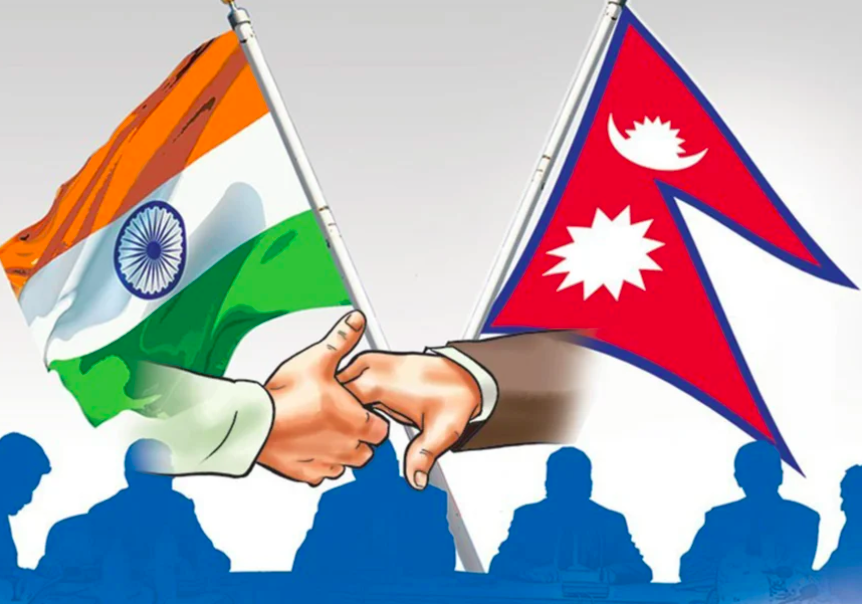
The parliamentary elections held in Nepal on 5 March 2026 represent one of the most consequential political developments in the country since the democratic transition of the early 1990s. The results have produced a dramatic restructuring of Nepal’s political landscape, signalling a generational shift in leadership and a profound transformation in public attitudes toward governance. The rise of the Rastriya Swatantra Party (RSP), led by Balendra Shah popularly known as Balen has challenged the long-standing dominance of traditional political forces such as the Nepali Congress and the Communist Party of Nepal (Unified Marxist–Leninist). For India, Nepal’s closest neighbour and one of its most strategically important partners in South Asia, the outcome of these elections carries far-reaching geopolitical, economic and diplomatic implications. The emergence of a new political leadership in Kathmandu offers opportunities for renewed engagement but also introduces uncertainties in the evolving dynamics of India–Nepal relations.
The 2026 elections were conducted in a highly charged political environment shaped by the youth-led protests of September 2025. These demonstrations, often referred to as the Gen-Z movement, were triggered by deep frustration among younger citizens over corruption, unemployment, political patronage, and perceived authoritarian tendencies within the ruling establishment. The immediate spark came from the government’s controversial attempt to restrict social media platforms, which many young Nepalis interpreted as an attempt to suppress dissent. What began as online mobilisation rapidly evolved into large-scale protests across the country. The demonstrations escalated into violence during the “Day of Rage” protests of 8–9 September 2025, resulting in the deaths of 76 people and injuries to more than 2,000 others. The crisis ultimately forced the resignation of Prime Minister KP Sharma Oli and the dissolution of parliament. An interim administration led by former Chief Justice Sushila Karki oversaw the transition to fresh elections, promising to restore political stability while responding to the demands of the protest movement.
The elections thus became more than a routine democratic exercise; they represented a referendum on Nepal’s established political order. For more than three decades, the country’s politics had been dominated by a limited group of leaders and parties, primarily the Nepali Congress and various communist factions. While these parties played a central role in Nepal’s democratic transition and the abolition of the monarchy in 2008, their prolonged dominance gradually produced widespread dissatisfaction. Frequent changes in government, factional infighting, corruption scandals and limited economic progress eroded public confidence in traditional leadership. Over the past two decades, Nepal witnessed fourteen changes of government, reflecting chronic political instability that hindered policy continuity and economic development. The Gen-Z protests brought these grievances into sharp focus, highlighting a generational demand for accountability, transparency, and new leadership.
Against this backdrop, the Rastriya Swatantra Party emerged as a powerful political alternative. Founded in June 2022 by media personality Rabi Lamichhane, the party quickly gained traction among urban voters, professionals and young citizens seeking a break from conventional political practices. Its emphasis on clean governance, institutional reform, and economic modernisation resonated strongly with voters disillusioned by the failures of traditional parties. The entry of Balendra Shah into the party’s leadership further strengthened its appeal. Shah, a civil engineer, former rapper and the widely popular mayor of Kathmandu, had already built a reputation as a reform-oriented administrator who challenged entrenched interests. His ability to communicate directly with young voters through social media and grassroots engagement transformed the RSP’s campaign into a nationwide movement for political renewal.
The electoral results reflected the depth of this transformation. The RSP delivered a stunning performance, capturing the overwhelming majority of directly elected seats and emerging as the dominant force in proportional representation. The party’s projected overall tally of around 180 seats in the 275-member House of Representatives places it close to a two-thirds majority an achievement rarely seen in Nepal’s democratic history. The outcome simultaneously marked the collapse of traditional parties. The Nepali Congress, once the leading political force in the country, was reduced to a small parliamentary presence, while the Communist Party of Nepal (Unified Marxist–Leninist) suffered an even more dramatic decline. The symbolic centrepiece of this political upheaval occurred in the eastern constituency of Jhapa-5, where Balendra Shah defeated former Prime Minister KP Sharma Oli, a veteran leader who had dominated Nepali politics for decades. The result was widely interpreted as a clear rejection of the old political elite.
The rise of the RSP reflects broader structural changes within Nepali society. Demographic shifts have significantly increased the political influence of younger voters. Nearly one million first-time voters participated in the 2026 elections, many of whom belonged to the digitally connected generation that organised the protests of 2025. For this generation, ideological debates that once defined Nepal’s political competition have become less relevant than issues of governance, employment and economic opportunity. Their political preferences are shaped less by traditional party loyalties and more by expectations of efficiency, accountability, and transparency. This transformation in voter priorities compelled even established parties to alter their campaign strategies, emphasising economic development and service delivery rather than ideological narratives.
For India, these political developments carry significant implications. India and Nepal share a unique and deeply interconnected relationship shaped by geography, history, culture and economics. The two countries share an open border of more than 1,700 kilometers, enabling the free movement of people and goods. Millions of Nepali citizens work in India, while large numbers of Indian pilgrims and tourists travel to Nepal each year. Economic ties are equally strong. India is Nepal’s largest trading partner, its principal source of investment and the primary market for its hydropower exports. The two countries also cooperate closely in areas such as energy connectivity, infrastructure development, and disaster management. Given this depth of interdependence, political changes in Kathmandu inevitably influence India’s strategic environment.
One of the most immediate implications of the election results is the possibility of greater political stability in Nepal. The country’s history of fragile coalition governments has often complicated policy implementation and slowed economic reforms. A strong parliamentary majority for the RSP could provide a rare opportunity for stable governance and long-term planning. For India, political stability in Nepal is generally viewed as beneficial because it reduces uncertainty in bilateral projects and facilitates sustained cooperation. Several major Indian-backed infrastructure initiatives, including hydropower projects such as Arun-3 and cross-border electricity transmission lines, had slowed during the political turmoil of 2025. The emergence of a stable government may enable these projects to regain momentum, strengthening regional energy connectivity and supporting Nepal’s economic growth.
Energy cooperation represents one of the most promising areas of India–Nepal partnership. Nepal possesses enormous hydropower potential, estimated at more than 40,000 megawatts of economically feasible capacity. However, the country has struggled to develop this resource due to political instability, regulatory challenges, and infrastructure constraints. In recent years, India has become an important partner in Nepal’s hydropower development, both as an investor and as a market for electricity exports. Nepal has already begun exporting several hundred megawatts of electricity to India, and this figure is expected to increase significantly in the coming years. A government committed to economic modernisation and infrastructure development could accelerate hydropower projects, benefiting both countries through increased energy trade and regional energy security.
At the same time, the new political landscape in Nepal also presents diplomatic challenges for India. The RSP’s leadership has occasionally expressed strong nationalist sentiments and criticised what some Nepalis perceive as India’s “big brother” approach in bilateral relations. Issues such as border disputes, economic dependence, and political interference have periodically generated tensions between the two countries. The territorial disagreements involving Kalapani, Lipulekh and Limpiyadhura remain particularly sensitive. These disputes intensified in 2020 when Nepal published a revised political map incorporating the contested territories. Although both sides have since attempted to manage the issue through diplomatic channels, it continues to influence public perceptions in Nepal.
Balendra Shah’s political rhetoric has sometimes emphasised Nepal’s need for greater strategic autonomy in its foreign policy. This emphasis reflects a broader trend among younger Nepali leaders who seek to diversify the country’s international partnerships. While such an approach does not necessarily imply hostility toward India, it suggests that the new government may pursue a more assertive and independent diplomatic posture. For India, this means that managing relations with Nepal will require greater sensitivity to Nepali public opinion and a willingness to engage with emerging political actors who may not share the traditional patterns of bilateral engagement.
Another important dimension of Nepal’s foreign policy is its relationship with China. Over the past decade, China has expanded its economic presence in Nepal through infrastructure investments, trade and development assistance. Many of these initiatives are linked to the Belt and Road Initiative (BRI), under which China has financed projects such as highways, airports and hydropower facilities. The expansion of Chinese influence in Nepal has occasionally generated strategic concerns in New Delhi, particularly because Nepal occupies a critical geographical position between the two Asian powers. India traditionally regarded Nepal as part of its immediate strategic neighbourhood, and the increasing involvement of external actors has altered the regional balance.
The new government in Kathmandu is likely to continue Nepal’s long-standing strategy of balancing relations between India and China. This approach reflects Nepal’s geopolitical reality as a small state located between two major powers. By maintaining constructive relations with both neighbours, Nepal seeks to maximise economic opportunities while preserving its political autonomy. However, the way this balancing strategy is implemented will influence India’s strategic calculations. If Nepal deepens its economic engagement with China through large-scale infrastructure projects or expanded security cooperation, India may view these developments with caution.
At the same time, the presence of a strong and popular government in Nepal could create opportunities for more constructive regional diplomacy. A leadership that enjoys broad domestic support may be better positioned to pursue pragmatic economic partnerships with both neighbours without being constrained by internal political rivalries. For India, engaging proactively with the new Nepali leadership could help build mutual trust and reduce misunderstandings that have periodically affected bilateral relations.
Economic cooperation will remain a central pillar of India–Nepal relations in the coming years. Beyond hydropower, the two countries are working to strengthen connectivity through cross-border railways, highways, and integrated check posts. Improved transport infrastructure has the potential to boost trade, tourism, and investment. Nepal’s strategic location between India and China also creates opportunities for it to function as a transit hub linking South Asia with the Himalayan region and beyond. If managed effectively, this connectivity could contribute to broader regional economic integration.
Another important aspect of bilateral relations is the movement of people across the open border. The India–Nepal border is one of the most unique international frontiers in the world, allowing citizens of both countries to travel, work and reside freely in each other’s territory. This arrangement has fostered deep social and cultural connections but has also created occasional security concerns related to smuggling and illegal activities. Maintaining the benefits of open borders while addressing emerging security challenges will remain an important priority for both governments.
Ultimately, the 2026 elections in Nepal represent a historic turning point in the country’s democratic evolution. The rise of the Rastriya Swatantra Party and the defeat of established political elites demonstrate the power of generational change and public demand for accountable governance. Whether this transformation leads to lasting institutional reform or simply inaugurates, another phase of political experimentation remains uncertain. Much will depend on the ability of the new leadership to translate its electoral mandate into effective governance and economic progress.
For India, the moment calls for careful diplomatic recalibration. The political landscape in Nepal has changed significantly, and the assumptions that guided bilateral relations in the past may no longer be sufficient. Rather than viewing Nepal’s political transformation with apprehension, India has an opportunity to engage constructively with the new leadership and support Nepal’s aspirations for stability and development. By strengthening economic cooperation, respecting Nepal’s sovereignty and addressing sensitive issues through dialogue, India can help ensure that the evolving relationship remains mutually beneficial.
In this sense, the 2026 elections mark not only a domestic political shift within Nepal but also a critical moment for regional diplomacy. As Nepal navigates a new phase of political leadership and policy priorities, the future of India–Nepal relations will depend on the ability of both countries to adapt to changing circumstances while preserving the deep historical ties that have long connected them. If managed wisely, this period of transformation could open the door to a more balanced, cooperative, and forward-looking partnership between the two neighbours.

About the Author
Sonalika Singh began her journey as an UPSC aspirant and has since transitioned into a full-time professional working with various organizations, including NCERT, in the governance and policy sector. She holds a master’s degree in political science and, over the years, has developed a strong interest in international relations, security studies, and geopolitics. Alongside this, she has cultivated a deep passion for research, analysis, and writing. Her work reflects a sustained commitment to rigorous inquiry and making meaningful contributions to the field of public affairs.



