
By : Sonalika Singh, Consulting Editor, GSDN
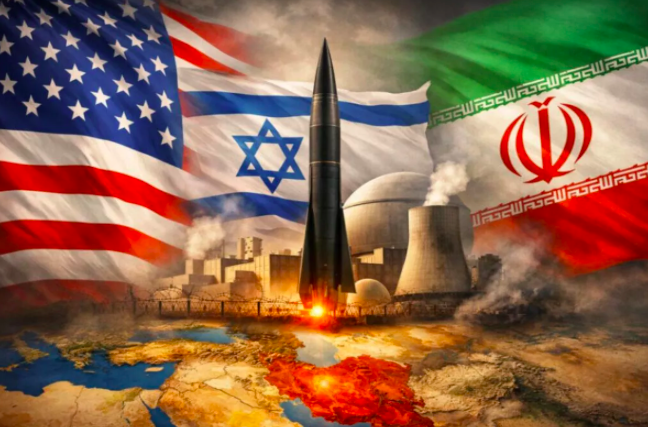
The escalating conflict involving Iran, Israel, and the United States has placed India in one of the most diplomatically sensitive situations in its contemporary foreign policy history. As tensions spiraled following coordinated US-Israeli military strikes on Iranian targets and Tehran’s retaliatory missile and drone attacks across West Asia, New Delhi responded with calibrated restraint rather than rhetorical alignment. Prime Minister Narendra Modi’s assertion that India supports the resolution of conflicts through dialogue and diplomacy captures the essence of this posture. Yet India’s position cannot be understood merely through official statements. It must be examined through the prism of strategic autonomy, defence partnerships, energy security, diaspora protection, regional connectivity ambitions, domestic political pressures, and the broader restructuring of global power equations. Far from being passive, India’s stance reflects a deliberate and cautious recalibration in response to one of the most volatile geopolitical crises in recent years.
For decades, India’s West Asia policy has been guided by a doctrine of de-hyphenation engaging Israel, Iran, and Palestine independently rather than linking one relationship to another. During the Cold War and even afterward, New Delhi maintained solidarity with the Palestinian cause while gradually normalizing and deepening ties with Israel. Simultaneously, it cultivated energy, civilizational, and connectivity partnerships with Iran. This multi-vector engagement enabled India to protect its interests without being drawn into the region’s rivalries. However, the current conflict tests whether such strategic balancing remains viable when two of India’s long-standing partners are locked in direct confrontation, backed by competing global powers. The intensity of hostilities and the direct involvement of the United States add further complexity, compelling India to navigate between principle and pragmatism.
India’s initial response to the outbreak of war was characterized by expressions of deep concern and calls for restraint. The Ministry of External Affairs urged all parties to avoid escalatory measures and to utilize existing channels of dialogue to de-escalate tensions. Significantly, India refrained from explicitly condemning the US-Israeli strikes on Iran, even though New Delhi has consistently upheld sovereignty and territorial integrity as foundational norms of international law. Nor did it directly criticize Iran’s retaliatory actions. This deliberate neutrality in language has sparked debate domestically and internationally. Critics argue that silence amounts to tacit approval, while supporters contend that calibrated messaging preserves diplomatic flexibility. India’s measured tone reflects its effort to avoid alienating any stakeholder while safeguarding its national interests.
The optics of Prime Minister Modi’s diplomatic engagements further shaped perceptions of India’s stance. His conversations with Israeli Prime Minister Benjamin Netanyahu emphasized concern over the unfolding crisis and the urgent need for cessation of hostilities. He also engaged with Gulf leaders, including the President of the United Arab Emirates, expressing solidarity amid regional instability. However, there was no immediate high-profile engagement with Tehran following the reported assassination of Iran’s Supreme Leader. This asymmetry fueled speculation that India was gravitating toward the US-Israel camp. Yet diplomacy often operates beyond public visibility. The absence of overt condemnation may reflect sensitivity to evolving ground realities rather than a strategic shift in alignment. India’s foreign policy tradition prioritizes autonomy over ideological positioning, especially during volatile conflicts.
A central pillar influencing India’s calculus is its robust defence partnership with Israel. Over the past three decades, Israel has become one of India’s most dependable suppliers of advanced military hardware, including missile defence systems, unmanned aerial vehicles, precision-guided munitions, and surveillance technologies. Israeli support during the Kargil conflict in 1999 laid the foundation for enduring trust, particularly when other countries hesitated under international pressure. Since then, the relationship has evolved beyond buyer-seller dynamics into joint research, co-production, and collaboration in emerging technological domains such as artificial intelligence, cybersecurity, and space systems. Israel’s willingness to share sensitive technologies and tailor solutions to India’s operational requirements has reinforced its strategic value. In this context, openly opposing Israeli military actions during a crisis could have repercussions for India’s defence preparedness and technological modernization.
Simultaneously, Iran’s geostrategic significance for India remains substantial. Located at the crossroads of the Persian Gulf and Central Asia, Iran provides India with access to landlocked Afghanistan and Eurasian markets through the Chabahar Port project. This port, developed with Indian investment, is integral to New Delhi’s efforts to bypass Pakistan and expand trade corridors under the International North-South Transport Corridor framework. Iran has also historically supplied crude oil to India under favorable terms prior to the tightening of US sanctions. Beyond economics, Iran has at times adopted nuanced positions on issues sensitive to India, including within multilateral Islamic forums. Abandoning or alienating Tehran would undermine years of diplomatic engagement and infrastructure investment. Thus, India must weigh the costs of perceived alignment against long-term connectivity and regional access objectives.
Energy security constitutes another decisive factor shaping India’s approach. West Asia accounts for a significant share of India’s hydrocarbon imports, and any disruption in shipping routesparticularly through the Strait of Hormuz would trigger immediate economic consequences. A prolonged war could drive oil prices upward, widen India’s trade deficit, and intensify inflationary pressures. Such shocks would have domestic political and fiscal implications. Therefore, India’s emphasis on de-escalation is not merely a normative appeal for peace but an economic imperative. Stabilizing energy flows and preventing supply chain disruptions are central to national resilience, especially at a time when global markets are already strained by geopolitical fragmentation.
Equally important is the safety of the Indian diaspora in the Gulf region. Nearly nine million Indians reside and work across West Asian countries, contributing billions of dollars annually in remittances. Escalation that draws Gulf states into direct confrontation risks endangering lives and destabilizing communities. The activation of emergency helplines, issuance of travel advisories, and review by the Cabinet Committee on Security to underscore that diaspora protection is paramount. Foreign policy decisions in this context are inseparable from humanitarian considerations. Safeguarding citizens abroad often necessitates diplomatic prudence rather than public posturing.
Domestic political discourse has intensified the government’s stance. Opposition leaders have accused the administration of abandoning traditional principles by failing to condemn actions perceived as violations of sovereignty. They argue that India’s moral authority as a proponent of peaceful dispute resolution is undermined by selective silence. Supporters of the government counter that foreign policy must prioritize national interest over rhetorical consistency. This debate reflects broader ideological tensions between legacy non-alignment narratives and contemporary strategic partnerships. However, modern strategic autonomy differs fundamentally from Cold War non-alignment. It entails flexible multi-alignment engaging diverse power centers without exclusive commitment rather than strict equidistance.
India’s growing strategic convergence with the United States further complicates the equation. Bilateral cooperation now spans defence interoperability, intelligence sharing, critical technologies, and Indo-Pacific security initiatives. The United States is a key partner in India’s efforts to counterbalance China’s regional assertiveness. Publicly condemning US military operations could strain this partnership at a critical juncture. Moreover, Israel’s integration into emerging connectivity initiatives such as the India-Middle East-Europe Economic Corridor aligns with India’s vision of diversified trade routes. These structural incentives encourage cautious positioning rather than overt criticism.
At the same time, India has maintained its support for Palestinian statehood and multilateral diplomacy. It continues to endorse a two-state solution in international forums and has sustained development assistance to Palestinian territories. Engagements with Arab states through institutional mechanisms reaffirm India’s broader West Asia outreach. This continuity suggests that India’s strategy is not binary but layered. Strengthening ties with Israel does not necessarily negate relations with Iran or Palestine; rather, it reflects differentiated engagement based on specific strategic imperatives.
The sustainability of this balancing act remains uncertain. Strategic autonomy depends on credibility across competing blocs. If one side perceives persistent asymmetry in India’s responses, trust could erode. Conversely, excessive neutrality may disappoint partners seeking solidarity. The art of contemporary diplomacy lies in managing these competing expectations while safeguarding core interests. India’s approach public restraint coupled with active engagement illustrates this delicate maneuvering.
Ultimately, India’s stand in the Iran-Israel-USA war reflects an evolution from moralistic rhetoric toward pragmatic statecraft. The emphasis on dialogue and diplomacy aligns with longstanding principles, yet the calibrated silence on specific provocations signals adaptation to shifting power realities. India is neither overtly choosing sides nor disengaging. It is pursuing a strategy designed to preserve leverage, protect economic stability, secure defence partnerships, and ensure citizen safety. Whether this nuanced positioning endures will depend on the trajectory of the conflict and the flexibility of regional actors.
Therefore, India’s response to the Iran-Israel-USA war underscores the complexity of navigating twenty-first century geopolitics. Strategic autonomy today demands agility rather than rigid neutrality. By balancing principles with pragmatism, New Delhi seeks to maintain maneuverability in an increasingly polarized environment. The crisis serves as a defining test of India’s foreign policy maturity its capacity to engage adversarial powers simultaneously, shield domestic interests from external shocks, and project itself as a responsible global actor. As West Asia remains volatile, India’s calibrated diplomacy will continue to evolve, reflecting the interplay between national interests and global responsibilities.

About the Author
Sonalika Singh began her journey as an UPSC aspirant and has since transitioned into a full-time professional working with various organizations, including NCERT, in the governance and policy sector. She holds a master’s degree in political science and, over the years, has developed a strong interest in international relations, security studies, and geopolitics. Alongside this, she has cultivated a deep passion for research, analysis, and writing. Her work reflects a sustained commitment to rigorous inquiry and making meaningful contributions to the field of public affairs.




So simple, yet so impactful. Well written!
This was really well done. I can tell a lot of thought went into making it clear and user-friendly. Keep up the good work!
This was a great reminder for me. Thanks for posting.
I always look forward to your posts. Keep it coming!
This made me rethink some of my assumptions. Really valuable post.