
By: Sagnik Sarkar
As South Asia grapples with rising energy demand, climate commitments, and the need for regional cooperation, cross-border renewable energy partnerships are emerging as a crucial pillar of sustainable growth. India and Bhutan, long bound by cooperation in various fields and levels, are now extending their collaboration into the bright new domain of solar energy, marking a subtle but significant shift in the region’s clean energy landscape.
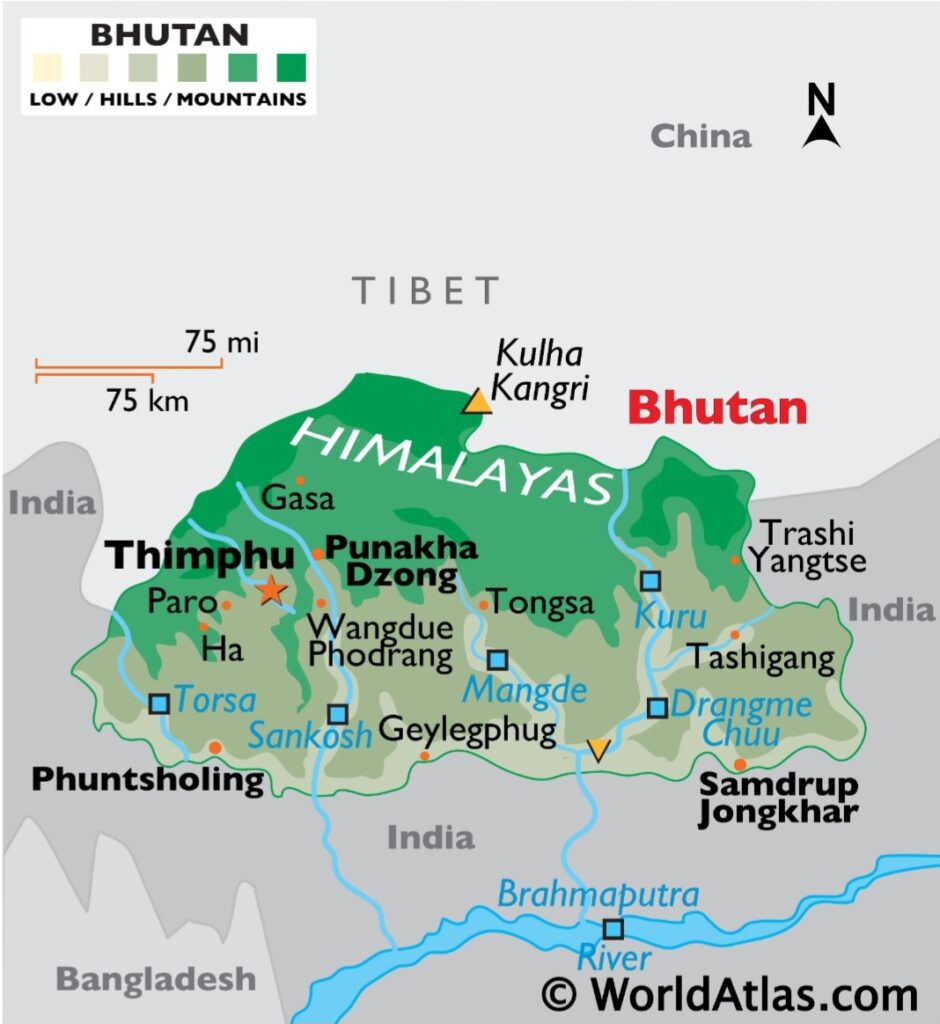
In lines with the national vision of ‘Neighbourhood First’, the India Power Corporation Limited (IPCL) has recently highlighted that it has formed a strategic collaboration with Bhutan’s Green Energy Power Private Limited to create a 70 MW solar power project in the neighbouring country’s Paro district. The project is part of the West Bengal-based power utility’s goal to install 1.5 GW of solar capacity in Bhutan over the next five years, according to a press statement.
Bhutan’s power consumption is predicted to get more than double in the next two years, led by initiatives like the Gelephu Mindfulness City, the rise of energy-intensive businesses like ferrosilicon, and increased demand from digital infrastructure and crypto-mining operations, according to the report. And while hydropower continues to dominate Bhutan’s energy mix, the government aims to reach 25,000 MW of installed power capacity by 2034, including 5,000 MW from solar energy.
According to IPCL, the Tenchuka location in Paro was chosen after a preliminary review of technical criteria. The project location is claimed to have approximately 200 acres of south-facing terrain with good solar irradiation and is located about 3.5 kilometers from the Jamjee 220/33 kV substation, thereby opening the doors to seamless power evacuation. Indeed, this project is not just a capacity addition, but rather reflective of India’s commitment to cross-border energy cooperation. This is in line with the country’s bigger goal of becoming a 1.5 GW solar player by 2030.
According to Tandi Dorji, founder of Green Energy Power Private Limited, this will be Bhutan’s first independent power producer (IPP) project. Bhutan is attracting increased attention from Indian powerhouses. Recently, Tata Power and Druk Green Power Corporation (DGPC) have joined hands and are progressing towards creating about 5,000 MW of clean energy projects, while Adani Power has inked an MoU with DGPC to explore hydropower potentials of up to 5,000 MW. Likewise, Reliance Power, in collaboration with Druk Holdings and Investments, is creating a 500 MW solar project and planning additional hydropower capacity.
IPCL, founded in 1919, is an integrated power company with interests in electricity distribution, smart metering, renewable energy, and thermal generating.
The corporation has reported that renewable energy currently accounts for more than 70% of its portfolio.
This recent collaboration represents more than a single solar installation, as it reflects a gradual broadening of India–Bhutan energy cooperation in response to evolving demand patterns and climate priorities. As Bhutan looks to diversify its energy mix beyond hydropower and India advances its neighbourhood-first approach through renewable energy partnerships, such initiatives underline the strategic role of cross-border solar projects in shaping a resilient and sustainable regional energy architecture.



