
By: Sanya Singh, Research Analyst, GSDN
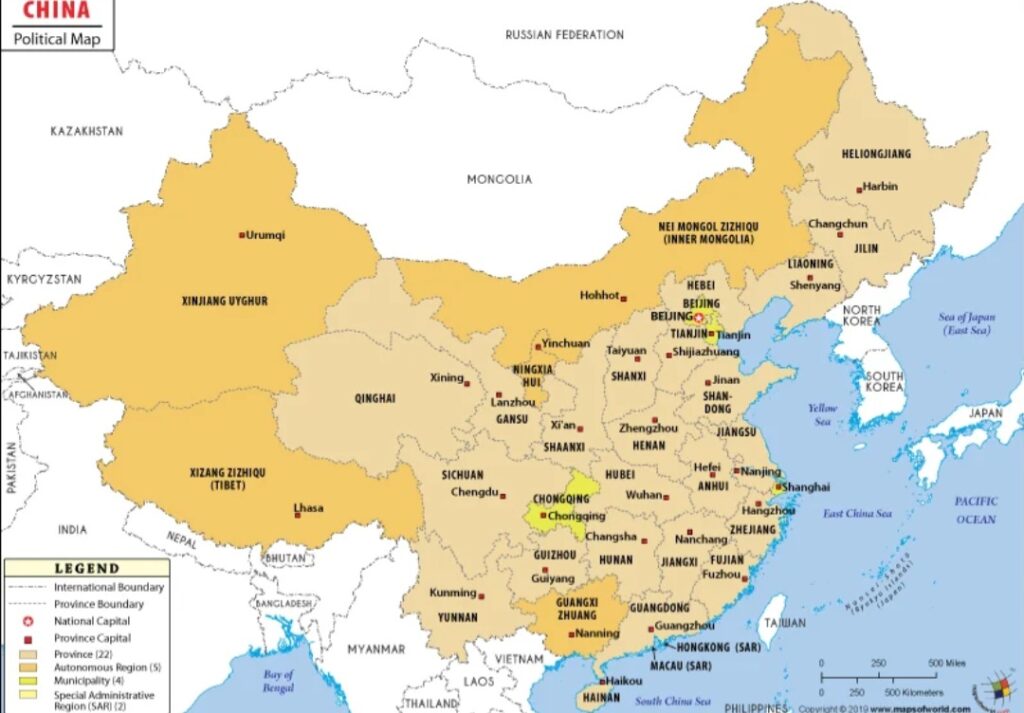
The rise of China as the manufacturing powerhouse of the world constitutes one of the most dramatic economic transformations of the contemporary world. In less than five decades, China transformed itself from an agrarian and inward-looking economy into the world’s largest manufacturing nation, accounting for nearly a third of global manufacturing output. Chinese factories, today, dominate global supply chains in everything from low-cost consumer goods to high-end electronics, electric vehicles, and renewable energy technologies. This manufacturing surge has reshaped not only international trade patterns but also global power dynamics.
The role of manufacturing in China’s rise exceeds economic growth. Manufacturing formed the backbone of China’s export-oriented development model, a source of employment for hundreds of millions, and the foundation for technological advancement and military modernisation. As global politics becomes increasingly shaped by supply chains, industrial capacity, and technological leadership, understanding how China surged in manufacturing is essential to understanding the basic contours of contemporary geopolitics. This article argues that China’s manufacturing predominance grew through deliberate state-led reforms, strategic global integration, labour and infrastructure advantages, and long-term industrial planning, all transforming economic strength into strategic power.
Historical Context: China Before Economic Reform
Until the late 1970s, China’s economy was dominated by a highly rigid, centrally planned regime under Mao Zedong. Most industrial output was produced under state control, where ideological ambitions took precedence over efficiency and innovation. For the most part, in terms of scale, quality, and technological levels, manufacturing output was low in China, while that country remained relatively closed to international markets. The absence of competition, weak incentives, and partial integration with international trade led to low productivity and stagnation in industrial growth.
It was apparent by the mid-1970s that China had dramatically lagged behind advanced industrial economies and several developing ones. Manufacturing served domestic consumption, rather than export markets, and technological capabilities were severely constrained. In fact, industrial capacity was further weakened by the failure of the Great Leap Forward and disruptions of the Cultural Revolution. This background thus made it plain that without fundamental reforms, China was destined to be an economically peripheral country. The requirement for transformation set the stage for a historic shift in economic strategy.
Deng Xiaoping’s Reforms and the Opening-Up Policy
Deng Xiaoping’s economic reforms, which began in 1978, represented a decisive break from Maoist central planning and laid the foundation for China’s manufacturing rise. Deng refocused priorities in China from ideological purity to economic pragmatism, growth, productivity, and modernization. His famous principle – “It does not matter whether a cat is black or white, as long as it catches mice” caught this pragmatic approach.
These reforms introduced market mechanisms within a socialist framework: state control was gradually relaxed, enterprises were given greater autonomy, profit incentives were introduced, and private entrepreneurship was cautiously allowed. Most importantly, China adopted a gradual and experimental reform strategy, testing policies in limited regions before expanding them nationwide. This avoided economic shocks and ensured political stability.
The Opening-Up Policy encouraged foreign trade, investment, and technological transfer. China opened coastal regions to international markets, invited foreign firms, and integrated into international production networks. These reforms then transformed China into an export-oriented manufacturing economy, where, in return, its rapid industrial growth could be achieved alongside strongly maintained state oversight. Deng’s reforms thus created the institutional and policy foundation for China’s emergence as a global manufacturing powerhouse.
The Role of State and Industrial Policy
Contrary to most developing countries relying on the free-market mechanisms, China followed state-led development. The Chinese state took a central and decisive role in driving the manufacturing surge through proactive industrial policy and long-term planning. In contrast to market-driven development models, China opted for the development state model, wherein the government played an active leading role in guiding industrial development and providing scope for market mechanisms under such controlled settings. Manufacturing had been marked as a strategic national priority, which was to be associated with economic growth, employment, and national power.
It was through the Five-Year Plan that the state identified the priority sectors, set production targets, and coordinated investment across regions. State-owned enterprises were retained and strengthened in strategic industries like steel, energy, transport, and heavy machinery, ensuring control by the state over key inputs. Simultaneously, private and foreign firms were allowed to compete in non-strategic sectors to create scale and efficiency.
The state also supported manufacturing through subsidies, tax incentives, cheap credit from state-owned banks, land access, and export support policies. Local governments were active in developing industrial clusters and infrastructure. This coordinated state-market model gave policy stability, a reduction of risks for investors, and the rapid scaling up of manufacturing with technological upgrading in China.
Special Economic Zones and Foreign Direct Investment
One of the most innovative tools in China’s manufacturing strategy was the creation of Special Economic Zones (SEZs). Special Economic Zones (SEZs) have played a decisive role in China’s manufacturing surge by acting as gateways for foreign capital, technology, and global integration. Since the late 1970s, China has established Special Economic Zones (SEZs) such as Shenzhen, Zhuhai, Xiamen, and Shantou, providing advantages of tax incentives, simplified regulations, flexible labour policies, and export-oriented infrastructure. Deliberately positioned along the coast, these zones are meant to enable trade and attract multinational corporations.
Foreign Direct Investment (FDI) flowed into Special Economic Zones (SEZs) as global firms sought low-cost production bases with reliable infrastructure and policy stability. In return, China accesses not only the capital but also advanced technologies, managerial expertise, and international standards of production. China was able to learn from Foreign Direct Investment (FDI) through joint ventures, subcontracting, and supplier relationships in order to gradually move up the manufacturing ladder.
Importantly, Special Economic Zones (SEZs) served as experimental laboratories for market-oriented reforms: successful policies were later extended nationwide, enabling China to scale industrial growth without destabilizing the broader economy. Integrating China into global value chains, SPECIAL Economic Zones (SEZs) transformed in from a peripheral producer into a central hub of global manufacturing.
Labour Advantage and Demographic Dividend
The labour comparative advantages and demographic dividend have strongly supported the rise of manufacturing in China. Throughout the several decades, the Chinese had a large working-age population and surplus rural labour that could be absorbed at relatively low wages into factories. Large-scale rural-to-urban migration supplied the manufacturing hubs with a disciplined and abundant workforce. That allowed firms to keep their operations low in cost and high in volume, with China becoming very competitive, especially in labour-intensive industries like textiles, electronics assembly, and consumer goods.
The demographic dividend, the proportion of the working-age population being much higher compared to dependents-boosted productivity and economic growth. The State simultaneously invested in basic education, vocational training, and skill development, leading to gradual improvement in the quality of labour. The country could thus move progressively from simple assembling work to more complex manufacturing processes.
The combination of low labour costs, workforce discipline, and improving skills let China dominate world manufacturing during its era of rapid growth. Now, this comparative advantage is starting to erode with rising wages and an ageing population, pushing China towards automation and higher-value production.
Infrastructure and Logistics Revolution
The large-scale manufacturing surge in China was led by an equally large-scale state-led infrastructure and logistics revolution. Realizing above all that efficient infrastructure in central to industrial competitiveness, the Chinese government invested massively in ports, highways, railways, airports, and power generation, and in industrial corridors. These investments drastically reduced transportation costs, delivery times, and supply-chain bottlenecks, therefore making large-scale manufacturing feasible and efficient.
Large, modern ports like Shanghai, Shenzhen, and Ningbo developed into some of the busiest in the world, enabling easy integration with sea routes serving international trade. Networks of high-speed rail and expressways linked inland production centres to coastal export hubs, including manufacturing well past a few coastal cities. Reliable electricity supplies, industrial parks, and export-processing zones also facilitate uninterrupted production.
This logistics efficiency enabled just-in-time manufacturing and rapid export fulfilment, which attracted multinational firms seeking reliability and scale. Whereas in most developing countries, a poor infrastructure strategy created a strong backbone for years of sustained manufacturing expansion and dominance in global supply chains.
World Trade Organisation (WTO) Accession and Export-Led Growth
China’s accession to the World Trade Organisation (WTO) in 2001 marked a defining moment in its manufacturing rise. For China, membership meant that it had gained predictable and legally secured access to major global markets in particular, the United States and the European Union. With this development, trade uncertainty decreased, investor confidence increased, and the pace at which global manufacturing was relocating to China quickened. Chinese exports also expanded rapidly, with falling tariffs and the stabilization of trade rules in sectors such as electronics, textiles, machinery, and consumer goods.
World Trade Organisation (WTO) integration allowed China to implement an export-oriented growth model in which manufacturing exports emerged as the leading locomotive for economic growth. The large trade surplus translated into huge foreign exchange reserves, bolstering the fiscal and financial capacity of the state. These resources, therefore, were reinvested in infrastructure, industrial upgrading, and technological development, establishing a self-reinforcing cycle of growth within the manufacturing sector. In addition, conformity to the World Trade Organisation’s (WTO’s) regulatory standards compelled China to rationalise its institutional environment and be more competitive. All in all, World Trade Organisation (WTO) accession transformed China from a regional Producer into a cornerstone of the global manufacturing system.
Technological Upgradation and Moving Up the Value Chain
The technological upgradation has been central in the transition of China from a low-cost manufacturing base to high-value production. Starting off with labour-intensive assembling, China gradually developed research and development, automation, and advanced skills so that its dependency on foreign technology decreased. State-led initiatives like Made in China 2025 have a strategic focus on areas such as semiconductors, robotics, aerospace, electric vehicles, and renewable energy.
Through sustained public investment, technology transfer from foreign firms, and the emergence of national champions such as Huawei, Build Your Dreams (BYD), and Contemporary Amperex Technology Co., Limited (CATL), Chinese manufacturers have climbed global value chains, from basic assembly to design, branding, and innovation. Automation and artificial intelligence have further raised productivity, compensating for increasing labour costs. This process has had strategic implications given that control over advanced manufacturing enhances economic resilience, military capability, and geopolitical influence. China’s technological upgrading has therefore heightened global competition, especially with the United States, and has made manufacturing and technology core to contemporary power politics.
Manufacturing, Economic Power, and Strategic Influence
The foundation of China’s economic and strategic power has been its manufacturing strength. Large-scale manufacturing allowed for sustained export-led growth, amassing enormous foreign exchange reserves and fiscal capacity. This economic surplus made available to the Chinese state the wherewithal for heavy investment in infrastructure, technology, and military modernisation, directly linking industrial capacity with national power.
Manufacturing dominance also meant the building of global supply chain dependence, with China acquiring structural leverage over other economies. Many countries rely on Chinese inputs for electronics, pharmaceuticals, renewable energy equipment, and consumer goods, thus enhancing Beijing’s bargaining power in trade and diplomacy. The interdependence has strategic implications, as seen during the COVID-19 pandemic and recent supply chain disruptions.
At the geopolitical level, manufacturing has emerged as a national security asset. Control over advanced manufacturing, such as semiconductors, electric vehicles, and telecom equipment, translates into technological leadership and military advantages. This is why China’s industrial rise has triggered strategic competition with the United States, including trade wars, export controls, and efforts to restrict China’s access to critical technologies. In other words, China’s manufacturing surge turned economic strength into strategic influence, drastically changing the contours of global power.
Challenges, Criticisms, and Sustainable Concerns
Despite the overall success of the model, huge challenges lie ahead. For one thing, rapid industrialisation has brought severe environmental degradation, raising serious questions about sustainability. Increasing wages and an aging population are eating into China’s low-cost labour advantages; thus, some firms have already begun shifting their production to other developing countries. Centrally guided expansion has also been associated with industrial overcapacity and high levels of local government debt, thus lowering efficiency. China also faces intensifying trade tensions, export controls, and supply-chain diversification efforts, especially from the United States and its allies.
In addition, reliance on foreign technology in strategic areas, such as semiconductors, presents strategic vulnerabilities. In all, these issues indicate that whereas China remains a powerhouse in manufacturing, sustaining dominance will need technological innovation, greener production, and structural reforms. Finally, critics question whether China’s state-led model of manufacturing is sustainable in a more complex, innovation-driven global economy. Although state coordination was useful in catch-up industrialization, excessive intervention may suppress innovation, competition, and efficiency in the advanced sectors.
The challenge for China is how to rebalance the role of the state: to provide strategic guidance while allowing market forces to drive innovation. How successfully China navigates this transition determines whether its manufacturing dominance is sustainable in the long term.
Comparative Perspective: Why China Succeeded Where Others Did Not?
Most developing countries that attempted industrialisation failed to achieve the same success as China. China benefited from a particular set of conditions that included: strong state capacity, policy continuity, massive domestic market size, and favourable timing within an era of globalisation. Massive investment in infrastructure, stable industrial policies, and integration into global value chains allowed firms to achieve economies of scale. Unlike fragmented or inconsistent reformers, China maintained a long-term commitment to manufacturing as a national priority.
These, in turn, have prevented countries like India and those in Latin America from fully taking advantage of the forces of globalisation due to infrastructure deficits, regulatory complexity, or political instability. China also had the benefit of timing. Industrialisation occurred at a period when the West was offshoring production as part of globalisation. Most countries had to bear fragmented governance, policy reversal, weak infrastructure, and premature deindustrialisation. The ability to coordinate policy across levels of government and integrate manufacturing with the national strategy sets China apart from most peers.
Conclusion
China’s rise in manufacturing is a product of conscious reforms, state-led industrial policy, global integration, labour, infrastructure advantages, and sustained strategic planning. Manufacturing was the bedrock of China’s economic ascendance and became one of the most important sources of national power. Today, China’s industrial might defines global trade, energizes technological competition, and shapes geopolitical dynamics, especially in the Indo-Pacific.
As global politics increasingly revolves around supply chains, technology, and economic resilience, China’s manufacturing story is a critical lesson for developing economies and policymakers alike around the world. Manufacturing is not just an economic sector; it has been a strategic asset for the reshaping of global power structures. China’s case displays how industrial capacity, allied with long-term vision and state capacity, can change a nation’s standing in the international system.



